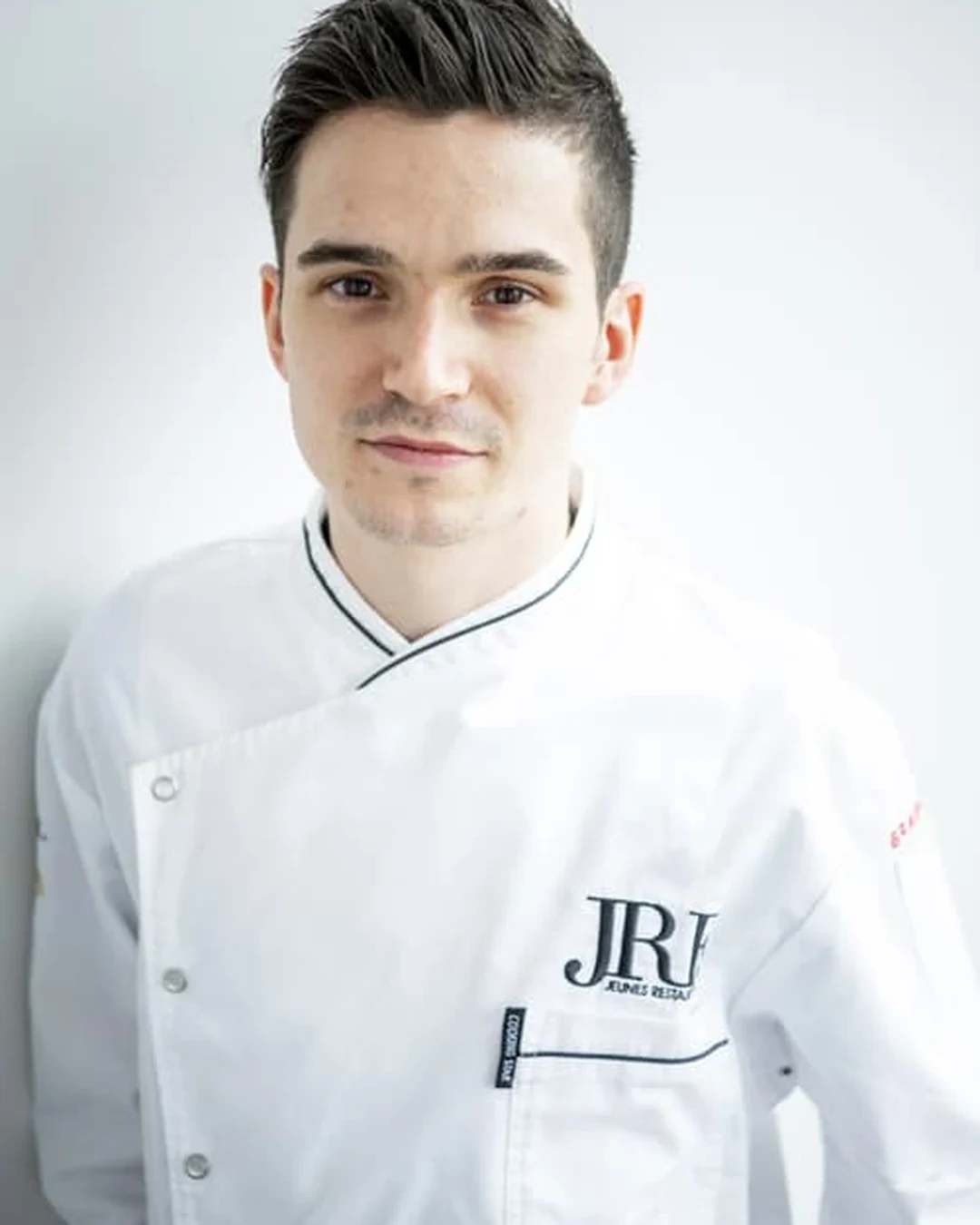
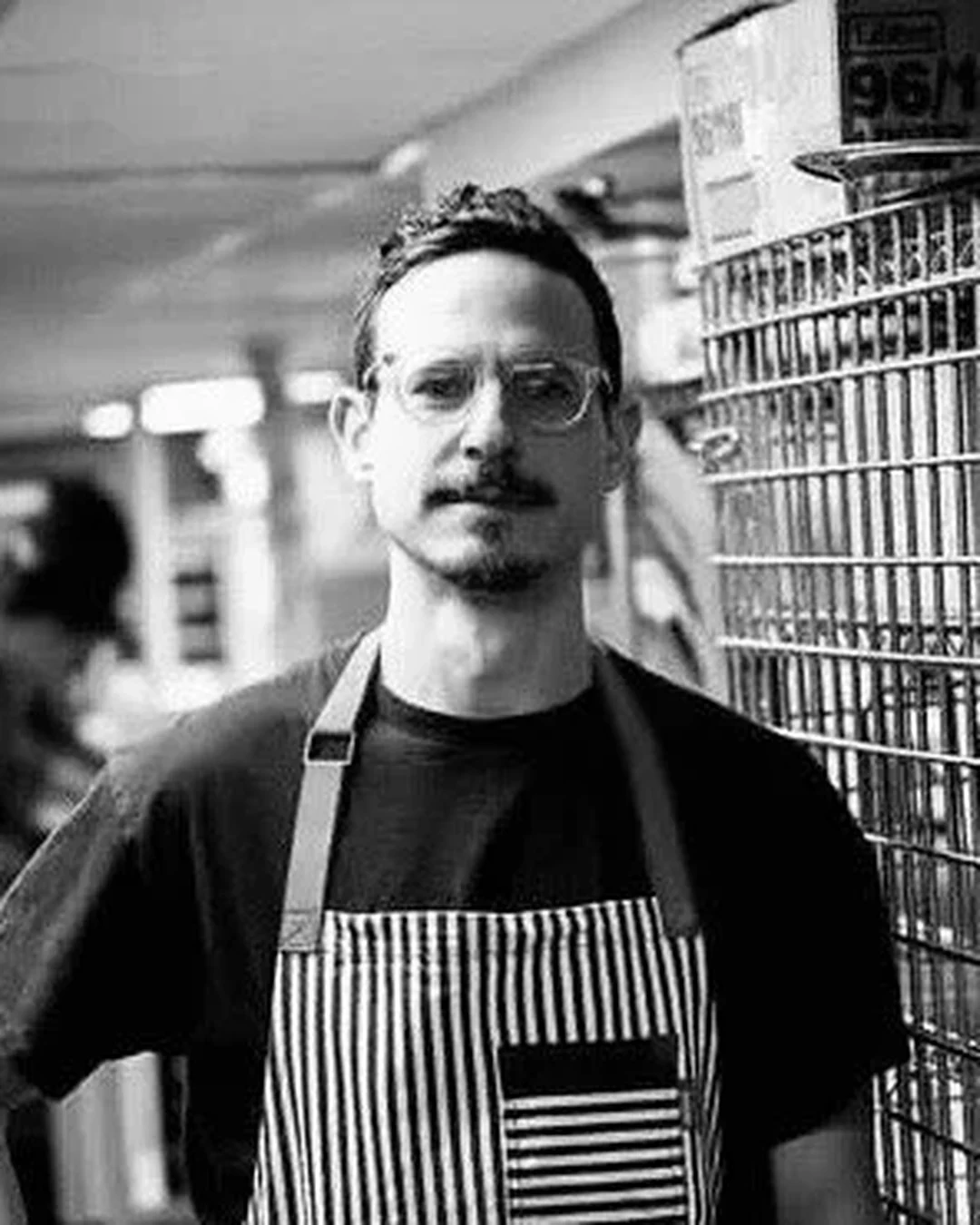
Portrait of Jo Grootaers
i. Biography
Tongeren gives this cooking its working frame: growers close by, seasons that matter, and a kitchen that treats land and water as limits as much as sources. In Jo Grootaers’s work, local products carry the plate, vegetables are given the same technical attention as fish and meat, and function comes before ornament. At Alter, French and Belgian references are held inside a controlled, product-led tasting-menu format; accents from elsewhere are used to sharpen the cooking, not to broaden it for effect. Flavour is the test. Complexity has value only when it improves the bite.
The Sunday letter
Read Made By's new profiles every Sunday.
Meet the chefs, winemakers and sommeliers behind the places we cover. See a sample below before you subscribe.
See a sample of the Sunday emailOne email a week. Unsubscribe from any issue.
The Climb
The current practice is divided across two connected posts: chef of Altermezzo and owner of Alter (since 2023), both in Tongeren. In Jo Grootaers’s progression, the cooking has tightened around product, sauce, vegetables, texture, balance, and restraint before a plate becomes crowded. Control here comes through selection, not accumulation. Grootaers’s cooking is polished but still warm, modern without losing its local footing, and built on the rule that every element has to justify its place. Contrast is used to complete the bite rather than to announce technique. The menu reads as a chain of choices made in service of flavour.
At Work Now
Alter in Tongeren, Belgium, operates with Grootaers as owner, while he continues as chef at Altermezzo. At Alter, the cooking is creative, pure, flavour-focused, and out of the box without relying on excessive products or ingredients. Precision is visible, but the plates are not stiff; elegance and surprise remain tied to the direct pleasure of good ingredients handled carefully. The method is hands-on rather than recipe-bound. Grootaers cooks without recipes, experiments until the intended flavour is reached, uses many techniques, and plays with structures. That way of working puts the burden on touch: how a sauce comes together, how softness is set against crunch, how acidity lifts richness, and how bitterness can sharpen sweetness. Vegetables are given a full place beside fish and meat, including in vegetarian four- or five-course menus inspired by the moment. The ecological standard is stated plainly: "We werken met lekkere en lokale producten en willen dat ecologisch verantwoord doen. We proberen alles te gebruiken en streven naar zero waste." The kitchen standard is equally direct: "In the kitchen we strive to give the best products available with a good sauce and quality vegetables." Together, those two lines set the discipline: pleasure and responsibility are handled as connected parts of the same craft. Alter’s specialties include Berugi beef with Irish Mor oyster, yuzu-kosho and radish. The Alter Experience menu has included hamachi with North Sea crab, melon and elderflower; catch of the day with courgette, verbena and mussels; Breton lobster with cauliflower, gyoza and sea urchin; Aradoa guinea fowl with tomato, tarragon and XO; and apricot with carrot, vadouvan and saffron. The combinations move between land and sea, delicacy and depth, familiar comfort and a more exploratory edge, while keeping balance as the central requirement.
Career - Chef — Altermezzo, Tongeren, Belgium - Owner — Alter, Tongeren, Belgium (2023–present)
Signature
Signature dishes include Berugi beef with Irish Mor oyster.
Honors
Recognition has followed the work: First Michelin star for Altermezzo (2019), JRE Hospitality Excellence Award powered by Mastercard (2026), and Best Young Chef of Flanders (2018). In Jo Grootaers’s case, the honors sit behind a craft language defined by place, economy of gesture, full product use, precise cooking, and service with conviction.
FAQ What recognition has Jo Grootaers received? First Michelin star for Altermezzo (2019). What is Jo Grootaers known for? Creative cuisine.
The Sunday letter
Get the next Made By profile in your inbox.
We send one email every Sunday morning with the people we profiled that week.
See a sample of the Sunday emailOne email a week. Unsubscribe from any issue.