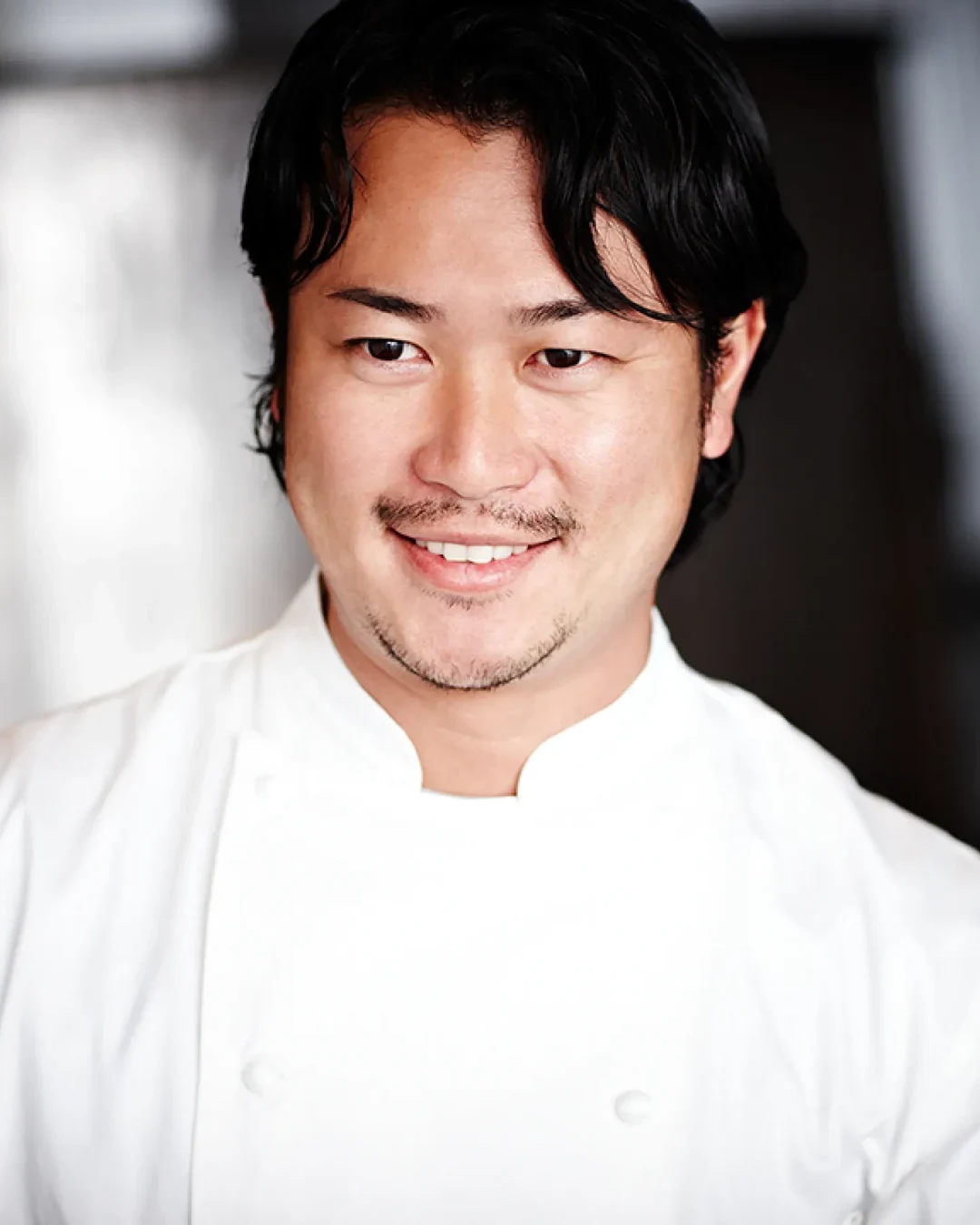
Portrait of Makoto Okuwa
i. Biography
Rice is the base material in Makoto Okuwa’s work, the part that sets the terms before fish, seasoning, temperature, and timing enter the frame. White rice carries one reading of Edomae-style sushi; brown rice carries another. At Makoto Bal Harbour, where Makoto Okuwa serves as Executive Chef, that approach is built grain by grain, with restraint used as a working tool rather than a pose.
The Sunday letter
Read Made By's new profiles every Sunday.
Meet the chefs, winemakers and sommeliers behind the places we cover. See a sample below before you subscribe.
See a sample of the Sunday emailOne email a week. Unsubscribe from any issue.
The Path
Technique and repetition define the line through Makoto Okuwa’s work at Makoto and Love, Makoto. The two names point to range, but the throughline is sushi treated as a living tradition: something maintained through judgment, adjusted through experience, and kept legible even as it changes.
The Work Today
Dear Sushi, one of the named works there, is framed by Makoto Okuwa in direct terms: “This menu honors tradition (old school) and showcases what I've learned along the way (new school) — no need for guests to choose, everyone gets both!” The point is not contrast for its own sake, but a menu structure that holds old and new in the same service. Rice makes that split visible. “We do have a two different type of rice. One is for old school, which is white rice, and one is brown rice, which is for new school.” In Okuwa’s hands, the distinction is plain in language and exact in execution. The two grains mark two registers of sushi, joined by the same discipline and the same aim: to make the difference taste deliberate. Other named works at Love, Makoto include Beloved BBQ and Hiya Izakaya, each part of the Washington, DC project’s broader structure. Together they show a chef working across formats without losing the center of the work.
Career - Chef — Makoto, Panama - Chef — Love, Makoto, Washington, DC
Signature
Makoto's signature dishes include Dear Sushi, Beloved BBQ, Hiya Izakaya, Sashi Sushi + Sake Lounge, and Makoto Ocean. Taken together, these names trace the breadth of his culinary voice: sushi at its most disciplined, and hospitality at its most expansive, with each venue carrying a distinct rhythm while still speaking the same language of care.
In Their Words “This menu honors tradition (old school) and showcases what I've learned along the way (new school) — no need for guests to choose, everyone gets both!” “We do have a two different type of rice. One is for old school, which is white rice, and one is brown rice, which is for new school.”
Acclaim
Okuwa’s public identity rests on Edomae-style sushi and on the named restaurants where that work is visible: Makoto Bal Harbour and Love, Makoto in Washington, DC. His earlier role as head sushi chef at Morimoto in Philadelphia and New York remains a key marker in that progression, linking his apprenticeship to the leadership roles he holds now. It is a career shaped by continuity, where each chapter extends the last and the discipline of rice remains, always, at the center.
FAQ What is Makoto Okuwa's current role? As of 2026, Makoto Okuwa is Executive Chef. What is Makoto Okuwa known for? Edomae-style sushi.
The Sunday letter
Get the next Made By profile in your inbox.
We send one email every Sunday morning with the people we profiled that week.
See a sample of the Sunday emailOne email a week. Unsubscribe from any issue.