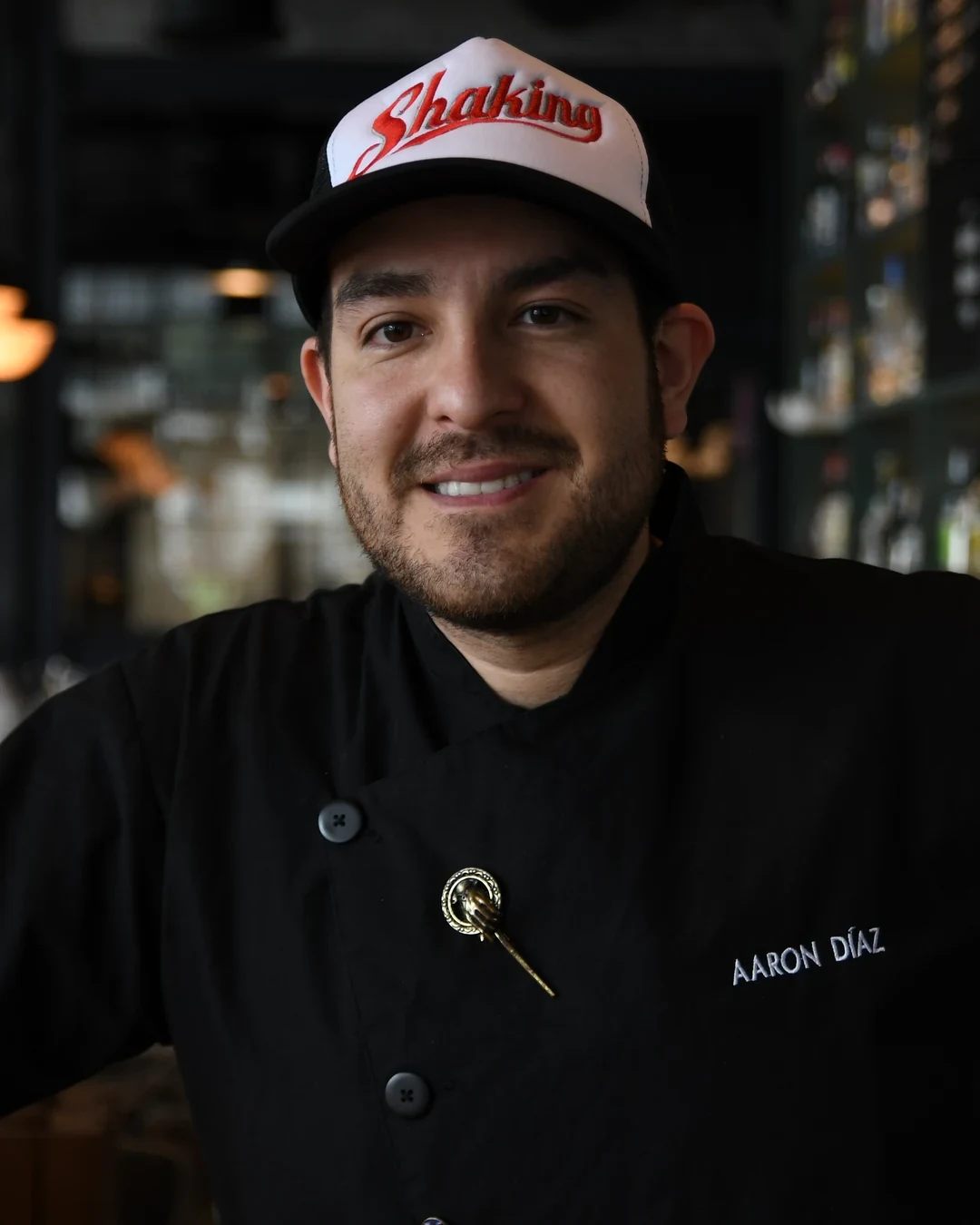
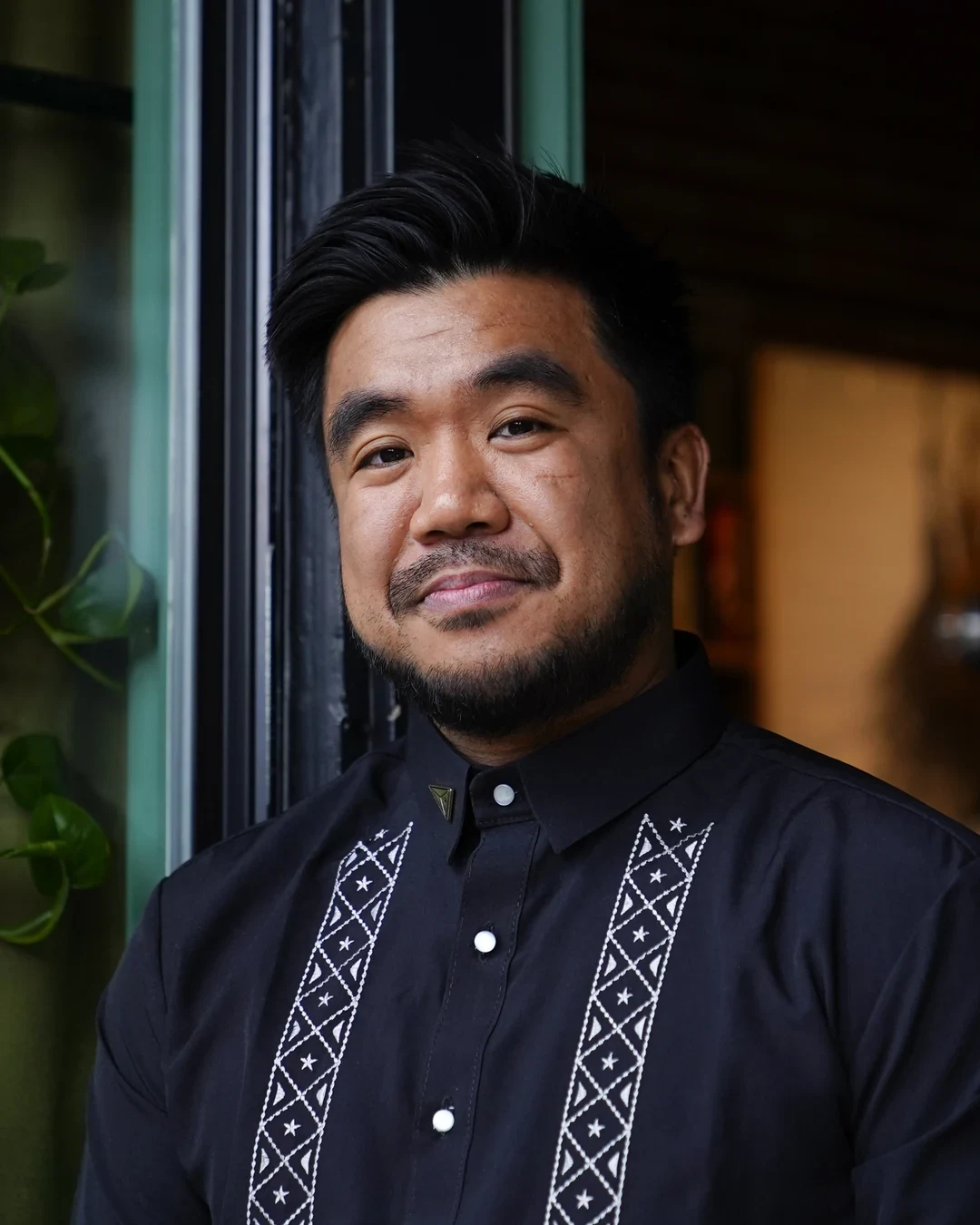
Portrait of Aaron Diaz
i. Biography
Coming Up
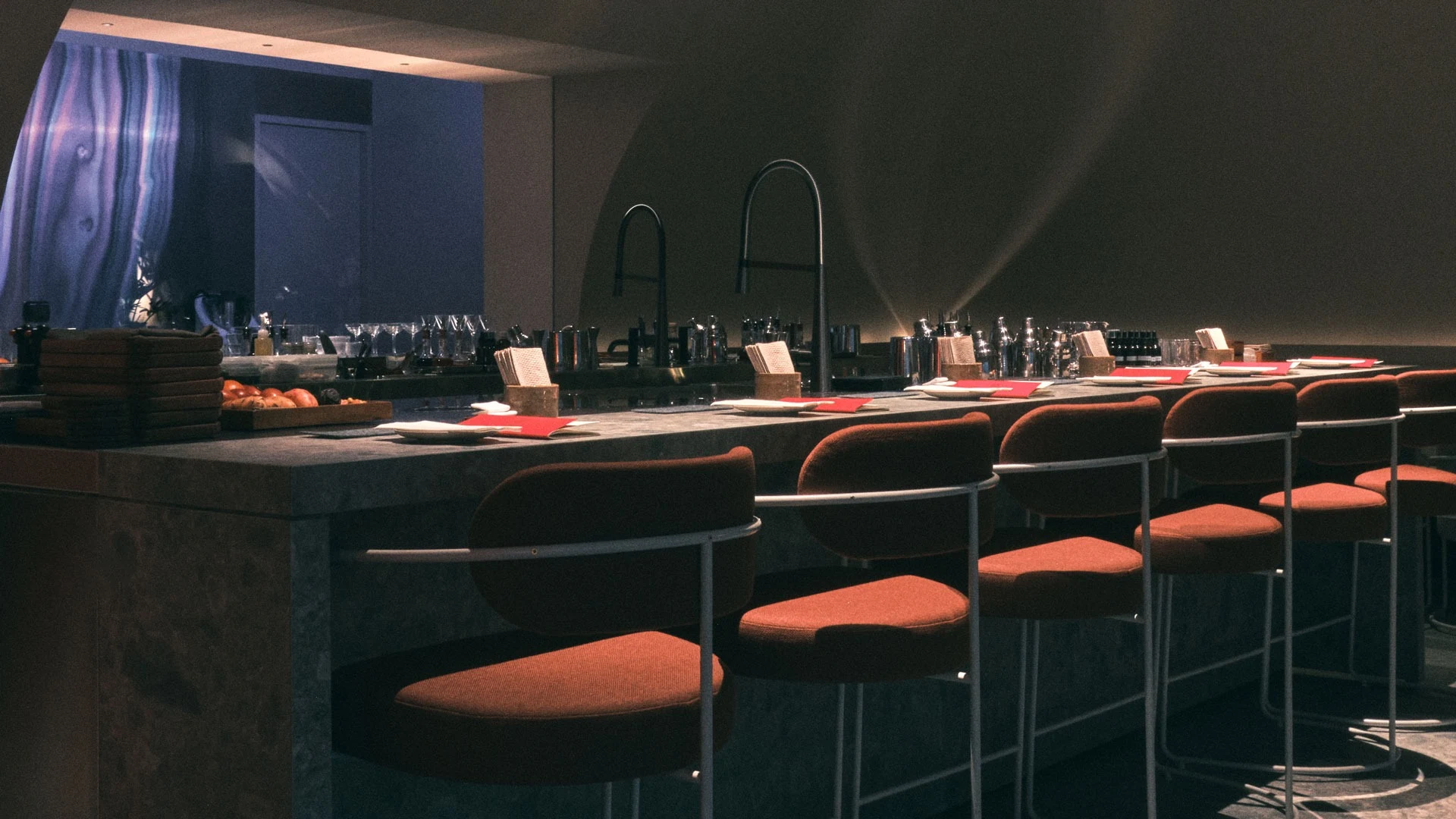
Formal culinary training is the first fixed point in Aaron Diaz’s record. At Le Cordon Bleu, the work would have been about structure, repetition, and the basic discipline that later shows up in Carnaval’s more theatrical frame. That kind of training matters in bars that ask the service to carry part of the concept: the technique has to hold before the presentation can move. Bar work at The Aviary in Chicago (2013–2014) pushed that foundation into a higher-complexity setting. Precision and performance sit close together in that room, and Diaz’s time there reads as a period of tightening both. By the time he became founder at Carnaval in Lima (2018–2026), the practice had taken on a broader scale: more composition, more control of movement, and a clearer sense of how the guest experiences the room as a sequence. At Carnaval in Lima, the bar is organized as a system, not a single counter. Aaron Diaz describes that system in kitchen terms, which tells you where his priorities sit: station work, flow, and the visibility of process. The result is a space built to make service legible, with color and motion carrying the experience while the underlying discipline keeps it coherent.
The Sunday letter
Read Made By's new profiles every Sunday.
Meet the chefs, winemakers and sommeliers behind the places we cover. See a sample below before you subscribe.
See a sample of the Sunday emailOne email a week. Unsubscribe from any issue.
Career - bartender — The Aviary, Chicago (2013–2014) - founder — Carnaval, Lima (2018–2026) Education: Le Cordon Bleu
Signature
Carnaval and Bipolar are the named signatures attached to Aaron Diaz’s work. The pair suggests a practice built on contrast rather than sameness, with the bar using tension, brightness, and restraint as part of its identity. In that sense, the signatures read less like isolated items than as markers of the same operating logic that shapes the room around them.
In Their Words “I designed the entire bar like a kitchen, with four different stations producing different cocktails and at the back of the bar, I created an open ice room.” The bar is as an arrangement of workstations, which is a useful way to read Carnaval. Kitchen logic gives the operation its order: production split across stations, process made visible, and ice handled as a dedicated part of the setup rather than a hidden utility. It is a service model built around structure. “I wanted a bar that was full of color, movement and flavor, reflecting the good and bad, joy and pain—like life’s own carnival.” Color, movement, and flavor are the terms Diaz uses to frame the place, and they point to an experience designed around contrast. The quote makes clear that Carnaval is meant to hold opposing registers at once, with the bar’s physical energy carrying both pleasure and friction. That is the conceptual register beneath the technique.
FAQ What is Aaron Diaz's current role? Where did Aaron Diaz train or study? Aaron Diaz trained at Le Cordon Bleu. What recognition has Aaron Diaz received? The World's 50 Best Bars, rank No. 43 (2023).

The Sunday letter
Get the next Made By profile in your inbox.
We send one email every Sunday morning with the people we profiled that week.
See a sample of the Sunday emailOne email a week. Unsubscribe from any issue.