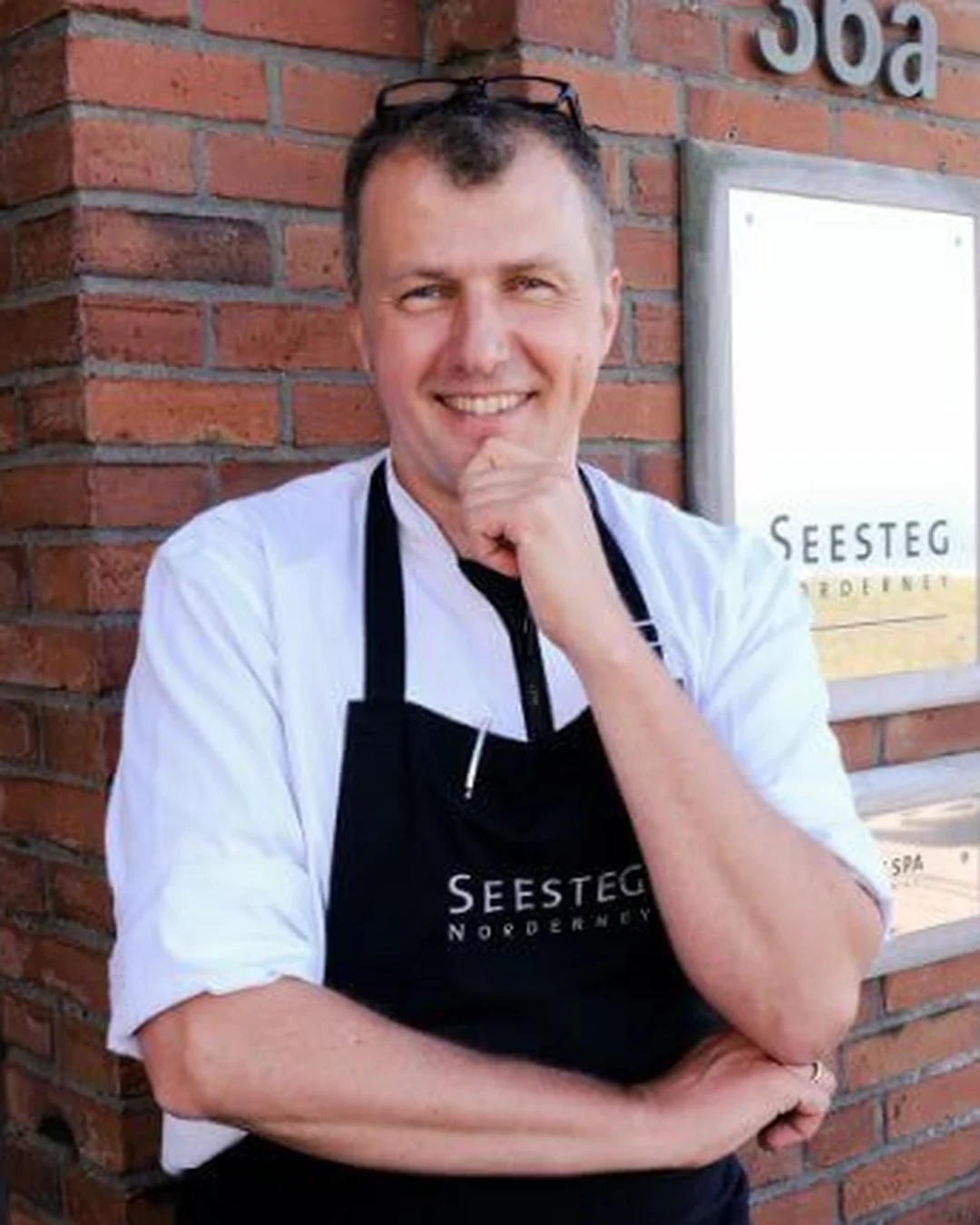
Portrait of Markus Kebschull
i. Biography
German cooking, in Markus Kebschull’s case, is built through repeated service in city, hotel, and coastal kitchens rather than through a single defining break. From Bad Mergentheim to Restaurant Seesteg on Norderney, the record points to a chef formed by discipline, product, and range. At Seesteg, where Kebschull works as chef de cuisine and head chef, precision is not treated as an end in itself; the cooking is framed around enjoyment and the product, keeping pleasure tied to execution.
The Sunday letter
Read Made By's new profiles every Sunday.
Meet the chefs, winemakers and sommeliers behind the places we cover. See a sample below before you subscribe.
See a sample of the Sunday emailOne email a week. Unsubscribe from any issue.
Career Arc
Professional rhythm is learned by station, repetition, and the standards of the room. Kebschull’s early work as cook at Restaurant Humperdinck in Frankfurt am Main, Germany (1988–1989), then at Weinhaus Anker in Marktheidenfeld, Germany (1989–1991), and Restaurant Francaise, Steigenberger Frankfurter Hof in Frankfurt am Main, Germany (1991–1992), set the base: disciplined kitchen practice across different houses before any head-chef post. Range in a cook’s formation often comes from changing the expectations around service, taste, and hospitality. The next posts took Kebschull to Hotel Adula in Flims, Switzerland (1992–1994), and Slieve Russell Hotel in Ballyconnell, Ireland (1994–1995). The value in that sequence is not novelty; it is exposure to different operating cultures while keeping the craft anchored in daily execution. Long tenure is one of the clearest measures of kitchen command. Kebschull’s period as head chef at Restaurant Sterneck, Badhotel Sternhagen in Cuxhaven, Germany (1995–2012), shows sustained responsibility for standards over many years. Since 2012, the same long-form discipline has continued at Restaurant Seesteg, where the setting of Norderney and the demands of contemporary fine dining shape the work.
Current Practice
Modern Cuisine and International cuisine at Restaurant Seesteg sit alongside modern gourmet cuisine and extravagant haute cuisine. In practice, that description gives the kitchen a broad register: contemporary technique, international reference points, and a heightened dining format working within the same house. Kebschull’s role as head chef and chef de cuisine since 2012 places him inside that range as the organizing hand, not as a fixed style label. Enjoyment and the product are the stated center of the cooking. For a fine-dining kitchen, that pairing matters: enjoyment keeps the guest experience in view, while product keeps the plate from becoming only technique or display. Even when the language is haute cuisine, the center remains ingredient-led. Creative independence inside a brigade is a craft decision as much as a management one. At Restaurant Seesteg, Kebschull uses the kitchen team to foster that independence among employees, asking cooks to build judgment rather than only follow instruction. The restaurant therefore functions not only as the site of his cooking, but as a working framework in which younger cooks learn how to think under demanding conditions.
Career - Head chef — Restaurant Seesteg, Norderney, Germany (2012–present) - Cook — Restaurant Humperdinck, Frankfurt am Main, Germany (1988–1989) - Cook — Weinhaus Anker, Marktheidenfeld, Germany (1989–1991) - Cook — Restaurant Francaise, Steigenberger Frankfurter Hof, Frankfurt am Main, Germany (1991–1992) - Cook — Hotel Adula, Flims, Switzerland (1992–1994) - Cook — Slieve Russell Hotel, Ballyconnell, Ireland (1994–1995) - Head chef — Restaurant Sterneck, Badhotel Sternhagen, Cuxhaven, Germany (1995–2012)
Awards and Standing
Recognition in this record is tied to sustained performance: Michelin Guide: second star (2010), one star (2001), one star, and Gault Millau: 16 points (2011). For Kebschull, those markers sit within a longer pattern of duration, consistency, and product-focused cooking at a high level.
FAQ What is Markus Kebschull's current role? Markus Kebschull is küchenchef at Restaurant Seesteg. Where did Markus Kebschull work before? Earlier in their career, Markus Kebschull worked at Restaurant Humper
The Sunday letter
Get the next Made By profile in your inbox.
We send one email every Sunday morning with the people we profiled that week.
See a sample of the Sunday emailOne email a week. Unsubscribe from any issue.