Winemaker
Maurizio Comitini
- Discipline
- Winemaker
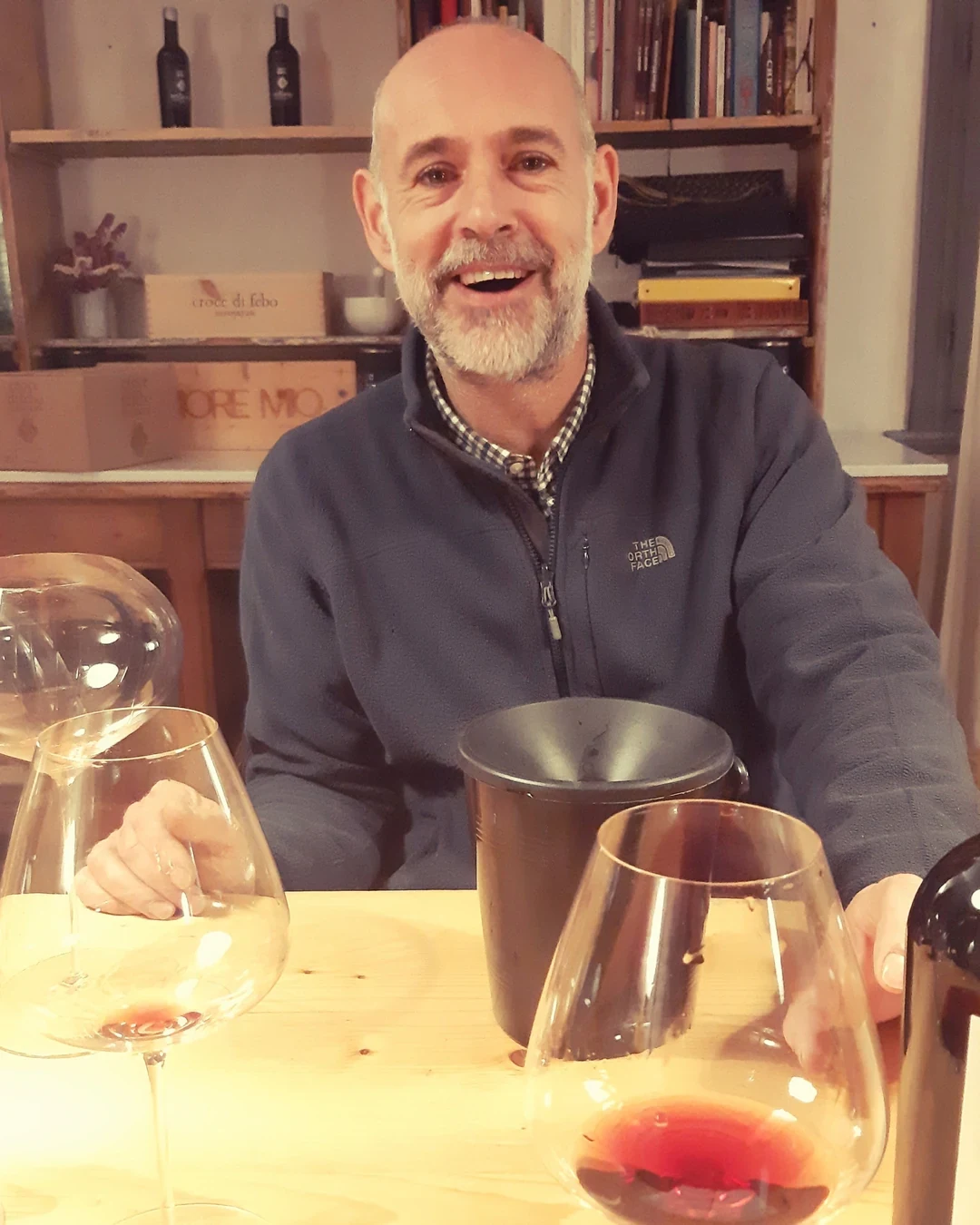
i. Biography
Since 1995, Maurizio Comitini has worked as winemaker at Croce di Febo (Montepulciano, Italy), a formation rooted less in classroom genealogy than in land rediscovered. The estate was first intended as an agritourism project, until the discovery that its sites had previously held productive vineyards turned the work back toward wine, continuity, and the restarting of production.
The Training Comitini’s training begins with that reversal: a project imagined for hospitality became a winery because the ground itself carried a prior vineyard life. In a region where Sangiovese carries long memory, his path at the estate has been shaped by parcels, harvest decisions, cellar restraint, and the discipline of letting a place speak in its own register. He gives the winery’s emergence its own date and cadence: "The Croce di Febo Winery was born in the mid-2000s." The line places his work in two times at once — the relationship that began in 1995, and the later moment when the estate’s identity as a winery took form. His standard around bottling is blunt: "I would not bottle a wine like that!" In that refusal sits a winemaker’s inheritance: not a named master, but a threshold, a decision, a willingness to leave behind what does not meet the work.
The Lineage The estate has been certified organic since 2018, a credential that fits a broader approach described as artisanal winemaking while limiting chemical and synthetic products. The aim is sincere expression of vintage and terroir, with the year and the site treated as forces to be translated rather than corrected. Harvest comes from 10 parcels. The clusters are not stomped, and the cellar works always with whole cluster fruit, a choice that keeps structure, stems, skins, and berries in the conversation from the beginning. Fermentation proceeds with indigenous yeasts. Vinification moves through several kinds of vessels, including French, Hungarian, and Italian oak barrels, concrete eggs, and tanks, giving the wines different materials and tempos without reducing the cellar to a single method. Sulfur is handled sparingly and at a defined point: a small amount of SO2 is added after malolactic fermentation and before racking. Most of those sulfites drop into the lees and are left behind, making the gesture one of control without excess. Even bottling follows a larger rhythm, carried out in accordance with the cycles of the moon. The resulting wines are described as precise, balanced, elegant, fresh, and typical of their place.
The Table Comitini’s specialty is Sangiovese-based wine from Montepulciano, including Vino Nobile di Montepulciano. That focus ties him to one of Tuscany’s most specific red-wine identities, where place is not an accessory to the grape but part of its meaning. Somaio gives another angle on the estate’s work. It is a macerated white wine made from Trebbiano, Malvasia, and San Colombano, carrying skin contact into a white-wine frame and widening the conversation beyond Sangiovese while staying within the same parcel-minded cellar. What connects the wines is not a decorative idea of tradition, but a sequence of choices: organic farming, whole clusters, native fermentations, mixed vessels, restrained SO2, lunar bottling, and a desire for vintage and terroir to remain legible. In Comitini’s hands, lineage is not only who teaches whom; it is what a site asks after it has been found again.
FAQ What tradition or house shaped Maurizio Comitini? The shaping house is the Montepulciano estate where he has worked since 1995, built from sites that had previously held productive vineyards. Who has Maurizio Comitini mentored? No named protégé is associated with Maurizio Comitini. Who did Maurizio Comitini train under? No named teacher is associated with Maurizio Comitini’s training.


