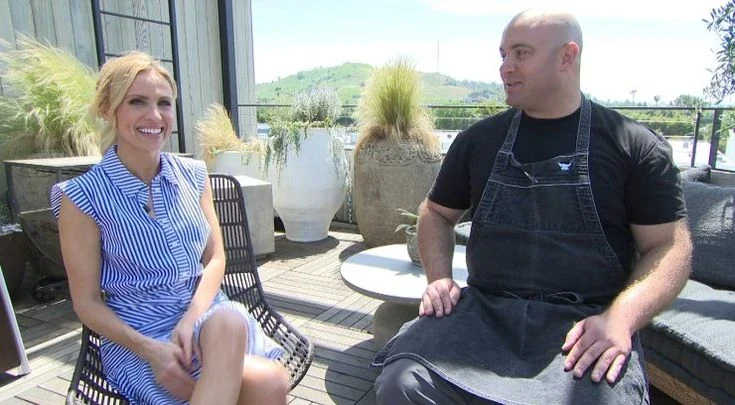
Portrait of Michael Williams
i. Biography
Michael Williams is a chef whose work is shaped by formal training, restaurant rigor, coastal product and handwork. He trained at Le Cordon Bleu - San Francisco, where he built a base in technique, repetition and the working habits required before food reaches the dining room. Restaurant work then added pace, pressure, station discipline and a practical understanding of how cooking changes when it is tied to service. His career includes public-service and independent settings that gave the work a direct, practical shape. At Our Place dining room in Victoria, he served as chef for the day / volunteer chef, a role defined by immediacy and communal dining. At Urban Forage, his self-employed chef and catering business owner role placed menu, execution and hospitality under one roof. He also worked as Executive Chef at Margot and as chef / operator at Urban Forage at The Atrium in downtown Victoria, where authorship had to operate within service constraints. He is currently Private Chef. At Margot, his cooking worked in a Spanish and Italian register. The menu included handmade pastas, grilled meats, seafood, lunchtime focaccia sandwiches and dinners refocused on vegetables. The cooking was tactile and heat-led. Dough was stretched and folded, fish was cooked over fire, greens were sharpened, meat was marked on the grill, and Southern Italian condiments added heat and sweetness inside a broader Mediterranean frame. Handmade pastas carried softness and structure, while grilled meats and seafood relied on smoke, char and clear product. Focaccia sandwiches brought bread, filling and appetite into a lunch rhythm, and the vegetable focus at dinner shifted the work toward brightness, texture and restraint. His signature dishes reflect that same range of handwork, grill work, raw preparation and fried texture. They include culurgiones with ‘nduja, arugula pesto and Calabrian honey, whole grilled sea bream, prime rib-eye, Kampachi crudo and fried chicken with Calabrian-chili honey. Culurgiones with ‘nduja, arugula pesto and Calabrian honey placed filled pasta alongside richness, bitterness, chile and sweetness. Whole grilled sea bream depended on structure, skin, bone, salt and flame. Prime rib-eye emphasized grilled meat, while Kampachi crudo relied on freshness, cutting and restraint. Fried chicken with Calabrian-chili honey brought crunch, heat and sweetness into the same register. Juliet in Culver City, Los Angeles, showed a different seasonal register: bright, French-inspired, seafood-forward and focused on ingredients and seafood from Southern California. Set beside the Spanish- and Italian-influenced work at Margot, it reads less as allegiance to one template than as a response to product and coastline. The continuity is in the handling. The coastline changes and the emphasis turns toward Southern California seafood and French-inspired brightness, but the kitchen grammar remains clear: disciplined technique, clean ingredients and plates carried by fire, acid, fat and texture rather than excess construction.
The Sunday letter
Read Made By's new profiles every Sunday.
Meet the chefs, winemakers and sommeliers behind the places we cover. See a sample below before you subscribe.
See a sample of the Sunday emailOne email a week. Unsubscribe from any issue.

The Sunday letter
Get the next Made By profile in your inbox.
We send one email every Sunday morning with the people we profiled that week.
See a sample of the Sunday emailOne email a week. Unsubscribe from any issue.