Chocolatier
Mott Green
- Discipline
- Chocolatier
i. Biography
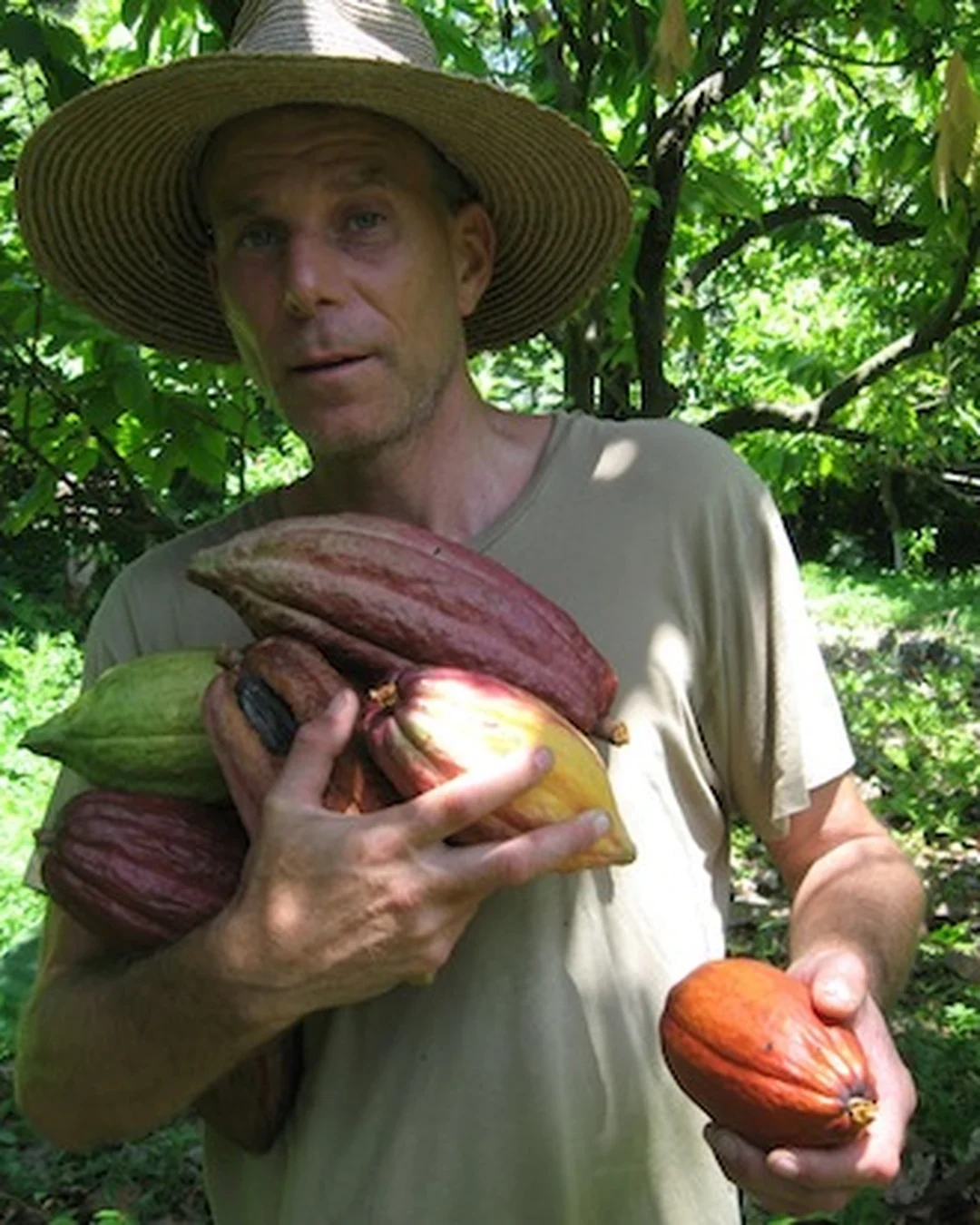
Tree-to-bar chocolate in Hermitage, Grenada, was treated as a production system, not a label. With Mott Green’s founding of the Grenada Chocolate Company in 1999, cocoa growing, fermentation, drying, machinery, village labor, and finished bars stayed in close working range. Born on April 15, 1966, the American founder became known for a cooperative model built to make great chocolate at a decent price point while helping put Grenada on the map as a fine chocolate destination. Place functioned as part of the method. The work stayed near the trees, the drying cocoa, the production problems, and the people handling the crop. In that arrangement, chocolate could carry the character of Grenada because the distance between farm, factory, and bar was deliberately kept short.
Coming Up
Formal study preceded the cocoa work: Mott Green trained at Curtis High School and University of Pennsylvania (1988). That academic base came before a working model that joined craft, community, cacao, agriculture, enterprise, and production systems rather than treating them as separate concerns. The main chapter was founder at Grenada Chocolate Company in Grenada (1999–2013). In Hermitage, the work centered on making chocolate at its source and building the company around the people and processes required to do that. Its identity came from cocoa grown, handled, transformed, and valued within the same community.
Where They Are Now
Tree-to-bar practice at Grenada Chocolate Company was literal: the company grew cocoa as a group, fermented and dried the cocoa, and made chocolate at its own village factory near the farms. In trade terms, the phrase carried material weight here: pods, fermentation, drying, equipment, staffing, and finished bars all remained inside a small-scale operation rooted in place. The cooperative structure was part of the production method, not a marketing layer. Green described it plainly: "We do our own fermenting and drying of the cocoa we grow as a group. And we have our own factory with separate staff and we all run the whole operation from tree to bar, cooperatively." The operating choices extended the same logic across labor, energy, and distribution. The company used solar power, employee shareholding, and small-scale antique equipment in Hermitage; it also used solar-powered machinery, fair wages, bicycle delivery, and sailing-ship transport to reduce carbon footprint. The bar was the finished product, but the system around it was also part of the craft: rural economy, local handling, low-impact movement, and shared production. Two bars show the range of the work.
Career - Founder — Grenada Chocolate Company, Grenada (1999–2013) Education: Curtis High School; University of Pennsylvania
Signature
Mott's signature chocolates include Salty-Licious Basic and 100% Cocoa. The pair marks two ends of the same practice: one direct and approachable, the other stripped back to cocoa itself, both tied to chocolate made close to where the crop was grown.
In Their Words “By living in Grenada and experimenting with living in the woods and growing food in the Caribbean hills. I was surrounded by cocoa trees and fell in love with the tree and the way people use it in a micro-way.” “We do our own fermenting and drying of the cocoa we grow as a group. And we have our own factory with separate staff and we all run the whole operation from tree to bar, cooperatively.”
Honors
The honors attached to Mott Green’s work recognized production systems as well as bars: Recognition for contribution to sustainable growth of rural economies, pioneering agritourism, environmental conservation, and promotion of organic farming (2011) and Silver medal for Grenada dark chocolate bars (2008).
FAQ Where did Mott Green train or study? Mott Green trained at Curtis High School and University of Pennsylvania. What recognition has Mott Green received? Recognition for contribution to sustainable growth of rural economies, pioneering agritourism, en


