Winemaker
Patrick Bonnefond
- Discipline
- Winemaker
i. Biography
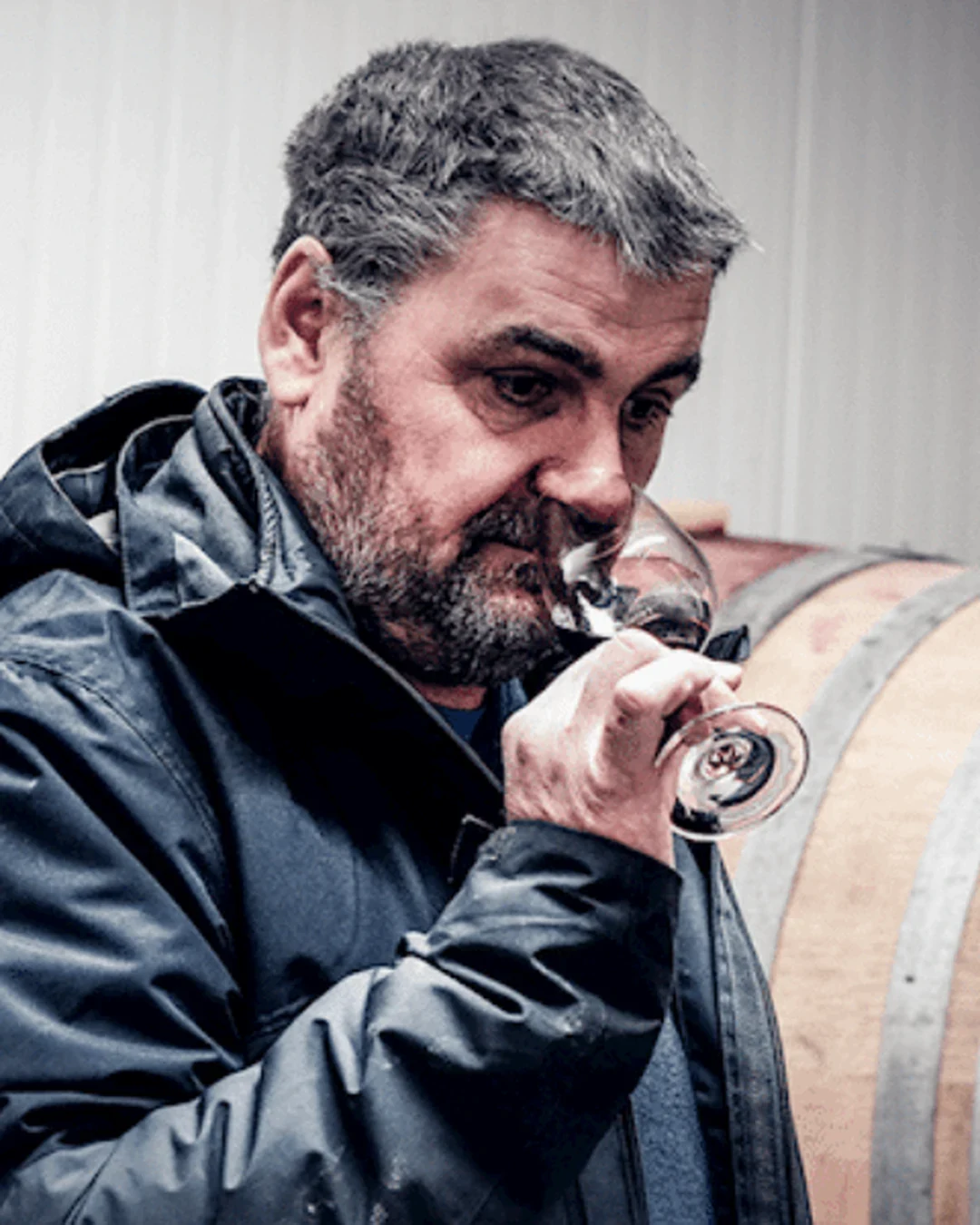
Since 1990, Patrick Bonnefond has managed Domaine Bonnefond in Ampuis, France, carrying forward a family domaine rooted for multiple generations in Côte-Rôtie viticulture. His formation is not framed by a distant school or outside house, but by the old family pattern of vines, merchants, cellar work, and the decisive turn he and Christophe Bonnefond made when they began bottling under their own label.
The Training Before the Bonnefond name appeared on its own bottles, the family sold grapes to négociant merchants, a route that tied the domaine to the broader commercial life of the Northern Rhône. In 1990, Patrick and Christophe Bonnefond took over and began bottling under their own label, changing the estate’s public identity from grape grower to producer. That change is the central apprenticeship in his story: a family inheritance converted into a bottled signature. The vineyards supplied the raw continuity, while the cellar gave the brothers a way to define the wines in their own name. Since 2019, Patrick has co-managed Domaine Patrick et Christophe Bonnefond in Ampuis, France, with Christophe Bonnefond and Léa Bonnefond. The arrangement keeps the domaine’s work inside a family structure, with the next named generation present in the running of the estate.
The Lineage The house style follows a traditional Northern Rhône approach: long macerations for red wines and measured barrel ageing, typically in 400-liter barrels, building texture without losing freshness. Syrah is the central specialty, with Viognier also part of the estate’s vocabulary. In the cellar, the work is compact and hands-on, arranged for long vat work on Syrah and patient élevage in large-format barrels. Vinification takes place in stainless steel tanks, while malolactic fermentation is divided between barrel and tank, with 40% carried out in barrel. Ripeness is treated as a defining choice. Bonnefond harvests late for maximum maturity, destems the entire crop, and can blend 8% to 10% Viognier with Syrah for the top wines, a practice that links grape handling directly to texture and aromatic lift.
The Table Côte Rozier is one of the estate’s flagship single-vineyard cuvées, drawn from 0.5 hectare in the northern Côte Brune sector on schist with iron oxide. Its place in the range speaks to a precise parcel identity rather than a broad appellation blend. Les Rochains is the other flagship single-vineyard cuvée alongside Côte Rozier, coming from 1 hectare in the northern Côte Brune sector on schist with iron oxide. Together, the two wines give the domaine a pair of named Côte-Rôtie reference points. Colline de Couzou plays a different role as the accessible Côte-Rôtie cuvée, blending fruit from multiple parcels rather than a single lieu-dit. Condrieu Côte Châtillon is the white-wine flagship, drawn from the 1-hectare Condrieu holding on the broader Côte Châtillon sector. Across those wines, the family story is practical rather than ornamental: late picking, full destemming, stainless steel vinification, partial barrel malolactic fermentation, and patient ageing. From the 1990 decision to bottle independently to the 2019 co-management with Christophe and Léa, Patrick Bonnefond’s work remains tied to Ampuis, Côte-Rôtie, Syrah, Viognier, and a domaine name carried from one generation into the next.
FAQ What tradition or house shaped Patrick Bonnefond? Patrick Bonnefond was shaped by a family domaine in Ampuis with roots in Côte-Rôtie viticulture for multiple generations. Who has Patrick Bonnefond mentored? The family line now includes work beside Christophe Bonnefond and Léa Bonnefond, who have co-managed Domaine Patrick et Christophe Bonnefond with him since 2019. Who did Patrick Bonnefond train under? His formation runs through the family domaine itself, rooted for multiple generations in Côte-Rôtie viticulture.


