i. Biography
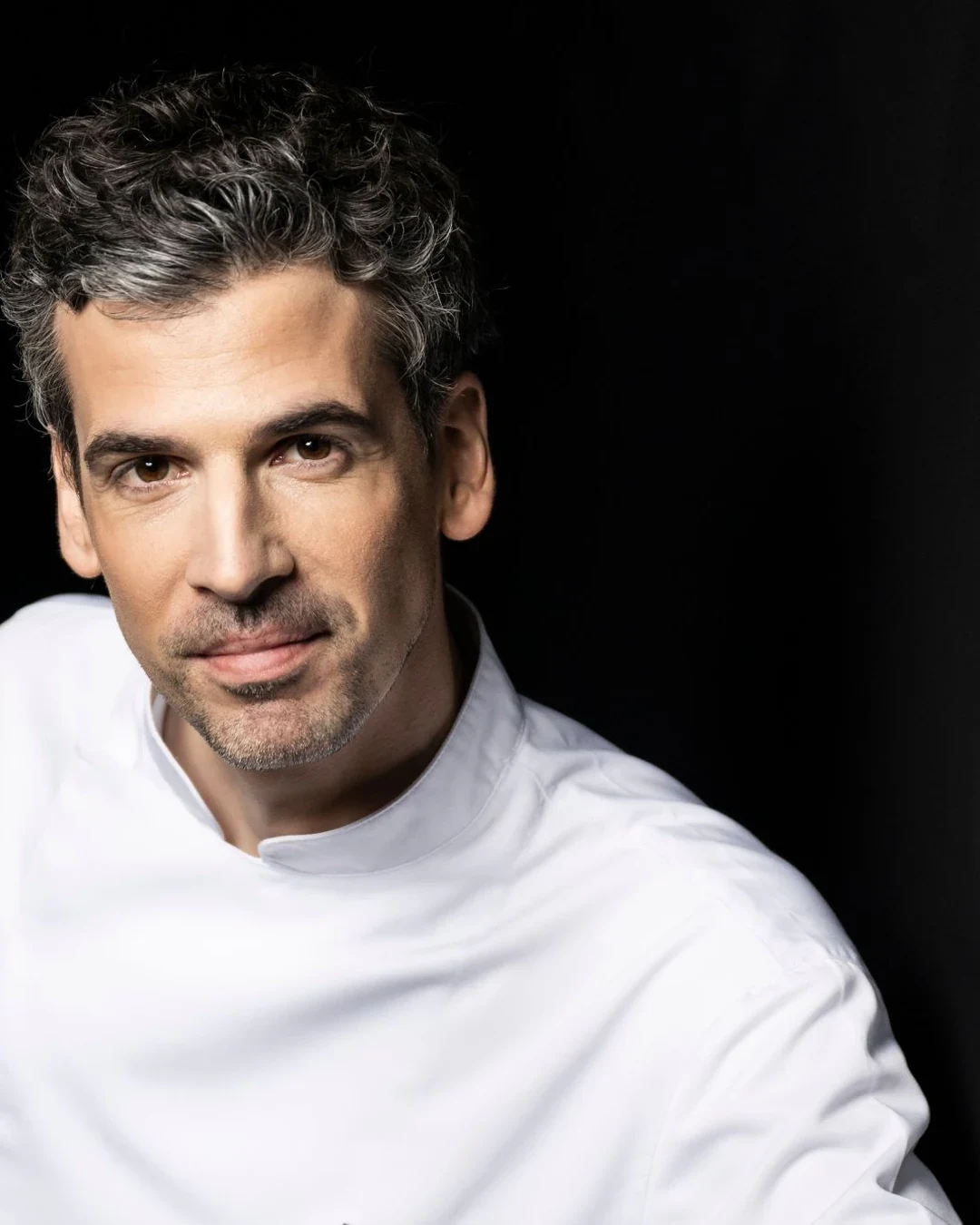
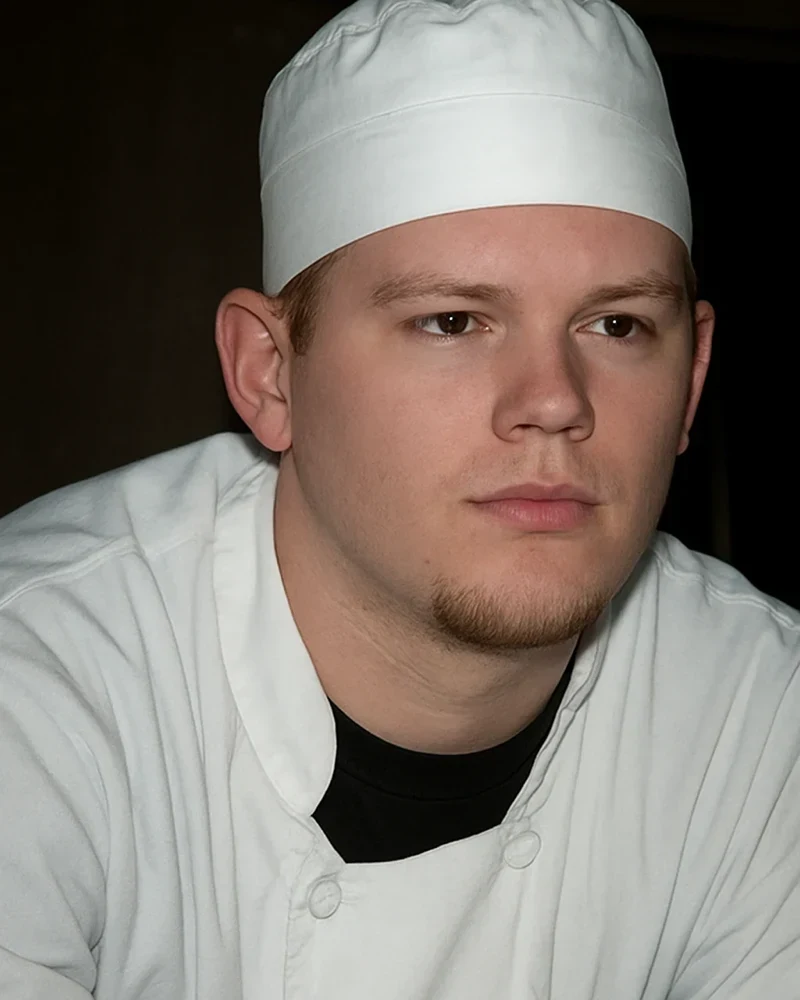
Philip Chronopoulos cooks with a disciplined calm that reads as technique, but also as recall. The line he draws between French structure and Mediterranean brightness is visible in the plate: olive oil, citrus, herbs, brine, and preserved elements used not as garnish, but as part of the grammar of the dish. The clearest expression of that approach is the egg of my childhood, where a fried ravioli puff, tomato purée marinated in honey and Cajun spices, and a soft yolk are assembled with enough control to keep the memory legible. The dish reaches back to his grandfather’s tomato, feta, and potato eggs, translated into a more contemporary register without losing the family reference that anchors it.
Coming Up
Rigor comes through clearly in the training path. Paul Bocuse School gave Chronopoulos a grounding associated with discipline and craft, and the next kitchens sharpened that into practice. At L’Atelier de Joël Robuchon in London (2006), he was part of the opening team, where service, timing, and detail are tested from the outset. The following year, he joined Alain Passard's team at L'Arpège in Paris (2007), moving into another exacting environment and extending the same focus on balance and control. Those early posts did not need long duration to matter; in kitchens like these, the work is dense, and the lessons stay. Philip was chef of Restaurant du Palais Royal until its 2025 closure. The food there is built on order, measured flavor, and a refusal to overstate what the ingredients can already do.
Where They Are Now
French cuisine with a Mediterranean touch is not a slogan here; it is the working frame of the plate. The French side supplies structure, precision, and economy. The Mediterranean side brings olive oil, citrus, herbs, and a preference for brightness that lifts richer elements rather than masking them. Chronopoulos uses memory the same way he uses seasoning: as something integrated into the dish’s architecture. That keeps the food from feeling academic or closed off. It remains composed, but it also keeps a clear line back to the family table that informs it.
Signature
Philip's signature dishes include the egg of my childhood, Cod confit with argan oil, preserved lemon and baby spinach leaves, and Crispy galette with poivrade artichokes and marinated radicchio. These plates show range without changing the core method. The egg of my childhood is the most personal of the three, with family memory built into the composition. Cod confit with argan oil, preserved lemon and baby spinach leaves shows how he handles contrast: richness, acidity, and green lift kept in balance. Crispy galette with poivrade artichokes and marinated radicchio turns to texture and bitterness, using crispness and marination to keep the plate active. Across the set, the same priorities hold: French technique, Mediterranean clarity, and ingredients allowed to stay distinct while still reading as one dish.
Profile updated July 2026
FAQ
Asked of Philip
Where did Philip Chronopoulos train or study?
Philip Chronopoulos trained at Paul Bocuse School.
What recognition has Philip Chronopoulos received?
second star (2022).