Chef
Stefano Catenacci
- Discipline
- Chef
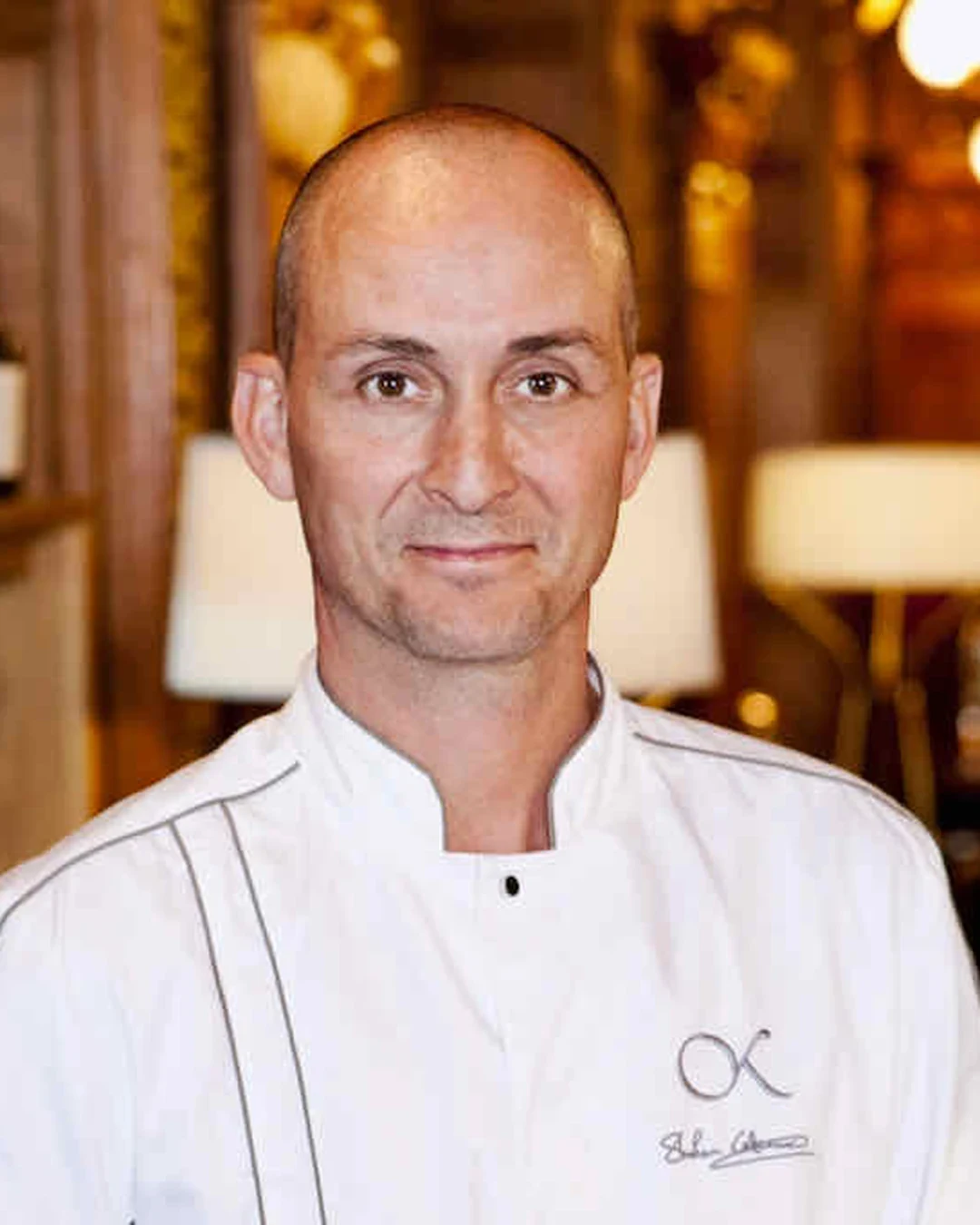
i. Biography
“To know that communication in the kitchen is 100 percent, despite the stress and many tasks, while the dining room is filled with happy and satisfied guests.” For Stefano Catenacci, Executive Chef på Bakfickan i Stockholm, service is measured in the pass between kitchen and dining room as much as at the stove. The craft depends on timing, clean signals, and a room that receives the work without seeing the pressure behind it. The range of the work runs from Traditional Swedish husmanskost to royal banquets, from large gala dinners to a daily format where simplicity leaves little cover for weak execution. In Catenacci’s register, unpretentious cooking still requires exactness: the ingredient has to read clearly, the technique has to support rather than announce itself, and the plate has to arrive as if the work behind it were inevitable.
The Path
Formal kitchen formation took Stefano Catenacci through Restaurant L'Gualtiero Marchesi Di Albereta (1994), Carré des Feuillants (1995), and Le Divellec (1995). Those rooms represent a training ground in rhythm, hierarchy, station discipline, and detail: the daily mechanics by which polish is built, corrected, and carried to service. Stockholm became the long field of practice. Work as cook at Caina led to Head Chef / chef des cuisines at Operakällaren in Stockholm, Sweden (1996–2020), a progression from station execution to responsibility for teams, standards, guests, and occasion. In that setting, refinement had to meet the practical demands of service and the expectations attached to a formal dining room. Ownership, ceremony, and daily restaurant work now sit inside the same professional frame: Stefano Catenacci is co-owner of Nobis AB (since 2001), responsible for royal banquets and gala dinners of Stockholm Palace / Royal Court, and Executive Chef of Bakfickan. The scale changes; the requirement does not. Hospitality has to feel composed, whether the room is familiar or formal.
The Work Today
Traditional Swedish husmanskost defines the line at Bakfickan in Stockholm, where Stefano Catenacci works as Executive Chef. The restaurant’s format is described as unpretentious, but the execution depends on precision: Nordic ingredient discipline, everyday accessibility, and enough restraint to let the dish remain itself. Everyday food is demanding because it cannot hide behind spectacle. Recognition, warmth, and clarity are part of the guest’s expectation; concentration is the kitchen’s answer. In this kind of cooking, tradition has to stay present without becoming heavy, and exactness has to stay useful rather than distant. Royal banquet work tests the same fundamentals at another scale. On 19 June 2010, Stefano Catenacci was appointed responsible for the Royal wedding banquet dinner for Crown Princess Victoria and Daniel Westling at Royal Palace in Stockholm. That assignment placed planning, timing, trust, and calm under public and ceremonial pressure. Before that dinner, he described the basis of the appointment plainly: “I believe that we were chosen because we have had a long and solid relationship with the Royal Court during the last 35 years, and I have personally been responsible for all Royal banquets during the last 13 years.” He added: “This Royal wedding dinner will be one of the most important dinners that I will ever do.” Continuity is a working credential in banquet cookery. Trust is built service by service, through fulfilled commitments under pressure. In Catenacci’s work, the royal banquet and the accessible husmanskost kitchen depend on the same base conditions: communication, presence, timing, and responsibility.
In Their Words “I believe that we were chosen because we have had a long and solid relationship with the Royal Court during the last 35 years, and I have personally been responsible for all Royal banquets during the last 13 years.” “I was very young when I decided to follow in the footsteps of my father. When I was 14 years old I began to work as a coo


