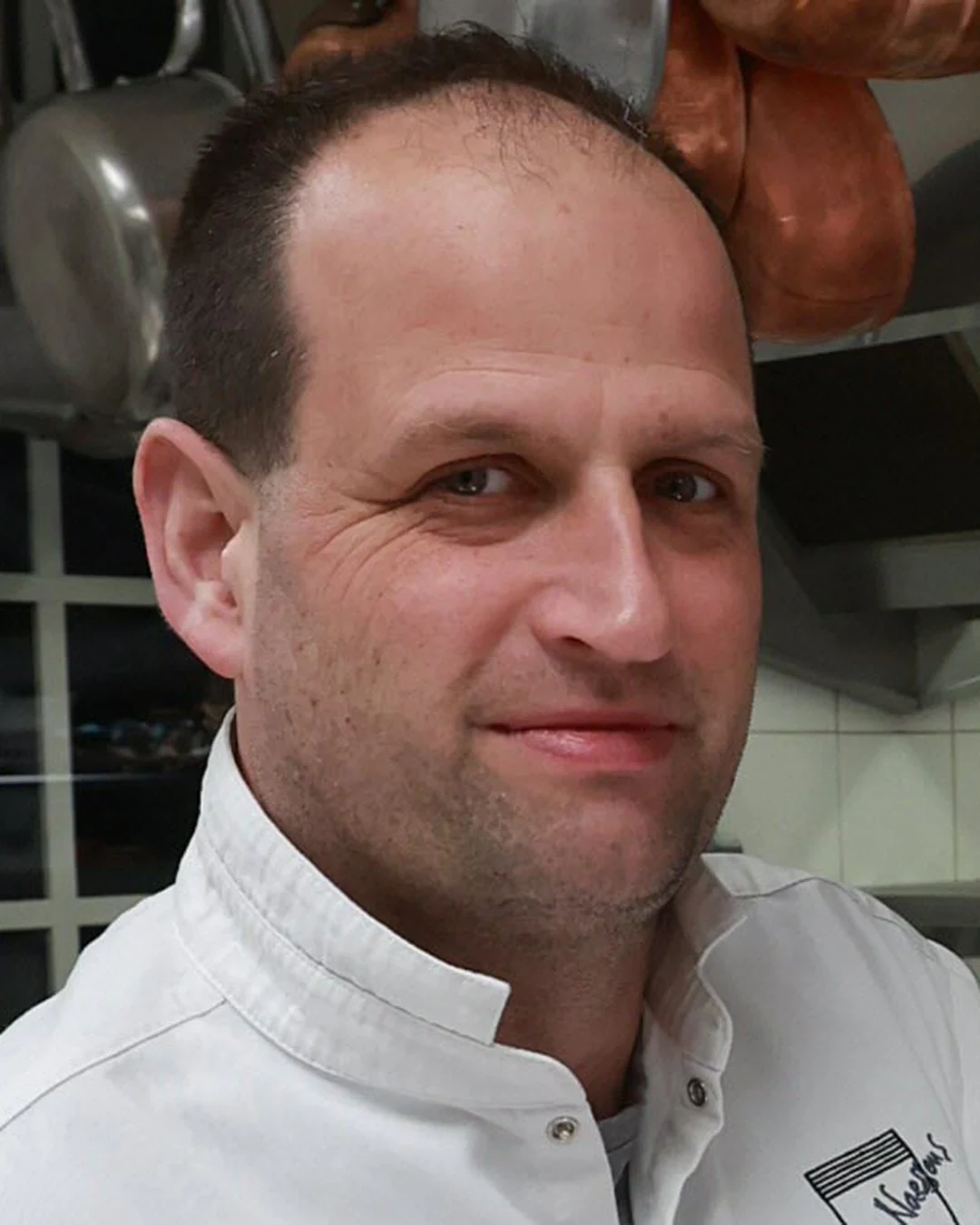
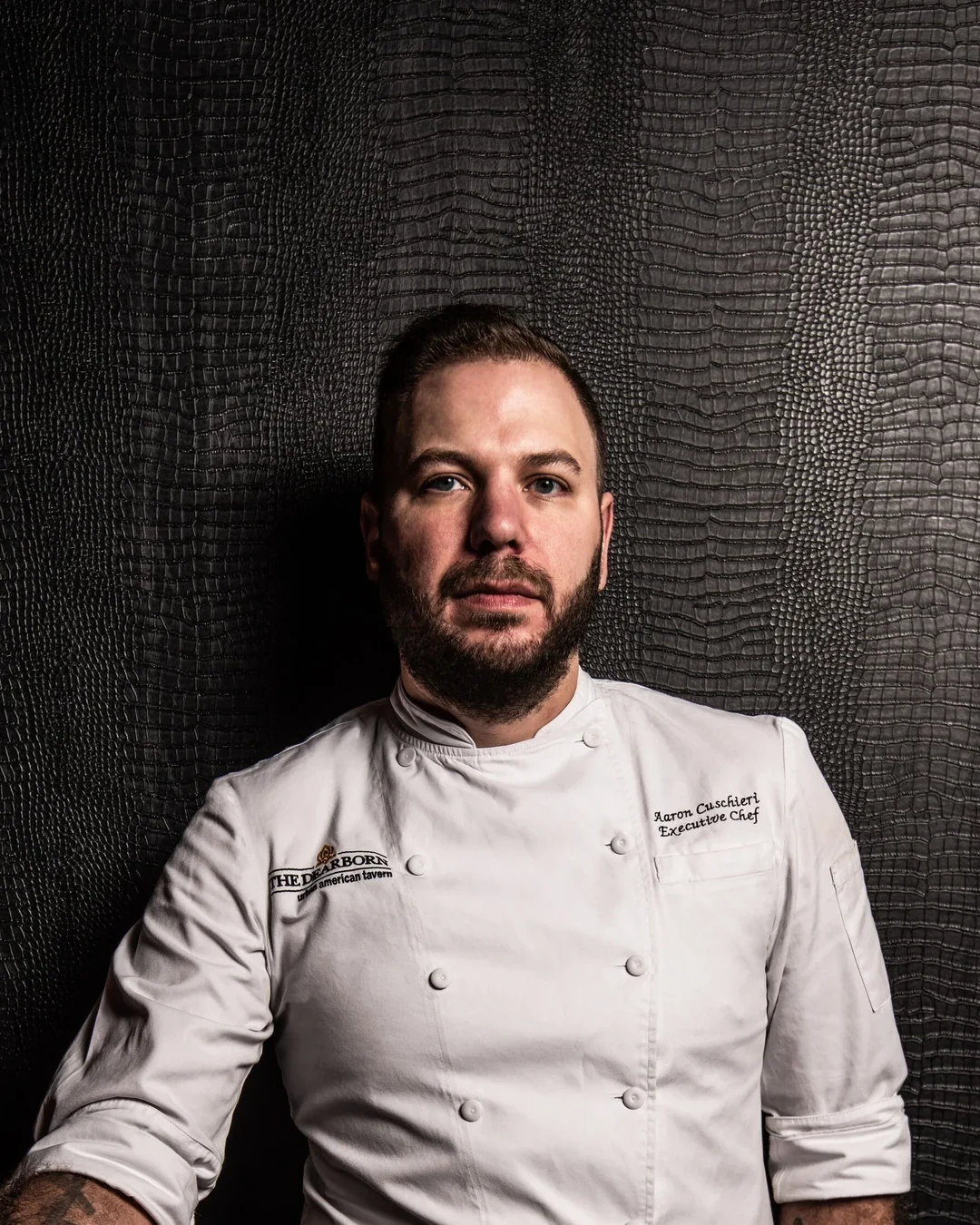
Portrait of Steven Naessens
i. Biography
Steven Naessens is chef of Maison Jeunet in Port-Lesney, France, a role he has held since 2021. His path in the kitchen began early, shaped by a childhood intention to work in the profession, and developed through formal training, service in demanding houses, and long experience beside Jean-Paul Jeunet. He has built a career grounded in discipline, repetition, and continuity, with each stage reinforcing the habits required by exact kitchen work. Naessens studied at Ter Duinen Culinary School, which gave him an early framework for the trade before he entered several starred restaurants in Germany. That period developed the timing, station discipline, and precise execution expected in high-level service. He later worked as a cook at Hof Van Cleve in Kruisthoum, Belgium, continuing his formation inside a serious kitchen structure. These stages established the technical base that would shape his later work. In 2009, Naessens joined Maison Jeunet in Arbois, France, as kitchen collaborator and second-in-command to Jean-Paul Jeunet. The position placed him inside a house defined by region, reputation, and a clear culinary identity. His work there was not only about technique, but also about continuity. Recipes, products, and service habits carried the Jeunet identity through daily work, and Naessens became part of that living transmission over many years. Since 2021, he has led Maison Jeunet from its current address in Port-Lesney, where his role has been to preserve the house’s recognizable language while making it function in a new setting. The work is custodial and active at once. It requires fidelity to the identity built in Arbois, while keeping that tradition alive through service after service. The Jeunet name continues through the current address, and Naessens’s task is to maintain that connection without treating the cuisine as static. Maison Jeunet’s house identity is carried by named classics that remain part of the menu. Poularde de Bresse au vin jaune et morilles is among the recipes associated with the restaurant’s reputation, and lièvre façon royale et truffe de Bourgogne carries the same weight. These dishes are central to the house record and reflect the grammar of French gastronomy that defines the restaurant’s style. They anchor the present work in a tradition that is meant to remain recognizable. The service format is also part of that identity. Cocottes, dishes, and desserts are shared at the table rather than presented only as plated courses, creating a collective rhythm of hospitality. The table becomes the center of the experience, and abundance is expressed through the way food is passed and received. This manner of service belongs to the craft of the place as much as the cooking itself. Naessens’s career therefore follows a direct line: Ter Duinen Culinary School, several starred restaurants in Germany, Hof Van Cleve in Kruisthoum, then Maison Jeunet in Arbois as collaborator and second-in-command, and finally chef of Maison Jeunet in Port-Lesney. He is identified by his long association with a house whose reputation is built on continuity, and his work is defined by the responsibility of carrying that identity forward while maintaining the standards that shaped it.
The Sunday letter
Read Made By's new profiles every Sunday.
Meet the chefs, winemakers and sommeliers behind the places we cover. See a sample below before you subscribe.
See a sample of the Sunday emailOne email a week. Unsubscribe from any issue.
The Sunday letter
Get the next Made By profile in your inbox.
We send one email every Sunday morning with the people we profiled that week.
See a sample of the Sunday emailOne email a week. Unsubscribe from any issue.