Wine authority
Walter Speller
- Discipline
- Wine authority
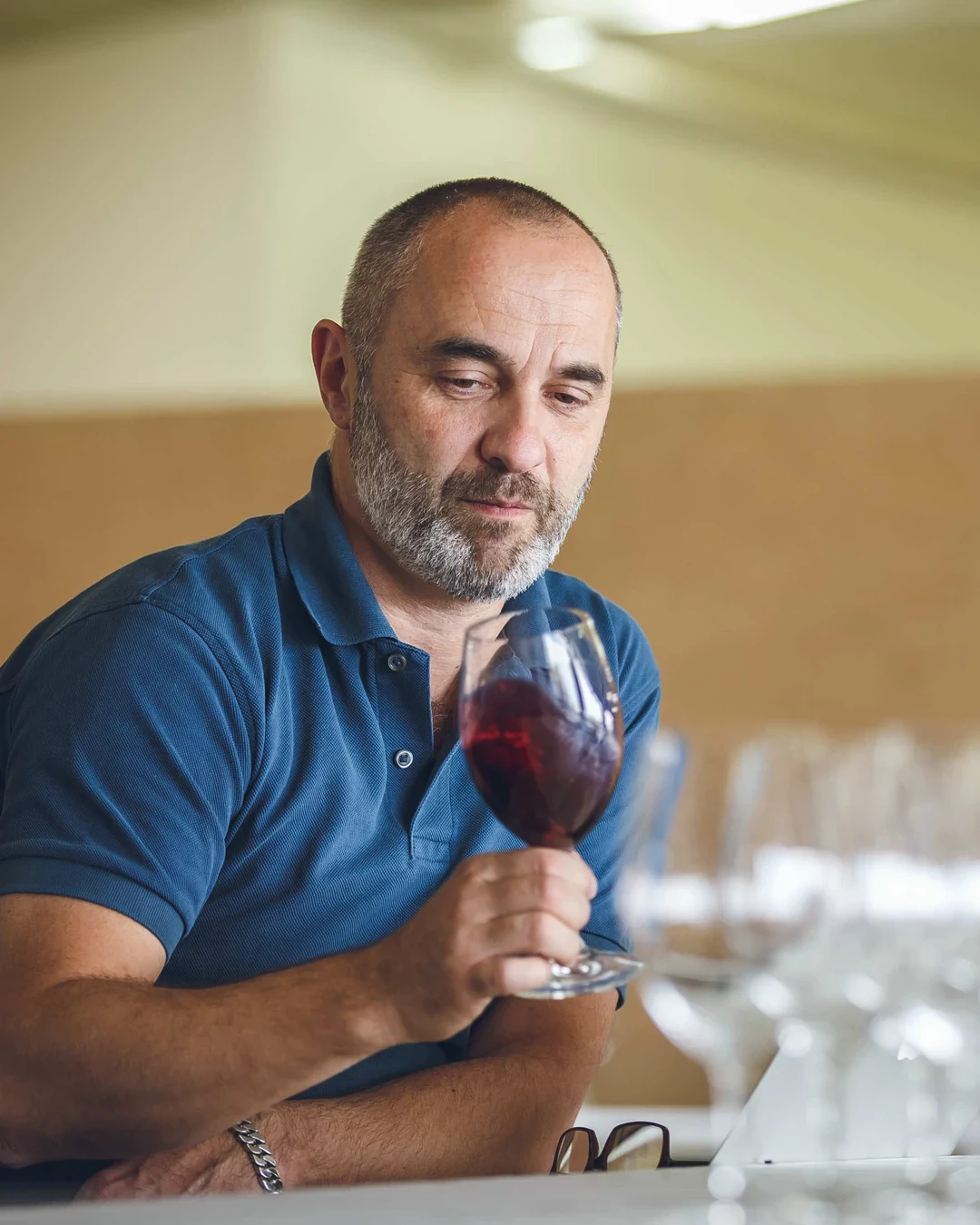
i. Biography
In Their Words “I can still see myself sitting there, flipping through The World Atlas of Wine, wondering what I was going to do next with my life.” Wine writing often starts before tasting: with orientation, maps, names, and the decision to treat geography as working material rather than backdrop. In Walter Speller’s recollection, The World Atlas of Wine is not decoration; it is the tool on the table at the point where direction was still being worked out. “But it taught me that the 'oh so simple’ Italian cuisine demands experience, which, I hope, we have since then acquired.” Italian cuisine is easy to misread because its surfaces are often direct: few ingredients, clear preparations, recognisable forms. Speller’s phrase keeps the necessary warning in place. The simplicity is in quotation marks because it depends on judgement — timing, texture, appetite, place, and the restraint to leave the material legible. Italian wine asks for the same discipline: the glass is tied to origin, naming, local habit, and what those signals have come to mean.
The Recognition Recognition in Italian wine writing sets a high bar because the field is dense with regional identity, grape variety, appellation language, producer usage, and historical memory. Walter Speller’s name sits inside that work as evidence of sustained attention to one of the trade’s most demanding subjects. Italy does not reward broad handling. Its distinctions are layered: local vocabulary, inherited practice, shifting classification, and grapes that do not fit clean shorthand. Writing about it well requires tasting discipline, but also patience with difference and the judgement not to force every region into a single national summary. The useful scale here is precision, not breadth. Italy is too varied to be treated as one flavour, and Brunello requires its own frame. Speller’s work is strongest when it narrows the lens: not a general salute to a famous wine country, but a closer reading of a subject that asks to be handled by place, name, and context.
The Work
Behind It Authorship alongside the Amarone date gives an early marker for published wine work with an Italian focus. It also places the writing within a discipline built on accumulation rather than spectacle. Wine writing can look, from outside the trade, like table pleasure: bottles opened, glasses raised, regions approached through appetite. The working part is less visible. It is comparison, recall, correction, and the joining of sensory evidence to context. For Italian wine, that context is not optional; it is part of how the wine becomes legible. The clearest craft position in Speller’s own words is the moment before certainty: a reader with The World Atlas of Wine, working out direction. The map comes before the route, and the route depends on learning how names, places, and styles connect. The remark on the 'oh so simple’ character of Italian cuisine carries the same practical warning. What looks plain can be the easiest thing to mishandle. A dish, a bottle, a region, a label name — each may appear readable until proper attention begins.
The Road The broader intellectual setting does not pull the work away from its central task: reading Italian wine with enough context to make a bottle mean more than its label. That distinction is central to the craft. A label gives a name, but not the full set of pressures behind it: region, grape, usage, classification, producer language, and the expectations attached to all of them. For Speller, the surrounding world of a wine is not ornament. It is part of the evidence. The path is best understood through writing and specialization. Narrowing the field is not a reduction of scope; in Italian wine, it is how the work becomes usable. Each region and bottle can still ask another question.
FAQ What is Walter Speller's current role? What is Walter Speller known for? Italian wine.


