On Monday, October 19, chef and food historian Fátima Juárez will seat 12 guests at 5 p.m. and 12 more at 7:30 p.m. for the first Komal tasting menu, an eight-course weekly service at Mercado La Paloma in Los Angeles built around 22 heirloom corn varieties. Juárez and her team begin from the molino, where indigenous corn sourced directly from farmers in Mexico is softened through nixtamalization before it becomes masa, tortillas, tostadas, tamales, and the structure of the meal (Eater) (Eater1).
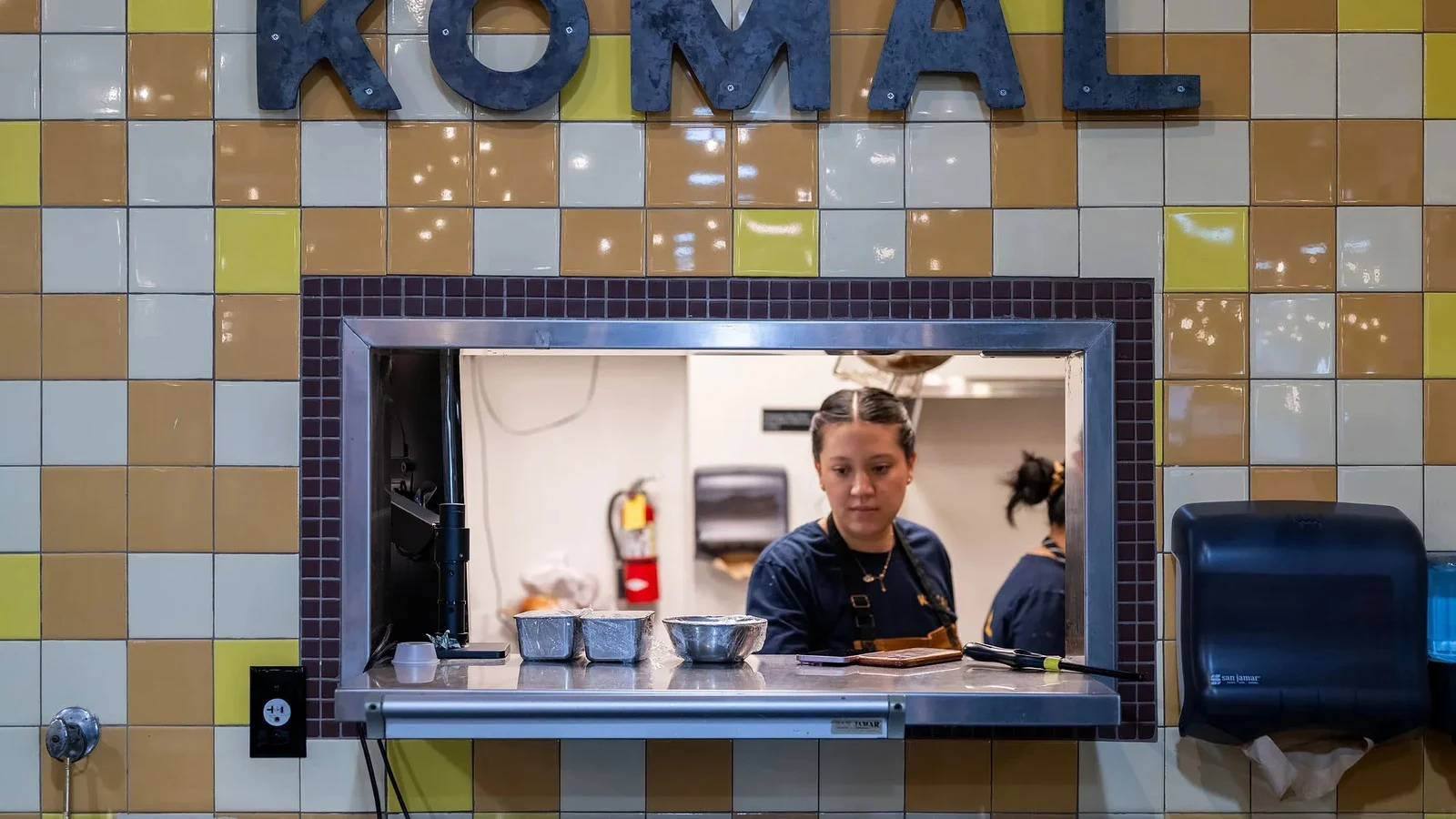
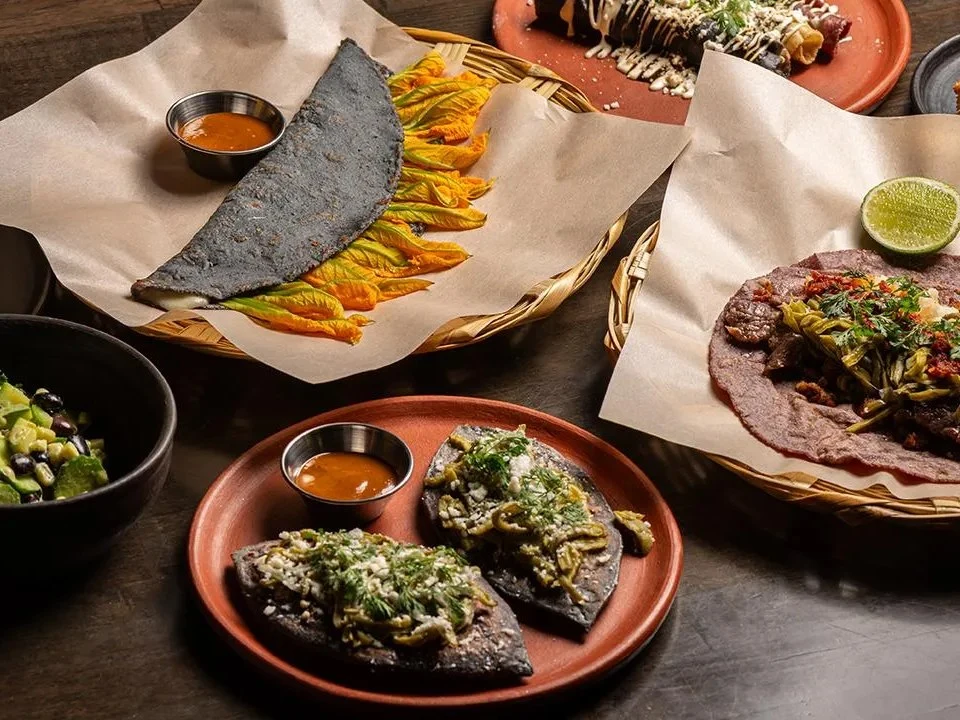
The new Monday service changes the scale of Komal, the pre-Hispanic indigenous Mexican restaurant Juárez opened in 2024. The restaurant has already worked in public view, through antojitos, quesadillas, pan de elote, handmade tortillas, and the daily rhythm of Mercado La Paloma in the Figueroa Corridor of South Los Angeles. Komal's tasting menu turns that work into a 24-seat weekly format and puts corn at the center of each course (Eater).
The Komal tasting menu starts with 22 corns
Juárez worked on the Komal tasting menu for seven months, and many Angelenos first meet corn as a tortilla, a tamal, or a street-side elote. Here, the eight courses feature 22 heirloom corn varieties, each tied to the restaurant's ongoing work with families in Mexico who cultivate and preserve rare varieties (Eater) (Eater1).
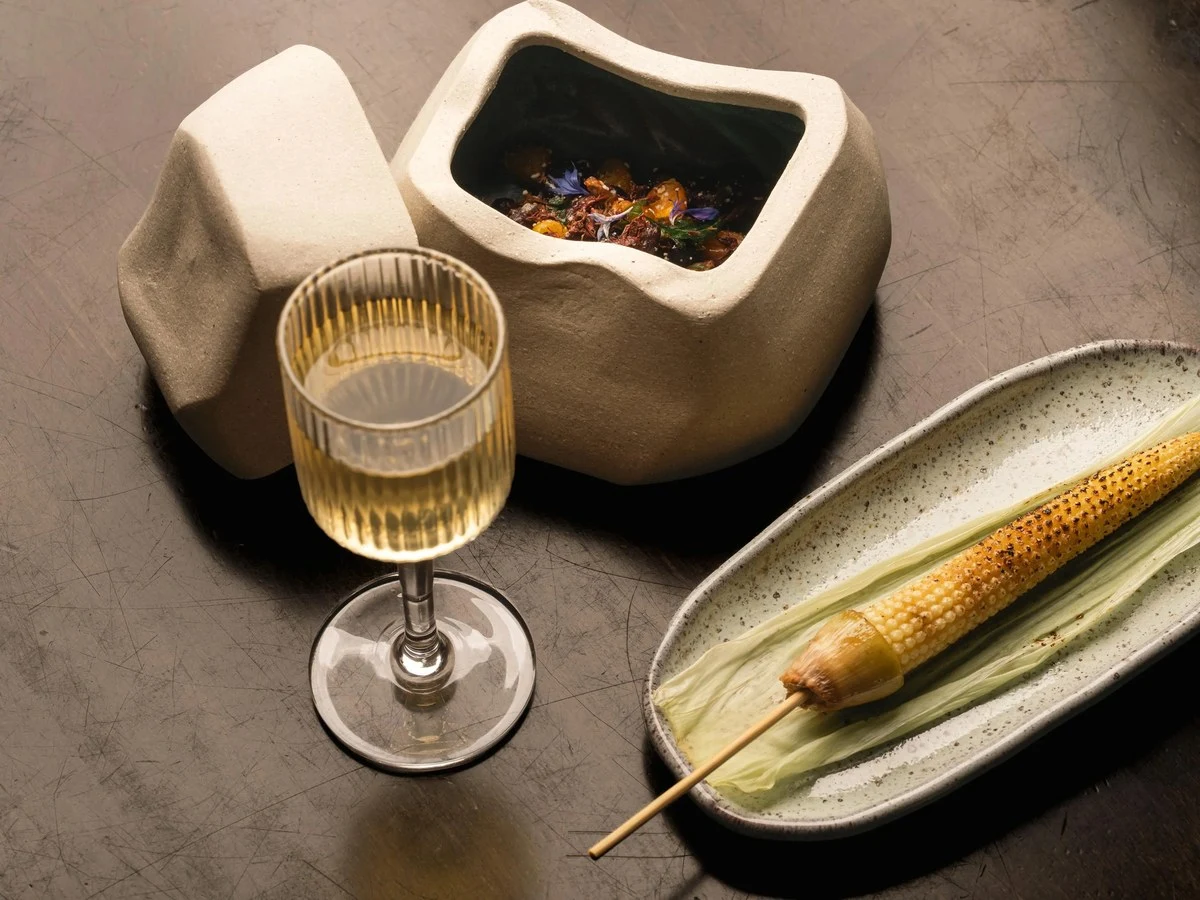
The first autumn menu begins with young corn and introduces nixtamalization, the alkaline process that softens kernels before milling. At Komal, that method has never been a hidden prep step. Komal uses nixtamalization to show how masa is made. The molino gives the kitchen its masa, and the masa gives the dining room its argument: corn changes when handled with time, water, alkalinity, and heat.
Juárez has been direct about the work behind the new format. "I worked on this menu for seven months. I'm very proud of my team. We put a lot of love into this presentation of Mexican corn and this project," she said. The menu may arrive as eight courses, but the labor begins earlier, with sourcing, nixtamalizing, grinding, portioning, cooking, and explaining.
The new service also changes the pace of the restaurant. A daytime order requires appetite and trust. A Monday tasting menu requires attention across eight courses, each one carrying a piece of Juárez's study of pre-Hispanic indigenous Mexican cuisine.
Juárez uses nixtamalization as the first lesson
Juárez's team prepares the new menu by nixtamalizing indigenous corn sourced directly from farmers in Mexico. Juárez's team takes indigenous corn sourced directly from farmers in Mexico, softens it in an alkaline solution, then mills it. Nixtamalization makes masa, but it also creates texture, aroma, and color differences that can confuse diners when they have only been taught to expect one shade of tortilla.
The new format gives Juárez time to guide that conversation plate by plate. The autumn sequence opens with corn silk tea paired with honey-cocopache butter, arbol chile-nixtamalized miniature corn, dried field grasshoppers, and fried epazote squash. That first pairing puts the drink program and the kitchen in the same field: silk that might be discarded becomes tea; squash and epazote carry the course through stems, leaves, and frying oil.
The course turns a tortilla into a tostada and tops it with dry-aged kanpachi aguachile negro. The tortilla changes through frying. The fish brings another curing and aging decision to the pass. The black aguachile uses acid and chile.
Juárez has said she wants to connect more meaningfully with customers through the new menu. The tasting menu is shaped by that goal. The menu includes young corn, nixtamalized corn, fried tortilla, tostada, tamal, tea, masa, and streusel.
The courses keep home cooking in the room
Komal opened in 2024, and the restaurant's early identity grew through dishes Juárez had personal memory attached to, including antojitos, quesadillas, pan de elote, and handmade tortillas. The tasting menu keeps that history visible while changing the dining format.
One course honors home cooking through a salsa verde enchilada. Another points toward barbacoa de borrego with slow-roasted black mole lamb, seasonal Mexican greens, and tomatillo vinaigrette. A cochinita pibil tamal arrives with fermented habanero and charred plantain salsa. These references keep Juárez's study of Mexican tradition close to the foods that first built Komal's audience.
The three desserts finish the meal with the same corn-driven logic. One dessert is a concha with toasted corn streusel, paired with fermented cacao tea to aid digestion. The pastry form is familiar; the streusel pushes toasted corn into the final course, and the cacao tea keeps the non-alcoholic pairing program moving after the savory station has closed.
Every course comes with a non-alcoholic beverage, using ingredients such as corn silk, squash stems, and hoja santa leaves. The menu uses non-alcoholic beverages made with corn silk, squash stems, and hoja santa leaves. Juárez's team treats pairings as part of the same plants and kitchen decisions that shape the food. The drinks use the same field vocabulary as the masa on the plate.
Komal's community recognition now meets a 12-seat format
Komal earned Eater L.A.'s Best Community Restaurant recognition in 2025. It follows a year in which Juárez and the Komal team built a following through masa work (Eater1).
The 12-seat structure changes the stakes. On Mondays, Komal will host two seatings, one at 5 p.m. and one at 7:30 p.m., with 12 guests at each seating. That creates 24 seats a week. The eight-course service is practical at 12 seats because it allows time for prep, service, explanation, and reset (Eater1).
Juárez has also spoken plainly about the pressure behind Komal's growth, saying that her family depends on the restaurant's success. It gives the restaurant another way to bring guests closer to the molino, the masa, and the families in Mexico who preserve the corn varieties Komal uses.
Juárez's format resists that flattening by naming corn as material, memory, agriculture, and technique.
Pricing, reservations, and what changes next
The menu begins October 19 at Mercado La Paloma, 3655 South Grand Avenue, Los Angeles, California 90007. The restaurant will offer the menu weekly on Mondays, with seatings at 5 p.m. and 7:30 p.m. Each seating holds 12 guests. The price is $160 per person, plus tax and tip, and reservations are available through Resy (Eater2).
The menu will change every four to six months, giving Juárez room to shift the corn, the preparations, and the seasonal frame. The autumn version begins with young corn and nixtamalization, then moves through tostada, enchilada, lamb, tamal, and dessert. Each future menu will use different materials to let heirloom corn lead through the full arc of service.
Mercado La Paloma is part of the work. Komal sits in the Figueroa Corridor of South Los Angeles, inside the same market setting where Juárez built Komal around masa, corn, and community recognition. The tasting menu changes the pace of Monday night service and remains tied to the molino and to the families in Mexico who keep these corn varieties in cultivation.
The first cycle will run four to six months. Juárez has a small room, a weekly cadence, and an eight-course format at Komal.