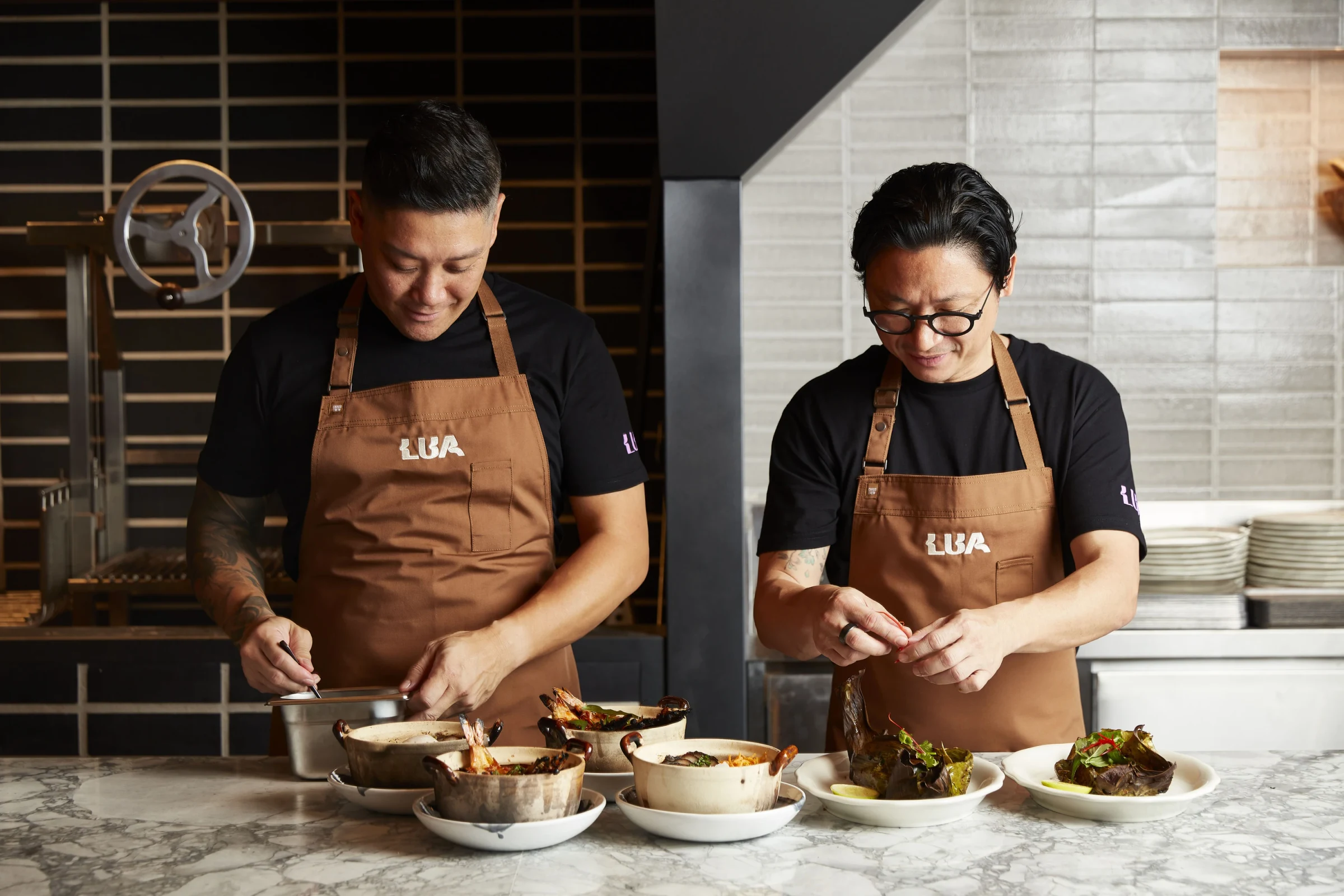
Over the fire at Lua by Luke Nguyen, the king prawn claypot does its last work in contact with heat. The meat comes from the shells; bun rieu bisque brings the crab-noodle-soup register; ST25 rice sits beneath it with dry, elastic grains and a pandan-leaf scent. The top stays fluffy. The base catches crisp, close to com chay. The scrape is part of the dish.
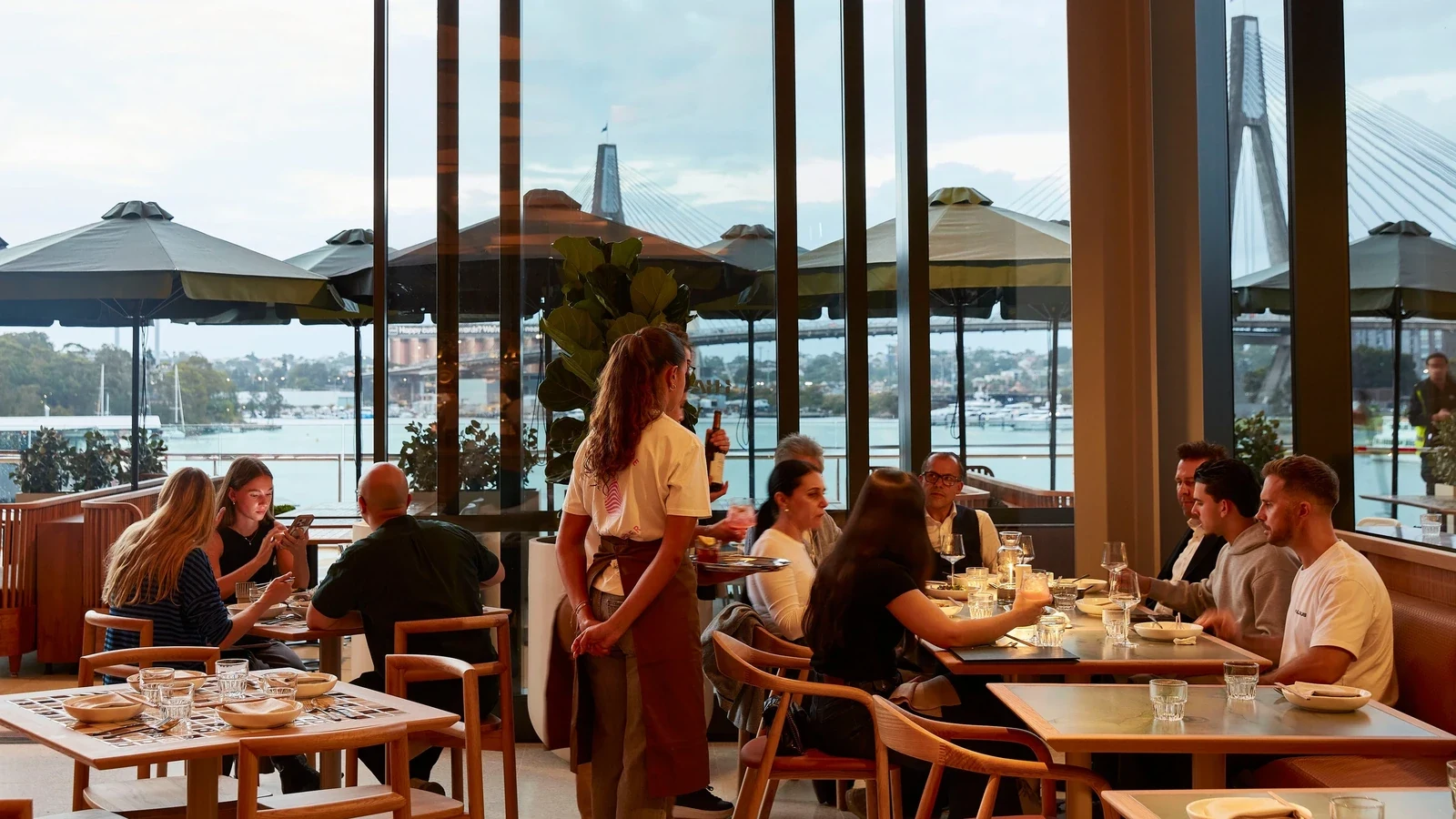
Luke Nguyen sets the frame, but the bench is not anonymous. Barry Ngo, ex-Chin Chin, and Jason Chan, Queen Chow's former head chef and the cook behind Rice Kid, work beside his name. Blackwattle Bay is visible from every seat; the stronger evidence sits in rice, shellfish, fire and timing.
Luke Nguyen Returns to Exposed Authorship with Ngo and Chan
Luke Nguyen opens Lua inside the new Sydney Fish Market with a Vietnamese seafood menu that runs through oysters, crab, coral trout, swordfish, bugs and pipis. He brings Barry Ngo and Jason Chan to the pass, and the three of them handle seafood as material, not scenery.
Nguyen's Sydney context carries weight. Red Lantern in Darlinghurst closed last November after 23 years. Before Lua launched, his other operating Sydney venues were Fat Noodle, a 24-hour restaurant on the gaming floor of The Star, and the event-led restaurant in the Botanic Gardens. Lua puts him back into a more exposed form of authorship, with a seafood market around the pass and two rising cooks beside him.
The menu follows the Mekong upstream, drawing on Nguyen's Vietnamese heritage, his connection to Thailand, his television work in South-East Asia and the Australian setting around him. That movement matters because the cooking is not simply regional citation. Nguyen, Ngo and Chan ask what happens when jasmine rice, mud crab, banana leaf, molten beef tallow and Vietnamese coffee sit in the same working vocabulary.
Nguyen, Ngo and Chan Work ST25 Rice Through the Claypot
ST25 is a saline-tolerant jasmine rice variety from the Mekong and a three-time winner of the World's Best Rice competition. At Lua, Nguyen and his cooks earn its place in the king prawn claypot through method rather than trophy language.
Rice often gets treated as the absorber, the quiet starch that takes sauce and disappears. Here the team gives it a harder job. It has to hold separate grains at the surface, take fire underneath and remain legible beside seafood. The claypot turns the grain into structure.
For a practitioner, the sequence is plain and exacting: use rice with enough elasticity to withstand heat, place it where the vessel can build a crust, and let the prawn and bisque season without turning the base soft. The dish works when the last spoonful still tastes like rice, not just what was poured over it.
That is Nguyen's most useful argument, and Ngo and Chan execute it through service. The grain is not garnish, and it is not nostalgia. It is the technical centre of the meal.
The Team Works Seafood Through Fire and Timing
The oysters flambadou show the kitchen in its shortest gesture. Nguyen's team finishes the bivalves with a stream of molten wagyu beef tallow, set alight, so they warm through while nuoc cham and chilli-crunch flavour ride the fat. A few seconds decide the dish.
Raw work appears in the wagyu "pho" tartare, dressed with warm anise spice and plated with crackling rice paper crisps. Nguyen reaches for the structure of the soup without turning the plate into imitation; the rice paper gives the hand something brittle to break.
Chan's touch shows in coral trout dumplings, tinted blue and built with calamari and prawn for sweetness and plumpness. Ngo's late mother's recipe anchors the live mud crab, tossed cua rang me style with tamarind and chilli sauce. The team wraps the market fish in banana leaves and grills it over coals, with Cambodian cues in the sauce and Vietnamese lift from the herbs.
Nguyen keeps the savoury intelligence close through dessert. Fish-sauce caramel falls over coconut sorbet. Vietnamese coffee tiramisu replaces zabaglione with salted coconut cream and swaps espresso for the bitter line of Vietnamese coffee; when the ratios land, it closes the meal without leaving the kitchen's own language.
Ngo and Chan Hold the Pass When Nguyen Is Off Deck
A name on the door does not cook service. Nguyen is not on deck all the time, so Lua depends on Ngo and Chan holding the stations when the room is moving and the fire is live.
Ngo and Chan matter because this menu gives them little cover. Oysters under hot tallow expose timing. ST25 exposes heat control. Dumplings expose texture. Mud crab exposes seasoning, especially when tamarind and chilli have to cling without burying the meat.
The market itself sets another constraint. Prime positions go to fryers and sushi counters, which close early, while the sit-down restaurants sit toward the fringes. Nguyen, Ngo and Chan have kept Lua steadily busy inside that layout, not by leaning on display, but by giving the precinct a worked-through seafood restaurant with a point of view.
The craft sits in repeatable gestures: a dumpling skin filled cleanly, a banana leaf holding fish over coals, a crust forming at the base of rice, tallow landing before an oyster loses its centre. These are small windows. Ngo and Chan have to hit them again and again.
What to Order, What It Costs, What to Watch
Start with the king prawn claypot if you want the clearest reading of what Nguyen, Ngo and Chan are doing at Lua. Add flambadou oysters, listed at $33 for three, then market fish at $56. Finish with Vietnamese coffee tiramisu with salted coconut cream, listed at $21. The meal sits at about $160 for two, excluding drinks.
The drinks move broadly: wines from classic bottles to skin-contact selections from China, plus sake, tea and fruit-driven cocktails. The Fire Margarita brings pandan, Phu Quoc pepper and Nguyen's house chilli sauce into the glass.
Watch the rice first. If the grain keeps its structure, if the oyster finish stays measured, and if Ngo and Chan keep seafood in its own texture rather than forcing everything into one loud register, Lua has the ingredients to become the new fish market's working headliner.
Nguyen brings the pedigree. Ngo and Chan bring the hands. ST25 brings the grain. The rest is execution, repeated under heat.