Akasaka Asada

In Residence
Yushi Tsuchida
Chef
- 01CuisineTraditional Kaga Kaiseki (Ryotei)
- 02CityTokyo, Japan
- Opinionated About Dining Top Restaurants in Japan Recommended · 2026
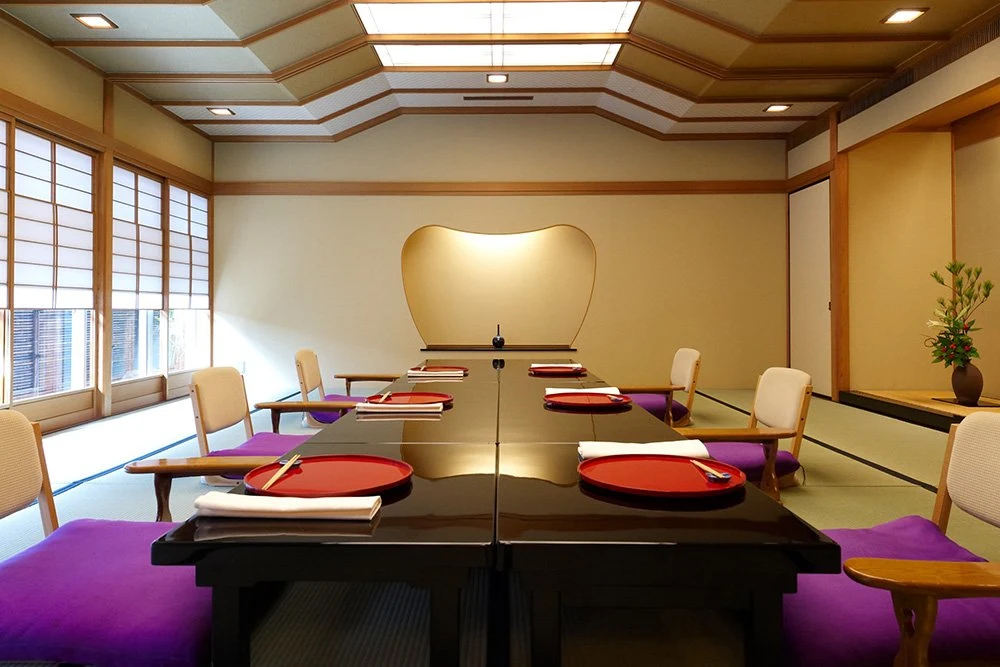
Akasaka’s dining rooms tend to reveal themselves quietly: office towers, political addresses, hotel corridors, then the controlled hush of a Japanese restaurant where the meal depends on timing rather than theatre. In that setting, Akasaka Asada belongs to a tradition that treats kaiseki as a sequence of seasonal judgments. The point is not abundance. It is calibration: the clarity of broth, the cut of fish, the temperature of rice, the way vegetables mark the calendar before the menu says anything explicit.
Tokyo has many formal Japanese restaurants, but kaiseki occupies a different register from sushi counters and tempura rooms. It asks the kitchen to build rhythm across courses, using dashi, seasonal produce, seafood, and tableware as a single grammar. Akasaka Asada is part of the Asada Daihei group and carries a Kaga association, placing it closer to regional courtly cooking than to the stripped-back counter formats that dominate much of Tokyo’s international attention. Chef Yushi Tsuchida’s name attached to the kitchen gives the page a human anchor, but the more useful reading is categorical: this is a Tokyo address for diners who want Japanese seasonality expressed through structure rather than novelty.
Kaga kaiseki in Akasaka, read through dashi and season
Kaga cuisine, associated with the old castle-town culture of Kanazawa and Ishikawa, has long prized lacquerware, seafood, mountain vegetables, and a composed sense of progression. In Tokyo, that tradition changes context. The city’s kaiseki rooms compete not only with each other, but with sushi counters, kappo restaurants, and French tasting menus for the same serious-dining calendar. Ingredient quality alone is not enough. The kitchen has to make seasonality legible without turning it into explanation.
That is where a restaurant like this earns its place. The 2026 Opinionated About Dining Top Restaurants in Japan Recommended listing is a useful trust signal because OAD’s Japan coverage sits outside the usual Michelin-driven shorthand. It does not tell diners what the meal tastes like course by course, and it should not be treated as a substitute for preference. It does, however, place the restaurant within a national conversation about serious Japanese dining rather than leaving it as a local Akasaka address.
The ingredient-forward lens matters here because kaiseki can look formal from the outside while being intensely practical in the kitchen. Dashi is not decoration; it is the foundation that decides whether a bowl feels thin, smoky, saline, or rounded. Seasonal produce is not a garnish; it sets the pace of the meal. Seafood is not simply a luxury marker; it tests sourcing and knife work. In stronger kaiseki formats, the luxury is often restraint: fewer gestures, cleaner transitions, and no need to prove importance through volume.
Why Akasaka suits this kind of formal Japanese meal
Akasaka gives kaiseki a particular frame. The neighbourhood sits between government, media, hotels, and corporate Tokyo, so restaurants here often serve a clientele that values privacy, polish, and consistency. That differs from the more counter-driven energy of Ginza or the younger, looser dining circuits of Ebisu and Nakameguro. Akasaka rewards restaurants that can host serious meals without making the room feel performative.
For travellers, that context is useful. A kaiseki meal in this part of Tokyo is less about chasing a viral reservation and more about choosing a format that fits the evening: composed, formal, seasonal, and built around a progression rather than a single showpiece. Akasaka Asada’s Minato address also places it within an easy dining radius for visitors staying in central Tokyo hotels, especially those using Akasaka, Roppongi, Toranomon, or Nagatacho as a base. The restaurant’s address and contact details belong in the practical rail; the editorial decision is whether this style of meal suits the trip.
It will suit diners who want Japanese cuisine at a measured tempo. It is less suited to those seeking a quick counter meal, a casual izakaya crawl, or a chef-led performance where personality dominates the room. Kaiseki is at its strongest when the diner pays attention to sequence: soup before sashimi, grilled or simmered courses after the opening movements, rice and pickles near the close. The pleasure comes from the accumulation of small decisions, not from a single headline dish.
How to place it within a Tokyo dining itinerary
Tokyo rewards specialization. A strong itinerary separates formats rather than stacking prestige meals that feel similar by the third night. Sushi, tempura, yakitori, kappo, kaiseki, and modern French-Japanese cooking each ask for a different mood and appetite. Akasaka Asada works as the kaiseki anchor in that rotation, especially for diners interested in regional Japanese traditions as they are practiced in the capital.
The restaurant’s OAD Recommended status in 2026 gives it external recognition, while the Kaga orientation gives the meal a clearer identity than generic formal Japanese dining. That combination is the reason to consider it: not because Tokyo lacks kaiseki, but because the city’s dining abundance makes specificity valuable. A meal here should be chosen for seasonality, broth work, and a formal progression tied to regional technique.
Readers building a wider Tokyo plan can map this choice against other categories in Our full Tokyo restaurants guide, then balance the trip with Our full Tokyo hotels guide, Our full Tokyo bars guide, Our full Tokyo wineries guide, and Our full Tokyo experiences guide. Nearby and broader Japan listings worth scanning for contrast include Ajihiro, Akasaka Ogino, Aoyama Jin, Bulgari Cafe II, Dal-Matto, -Grilled beef Sukiyaki- KAMAKURA TANUKIAN 鎌倉 たぬき庵 in Kamakura,.cafe in Osaka,.know in Kumamoto, (Shoku) Vietnam in Kawasaki, [Curry Senmon Ten] Maruyama Kyoju. in Sapporo, [ki:] in Kyoto, Ankyu, Kaiseki in Kyoto, and Araya Totoan, Kaiseki in Kaga.
The editorial verdict is simple: choose Akasaka Asada when the meal’s purpose is formal Japanese seasonality rather than novelty. Tokyo has louder dining experiences, but kaiseki is not improved by noise. Its authority comes from disciplined sourcing, controlled pacing, and the confidence to let dashi, produce, and regional technique carry the evening.
The Sunday letter
Get new places like Akasaka Asada every Sunday.
One email a week with the restaurants, bars and hotels we have just written up, and the people who run them.
One email a week. Unsubscribe from any issue.
Questions
Frequently asked
Who works at Akasaka Asada?
Made By profiles Yushi Tsuchida (Chef) at Akasaka Asada.
How expensive is Akasaka Asada?
Akasaka Asada is listed at a price level of $$$$.
Where is Akasaka Asada and what does it serve?
Akasaka Asada is in Akasaka, Tokyo, serving Traditional Kaga Kaiseki (Ryotei).
The field
How it compares
| Place | Cuisine | Notes | Awards |
|---|---|---|---|
| Akasaka Asada | Traditional Kaga Kaiseki (Ryotei) | Akasaka, $$$$ | · |
| Den | Modern Japanese Kaiseki | Tokyo | Michelin 2 Stars, World's 50 Best |
| Florilège | Modern French-Japanese Plant-Based Fine Dining | Tokyo | Michelin 2 Stars, World's 50 Best |
| Narisawa | Modern Japanese Satoyama Fine Dining | Tokyo | Michelin 2 Stars, World's 50 Best |
| Quintessence | Modern French Fine Dining | Tokyo | Michelin 3 Stars |
| Sazenka | Modern Chinese Fine Dining | Tokyo | Michelin 3 Stars, World's 50 Best |
| Sézanne | Modern French Fine Dining | Tokyo | Michelin 3 Stars, World's 50 Best |
In residence
Similar places
Modern Japanese Kaiseki
Den
Tokyo, Japan
★★ · 50 Best
Modern French-Japanese Plant-Based Fine Dining
Florilège
Tokyo, Japan
★★ · 50 Best
Modern Japanese Satoyama Fine Dining
Narisawa
Tokyo, Japan
★★ · 50 Best
Modern French Fine Dining
Quintessence
Tokyo, Japan
★★★
Modern Chinese Fine Dining
Sazenka
Tokyo, Japan
★★★ · 50 Best
Modern French Fine Dining
Sézanne
Tokyo, Japan
★★★ · 50 Best
The Sunday letter
Get the next Made By story in your inbox.
We send one email every Sunday morning with the places and people we covered that week.
One email a week. Unsubscribe from any issue.