Organic Nero di Troia from Cerignola
- Falstaff Winery - Listed · 2026
The founder still takes the farm view
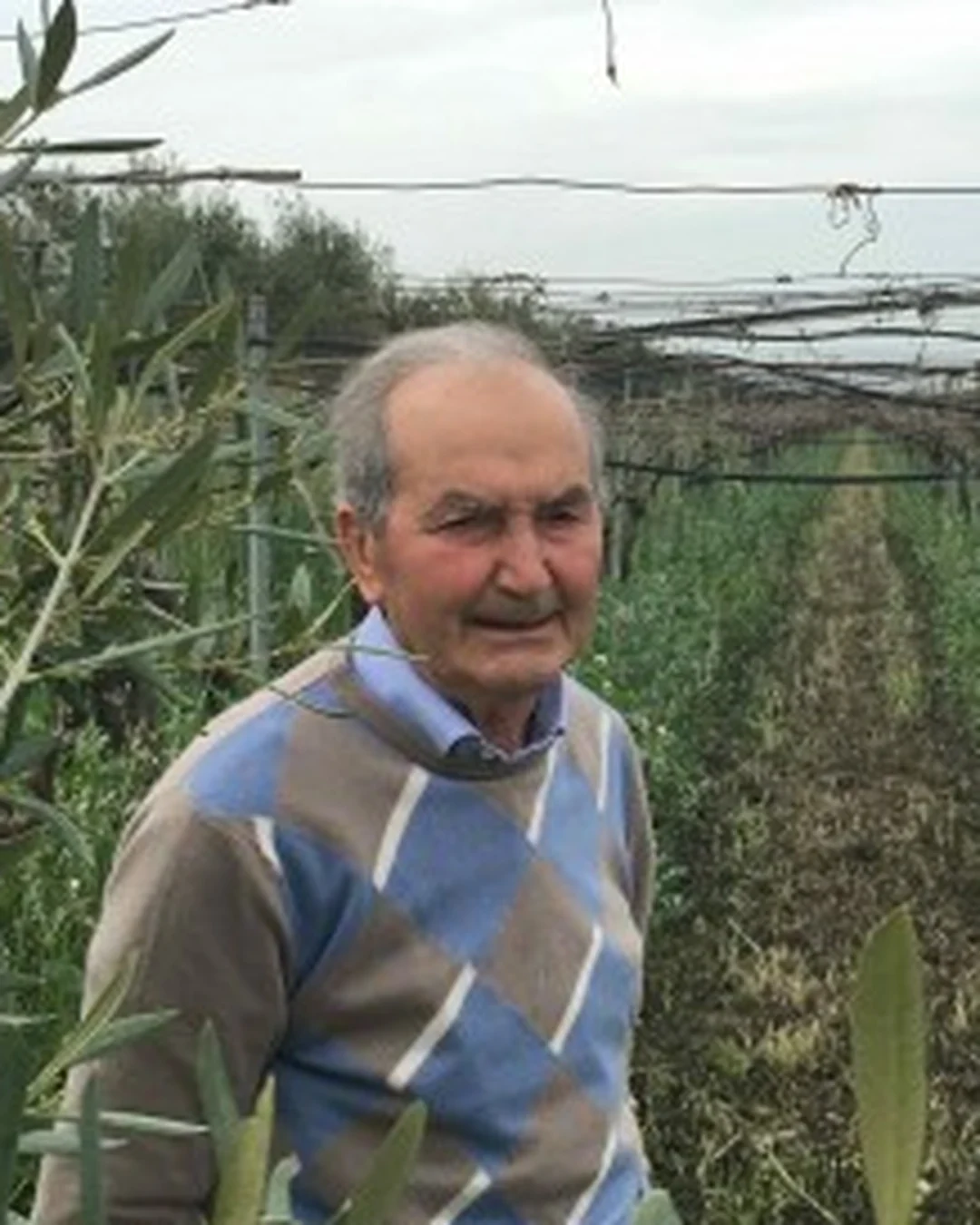
Raffaele Di Tuccio tends the vineyard and cellar as winemaker at Antica Enotria in Cerignola, keeping the work close to the farm before it reaches the bottle. Raffaele Di Tuccio founded the estate in 1985, and the house still reads through that first decision: wine begins in the agricultural base, not in a separate idea of the cellar. The property sits in a restored 18th-century masseria near Cerignola, in the northern Daunia of Puglia, with vines held beside olive groves and open countryside. The lineage here is not a public list of masters and apprentices; it is the continuity of one maker on one estate, with farming named as the base line of the craft. In the house’s own words, “We are born farmers and we continue to be farmers.” That sentence explains the pace better than any technical gloss. The vineyard, the cellar, and the tasting room are treated as parts of the same organism, and Di Tuccio’s role keeps those parts in conversation.
Twelve hectares under organic discipline
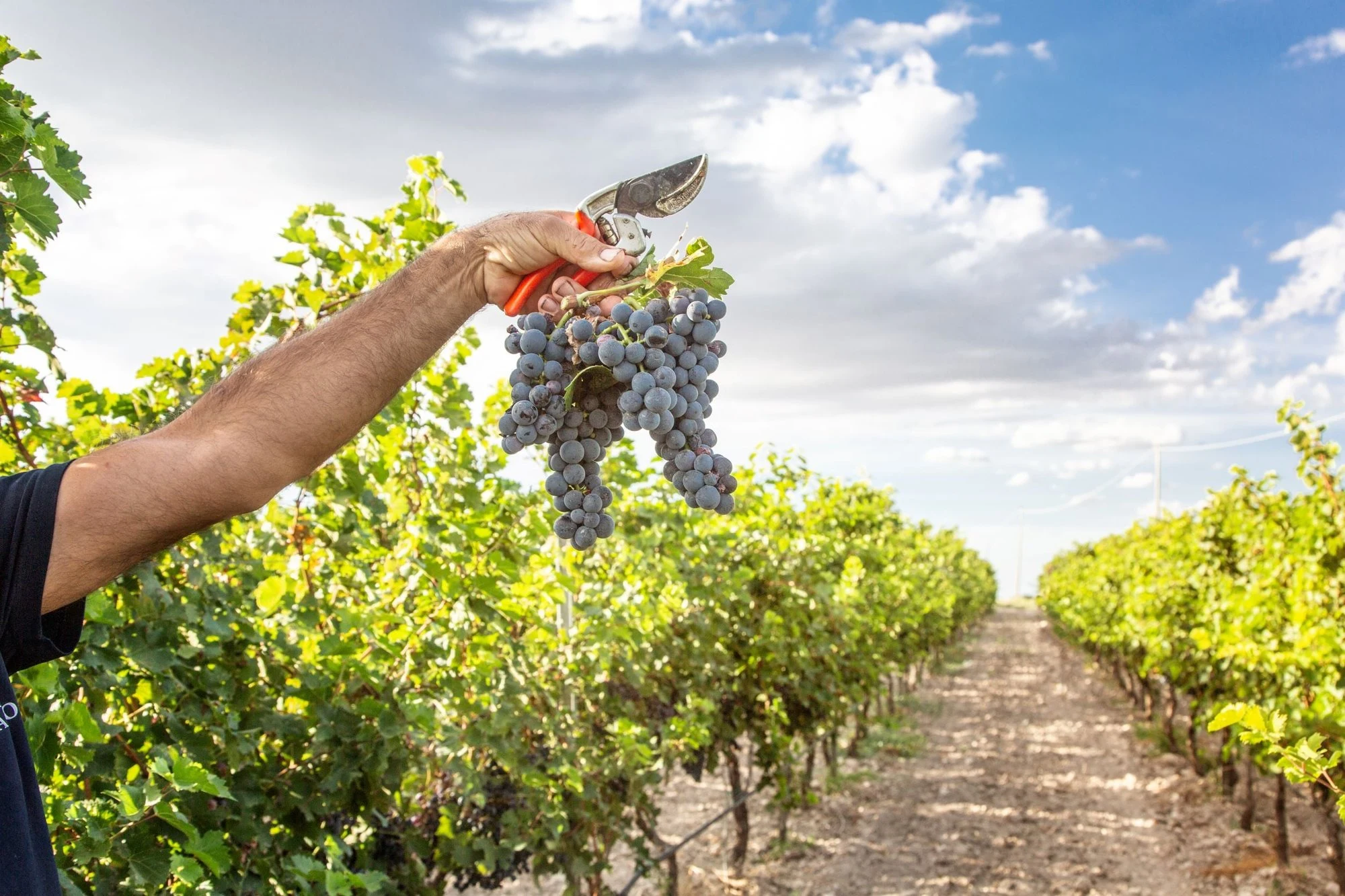
The estate works 12 hectares of vineyards, with Nero di Troia, Primitivo, Negroamaro, Aglianico, Falanghina, Montepulciano, and Sangiovese among the varieties in its field of view. The conversion to organic farming began in 1993, giving the method its own duration on the property. The harvest is done by hand, and the grapes move into perforated crates so the fruit reaches the cellar intact. Before pressing, stems are separated from the grapes, a practical choice against woody tannin and a useful sign of the house style: extraction does not need to shout. Fermentation follows a low-intervention register, with native yeasts carrying the work where the fruit and the place allow. In the aging cellar, the stated aim is to keep balance between fruit, acidity, and tannin, without leaning on heavy oak to mask the Puglian ground. The cellar tour often ends with three Nero di Troia wines beside local Puglian specialties, so the grape is read in sequence rather than as a single pour.
A masseria with vineyard air
The room feels rural before it feels formal. The tasting room belongs to the masseria, not to a polished urban shell, and the cellar sits within the same quiet agricultural frame as the vines. Outside, the estate opens onto the countryside near Cerignola, with olive groves and vineyards setting the tempo; inside, the work narrows to tanks, barrels, glasses, and the measured language of a family-run winery. The Gulf of Manfredonia is only a few kilometers away, close enough for the Adriatic to sit in the background of the place without turning the cellar into a postcard. The strongest detail remains the route itself: soil, vineyard, cellar, then glass, with Nero di Troia carrying the final word.
Questions
Frequently asked
Who runs Antica Enotria?
Raffaele Di Tuccio founded Antica Enotria in 1985 and still works as the winemaker, tending both the vineyard and the cellar.
What kind of place is Antica Enotria?
It is a winery set in a restored 18th-century masseria near Cerignola in Puglia, with vines, olive groves, and open countryside around it.
What does the estate grow?
Antica Enotria works 12 hectares of vineyards under organic discipline, with Nero di Troia, Primitivo, Negroamaro, Aglianico, Falanghina, Montepulciano, and Sangiovese among the varieties on the property.
How are the wines made?
The harvest is done by hand, the grapes are moved in perforated crates, stems are separated before pressing, and fermentation follows a low-intervention approach with native yeasts.
Can you visit without booking?
Visits are by appointment only.
The field
How it compares
| Place | Notes | Awards |
|---|---|---|
| Antica Enotria | Cerignola, $$ | · |
| Ardbeg | Port Ellen | · |
| Bollinger | Aÿ | World's 50 Best |
| Cantine Paradiso | Cerignola | · |
| Chapoutier | Tain-l'Hermitage | World's 50 Best |
| Chateau Petrus | Pomerol | · |
| Tenute Manduano | Cerignola | · |