Apicius
- 01CuisineClassic French Grande Maison
- 02CityTokyo, Japan
Consomme jelly, caviar, French cellar
- Michelin Plate · 2026
- Black Pearl 1 Diamond · 2026
- Tabelog Bronze #21: 4.3pts · 2026
- Star Wine List · 2026
- Michelin Plate · 2025
- Tabelog 100 #75: 4.3pts · 2025
- Black Pearl 1 Diamond · 2025
The dish held in its first shape
At Apicius in Yurakucho, Tokyo, sea urchin, caviar, cauliflower mousse and consomme jelly still arrive in the old formation, and the house around that dish keeps its own older discipline. Apicius opened in 1983 in the Sanshi-Kaikan building, near Hibiya and Yurakucho stations, with the habits of a French grande maison rather than the speed of a fashionable dining room. Its first head chef, Norio Takahashi, gave the restaurant the plate that still defines its method: marine fat, salt, vegetable sweetness and chilled consomme set into a composition that has not been revised for novelty. Current executive chef Junichi Moriyama leads the kitchen within that inherited frame, blending tradition with finesse rather than reaching for a new signature. The conversation here is with continuity, Tokyo keeping classical French technique in service without making it decorative.
A cellar scaled for the room
The program is built around French wine with the patience of allocation rather than fashion. Apicius holds a 50,000-bottle cellar drawn from 500 French vintners, and four sommeliers are on the floor for the pairings and the older bottles that suit the menu's weight. That scale matters because the cooking asks for it. Bouillabaisse APICIUS-style, foie gras poele, red snapper vapeur, white truffle risotto, turtle consomme flavored with sherry and winter sea turtle soups all sit in a register where sauce, stock, reduction and temperature decide the course. The a la carte and tasting formats let the kitchen pace the meal through orthodox French structure: cold richness, shellfish depth, fish, meat, cheese, pastry. Patisserie chef Kouji Uehara carries the final station with crepes suzette, seasonal cakes, sherbet and the retro cheese trolley. Nothing here needs a modern explanation. The method is the explanation: consomme clarified enough to hold its line, bearnaise brought to the plate with salmon, caviar placed where its salinity cuts through cream.
The Sunday letter
Find new places through the people who run them.
Our Sunday email brings you the chefs, winemakers and hoteliers behind our newest stories. See a sample before you subscribe.
See a sample of the Sunday emailOne email a week. Unsubscribe from any issue.
Below street level, the room slows down
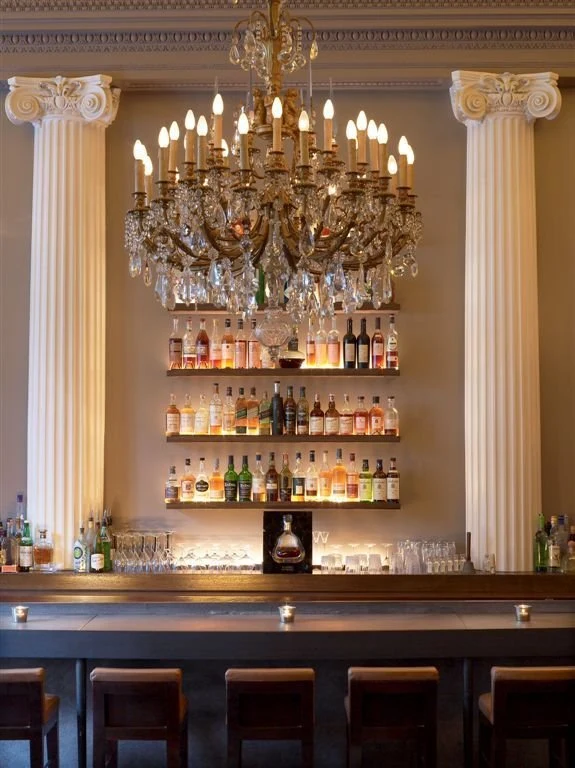
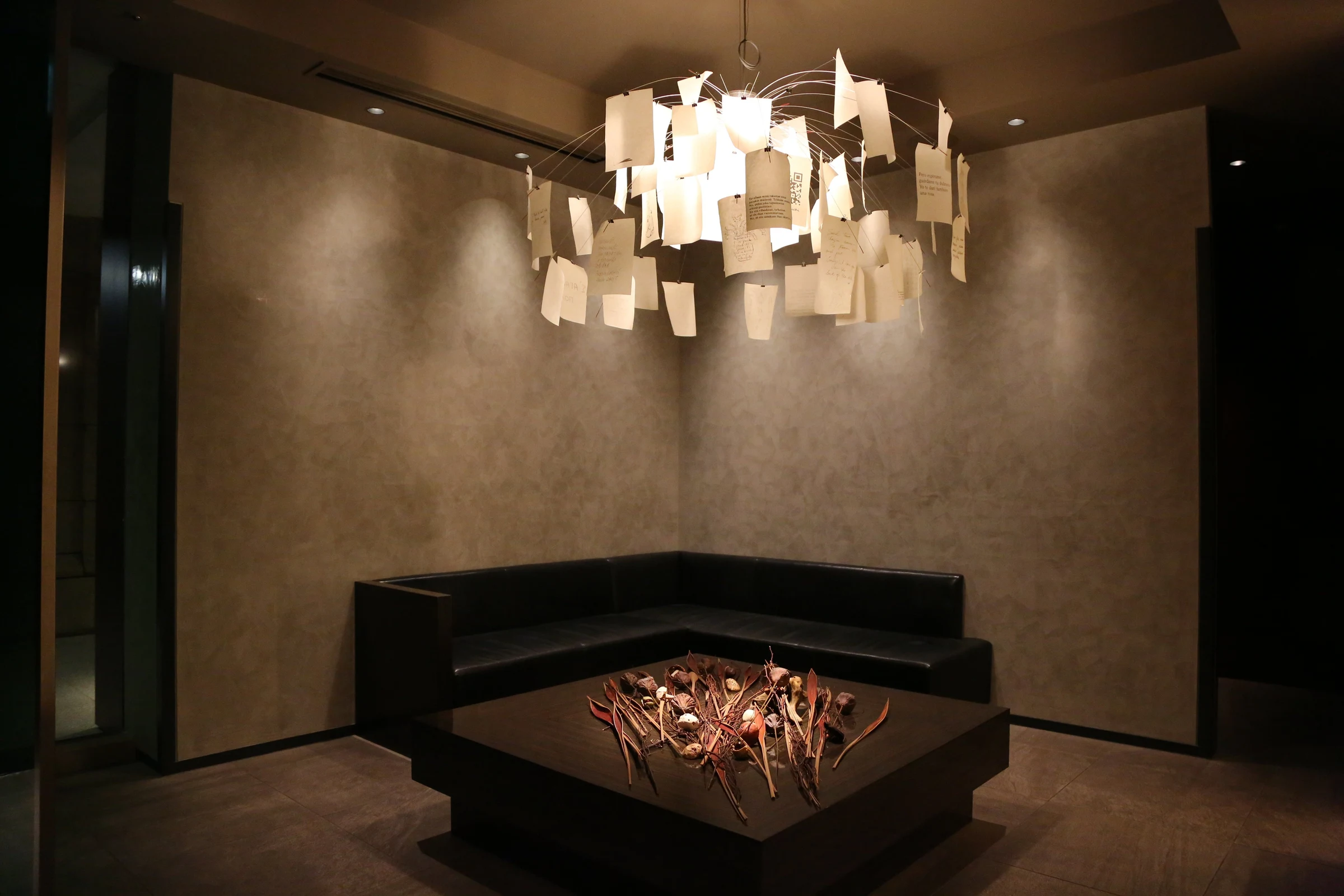
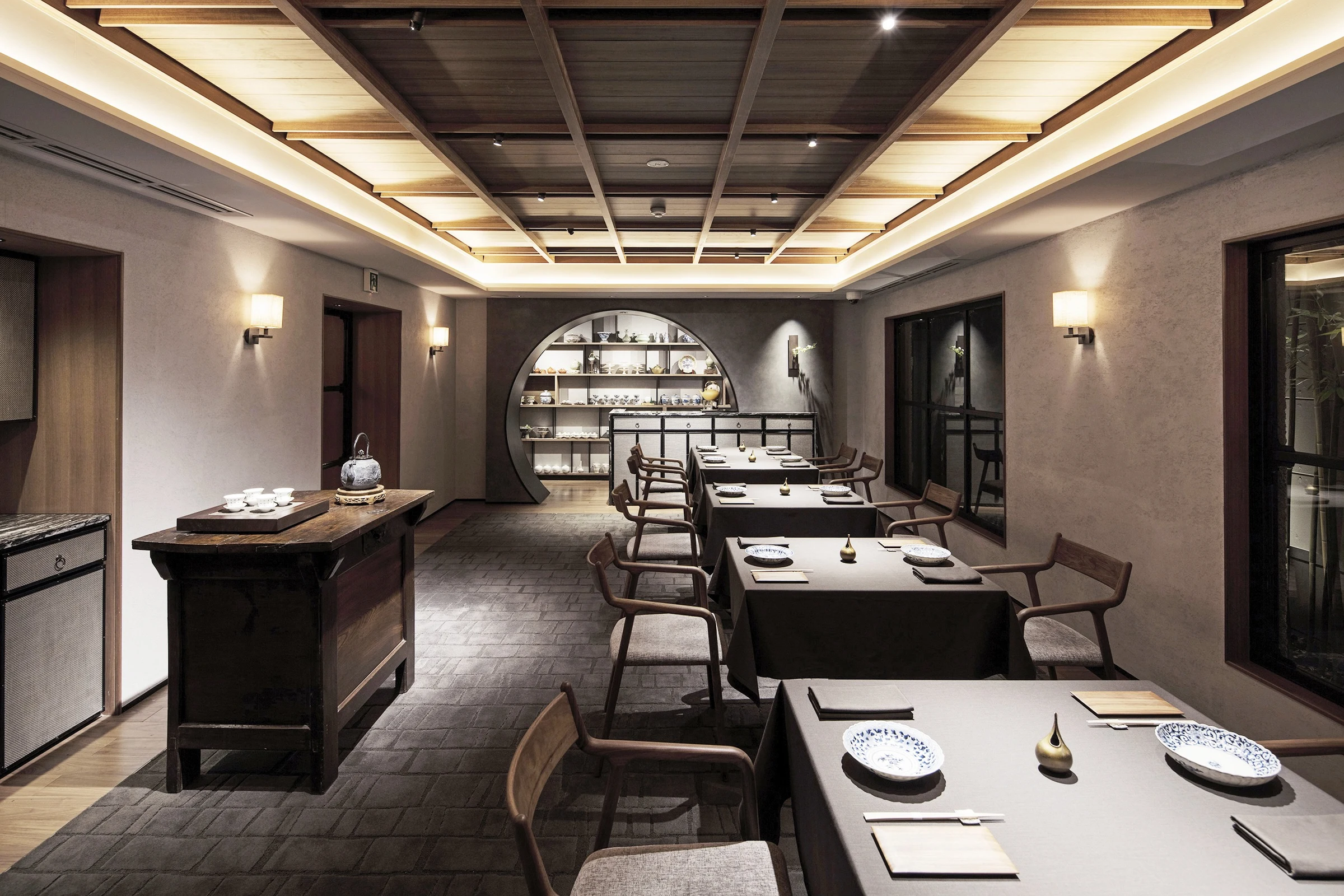
The room sits below the street, in the basement of the Sanshi-Kaikan building, which changes the tempo before the first glass is poured. Art Nouveau detail, chandeliers, Chagall and Andrew Wyeth paintings, and Rodin sculptures give the dining room the density of a private collection rather than a themed interior. The noise stays low. Service has the formal spacing of a house that expects the guest to notice the interval between courses, the pass to the trolley, the sommelier's pause at the bottle. In Yurakucho, where the city moves quickly above ground, Apicius holds to an older rhythm: a quiet counterweight of linen, stock, cellar work and plated memory. At Apicius, the close is not a new opening or a change of hand; it is the continued return of sea urchin and caviar with cauliflower mousse and consomme jelly.
Questions
Frequently asked
What kind of restaurant is Apicius?
Apicius is a Classic French Grande Maison restaurant in Yurakucho, Tokyo. It opened in 1983 and keeps to a formal French dining style rather than a fast or fashionable one.
What is Apicius known for?
The restaurant is known for sea urchin, caviar, cauliflower mousse and consomme jelly, a dish that has remained central since its first head chef, Norio Takahashi, shaped it. Bouillabaisse APICIUS-style is another signature dish.
Who leads the kitchen at Apicius now?
Current executive chef Junichi Moriyama leads the kitchen, working within the restaurant's inherited French framework.
What is the wine programme like?
Apicius has a 50,000-bottle cellar drawn from 500 French vintners, and four sommeliers work on the floor to guide pairings and older bottles.
What should a visit to Apicius be planned around?
Reservations are essential, the dress code is smart casual, and the restaurant is closed on Sundays. It serves lunch and dinner from Monday to Saturday.
The field
How it compares
| Place | Cuisine | Notes | Awards |
|---|---|---|---|
| Apicius | Classic French Grande Maison | Chiyoda, $$$$ | · |
| Den | Modern Japanese Kaiseki | Tokyo | Michelin 2 Stars, World's 50 Best |
| Florilège | Modern French-Japanese Plant-Based Fine Dining | Tokyo | Michelin 2 Stars, World's 50 Best |
| Narisawa | Modern Japanese Satoyama Fine Dining | Tokyo | Michelin 2 Stars, World's 50 Best |
| Quintessence | Modern French Fine Dining | Tokyo | Michelin 3 Stars |
| Sazenka | Modern Chinese Fine Dining | Tokyo | Michelin 3 Stars, World's 50 Best |
| Sézanne | Modern French Fine Dining | Tokyo | Michelin 3 Stars, World's 50 Best |
Producers
Sourced from / Made with

Similar places
Modern Japanese Kaiseki
Den
Tokyo, Japan
★★ · 50 Best
Modern French-Japanese Plant-Based Fine Dining
Florilège
Tokyo, Japan
★★ · 50 Best
Modern Japanese Satoyama Fine Dining
Narisawa
Tokyo, Japan
★★ · 50 Best
Modern French Fine Dining
Quintessence
Tokyo, Japan
★★★
Modern Chinese Fine Dining
Sazenka
Tokyo, Japan
★★★ · 50 Best
Modern French Fine Dining
Sézanne
Tokyo, Japan
★★★ · 50 Best
The Sunday letter
Get the next Made By story in your inbox.
We send one email every Sunday morning with the places and people we covered that week.
See a sample of the Sunday emailOne email a week. Unsubscribe from any issue.