Four-day chicken, zero-proof Levantine room
- The Best Chef One Knife · 2025
Four days before the pass
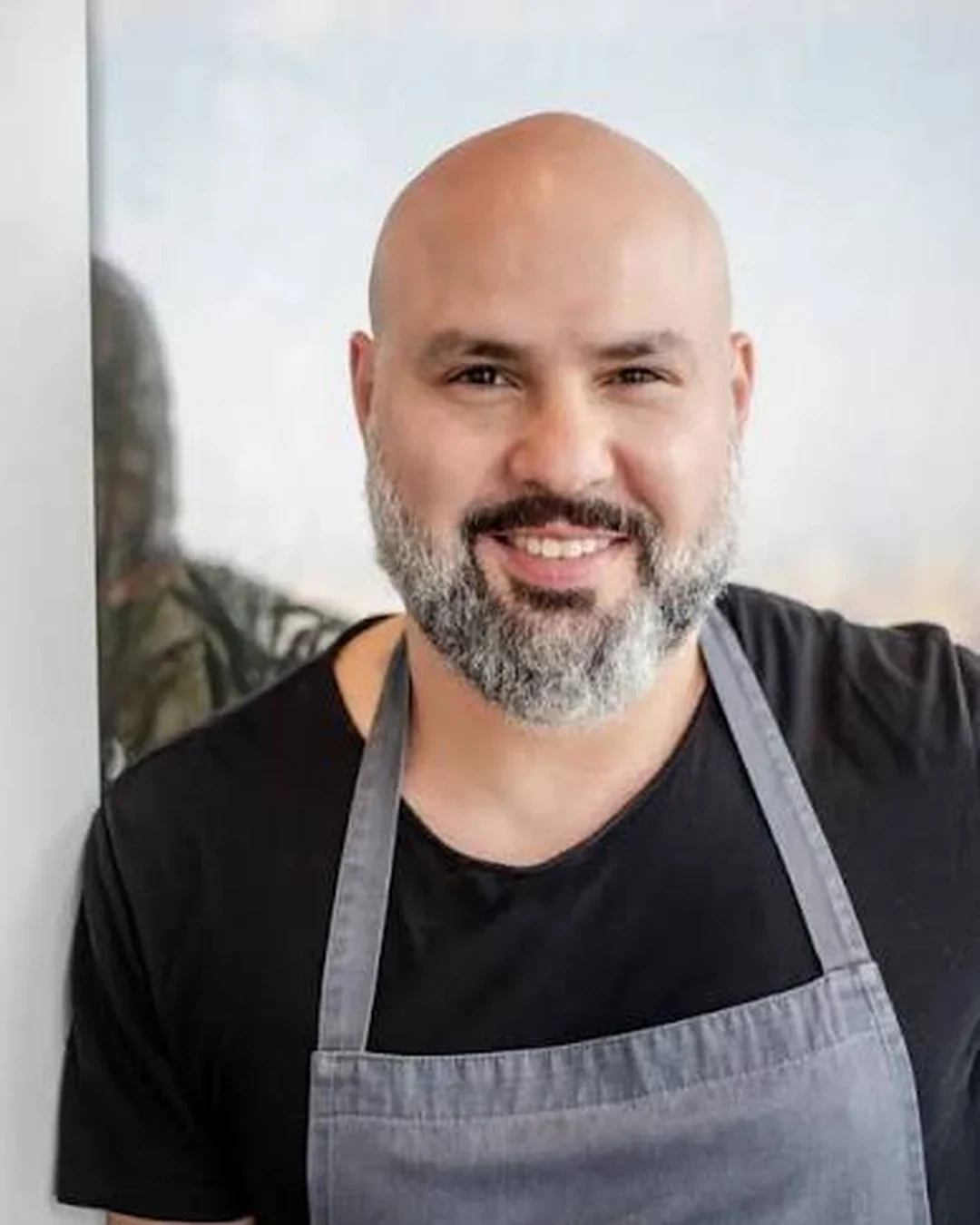
Moeen Abu Zeid checks the chicken before it reaches the pass, working as Executive Chef at Arbequina in Toronto with a four-day brine, marinade, smoke and roast behind it. At this Roncesvalles restaurant, the gesture carries the shape of his training: hotel cooking in Jordan, New York City kitchens from 2009, and the authorship he brought to The Broken English before opening this room with Asma Syed-Abuzaid in 2024.
Moeen Abu Zeid cooks from Palestinian and Jordanian memory without treating memory as a museum piece. The early discipline came through hotel kitchens, where consistency is not decorative; it is the work. New York added pace and a wider vocabulary. At Arbequina, those two educations meet local Toronto ingredients, halal parameters, and a zero-proof dining room. Technique has to earn its place. A sauce, a ferment, a smoke, a glaze, each one must clarify the plate rather than announce the cook.
Levantine methods under local pressure
The kitchen builds familiar forms by the long way. Djaj Mashwi moves through brining, marinating, smoking and roasting before it arrives with chicken bone aioli, house hot sauce, fried root chips and lettuce. Angus Short Ribs take three days, then meet a glaze reduced from trimmings, dates and spice, with saj bread, pickled onion, mint, tahini and roasted tomato salsa. Sea Bass comes with grilled shishitos, shaved Brussels sprouts, crisp fermented grape leaves and preserved lemon sauce.
The vegetable work follows the same discipline. Potato falafel sits over tahini rather than chickpea habit. Lima bean hummus takes braised lamb as its top note. Eggplant ghanoush gains crunch from fried lentils. A butternut squash, cashew and Jerusalem artichoke dish uses cashew cream, sunchoke chips and an olive oil, lemon and squash seed drizzle. The kitchen avoids butter and cream, not as denial, but as a method for keeping richness in the ingredients themselves.
Golden light on Roncesvalles
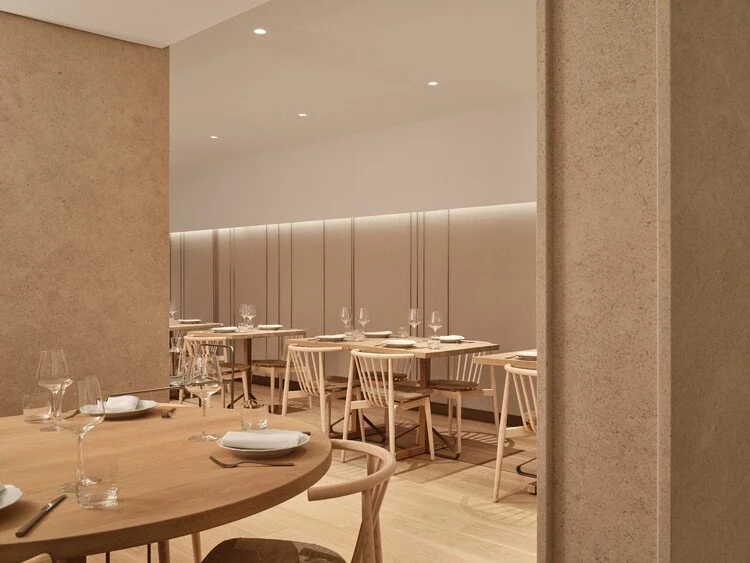
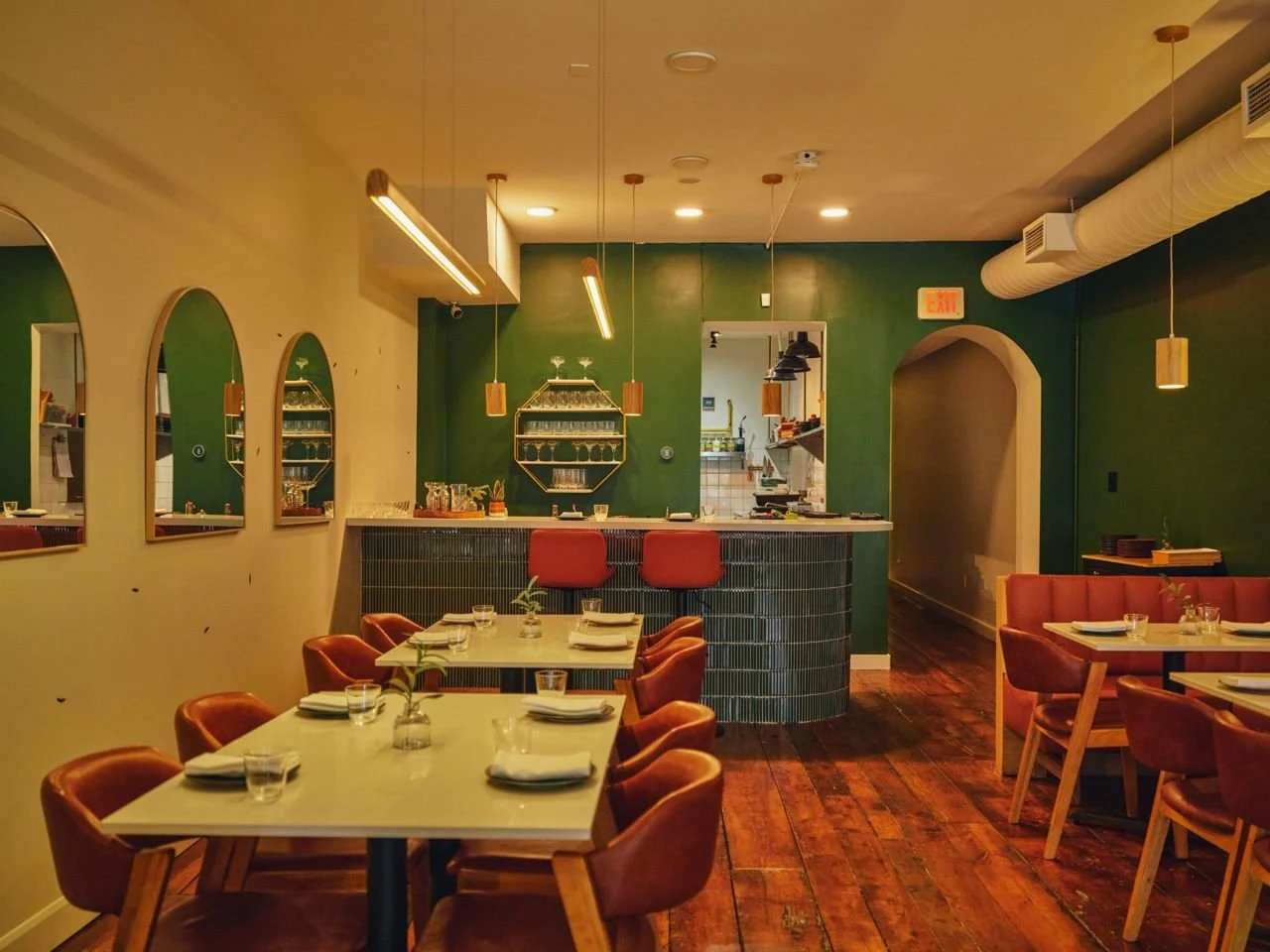
The room stays close to the food: green and brown tones, golden lighting, a minimalist surface, a conversational level of sound. Arbequina is small enough for the counter and the pass to feel connected, yet polished enough that the work does not spill into performance. Shared plates suit the room. So does the absence of a wine cellar. The beverage program answers with zero-proof drinks, de-alcoholized wine options, cucumber, lemon, jalapeno, strawberry, white cranberry, pink peppercorn, pomegranate and lime.
That choice changes the pace of service. The meal does not borrow weight from alcohol; it has to find its own measure in smoke, acid, grain, herb and heat.
The olive variety that names the house
Arbequina takes its name from an olive variety native to Palestine, a quiet signal rather than a slogan. The restaurant has added Sunday brunch and Ramadan Iftar events while keeping the center of the work steady: halal fine dining, Toronto sourcing, and Levantine technique shaped by one chef’s hands. At Arbequina, Djaj Mashwi moves from brine to smoke before service.
Questions
Frequently asked
What kind of restaurant is Arbequina?
Arbequina is a modern Levantine restaurant in Roncesvalles, Toronto, with a halal menu shaped by local sourcing and zero-proof drinks.
Who is the chef behind the kitchen?
Moeen Abu Zeid is the Executive Chef at Arbequina. His background includes hotel cooking in Jordan, New York City kitchens from 2009, and work at The Broken English before he opened Arbequina with Asma Syed-Abuzaid in 2024.
What are some of the dishes people order here?
The menu includes Djaj Mashwi, Angus Short Ribs, Sea Bass and Homemade Chocolate Cake. The kitchen also works with dishes such as potato falafel, lima bean hummus and eggplant ghanoush.
Is there a wine list?
Arbequina does not have a wine cellar. The drinks list instead focuses on zero-proof drinks and de-alcoholized wine options.
What are the booking and service details?
Reservations are recommended. The restaurant is open Wednesday and Sunday from 5 to 9 PM, Thursday from 5 to 9 PM, and Friday and Saturday from 5 to 10 PM, with Monday and Tuesday closed.
The field
How it compares
| Place | Cuisine | Notes | Awards |
|---|---|---|---|
| Arbequina | Modern Levantine | North Parkdale, $$$ | · |
| Alo | Modern French Fine Dining with Asian Influences | Toronto | Michelin 1 Star |
| Don Alfonso 1890 | Modern Italian Fine Dining | Toronto | Michelin 1 Star |
| Edulis | Mediterranean Seafood Tasting Menu | Toronto | Michelin 1 Star, World's 50 Best |
| Osteria Giulia | Modern Northern Italian (Ligurian) | Toronto | Michelin 1 Star |
| Quetzal | Modern Wood-Fired Mexican | Toronto | Michelin 1 Star, World's 50 Best |
| Sushi Masaki Saito | Edomae-Style Omakase | Toronto | Michelin 1 Star |
In residence
Similar places
Modern French Fine Dining with Asian Influences
Alo
Toronto, Canada
★
Modern Italian Fine Dining
Don Alfonso 1890
Toronto, Canada
★
Mediterranean Seafood Tasting Menu
Edulis
Toronto, Canada
★ · 50 Best
Modern Northern Italian (Ligurian)
Osteria Giulia
Toronto, Canada
★
Modern Wood-Fired Mexican
Quetzal
Toronto, Canada
★ · 50 Best
Edomae-Style Omakase
Sushi Masaki Saito
Toronto, Canada
★