Chef in Residence
Stefano Catenacci
Chef

A fixture of Stockholm's serious-casual dining scene, Bakfickan on Jakobsgatan operates in the tradition of the Swedish husmanskost counter, unpretentious in format, precise in execution. Chef Stefano Catenacci leads a kitchen that has earned consecutive Opinionated About Dining recognition since 2023, placing it in a tier of Stockholm venues where Nordic sourcing discipline and everyday accessibility coexist without compromise.
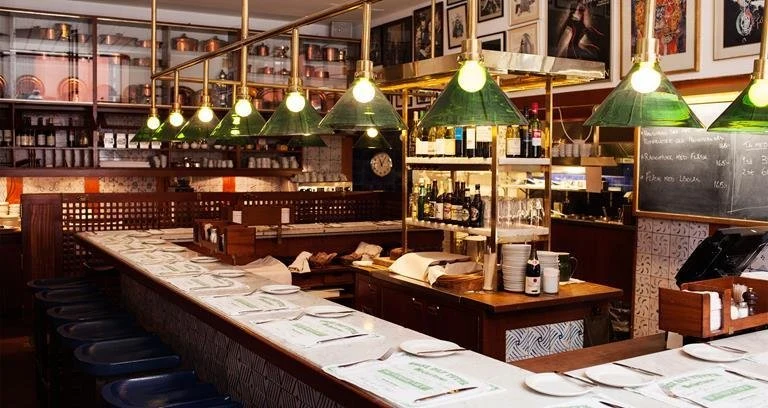
<h2>The Counter Behind the Opera</h2><p>Jakobsgatan 12 sits close enough to Stockholm's Kungliga Operan that the building shares its footprint, and the room reads accordingly: compact, wood-panelled, lit without drama. This is the format that Swedes call a <em>bakficka</em>, literally, a back pocket, a smaller, more approachable room operating in the shadow of a larger, grander neighbour. The concept itself is a distinctly Swedish invention: a place to eat well without ceremony, where the kitchen's seriousness does not demand a formal occasion. Bakfickan is neither a tasting-menu destination nor a neighbourhood bistro. It occupies a middle register that Stockholm does particularly well, and that the city's more conspicuous fine-dining addresses, Michelin-starred rooms like Ekstedt or AIRA, do not attempt to cover.</p><p></p><h2>Nordic Kitchens and the Logic of Restraint</h2><p>Scandinavian cooking is often framed through New Nordic doctrine: foraged ingredients, fermentation, hyper-seasonal menus, and a commitment to minimising what travels far to reach the plate. That framework was codified in Copenhagen and exported outward, but it did not invent Swedish kitchen values, it reinterpreted ones that already existed. Sweden's <em>husmanskost</em> tradition, the plain, ingredient-led domestic cooking that sustained working households for generations, was always built around proximity and seasonal availability. What changed is that it became a deliberate aesthetic rather than an economic necessity.</p><p>Bakfickan operates inside this longer lineage. The Swedish kitchen's relationship with zero-waste and local sourcing is not a recent sustainability overlay applied for marketing purposes, it is structural. Root vegetables that last through winter, preserved fish, butter-based sauces that use whole animals efficiently, dairy from Swedish farms: these are the building blocks of a cuisine that never discarded the instinct to use what was available and waste none of it. Contemporary Stockholm kitchens that work in this register are making a different argument than those deploying Nordic credentials as high-concept abstraction. Bakfickan is in the former camp. <a href="https://www.enprimeurclub.com/restaurants/signum-molnlycke-restaurant">Signum in Mölnlycke</a> and <a href="https://www.enprimeurclub.com/restaurants/ang-tvaaker-restaurant">ÄNG in Tvååker</a> show how regional Swedish kitchens build around the same sourcing logic outside the capital.</p><h2>Chef Stefano Catenacci and the Discipline of the Swedish Counter</h2><p>Chef Stefano Catenacci leads the kitchen at Bakfickan, a name that surfaces also in connection with Operakällaren, the grand-format Swedish restaurant housed in the same Opera building. That connection matters less as biography than as context: running a serious-casual counter alongside a formal restaurant is a different discipline entirely. The <em>bakficka</em> format demands efficiency, economy, and the ability to produce food that reads as effortless while being built on the same sourcing rigour as higher-ticket neighbours. Catenacci's sustained recognition at Bakfickan across three consecutive years of Opinionated About Dining assessment suggests the counter is not an afterthought. It holds its position as a credentialled destination in its own right.</p><p>For comparison, Stockholm's fine-dining tier, Ekstedt, Adam/Albin, Etoile, prices and formats itself for a different visit frequency. The OAD Casual in Europe list, where Bakfickan appeared at #280 in 2024 and #305 in 2025 while holding Highly Recommended status since 2023, tracks something distinct: the restaurants diners return to regularly rather than save for occasions. That ranking trajectory, and the Google rating of 4.6 across 311 reviews, reflects consistent execution rather than a single high-profile moment.</p><h2>Where Bakfickan Sits in Stockholm's Casual Tier</h2><p>Stockholm's serious-casual restaurant tier has thickened considerably over the past decade. The city that once split cleanly between husmanskost cafés and white-tablecloth Swedish formality now has a middle band populated by credentialled kitchens working at accessible price points. <a href="https://www.enprimeurclub.com/restaurants/bobergs-matsal-stockholm-restaurant">Bobergs Matsal</a> occupies a similar position in the Östermalm Saluhall, with its grand-hall setting and traditional Swedish menu. <a href="https://www.enprimeurclub.com/restaurants/prinsen-stockholm-restaurant">Prinsen</a> represents another axis of the same tradition, a long-standing room with institutional consistency. <a href="https://www.enprimeurclub.com/restaurants/bar-agrikultur-stockholm-restaurant">Bar Agrikultur</a> and <a href="https://www.enprimeurclub.com/restaurants/freyja-stockholm-restaurant">freyja.</a> represent newer entries into the casual-serious tier, each with a different editorial identity but operating in the same competitive set.</p><p>Bakfickan's position in this peer group is defined by format continuity: it has not pivoted toward natural wine bar aesthetics, tasting-menu ambitions, or trend-chasing menus. It does Swedish food at a counter, consistently, in the centre of the city, with credentials that validate the consistency. For those building a broader Stockholm itinerary, <a href="https://www.enprimeurclub.com/restaurants/coco-carmen-stockholm-restaurant">Coco & Carmen</a> offers a counterpoint in a different genre entirely. The EP Club's full Stockholm restaurants guide maps the wider field.</p><h2>Sourcing, Seasonality, and What the Menu Signals</h2><p>The strongest signal of Bakfickan's kitchen orientation comes from its classification as Swedish cuisine at the casual counter format and the tradition it inherits. Swedish serious-casual kitchens at this recognition tier typically rotate their menus around what Swedish producers and fisheries deliver by season: herring in multiple preparations during late spring and early summer, reindeer and game through autumn and winter, new potatoes and asparagus when the Swedish growing window briefly opens. The husmanskost backbone means dishes are recognisable in structure, meatballs, pickled accompaniments, cured fish, brown butter, executed at a technical level that distinguishes a professional kitchen from a canteen.</p><p>This is also the format that embeds sustainability most naturally. No single-use protein menu cycles, no air-freighted exotica, no off-season tomatoes. The constraint of working with what Swedish climate and geography produce is simultaneously an environmental position and a flavour argument. Nordic kitchens that built on this foundation before sustainability became a sales category are, in some respects, ahead of those that added it later as a marketing frame.</p><p><a href="https://www.enprimeurclub.com/restaurants/vyn-simrishamn-restaurant">VYN in Simrishamn</a>, <a href="https://www.enprimeurclub.com/restaurants/knystaforsen-rydobruk-restaurant">Knystaforsen in Rydöbruk</a>, and <a href="https://www.enprimeurclub.com/restaurants/vollmers-malmo-restaurant">Vollmers in Malmö</a> shows how the same sourcing logic operates at different scales and price tiers across the country. The Malmö contingent also includes <a href="https://www.enprimeurclub.com/restaurants/restaurang-atmosfar-malmo-restaurant">Restaurang Atmosfär</a> and <a href="https://www.enprimeurclub.com/restaurants/vastergatan-malmo-restaurant">Västergatan</a>, two kitchens working in related registers. And <a href="https://www.enprimeurclub.com/restaurants/28-gothenberg-restaurant">28+ in Gothenberg</a> represents the Gothenburg end of the Swedish casual-serious spectrum with its own particular authority.</p><h2>Planning a Visit</h2><p>Bakfickan is at Jakobsgatan 12, a short walk from Stockholm's T-Centralen and within easy reach of the Gamla Stan and Norrmalm neighbourhoods. The room is open six days a week, closed Sundays, with service running from 11:30am (noon on Saturdays) through to 10pm. Given the central location and OAD recognition, lunch on a weekday is likely the most accessible entry point, though the format suits an early weeknight dinner equally well.</p>
Bakfickan has received recognition including: Opinionated About Dining Casual in Europe Ranked #305 (2025); Opinionated About Dining Casual in Europe Ranked #280 (2024); Opinionated About Dining Casual in Europe Highly Recommended (2023).
Bakfickan is located at Jakobsgatan 12, 111 52 Stockholm, Sweden, Stockholm.
Bakfickan operates within the Swedish husmanskost tradition, so the menu follows seasonal Swedish produce and classic preparations rather than tasting-menu theatre. Dishes tend to reflect whatever is in season across Sweden's larder at the time of your visit. The kitchen is led by Stefano Catenacci, whose work here is consistently recognised by Opinionated About Dining — ranked #280 in Casual Europe for 2024 and #305 for 2025. Your best approach is to follow the daily specials, which in a counter format of this kind carry the kitchen's clearest statement of intent.
Hours at Bakfickan: Hours: Monday 11:30 am–10 pm Tuesday 11:30 am–10 pm Wednesday 11:30 am–10 pm Thursday 11:30 am–10 pm Friday 11:30 am–10 pm Saturday 12–10 pm Sunday Closed.
The chef associated with Bakfickan is Stefano Catenacci.
Bakfickan's standing in Stockholm's casual dining tier comes from format consistency: it operates as a genuine bakficka counter adjacent to Operakällaren on Jakobsgatan 12, holding to the tradition of unfussy, well-executed Swedish cooking rather than chasing fine-dining scale. Opinionated About Dining has listed it among its top Casual Europe venues for three consecutive years — Highly Recommended in 2023, #280 in 2024, and #305 in 2025. That sustained recognition across annual cycles is a more reliable signal than a single-year placement.
Jakobsgatan 12, 111 52 Stockholm, Sweden
Norrmalm
Vete–Katten

Modern Nordic Fusion with Japanese Influences
Frantzén
Stockholm, Sweden
★★★ · 50 Best

Modern Scandinavian Fine Dining
Operakällaren
Stockholm, Sweden
★ · 50 Best

Wood-Fire Nordic Fine Dining
Ekstedt
Stockholm, Sweden
★

Modern Nordic Seasonal Tasting Menu
AIRA
Stockholm, Sweden
★★

Scandinavian Cocktails with Asian Fusion
Röda Huset
Stockholm, Sweden

Modern Mediterranean Small Plates
Tjoget
Stockholm, Sweden