
Organic Wagram from loess and gravel
Fruit, spice, freshness, structure
Loess and gravel set the decision before the fruit reaches the cellar. Josef Hummel, winemaker at Bioweingut Josef Hummel in Wagram, works from that ground in Großriedenthal, where the family estate sits among the rolling vineyards around Neudegg. His role is not presented as a break from the house that came before him. He is the fifth generation at a family-run organic winery, carrying a cellar practice shaped by Wagram wine, a Pannonian climate, and soils that give the wines their weight and line.
The vocabulary of his work is direct: fruit, spice, freshness, structure, regional character. In his hands those words behave like cellar instructions rather than tasting-room gloss. Grüner Veltliner and Roter Veltliner sit at the center of the estate’s identity, joined by Gelber Muskateller, Gemischter Satz, Chardonnay, Pinot Noir, Weißer Burgunder, and Zweigelt. The house works under an organic philosophy and keeps its focus on Wagram DAC wines that carry origin without excess polish. Hummel’s own account of the region is plain enough to stand: the Wagram gives fine spice, lively freshness, and harmonious structure. The cellar follows that lead.
The Sunday email
Read about the people behind wineries like Bioweingut Josef Hummel in the Sunday email.
Every Sunday we send a lead story and up to four more about the chefs, winemakers, sommeliers and hoteliers behind the restaurants, bars, wineries and hotels we cover.
Recent stories

Free. One email a week, and you can unsubscribe from any issue.
Organic work on loess and gravel
The estate’s program begins outside, in vineyards on loess and gravel soils. That pairing matters here. Loess holds warmth and water; gravel gives drainage and a different kind of tension. Hummel does not need to make the wines loud to make the site legible. The method aims for clean fruit, lift from spice, freshness through the palate, and enough structure to keep the wine from becoming soft.
Bioweingut Josef Hummel is certified organic, and the estate describes its practice through sustainability, authenticity, and hand work. In the cellar, the range stays broad but coherent: still white, still red, sparkling, and dessert wines, with the Wagram DAC frame keeping the house from drifting into generality. The named bottles associated with Hummel make that frame visible. The 2022 Grüner Veltliner Wagram DAC Ried Wadenthal points to a vineyard site and the region’s principal white variety. The 2024 Weißburgunder Wagram DAC Neudegg carries the village name back into the glass. Neither needs ornament to explain its purpose.
The cellar in the hills
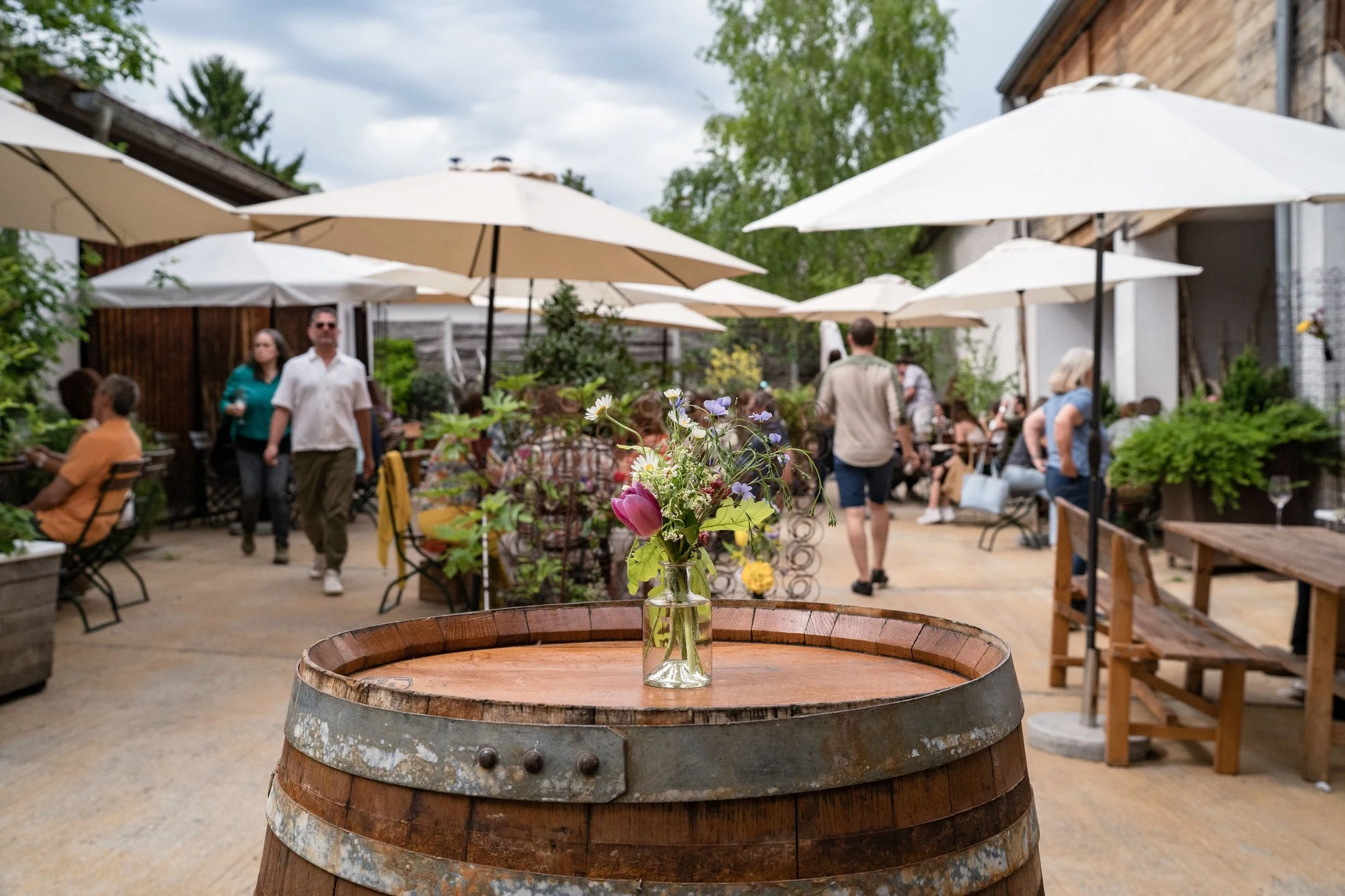
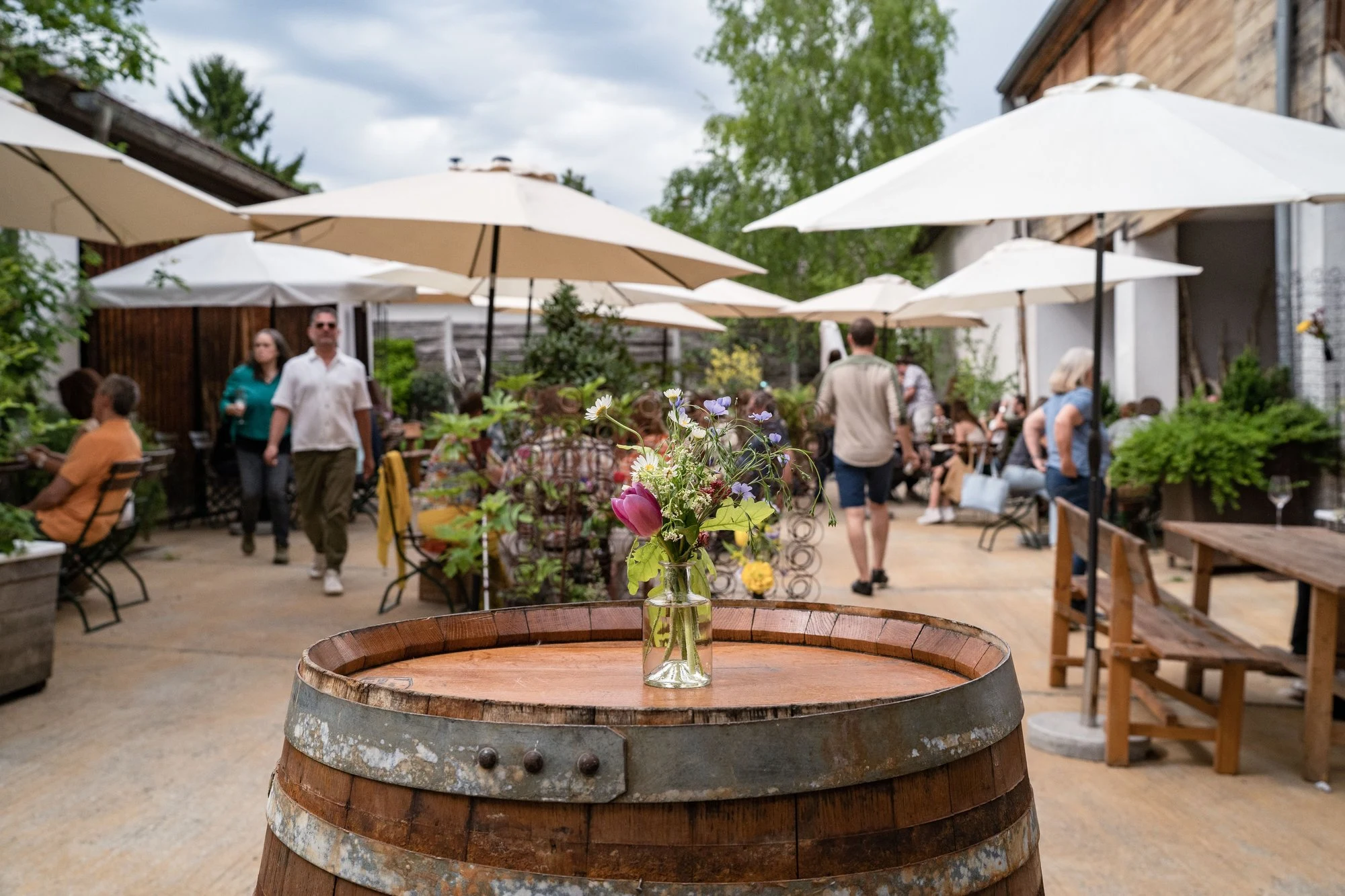
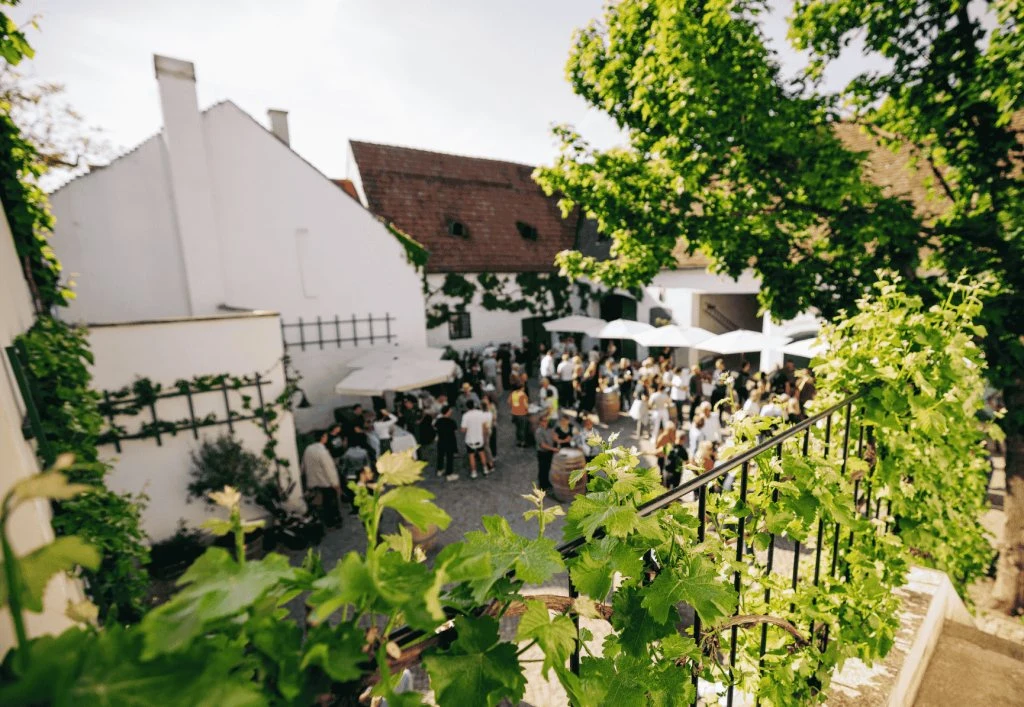
The place is quiet before it is performative. Around the estate, vineyards and farmland hold the pace; the cellar and outdoor tasting areas belong to the same rural rhythm rather than to a designed spectacle. Tastings can happen at the bar or closer to the vineyard, but the center of gravity remains the work: organic farming, cellar restraint, and the steady sorting of variety, site, and season.
Inside that atmosphere, the wines have room to stay composed. Grüner Veltliner brings the estate back to loess. Roter Veltliner keeps the Wagram’s older regional voice in the foreground. The reds and sparkling wines widen the table without changing the house grammar. If there is a next move to follow, it is already named in the bottles Hummel chooses to put forward, especially 2024 Weißburgunder Wagram DAC Neudegg.
Questions
Frequently asked
Who runs Bioweingut Josef Hummel?
Josef Hummel is the winemaker at the family-run estate in Großriedenthal, and he is the fifth generation to work there.
What is the winery known for?
The winery focuses on organic Wagram DAC wines, with Grüner Veltliner and Roter Veltliner at the center of the range, alongside varieties such as Gelber Muskateller, Gemischter Satz, Chardonnay, Pinot Noir, Weißer Burgunder, and Zweigelt.
What kind of winemaking does the estate follow?
Bioweingut Josef Hummel is certified organic and works from loess and gravel soils, aiming for clean fruit, freshness, structure, and regional character.
Is parking available at the winery?
On-site parking is available.
Should visits be booked in advance?
Reservations are recommended.
The field
How it compares
| Place | Notes |
|---|---|
| Bioweingut Josef Hummel | Wagram, $$ |
| Bioweingut Arkadenhof Hausdorf | Großriedenthal |
| Bioweingut Martin Diwald | Großriedenthal |
| Eschenhof Holzer | Großriedenthal |
| Familie Bauer - Bioweingut | Großriedenthal |
| Weingut Familie Schuster | Großriedenthal |
| Weingut Mehofer – Neudeggerhof | Großriedenthal |
Similar places

The Sunday email
Read about the people behind wineries like Bioweingut Josef Hummel in the Sunday email.
Every Sunday we send a lead story and up to four more about the chefs, winemakers, sommeliers and hoteliers behind the restaurants, bars, wineries and hotels we cover.
Recent stories
Free. One email a week, and you can unsubscribe from any issue.