Bodegas y Vinedos Pujanza
- 01CityLaguardia Alava, Spain
Single vineyards before cellar style.
- Falstaff Winery - 4 Stars · 2026
The vineyard comes before the barrel
The fruit leads the decision at Bodegas y Vinedos Pujanza in Laguardia Alava. The house was founded in 1998 in Rioja Alavesa with a clear argument: Rioja could look back toward its older habits and still work with a contemporary eye, so long as the vineyard stayed first. Carlos San Pedro, a fifth-generation winegrower, founded the estate and remains its owner and technical director, which keeps the cellar answerable to the parcels rather than the reverse. This is not a cellar style with grapes asked to fit it; the winery was built to read estate plots, clay-limestone soils, and the cooling line of the Sierra de Cantabria before oak has its say. Around that sits a medium-scale Rioja cellar, quiet in its manner, with Tempranillo and Viura as the named varieties and a sustainable approach to the land. The estate language is direct. Freshness, fruit left unmasked, and structure in the mouth matter more here than weight for its own sake.
Single vineyards, kept separate
The craft at Pujanza begins with separation. The winery’s identity rests on single-vineyard bottlings, among them Norte, Hado, Finca Valdepoleo, and Cisma, each tied to a particular plot rather than to a cellar recipe. The vineyard plots are registered at government level, and the vines are at least 35 years old. For a single-vineyard wine, the same team must manage the plot for over 10 years, a long enough apprenticeship to learn which rows move early, which hold acidity, and which need restraint at harvest. Pujanza reduces grape yields against standard D.O.Ca. Rioja rules, then reduces juice yields as well, a choice that spends volume to keep concentration. Fermentation may use stainless steel or oak, depending on the wine, while the aging program keeps Rioja tradition in view through American oak, large oak vessels, and smaller barriques. The point is not novelty. The method asks each parcel to arrive with its own shape, then gives it enough cellar work to hold that shape in bottle.
A cellar door tied to the slopes
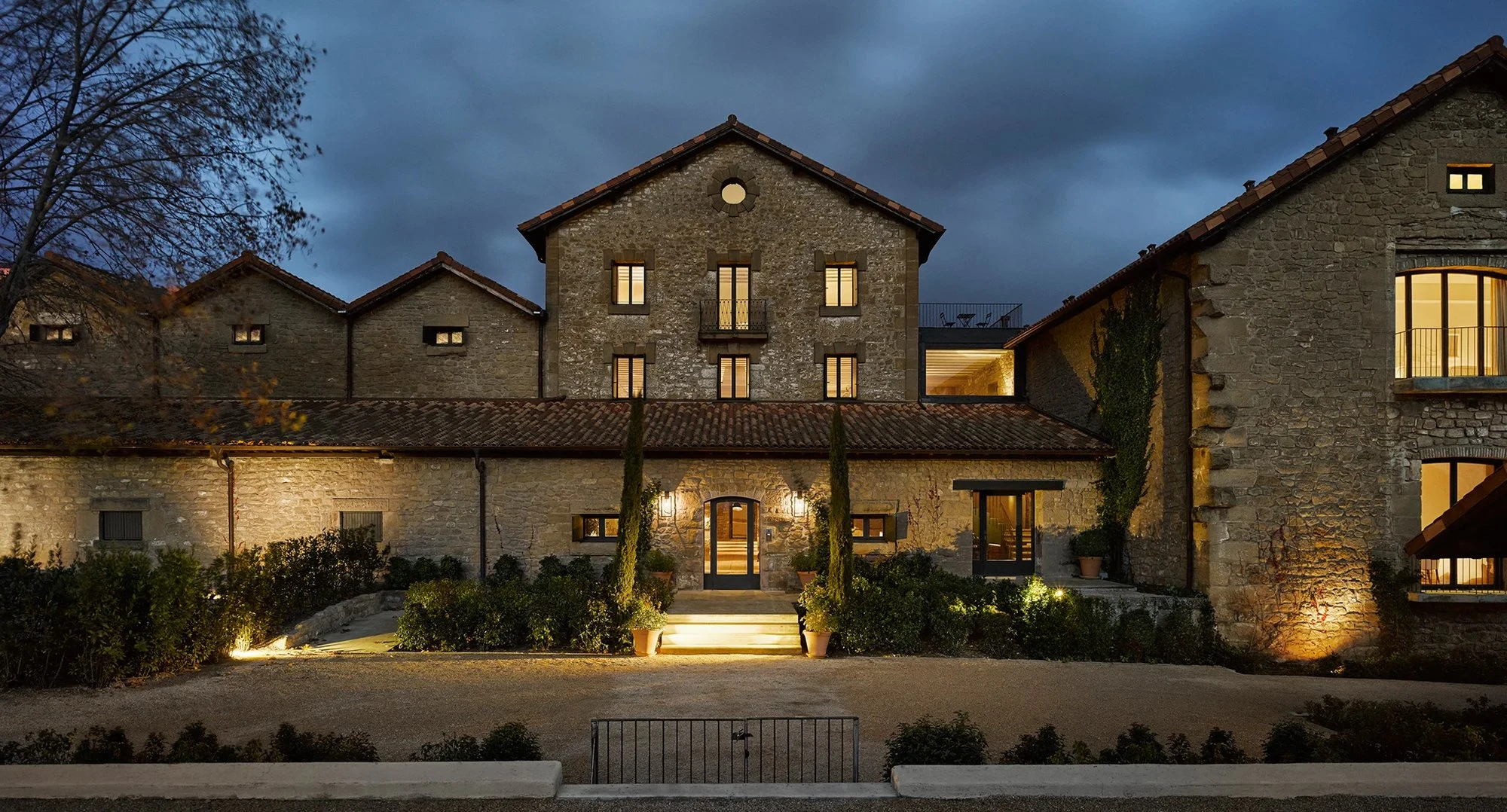
The room is a modern, vineyard-centered winery at the foot of the Sierra de Cantabria, in a part of Rioja Alavesa where the landscape is not background. It is part of the cellar’s argument. The visit experience follows that same line: guided tasting, a quiet pace, and a close connection between glass and vineyard rather than a performance of luxury. The setting is scenic, but the useful texture is practical. Clay-limestone soils, a moderating mountain influence, and the edge of the vine-growing zone all sit behind the wines before the barrel room enters the conversation. Inside that frame, the house style wants clarity from Tempranillo and Viura, not decoration.
What the house keeps in play
Pujanza matters because it belongs to the Rioja argument that grower-producers can carry tradition without freezing it. The estate’s phrase, looking back at traditional Rioja with a new perspective, lands in the vineyard rather than in nostalgia. Cisma, Finca Valdepoleo, Hado, and Norte keep that argument concrete, bottle by bottle, with each parcel asked to speak in its own register.
Questions
Frequently asked
Who founded Bodegas y Viñedos Pujanza?
Bodegas y Viñedos Pujanza was founded in 1998 by Carlos San Pedro, a fifth-generation winegrower, who remains the estate’s owner and technical director.
What is the winery known for?
Pujanza is known for single-vineyard bottlings, including Norte, Hado, Finca Valdepoleo, and Cisma, with Tempranillo and Viura kept close to the character of each parcel.
What is the visiting format?
Visits are by guided tasting, with a quiet pace and a focus on the link between the glass and the vineyard.
What style of winemaking does the estate follow?
The cellar is built to read estate plots, clay-limestone soils, and the cooling influence of the Sierra de Cantabria before oak has its say. Fermentation may take place in stainless steel or oak, and the ageing programme uses American oak, large oak vessels, and smaller barriques.
Do visits need to be booked in advance?
Yes. The reservation policy is appointment only.
The field
How it compares
| Place | Notes | Awards |
|---|---|---|
| Bodegas y Vinedos Pujanza | Laguardia, $$ | · |
| Château Lafleur | Pomerol | · |
| Domaine Coche-Dury | Meursault | · |
| Domaine Faiveley | Nuits-Saint-Georges | World's 50 Best |
| Ridge Vineyards | Cupertino | World's 50 Best |
| Schloss Johannisberg | Geisenheim-Johannisberg | World's 50 Best |
| Vieux Château Certan | Pomerol | · |