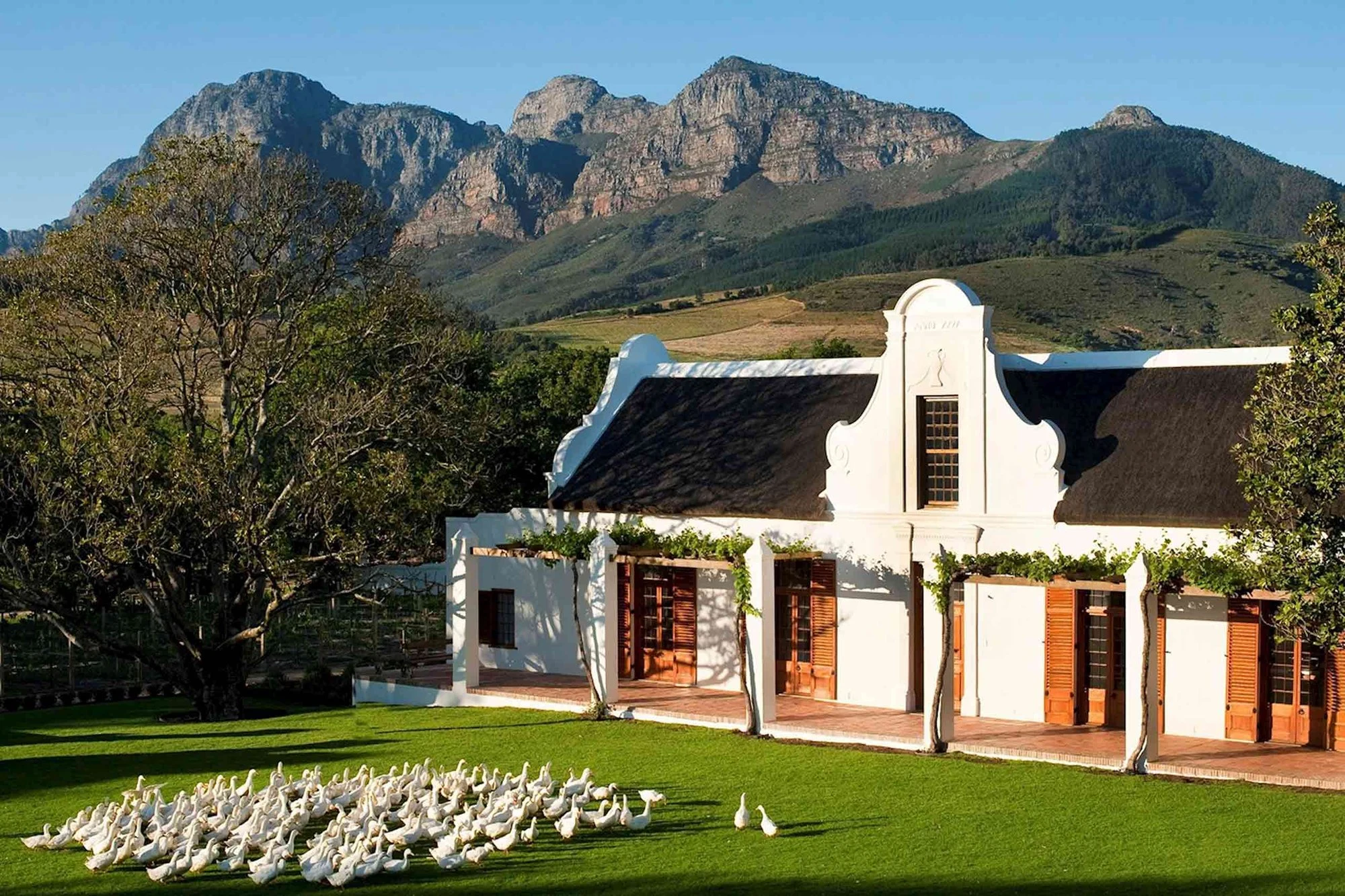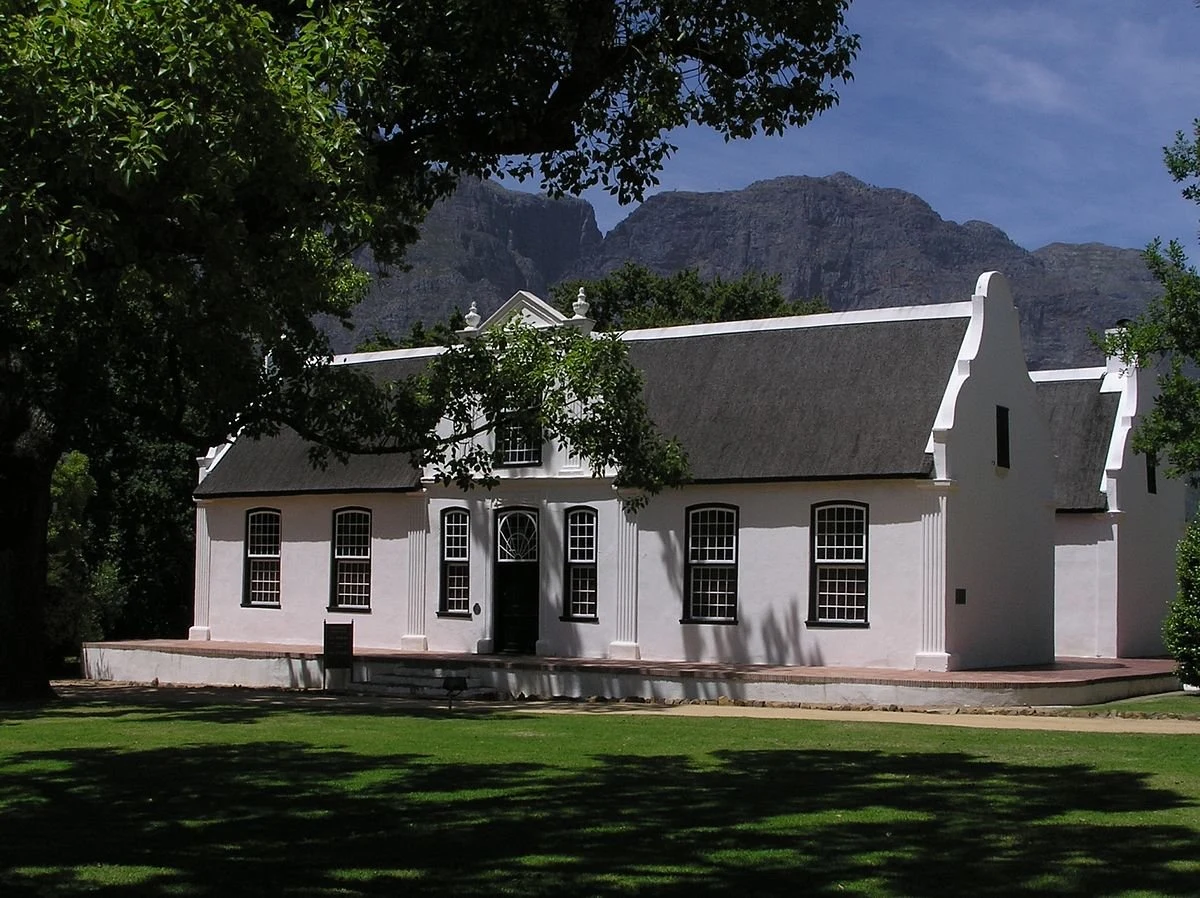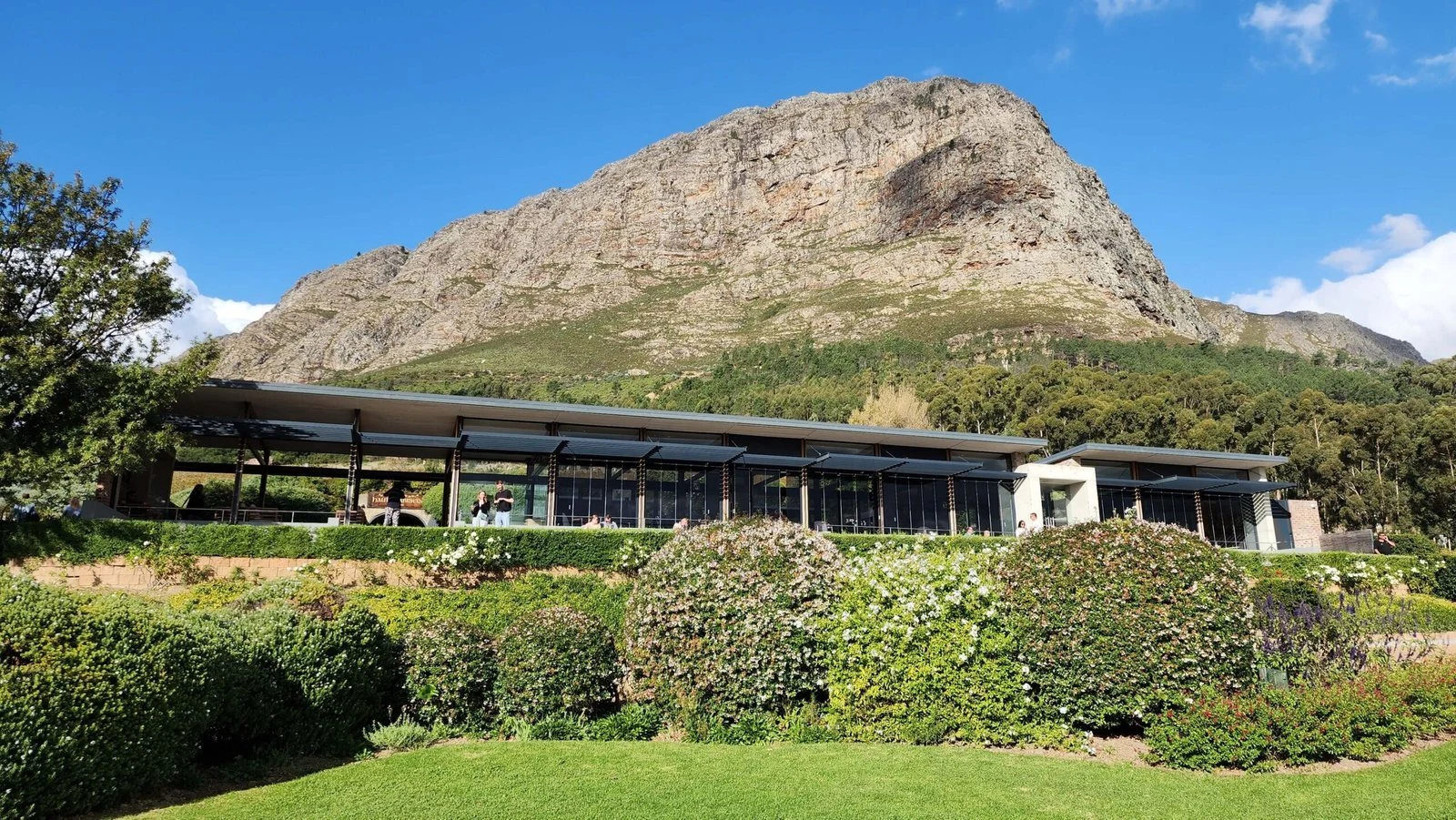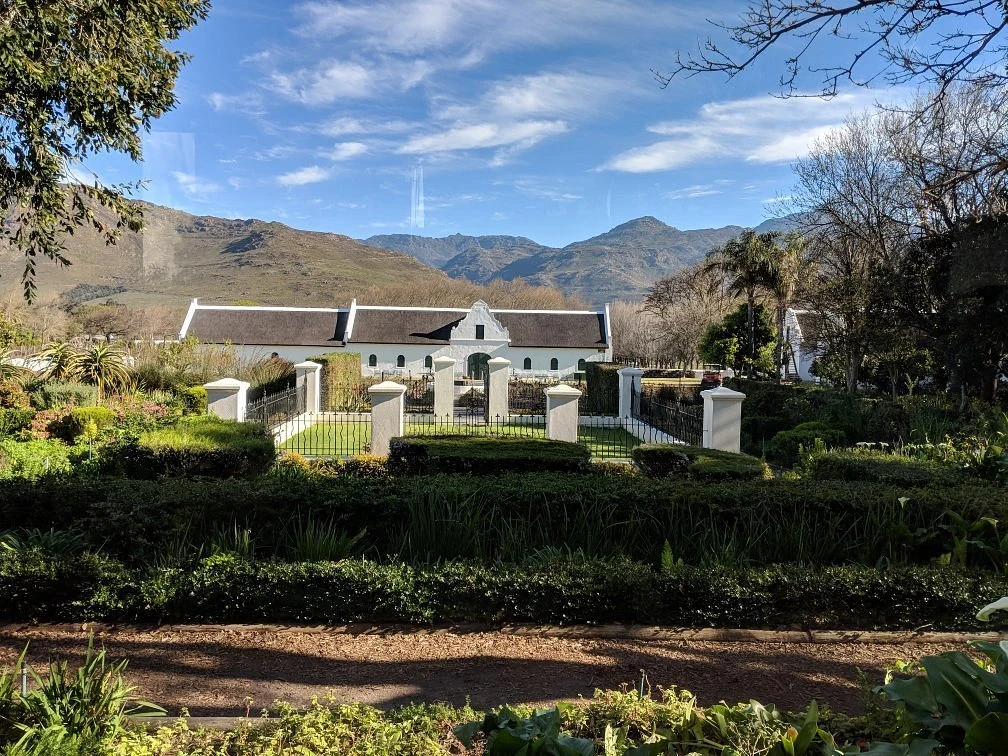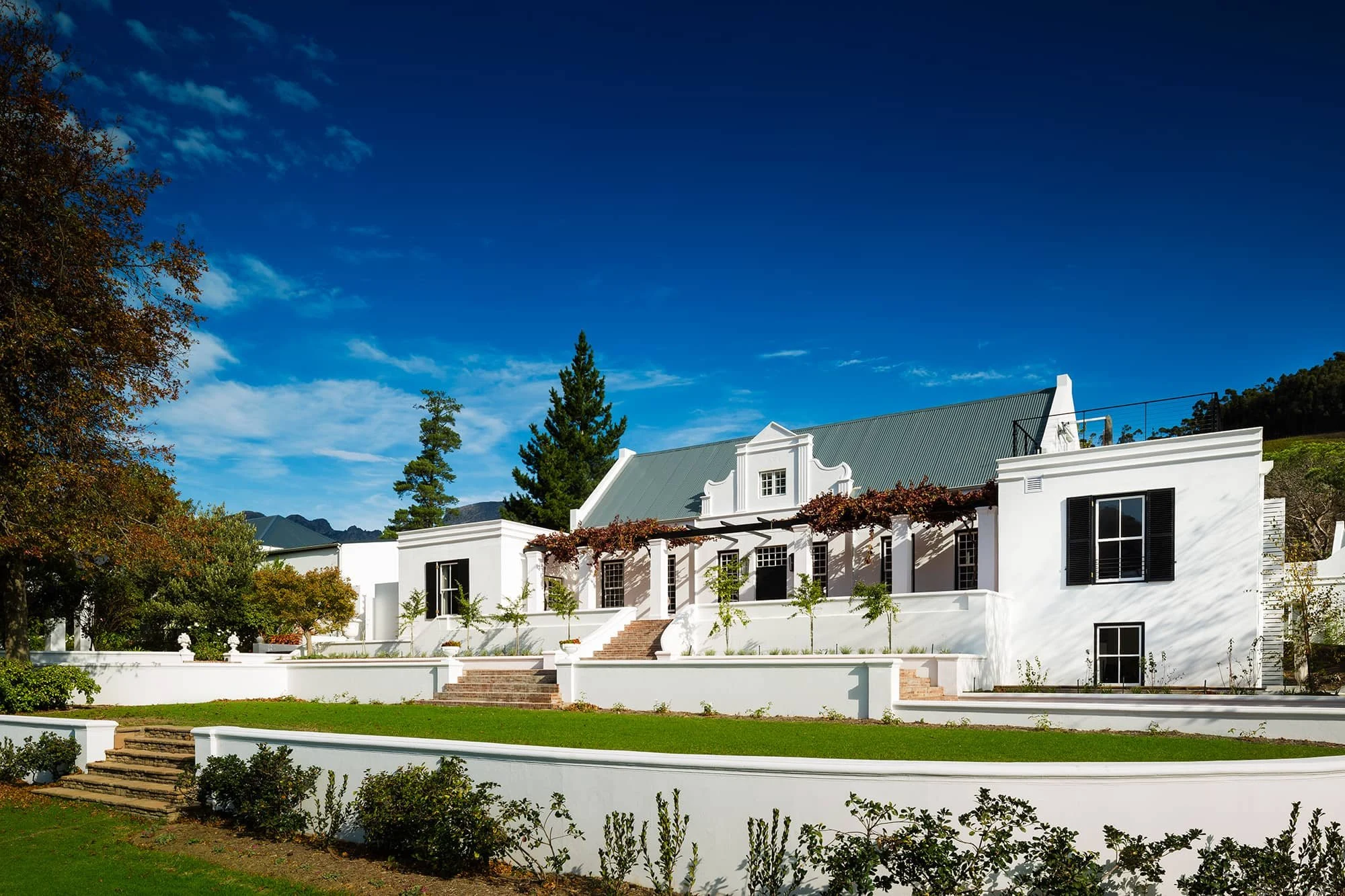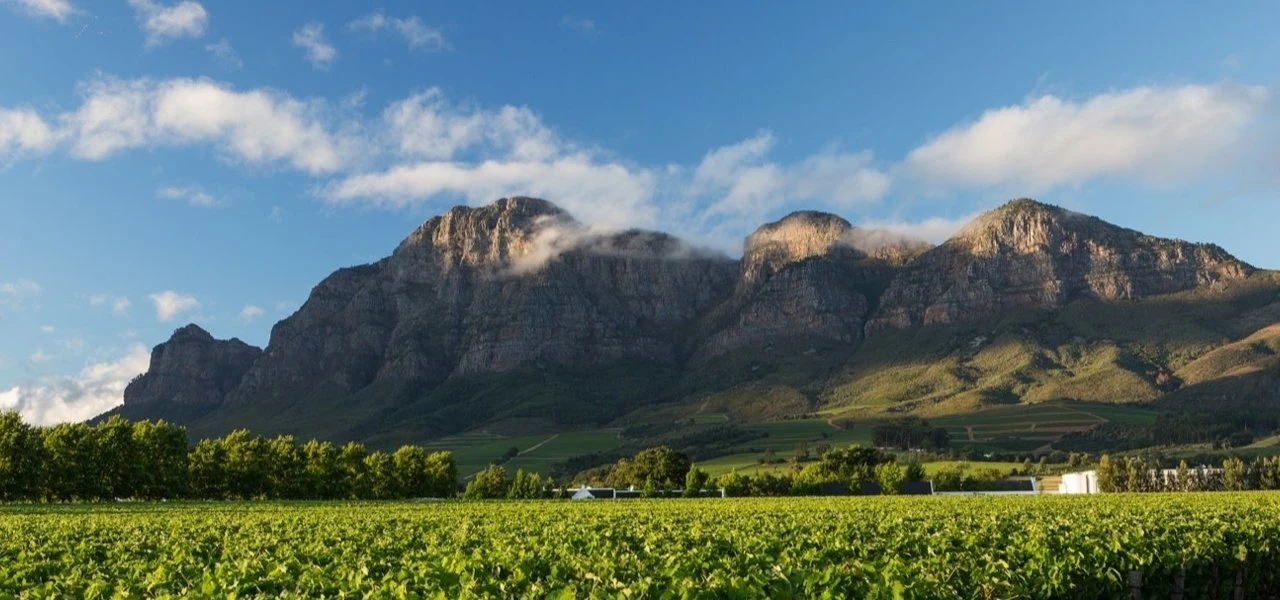
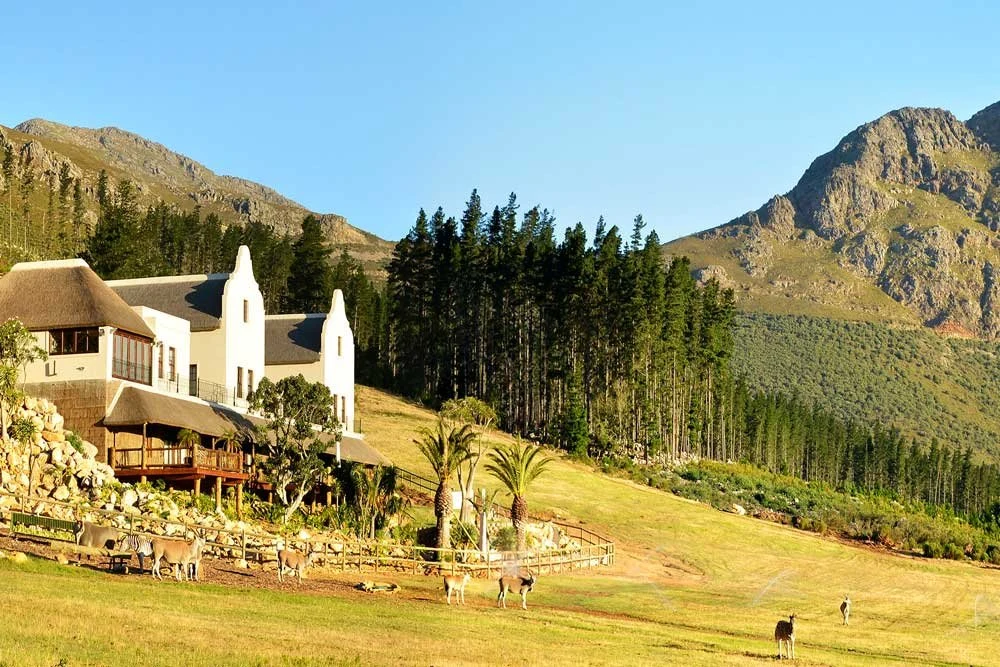
Chamonix Wine Farm sits on the cooler, higher-altitude margins of Franschhoek's valley floor, earning Pearl 2 Star Prestige recognition in 2025. The estate's position in one of the Cape Winelands' most concentrated fine-wine corridors places it alongside peers such as Boschendal and La Motte, though its mountain-backed terroir gives it a distinct identity within that group.
<h2>Where the Valley Narrows and the Altitude Rises</h2><p>Chamonix Wine Farm is a winery in Franschhoek, Western Cape, with a 2025 Pearl 2 Star Prestige award and a price tier of 3. The road into Chamonix Wine Farm along Uitkyk Street follows the same corridor that has shaped Franschhoek's wine identity for more than three centuries: a tight valley flanked by the Franschhoek and Groot Drakenstein mountain ranges, with soils and elevation that change meaningfully over short distances. At this end of the valley, the air carries a different quality in the early morning, and the vineyard blocks work harder against cooler temperatures and steeper gradients. That physical context is not incidental to what ends up in the glass; it is the primary argument for why the estate occupies its particular position in the Franschhoek hierarchy.</p><p>Franschhoek is one of the Western Cape's most densely populated fine-wine corridors. Neighbours such as <a href="https://www.enprimeurclub.com/wineries/babylonstoren-franschhoek-winery">Babylonstoren</a>, <a href="https://www.enprimeurclub.com/wineries/boschendal-franschhoek-winery">Boschendal</a>, <a href="https://www.enprimeurclub.com/wineries/haute-cabriere-franschhoek-winery">Haute Cabrière</a>, <a href="https://www.enprimeurclub.com/wineries/la-motte-wine-estate-franschhoek-winery">La Motte Wine Estate</a>, and <a href="https://www.enprimeurclub.com/wineries/anthonij-rupert-wyne-l-ormarins-franschhoek-winery">Anthonij Rupert Wyne (L'Ormarins)</a> each occupy distinct terroir pockets within the same appellation. Chamonix's position at the valley's higher, cooler reaches gives it a separation from the warmer, more alluvial floor sites, and that separation drives the house's orientation toward varieties and styles that benefit from slower ripening and retained acidity.</p><h2>The Franschhoek Altitude Argument</h2><p>Altitude viticulture in the Cape Winelands has gained significant attention over the past decade, with growers increasingly moving blocks upslope to preserve freshness in warmer vintages. Chamonix sits within this broader structural shift. Higher-elevation sites in Franschhoek typically show longer hang times, lower sugar accumulation at physiological maturity, and more pronounced mineral and herbal registers in the finished wines. These are not marketing abstractions; they translate into measurable differences in pH, acid levels, and aromatic profile when set against valley-floor fruit from the same vintage.</p><p>This pattern plays out across the broader Cape Winelands region. Estates working cooler mountain-facing or high-altitude blocks, from <a href="https://www.enprimeurclub.com/wineries/constantia-glen-cape-town-winery">Constantia Glen in Cape Town</a> to <a href="https://www.enprimeurclub.com/wineries/creation-wines-hermanus-winery">Creation Wines in Hermanus</a>, have positioned themselves around a shared vocabulary of precision and restraint that contrasts with the fuller, more extracted styles that defined South African fine wine in the 1990s and early 2000s. Chamonix belongs to that revisionist cohort, even if the estate's methods and range sit outside what can be fully verified here without additional sourcing.</p><h2>Sustainability and How the Vineyards Are Farmed</h2><p>The sustainability question in South African viticulture has moved well beyond certification compliance. Across the Western Cape, estates are grappling with water scarcity, shifting rainfall patterns, and the long-term viability of farming under increasing climate pressure. Franschhoek's mountain-fed streams and higher-altitude positions provide some insulation, but the pressure is real across the appellation. Estates that farm with soil health and biodiversity at the centre of their decisions are, in aggregate, better positioned for that future than those treating the land purely as a production input.</p><p>Chamonix's mountain setting lends itself to lower-intervention farming approaches, though the specific certifications or practices currently in place are not documented in What the geography does confirm is that rocky, well-drained soils at altitude require less corrective intervention than heavier valley soils: natural drainage reduces disease pressure, and cooler temperatures moderate the pest cycles that push conventional growers toward chemical dependence. Whether Chamonix formally pursues organic or biodynamic certification, the terroir itself sets a lower baseline for inputs.</p><p>Across the broader South African wine scene, the estates earning consistent critical attention, whether from local competitions or international coverage, are disproportionately those farming with long-term soil health in mind. The Pearl 2 Star Prestige award received by Chamonix in 2025 places it inside the tier of estates that attract structured evaluation, and at that level, viticulture quality is a central criterion. For visitors approaching the estate with sustainability as a priority, the conversation with tasting room staff will be more instructive than any printed claim on a label.</p><h2>Franschhoek's comparable set and Where Chamonix Sits Within It</h2><p>The Franschhoek appellation punches above its size in international recognition. Its concentration of estates, restaurants, and hospitality infrastructure make it South Africa's most visited wine destination, and that visibility creates a sharply competitive peer environment. Within the valley, there is a meaningful distinction between the large heritage estates with substantial tourism operations, think Boschendal's multiple restaurants and accommodation tiers, and the more production-focused properties where the tasting experience is more intimate and the wine program takes clear precedence over hospitality volume.</p><p>Chamonix occupies a position closer to the latter category, at least in terms of its terroir-driven identity. The Pearl 2 Star Prestige recognition for 2025 signals that the estate is operating at a level where critical benchmarking matters, and where the wines are expected to hold their own against the appellation's stronger names. For context on how Franschhoek estates compare against peers from other Western Cape appellations, properties such as <a href="https://www.enprimeurclub.com/wineries/vergelegen-wine-estate-somerset-west-winery">Vergelegen Wine Estate in Somerset West</a>, <a href="https://www.enprimeurclub.com/wineries/neethlingshof-estate-stellenbosch-winery">Neethlingshof Estate in Stellenbosch</a>, and <a href="https://www.enprimeurclub.com/wineries/val-de-vie-estate-paarl-winery">Val de Vie Estate in Paarl</a> offer useful reference points. Each operates from a different appellation base but competes in a similar tier of structured recognition and visitor expectation.</p><p>Beyond the Western Cape entirely, South African wine has widened its international comparison set. Estates like <a href="https://www.enprimeurclub.com/wineries/graham-beck-wines-robertson-winery">Graham Beck Wines in Robertson</a> have built export profiles that allow domestic quality benchmarks to be tested against global opinion, and the category confidence that creates filters back into the competitive standards expected at estate level. The Pearl award structure Chamonix operates within is one of those domestic benchmarks.</p><h2>Planning a Visit</h2><p>Chamonix Wine Farm is located on Uitkyk Street in Franschhoek, in the 7690 postal district. The estate is accessible by car from central Franschhoek village, which sits approximately one hour's drive from Cape Town via the N1 and R45. Franschhoek itself is compact enough that the village, its restaurants, and the surrounding estates can be covered in a day, though the depth of the wine program at Chamonix and its neighbours rewards a slower pace. Visitors combining the estate with a wider Franschhoek itinerary can use the Franschhoek restaurants guide for context on what the town's dining and drinking scene now offers beyond the tasting rooms.</p><p>Advance booking is recommended. The Pearl 2 Star Prestige award signals a program operating at a level where advance planning is advisable, particularly during the October to April harvest season when visitor numbers across Franschhoek are highest. The cooler mountain-adjacent setting at Chamonix makes it a more comfortable mid-summer visit than some of the lower-lying valley estates.</p><p>For travellers building a wider Cape Winelands circuit, the contrast between Franschhoek's mountain-corridor style and the distilling traditions at <a href="https://www.enprimeurclub.com/wineries/oude-molen-distillery-grabouw-winery">Oude Molen Distillery in Grabouw</a>, or the structured Bordeaux-influenced range at <a href="https://www.enprimeurclub.com/wineries/accendo-cellars">Accendo Cellars in St. Helena</a>, illustrates how differently producers in the same hemisphere interpret the relationship between terroir, restraint, and ambition. Chamonix, at its altitude and with its award recognition, sits at a point in that conversation worth engaging with directly.</p>
Chamonix Wine Farm is located at Uitkyk St, Franschhoek, 7690, Franschhoek.
Chamonix Wine Farm has received recognition including: Pearl 2 Star Prestige (2025).
Chamonix is associated with high-altitude viticulture in the Franschhoek valley, where vineyard elevation shapes cooler ripening conditions and longer hang times. The estate earned Pearl 2 Star Prestige recognition in 2025, placing it among Franschhoek's more formally rated producers. Specific variety breakdowns are best confirmed directly with the estate before visiting.
Chamonix sits within Franschhoek's concentrated comparable set of estate producers and holds a Pearl 2 Star Prestige rating for 2025, a credential that reflects consistent quality across its portfolio. The estate's position along Uitkyk Street places it at the valley's upper corridor, where altitude and aspect are the primary arguments for its wine style. That combination of formal recognition and site-driven farming is where the estate's case is strongest.
Franschhoek estates at the Pearl 2 Star Prestige level typically operate tasting rooms that require advance bookings, particularly during peak summer weekends from December through February. Contact details are not listed in current public records, so booking directly via the estate's own channels is the practical approach. Visiting mid-week during the shoulder season of March to April generally offers more availability across the appellation.
The Pearl 2 Star Prestige designation, awarded in 2025, places Chamonix among the formally graded tier of Cape Winelands producers, a group that remains a minority within the Franschhoek appellation as a whole. Franschhoek carries significant international visibility relative to its geographic footprint, which makes rated producers here more comparable to peers in Stellenbosch and Hemel-en-Aarde than their valley size might suggest. Visitors using ratings as a selection filter will find Chamonix's 2025 credential a meaningful point of differentiation on Uitkyk Street.
Chamonix is a sound choice when the visit centres on estate-specific wine with a documented quality benchmark: the Pearl 2 Star Prestige (2025) gives a concrete reference point that many Franschhoek producers do not yet carry. It fits travellers who want a producer with a verifiable track record rather than a cellar door selected by location alone. The Uitkyk Street address puts it within reach of Franschhoek's broader restaurant and hospitality infrastructure for a full-day itinerary.
Uitkyk St, Franschhoek, 7690
Franschhoek
Anthonij Rupert Wyne (L’Ormarins)