Made ByWinery

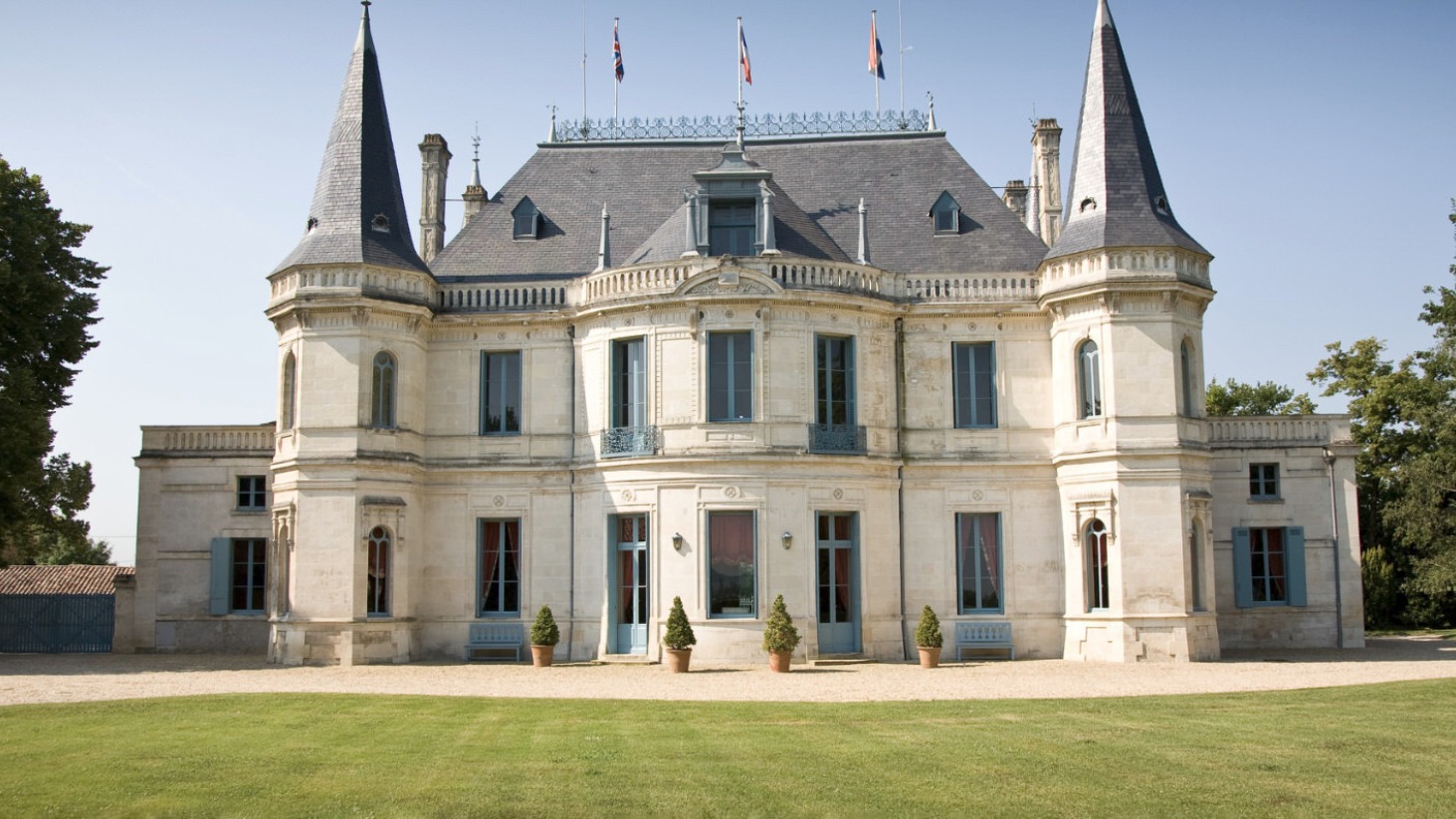
Château Palmer has been producing wine from the Margaux appellation since 1824, placing it among the oldest continuously operating estates on the Médoc's left bank. Under winemaker Thomas Duroux, the property holds a Pearl 4 Star Prestige rating (2025) and operates at the upper tier of third-growth classification, routinely trading above its 1855 rank in secondary markets.
At a glance
- Price
- $$$$
- Neighborhood
- Margaux
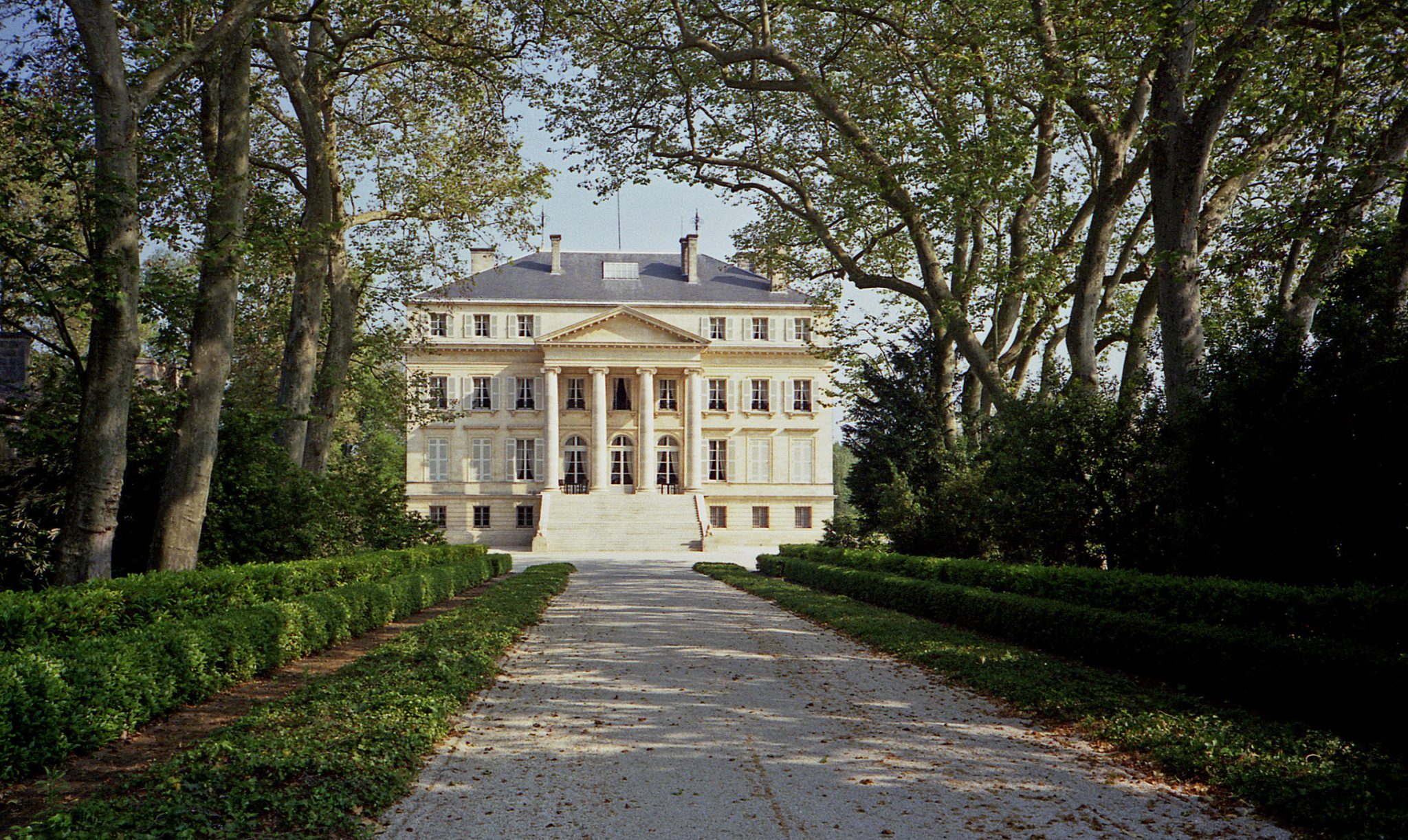
<h2>Two Centuries of Margaux, One Address on the Route d'Issan</h2><p>The Route d'Issan runs south through the commune of Margaux-Cantenac with the unhurried certainty of a road that has outlasted most things built beside it. Château Palmer sits along this stretch with a composed, château-fronted presence that reflects the architectural confidence of mid-nineteenth-century Médoc ambition: slate-roofed towers, symmetrical facade, and the kind of gravel forecourt that announces a property built to receive serious visitors. The estate does not advertise its age loudly, but its history places it firmly in the era when Bordeaux's classification system was still thirty years from being formalised. That context matters: Palmer was already an established name before the 1855 Grand Cru Classé list enshrined it as a Troisième Cru.</p><p>For those visiting the Margaux appellation, the concentration of classified estates along this corridor is notable. <a href="https://www.enprimeurclub.com/wineries/chateau-lascombes-margaux">Château Lascombes</a>, <a href="https://www.enprimeurclub.com/wineries/chateau-desmirail-margaux-winery">Château Desmirail</a>, <a href="https://www.enprimeurclub.com/wineries/chateau-durfort-vivens-margaux-winery">Château Durfort-Vivens</a>, <a href="https://www.enprimeurclub.com/wineries/chateau-ferriere-margaux-winery">Château Ferrière</a>, and <a href="https://www.enprimeurclub.com/wineries/chateau-marquis-de-terme-margaux-winery">Château Marquis-de-Terme</a> all occupy the same commune, making a focused half-day circuit genuinely practical. Palmer, however, tends to anchor that itinerary rather than complement it, a function of both its 2025 Pearl 4 Star Prestige recognition and its secondary-market position. Bottles regularly trade above third-growth pricing, aligning Palmer with higher-ranked competitors rather than its classification peers.</p><h2>The Palmer Position in the Margaux Tier</h2><p>Margaux's classified-growth producers divide, broadly, into those whose market performance mirrors their 1855 rank and those whose reputation has diverged from it over subsequent decades. Palmer belongs firmly to the second group. The estate's wines have sustained a pricing premium above its official classification for long enough that the gap reads less as an anomaly and more as a structural feature of the Bordeaux market. Collectors and en primeur buyers routinely price Palmer against second growths from the appellation, and in strong vintages the comparison holds.</p><p>That position shapes what a visit to the estate involves. Palmer is not a producer aimed at casual walk-in tourism. The property does receive guests, but the experience is calibrated for buyers, critics, and committed collectors rather than general wine tourists. Visitors coming from further afield, whether from <a href="https://www.enprimeurclub.com/wineries/chateau-batailley-pauillac-winery">Pauillac</a>, <a href="https://www.enprimeurclub.com/wineries/chateau-branaire-ducru-st-julien">Saint-Julien</a>, or <a href="https://www.enprimeurclub.com/wineries/chateau-belair-monange-saint-emilion-winery">Saint-Emilion</a>, should treat Palmer as a serious engagement rather than a drop-in tasting.</p><h2>Thomas Duroux and the Technical Programme</h2><p>In French fine wine, the winemaker's role tends to operate at a remove from the public-facing narrative of an estate, particularly at properties where the brand identity predates living memory. Palmer is an instructive case of how that dynamic plays out at high-prestige level. Thomas Duroux has held the winemaking position at the estate and represents continuity within an already-established stylistic register rather than a departure from it. The technical conversation around Palmer centres on the proportion of Merlot in the blend, which runs higher than most of its Margaux peers, and on vineyard management practices that have moved progressively toward biodynamic certification over recent years.</p><p>That blend composition has practical implications for pairing and service. Higher Merlot fractions in a Cabernet Sauvignon-dominant appellation tend to produce wines with earlier textural approachability, rounder mid-palate structure, and sometimes greater aromatic complexity at younger ages. It is part of why Palmer has long attracted comparison to Pomerol and Saint-Emilion producers as much as to its immediate Margaux neighbours. Estates like <a href="https://www.enprimeurclub.com/wineries/chateau-bastor-lamontagne">Château Bastor-Lamontagne in Preignac</a> and <a href="https://www.enprimeurclub.com/wineries/chateau-boyd-cantenac-cantenac-winery">Château Boyd-Cantenac in Cantenac</a> operate in stylistically different registers, which helps illustrate how much variation exists within even a small geographic radius on the Médoc.</p><h2>Food Pairing and Hospitality at the Estate Level</h2><p>Palmer sits within a broader Bordeaux trend. The appellation's leading estates have, over the past decade, invested in hospitality infrastructure that supports experiential visits: structured tasting formats, cellar access, and in some cases curated dining events tied to vertical presentations of older vintages. Palmer's position at the premium tier makes it a natural candidate for this kind of programming, though the specific format of any given visit should be confirmed directly with the estate.</p><p>What the wine itself demands at table is worth considering as a planning frame. Margaux's characteristic aromatic profile, violet and cassis-forward, with fine-grained tannin and an extended finish, is well-documented across the appellation. Palmer's Merlot-inflected version of that profile pairs with a wider range of preparations than a more austere, Cabernet-dominated Médoc. Classic Bordelaise service, roast lamb with herbs from the Landes, or duck preparations from the Dordogne, works reliably. More adventurously, the estate's approachability in younger vintages opens pairing conversations that stricter Cabernet houses at the same price point do not.</p><p>For those comparing Bordeaux hospitality to producer experiences elsewhere in France, the contrast with estates like <a href="https://www.enprimeurclub.com/wineries/albert-boxler-niedermorschwihr-winery">Albert Boxler in Niedermorschwihr</a> in Alsace or <a href="https://www.enprimeurclub.com/wineries/chartreuse-voiron-winery">Chartreuse in Voiron</a> is instructive. Bordeaux's classified growths operate within a commercial hospitality framework shaped by the en primeur system and the négociant trade. The relationship between estate and visitor is more formal, more appointment-driven, and more explicitly tied to commercial context than you would find at a smaller, family-run domaine.</p><h2>Planning a Visit</h2><p>Château Palmer is located at Rte d'Issan, 33460 Margaux-Cantenac, reachable from Bordeaux city by car in approximately forty minutes via the D2 Route des Châteaux north through the Médoc. The estate is appointment only. Visitors should arrange an appointment in advance. Walking in without an appointment at a property of this standing is unlikely to yield a productive visit. For context on how similar estates across different categories handle this kind of engagement, <a href="https://www.enprimeurclub.com/wineries/accendo-cellars">Accendo Cellars in St. Helena</a> and <a href="https://www.enprimeurclub.com/wineries/aberlour-aberlour-winery">Aberlour in Aberlour</a> both illustrate how premium producers in different regions calibrate access to their production tier.</p><p>The 2025 Pearl 4 Star Prestige award adds a current editorial credential. Pricing, when available through négociants or secondary market, reflects the estate's status above its 1855 classification, so budget planning for a case purchase or en primeur allocation should account for second-growth equivalents rather than third-growth benchmarks.</p>
Know before you go
- Dress code
- smart_casual
- Reservations
- appointment_only
- Parking
- on_site_lot
- Payment
- credit_card
Frequently asked
Is Château Palmer recognized by any major rating lists?
Château Palmer has received recognition including: Pearl 4 Star Prestige (2025).
Where can I find Château Palmer?
Château Palmer is located at Rte d'Issan, 33460 Margaux-Cantenac, Margaux.
What's the signature bottle at Château Palmer?
The estate's grand vin, sold simply as Château Palmer, is a Cabernet Sauvignon-Merlot blend from the Margaux appellation and the reference point against which the rest of the Palmer portfolio is measured. It consistently trades above its 1855 Third Growth classification in secondary markets, which positions it alongside Second Growth peers in practice if not in official rank. A second wine, Alter Ego de Palmer, was introduced to carry fruit from younger vines and different parcels.
What's the main draw of Château Palmer?
Palmer's primary appeal is the gap between its official 1855 classification as a Third Growth and its real-world market and critical standing, which regularly places it in Second Growth territory. That discrepancy, sustained across multiple decades, is rare in Bordeaux and makes the estate a reference point for anyone studying how reputation operates independently of a fixed hierarchy. The Pearl 4 Star Prestige recognition (2025) adds a current editorial credential to what is already a long-standing market reality.
Do I need a reservation for Château Palmer?
Château Palmer is a working wine estate on the Route d'Issan in Margaux-Cantenac, not a walk-in tasting room, so advance contact is required before visiting. The estate does not publish a public booking line in its standard directory listings, which means visit requests are handled through direct outreach via the château's official channels. Arriving without prior arrangement is not the norm at classified-growth properties of this tier.
How does Thomas Duroux's technical approach shape the style of Château Palmer?
Thomas Duroux, who has led the winemaking programme at Palmer, has overseen a period during which the estate has attracted attention for its work with organic and biodynamic practices in the vineyard, a less common commitment among classified-growth Bordeaux producers. That shift in viticulture feeds directly into the character of the wine, with greater emphasis placed on terroir expression at the parcel level. The Pearl 4 Star Prestige award (2025) reflects the continued critical recognition the estate has earned under his tenure.
Address
Rte d'Issan, 33460 Margaux-Cantenac
Margaux · Bordeaux
How it compares
- Cuisine
- Cabernet Sauvignon, Merlot
- Price
- $$$$
- Awards
- 1 recognition
- Notes
- Margaux
- Cuisine
- Cabernet Sauvignon, Merlot
- Price
- $$$$
- Awards
- 1 recognition
- Notes
- Margaux
- Cuisine
- Cabernet Sauvignon, Merlot
- Price
- $$$$
- Awards
- 1 recognition
- Notes
- Margaux
- Cuisine
- Cabernet Sauvignon, Merlot
- Price
- $$$$
- Awards
- 1 recognition
- Notes
- Margaux
- Cuisine
- Cabernet Sauvignon, Merlot
- Price
- $$$
- Awards
- 1 recognition
- Notes
- Margaux
- Cuisine
- Cabernet Sauvignon, Merlot
- Price
- $$$$
- Awards
- 1 recognition
- Notes
- Margaux