Made ByRestaurant
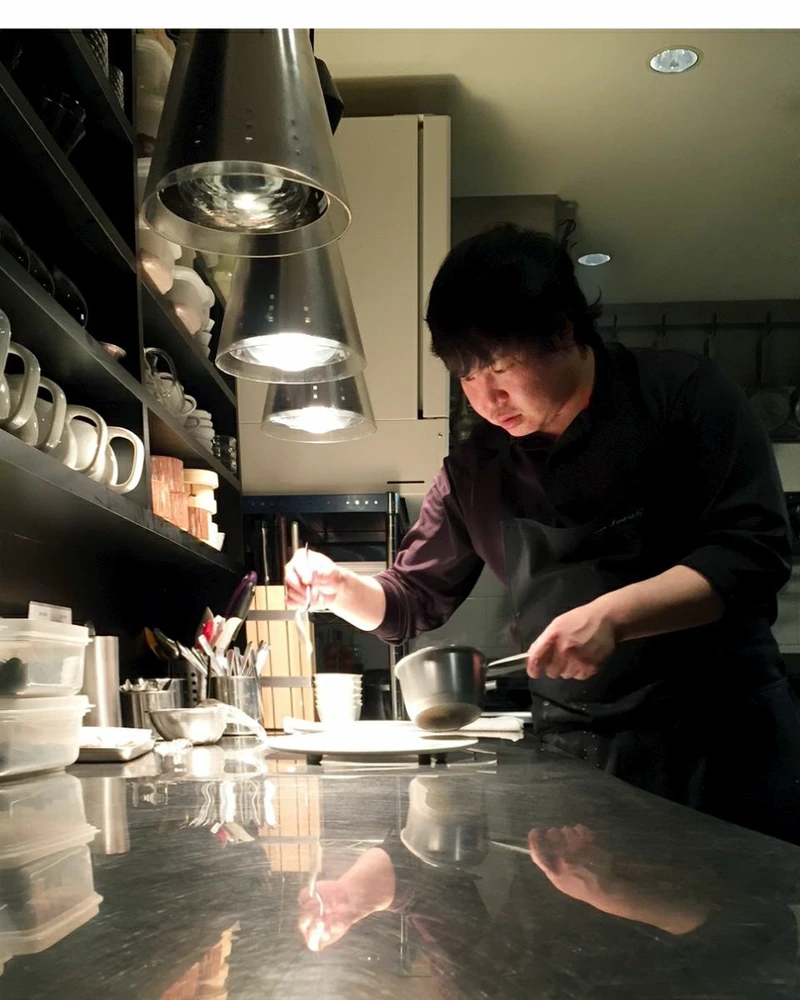
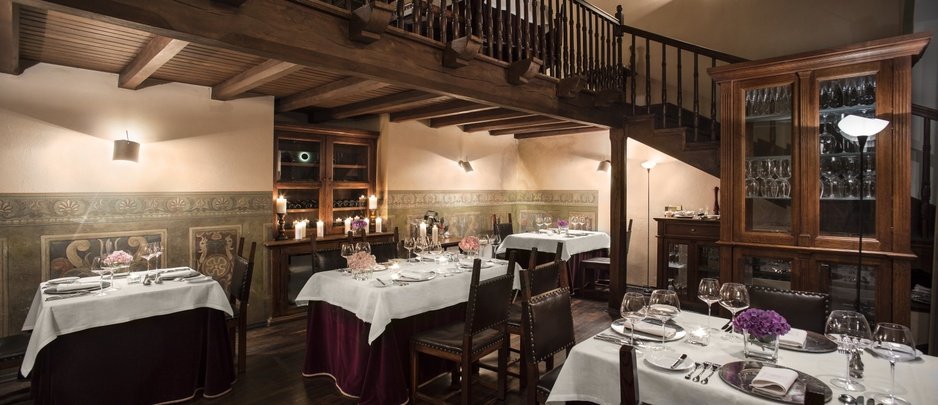
On Kraków's oldest and most architecturally preserved street, Copernicus holds a Michelin Plate for two consecutive years and a specific commendation for creative cooking. Chef Yuji Iwasaki leads a modern cuisine program that sits at the upper end of Kraków's fine dining tier, priced at €€€ and drawing consistently strong reviews from a 4.6 Google rating across 241 responses.
At a glance
- Cuisine
- Modern Polish Royal Cuisine
- Price
- $$$
- Per person
- $45
- Hours
- Mon: 12–11 PM; Tue: 12–11 PM; Wed: 12–11 PM; Thu: 12–11 PM; Fri: 12–11 PM; Sat: 12–11 PM; Sun: 12–11 PM
- Neighborhood
- Stare Miasto
- Rating
- 4.6 (286)
<h2>Kanonicza Street and What It Does to a Dinner</h2><p>Kanonicza, the cobbled lane connecting the Royal Castle at Wawel to the edge of Kraków's Old Town, is among the most intact medieval streets in Central Europe. The buildings lining it served canons of the Wawel Cathedral for centuries, and the street retains that quality of deliberate calm that institutional stonework tends to produce. Arriving at number 16 for dinner is not simply a matter of crossing a threshold; the address itself frames everything that follows. In a city where historical weight can easily shade into theme-park repetition, Kanonicza's residential seriousness cuts in the opposite direction. This is the kind of street that makes a meal feel considered before a single dish appears.</p><p>That context matters for understanding where Copernicus sits in Kraków's fine dining conversation. The restaurant holds a Michelin Plate for 2024 and 2025, with the Guide's specific notation for creative cooking in both cycles. The Michelin Plate designation, often underread by diners focused on starred restaurants, signals food that inspires a visit: technically sound, coherently conceived, and worth a traveller's detour. Across 286 Google reviews, the venue holds a 4.6 rating.</p><h2>The Creative Cooking Tier in Kraków's Fine Dining Scene</h2><p>Kraków has developed a small but genuine upper tier of modern cuisine restaurants, and the Michelin Guide's annual Poland selections have increasingly treated the city as a serious dining destination rather than a secondary afterthought to Warsaw. Within that tier, restaurants tend to cluster around two approaches: modern Polish, which uses the Michelin-starred <a href="https://www.enprimeurclub.com/restaurants/amarylis-krakow-restaurant">Amarylis</a> as a point of reference, and modern cuisine with a broader international or fusion vocabulary. Copernicus operates in the second category, priced at €€€ alongside <a href="https://www.enprimeurclub.com/restaurants/amarylis-krakow-restaurant">Amarylis</a> at the city's higher price point.</p><p>Below that tier, restaurants like <a href="https://www.enprimeurclub.com/restaurants/filipa-18-krakow-restaurant">Filipa 18</a> deliver modern cuisine at a €€ price point, and neighbourhood-focused addresses such as <a href="https://www.enprimeurclub.com/restaurants/folga-krakow-restaurant">Folga</a> and <a href="https://www.enprimeurclub.com/restaurants/karakter-krakow-restaurant">Karakter</a> build their own identities at different registers. The presence of <a href="https://www.enprimeurclub.com/restaurants/bufet-krk-krakow-restaurant">Bufet KRK</a> further down the pricing ladder shows the breadth of the city's current output. What Copernicus occupies, then, is a specific position: the Michelin-recognised creative cooking bracket, on the most historically freighted street in the Old Town, at a price that expects its guests to arrive with intention.</p><p>That cross-category dynamic is worth holding in mind when reading the Michelin notation for creative cooking. It is not awarded to restaurants for doing the expected thing with familiar ingredients. It marks places where the kitchen is making actual compositional decisions, combining influences, techniques, or ingredient pairings that wouldn't be predictable from the address. Chef Yuji Iwasaki's name suggests a Japanese lineage, which in the context of a modern cuisine program in Kraków implies a particular set of technical priorities: precision in temperature and texture, restraint in seasoning, and the kind of structural clarity that Japanese culinary training tends to embed. How that vocabulary meets Central European ingredients and Polish seasonal produce is the interesting editorial question, one the Michelin creative cooking citation implicitly endorses.</p><h2>How Copernicus Compares Beyond Kraków</h2><p>Across Poland, the modern cuisine category at the Michelin-recognised level produces a handful of peers worth mapping. <a href="https://www.enprimeurclub.com/restaurants/arco-by-paco-perez-gdansk-restaurant">Arco by Paco Pérez in Gdańsk</a> brings a Spanish fine dining framework to a Baltic city context. <a href="https://www.enprimeurclub.com/restaurants/muga-poznan-restaurant">Muga in Poznań</a> represents Poznań's own high end. hub.praga in Warsaw and <a href="https://www.enprimeurclub.com/restaurants/1911-restaurant-sopot-restaurant">1911 Restaurant in Sopot</a> each position themselves in distinct urban frames. In Wrocław, Acquario holds its own tier. Mountain-adjacent dining gets a different treatment at <a href="https://www.enprimeurclub.com/restaurants/giewont-koscielisko-restaurant">Giewont in Kościelisko</a>.</p><p>What places Copernicus in a specific peer bracket within that national picture is the combination of address, price tier, recurring Michelin recognition, and the cross-cultural kitchen leadership. The comparison at a European scale is instructive: modern cuisine programs led by chefs with Japanese training have produced some of the most discussed fine dining rooms in northern Europe, including <a href="https://www.enprimeurclub.com/restaurants/frantzen-stockholm-restaurant">Frantzén in Stockholm</a> and outposts such as <a href="https://www.enprimeurclub.com/restaurants/fzn-by-bjorn-frantzen-dubai-restaurant">FZN by Björn Frantzén in Dubai</a>, though those examples operate at a different scale and starred level. The point is less about direct comparison than about the culinary direction that cross-cultural modern cuisine programs tend to follow when executed with rigour.</p><h2>Planning a Visit: What to Know Before You Go</h2><p>Copernicus sits at Kanonicza 16, a short walk from Wawel Castle and within the boundaries of Kraków's UNESCO-listed Old Town. The address makes it both easy to locate and logistically sensible to combine with an afternoon at the castle or an evening exploring the Kazimierz quarter. For practical context on accommodation nearby, our full Kraków hotels guide covers the range of options across the Old Town and adjacent neighbourhoods.</p><p>At the €€€ price tier with Michelin recognition across consecutive years, this is a restaurant that rewards advance planning. Reservations are essential. Booking ahead is the practical posture, and the Michelin citations across two years mean the restaurant has maintained a consistent profile that drives forward demand.</p>
Know before you go
- Dress code
- smart_casual
- Reservations
- essential
- Parking
- street
- Payment
- credit_card, debit_card
- Outdoor seating
- Yes
- Groups
- Welcomed
Frequently asked
What kind of recognition has Copernicus received?
Copernicus has received recognition including: Michelin Plate (2025); HIGHLIGHTS: • CREATIVE COOKING; Michelin Plate (2024).
What's the pricing like at Copernicus?
Pricing at Copernicus is listed as €€€.
What's the signature dish at Copernicus?
The Michelin Guide's commendation for Copernicus specifically cites creative cooking rather than a single standout plate, which points to a kitchen whose identity is built around the overall programme rather than one anchor dish. That framing, repeated across both the 2024 and 2025 Michelin Plate awards, suggests chef Yuji Iwasaki's strength is in composition and consistency across a full menu at the €€€ price tier.
What's the address for Copernicus?
Copernicus is located at Kanonicza 16, 31-002 Kraków, Poland, Kraków.
Is there a head chef associated with Copernicus?
The chef associated with Copernicus is Yuji Iwasaki.
Should I book Copernicus in advance?
Yes. Two consecutive Michelin Plate recognitions (2024 and 2025) and a 4.6 Google rating across more than 240 reviews put Copernicus among the most in-demand tables in Kraków's Old Town. The Kanonicza 16 address also draws visitors staying near Wawel Castle, so weekend covers in particular tend to fill ahead. Booking at least a week or two out is advisable during peak tourist months.
Address
Kanonicza 16, 31-002 Kraków, Poland
Stare Miasto
How it compares
- Awards
- Michelin Plate
- Cuisine
- Modern Polish Royal Cuisine
- Notes
- Stare Miasto, $$$
- Awards
- Michelin Plate
- Cuisine
- Modern Polish
- Notes
- Kleparz, $$$
- Awards
- Michelin Plate
- Cuisine
- Modern Polish Offal-Focused
- Notes
- Kazimierz, $$$
- Awards
- —
- Cuisine
- Cocktail Bar with Food Pairings
- Notes
- Kazimierz, $$$
- Awards
- Michelin Plate
- Cuisine
- Modern European Fine Dining
- Notes
- Stare Miasto, $$$
- Awards
- 2 recognitions
- Cuisine
- Modern Polish Fine Dining
- Notes
- Old Town/Main Square (Rynek Główny), $$$