daGorini
In Residence
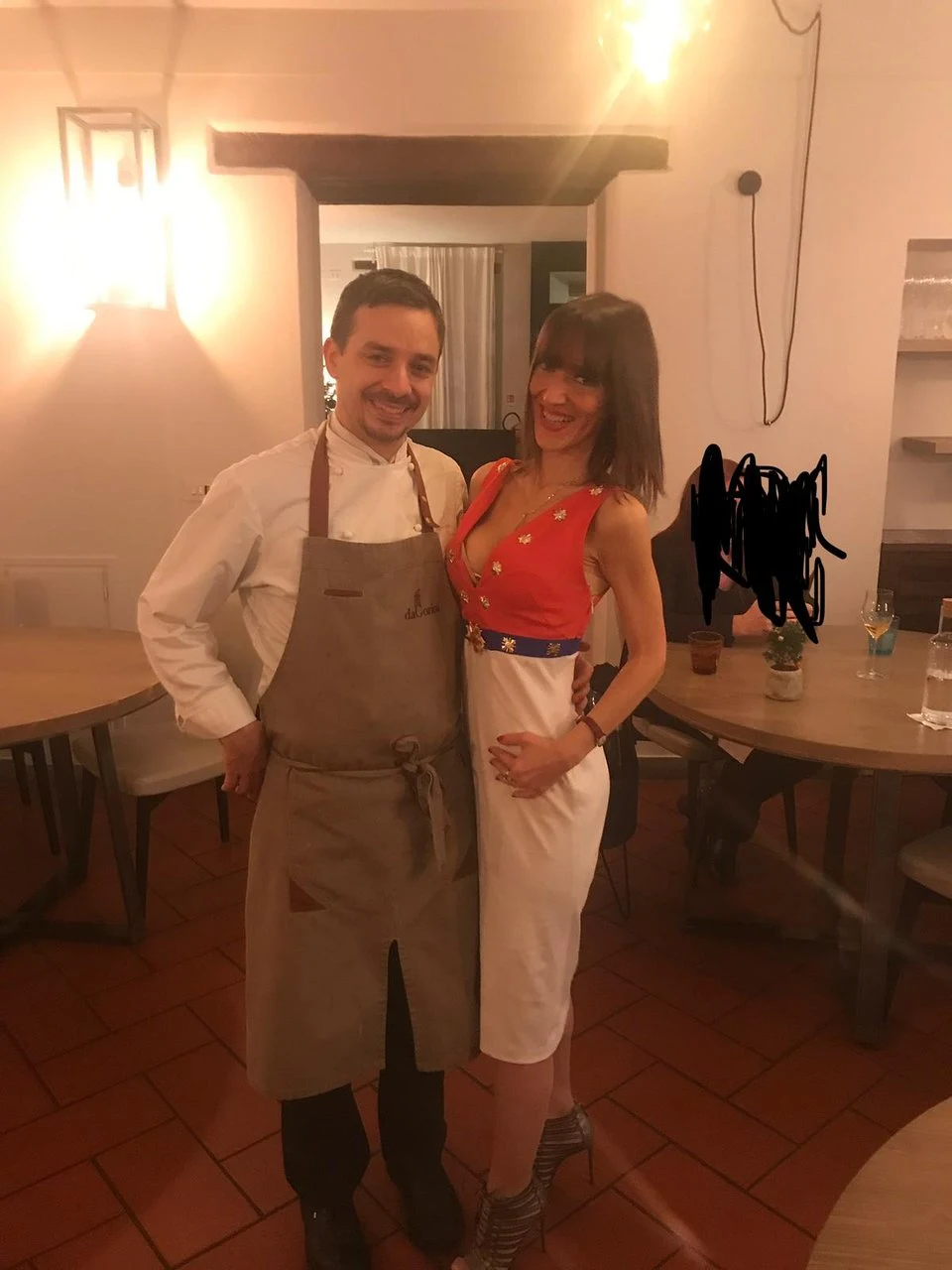
Gianluca Gorini
Chef
- 01CuisineModern Italian Romagna Cuisine
- 02CitySan Piero In Bagno, Italy
- 03RecognitionOne Michelin Star
- 1 Michelin Star · Michelin Guide
- Opinionated About Dining Top Restaurants in Europe Ranked #36 · 2026
- La Liste Top Restaurants: 87pts · 2026
- Michelin 1 Star · 2026
- La Liste Top Restaurants: 88.5pts · 2025
- Michelin 1 Star · 2025
- The Best Chef Two Knives · 2025
- Opinionated About Dining Top Restaurants in Europe Ranked #112 · 2025
- We're Smart World 3 Radishes · 2025
- Opinionated About Dining Top Restaurants in Europe Ranked #117 · 2024
- Opinionated About Dining Top New Restaurants in Europe Ranked #89 · 2023
A hill-town address, a serious kitchen
San Piero in Bagno sits in the Savio valley of the Apennine foothills, in the province of Forlì-Cesena, roughly equidistant between Florence and Rimini. It is the kind of small historic centre, stone streets, a medieval layout, a population measured in the thousands, that Italian guidebooks tend to pass over in favour of the region's better-known spa towns and Adriatic resorts. That peripheral status makes what happens at Via Giuseppe Verdi, 5 all the more instructive. daGorini has accumulated recognition that most restaurants in far larger Italian cities never reach: a ranking of #112 in the Opinionated About Dining European index for 2025, and a trajectory that began with an appearance at #89 on OAD's Leading New Restaurants in Europe list in 2023. They position daGorini inside a competitive set that includes Osteria Francescana in Modena, Enoteca Pinchiorri in Florence, and Uliassi in Senigallia, all operating at the €€€€ tier in cities with established fine-dining infrastructure.
The Romagna tradition and where daGorini sits within it
Italian regional cooking has long resisted the centralising logic of national cuisine. The gap between Roman offal culture, Neapolitan pizza orthodoxy, Milanese risotto precision, and Tuscan farmhouse restraint reflects genuine geographical and agricultural difference, not marketing segmentation. Emilia-Romagna occupies a specific position in this geography: it is the region most associated with the rich, fat-forward tradition of tortellini in brodo, tagliatelle al ragù, and cured meats from Parma and Modena. That tradition is well documented and deeply defended.
The Apennine foothills south of Cesena sit at a different altitude and with a different larder. Mushrooms, porcini especially, game birds, freshwater species from the Savio and its tributaries, and indigenous breeds like the Mora Romagnolo pig define what the land actually produces. daGorini's menu operates from exactly that larder, placing it closer in spirit to the mountain-inflected kitchens of Atelier Moessmer Norbert Niederkofler in Brunico or Reale in Castel di Sangro than to the Bolognese establishments that tend to define Emilia-Romagna's international reputation.
Chef Gianluca Gorini works this territory with a technique set that extends well beyond preservation of tradition. The kitchen's use of the barbecue grill as a primary instrument, applied to lamb, eel, and pigeon, reflects a deliberate interest in texture and char that sits in productive tension with the delicacy of freshwater fish preparations and what reviewers have described as vegetable courses with an almost confectionery precision. This is not fusion, and it is not nostalgia. It is a kitchen that takes the specific ecology of the upper Savio valley seriously and then pushes against it.
Where progressive Italian cooking meets provincial geography
The broader category of progressive Italian cuisine has developed along several distinct lines over the past two decades. At one end sit the urban flagship operations, Enrico Bartolini in Milan, with its multi-restaurant infrastructure and metropolitan address, or the internationally referenced prestige of Osteria Francescana. At another end, a smaller cohort of chefs has chosen provincial or rural settings deliberately, treating the limited local ingredient pool as a constraint that generates creative pressure rather than a commercial disadvantage.
daGorini belongs to that second group. The comparison set here is closer to Piazza Duomo in Alba or Le Calandre in Rubano, kitchens operating at genuine creative altitude in cities that are not Milan, Rome, or Florence. The difference is that Alba and Rubano have established wine and food tourism infrastructure to support destination dining. San Piero in Bagno does not, which means the journey to daGorini is a more deliberate act. Guests do not pass through on the way to something else. The restaurant is the destination.
That dynamic has precedents in Italian fine dining. Dal Pescatore in Runate has operated for decades in a similarly remote Mantuan village with no surrounding tourist circuit. Casa Vissani in Baschi sits on a highway in Umbria. Quattro Passi in Marina del Cantone occupies a small bay on the Sorrento Peninsula. The pattern of serious Italian kitchens choosing off-circuit addresses is well established. daGorini is the Apennine edition of that pattern, and its OAD trajectory over three consecutive years, new entry at #89 in 2023, #117 in 2024, #112 in 2025, suggests the recognition is consolidating rather than peaking.
The kitchen's signature approaches
The ingredients that recur across daGorini's documented profile give a clear picture of the kitchen's priorities. Mora Romagnolo suckling pig is a slow-maturing indigenous breed, practically extinct until recent conservation efforts returned it to a handful of Apennine farms; its presence on the menu signals a relationship with local producers that goes beyond seasonal sourcing. Freshwater fish from the area's rivers appear alongside game, pigeon, lamb, that reflects the hunting culture of the Apennine foothills. Mushrooms, the Apennine forest's most reliable ingredient across autumn and spring, provide an anchoring element.
Against this hyper-local foundation, the kitchen introduces what reviewers have called more exotic combinations, and the barbecue grill appears as a recurring technical choice rather than an occasional flourish. The vegetable courses have drawn specific comment: their precision and finish stand out in the dining room.
For visitors exploring the wider area, St. Hubertus in San Cassiano and Casa Perbellini 12 Apostoli in Verona represent the broader category of mountain-influenced and northern Italian progressive kitchens worth benchmarking against daGorini's approach.
Approaching and planning a visit
daGorini opens for lunch and dinner on Monday, Friday, Saturday, and Sunday, with Thursday evenings only and a full Tuesday-Wednesday closure. The Thursday-only evening service is a detail worth noting when planning a multi-day itinerary around the restaurant. San Piero in Bagno sits within reach of Bologna and Florence by road, and the surrounding area offers spa hotels in Bagno di Romagna, a town a few kilometres away with thermal facilities that have served the valley since Roman times.
The Google rating of 4.8 across 676 reviews is a secondary signal, but a consistent one. Reservations are essential.
Questions
Frequently asked
What recognition does daGorini hold?
daGorini holds 1 Michelin star.
Who works at daGorini?
Made By profiles Gianluca Gorini (Chef) at daGorini.
How expensive is daGorini?
daGorini is listed at a price level of $$$.
Where is daGorini and what does it serve?
daGorini is in San Piero in Bagno, San Piero In Bagno, serving Modern Italian Romagna Cuisine.
The field
How it compares
| Place | Awards | Cuisine | Notes |
|---|---|---|---|
| daGorini | Michelin 1 Star | Modern Italian Romagna Cuisine | San Piero in Bagno, $$$ |
| Blue Hill at Stone Barns | Michelin 2 Stars, World's 50 Best | Farm-to-Table Fine Dining | Tarrytown |
| El Celler de Can Roca | Michelin 3 Stars, World's 50 Best | Creative Catalan Fine Dining | Girona |
| Elkano | Michelin 1 Star, World's 50 Best | Basque Grilled Fish | Getaria |
| Jaan by Kirk Westaway | Michelin 2 Stars, World's 50 Best | Modern British Fine Dining | Singapore |
| Narisawa | Michelin 2 Stars, World's 50 Best | Modern Japanese Satoyama Fine Dining | Tokyo |
| Sorn | Michelin 3 Stars, World's 50 Best | Fine Southern Thai | Bangkok |
In residence
Similar places
Farm-to-Table Fine Dining
Blue Hill at Stone Barns
Tarrytown, United States
★★ · 50 Best
Creative Catalan Fine Dining
El Celler de Can Roca
Girona, Spain
★★★ · 50 Best
Basque Grilled Fish
Elkano
Getaria, Spain
★ · 50 Best
Modern British Fine Dining
Jaan by Kirk Westaway
Singapore, Singapore
★★ · 50 Best
Modern Japanese Satoyama Fine Dining
Narisawa
Tokyo, Japan
★★ · 50 Best
Fine Southern Thai
Sorn
Bangkok, Thailand
★★★ · 50 Best