De Kas
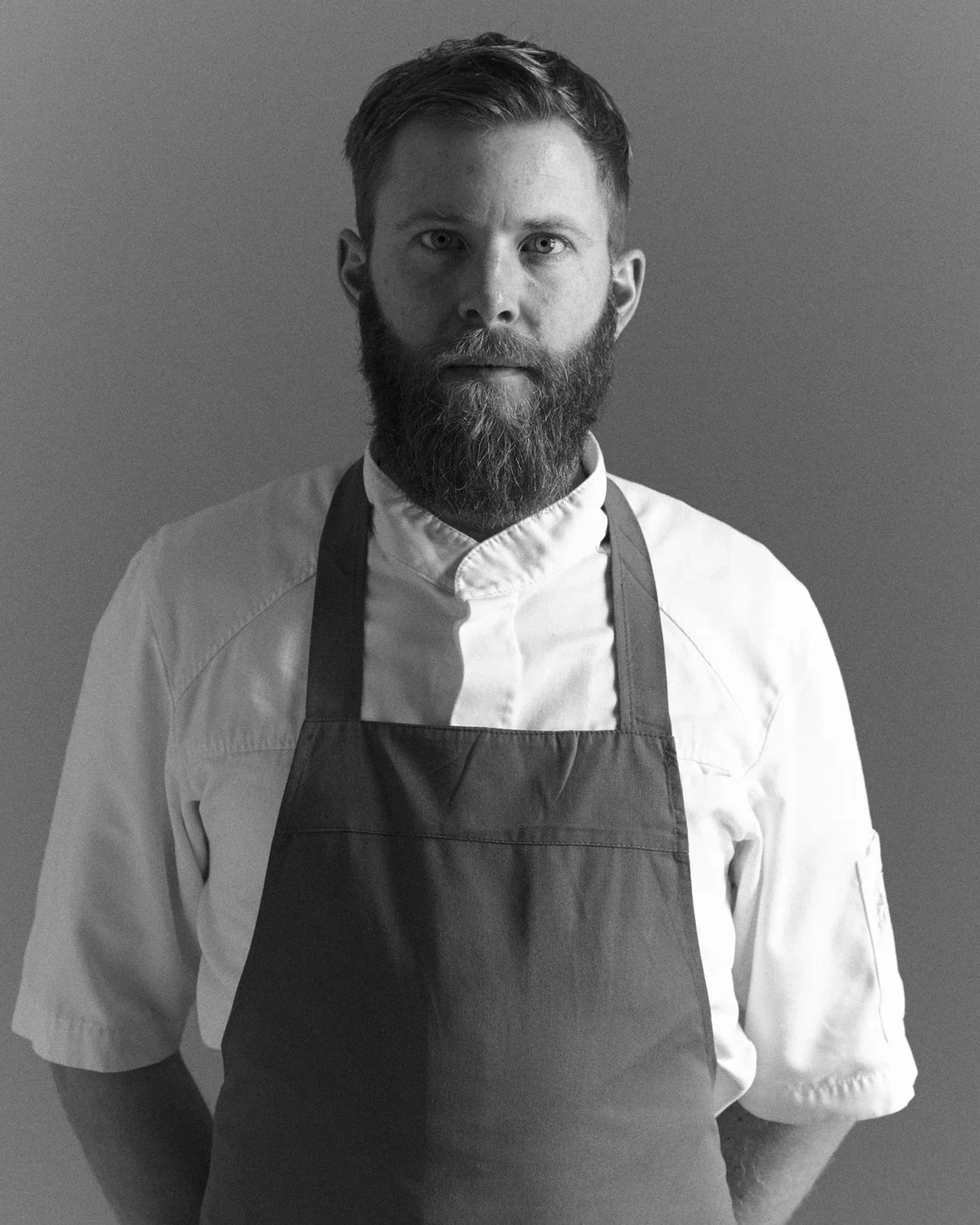
In Residence
Jos Timmer
Chef
- 01CuisineSeasonal Farm-to-Table Fine Dining
- 02CityAmsterdam, Netherlands
- 03RecognitionOne Michelin Star
- 1 Michelin Star · Michelin Guide
- Star Wine List · 2026
- Opinionated About Dining Casual in Europe Recommended · 2026
- Michelin 1 Star · 2025
- We're Smart World 5 Radishes · 2025
- We're Smart World Top 100 #88 · 2025
- Opinionated About Dining Casual in Europe Ranked #378 · 2025
- Michelin 1 Star · 2024
- Opinionated About Dining Casual in Europe Ranked #250 · 2024
- Opinionated About Dining Casual in Europe Highly Recommended · 2023
A Greenhouse That Became a Standard
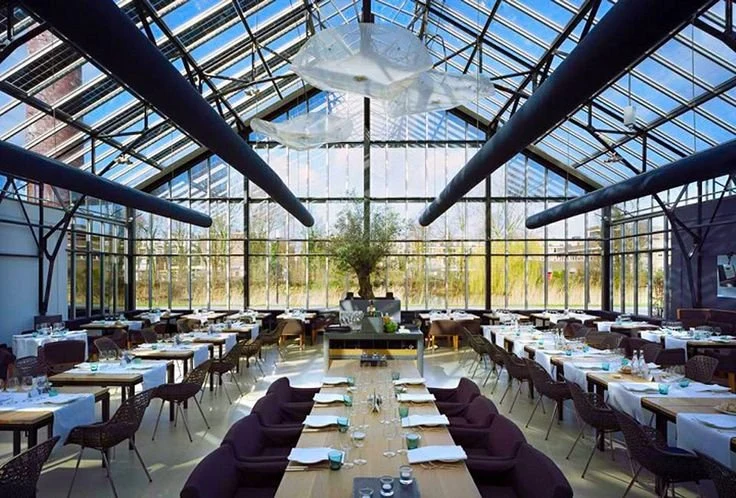
Walk through the eastern edge of Frankendael park toward Kamerlingh Onneslaan and the building announces itself before you reach the entrance: a tall, cathedral-proportioned glass structure whose iron framework dates to 1926. This was the city's municipal nursery for decades, and the bones of that utilitarian purpose are still visible, exposed steel, long central aisles, soil-level planting beds running alongside the dining room. Amsterdam's farm-to-table movement has produced plenty of restaurants with allotment plots and foraging credentials, but few have anchored that argument in a building where cultivation was the original, industrial-scale point.
De Kas opened in 2001, and since then the city's dining culture has shifted considerably around it. The greenhouse format, which looked eccentric at the turn of the millennium, now reads as prescient. What the team built here has become a reference point for the farm-integrated restaurant model across the Netherlands and, increasingly, across northern Europe. The Michelin Green Star it carries is the formal shorthand for that position, but the operating logic runs deeper than an award category.
The Sunday letter
Find new places through the people who run them.
Our Sunday email brings you the chefs, winemakers and hoteliers behind our newest stories. See a sample before you subscribe.
See a sample of the Sunday emailOne email a week. Unsubscribe from any issue.
The Supply Chain Is the Concept
Amsterdam's more sustainability-conscious restaurants typically source from regional farms with whom they maintain close supplier relationships. De Kas went further, and the distance between that model and what happens here is the difference between sourcing and ownership. Chefs Jos Timmer and Wim de Beer oversee roughly 300 varieties of vegetables, herbs, and fruit, grown both in the on-site greenhouse gardens and at a larger working field in the Beemster Polder, a UNESCO-listed reclaimed-land landscape north of Amsterdam. What is harvested in the morning from either site reaches the kitchen the same day.
That operational structure is why the menu changes daily. There is no fixed card, because the card is determined by what the land produces rather than what a menu committee agrees on each quarter. The kitchen brigade works a Mediterranean framework, one that allows for olive oil, citrus acidity, and herb-forward preparations without being geographically prescriptive, and within that frame the seasonal produce from the Beemster drives every decision. A vegetarian version of the menu runs alongside the main format, and given that vegetables are the primary argument of the cooking, the vegetarian route is not a concession but an equal expression of the same logic.
Among the dishes that have drawn consistent critical attention, the preparation of barbecued pointed cabbage with a saffron cream illustrates the kitchen's approach well: a smoky char balanced against a delicate, aromatic sauce that softens rather than dominates. Similarly, the combination of cockles with a lime leaf emulsion reflects the broader Mediterranean tendency to use acid and brightness to anchor seafood dishes. These are not novelty combinations; they are technically grounded pairings that let the produce lead.
Where De Kas Sits in Amsterdam's Restaurant Tiers
Amsterdam's highest-profile fine dining addresses operate at the €€€€ tier: Ciel Bleu (€€€€ · Creative), Flore (€€€€ · Contemporary), Spectrum (€€€€ · Creative), and Vinkeles (€€€€ · Creative) all sit in that bracket, with tasting menus priced and structured accordingly. De Kas operates one tier lower at €€€, which positions it closer to Bistro de la Mer (€€€ · Classic Cuisine) in price terms but in a very different conceptual category. The greenhouse setting, own-farm supply, and Michelin recognition give it a profile that competes with rooms spending considerably more per cover on procurement and production.
Among Dutch restaurants taking an organic and sustainability-led approach at a comparable tier, the comparable set extends beyond Amsterdam. MEI in Amersfoort and Restaurant Renilde in Rotterdam both hold organic credentials in the same price bracket and offer useful comparative reference points when thinking about how this model plays out across different Dutch cities. For Michelin-decorated Dutch cooking in other formats and regions, De Librije in Zwolle, Aan de Poel in Amstelveen, De Bokkedoorns in Overveen, De Groene Lantaarn in Staphorst, De Lindehof in Nuenen, and De Lindenhof in Giethoorn each demonstrate how seriously the Netherlands takes its broader fine-dining infrastructure.
Google reviewers across 3,469 responses have settled on a 4.7 average, a score that indicates sustained consistency rather than a cluster of enthusiastic early adopters. The movement in that ranking reflects a competitive field that has grown, not a diminishing kitchen. Google reviewers across 3,238 responses have settled on a 4.7 average, a score that, at that volume, indicates sustained consistency rather than a cluster of enthusiastic early adopters.
The Building and the Experience
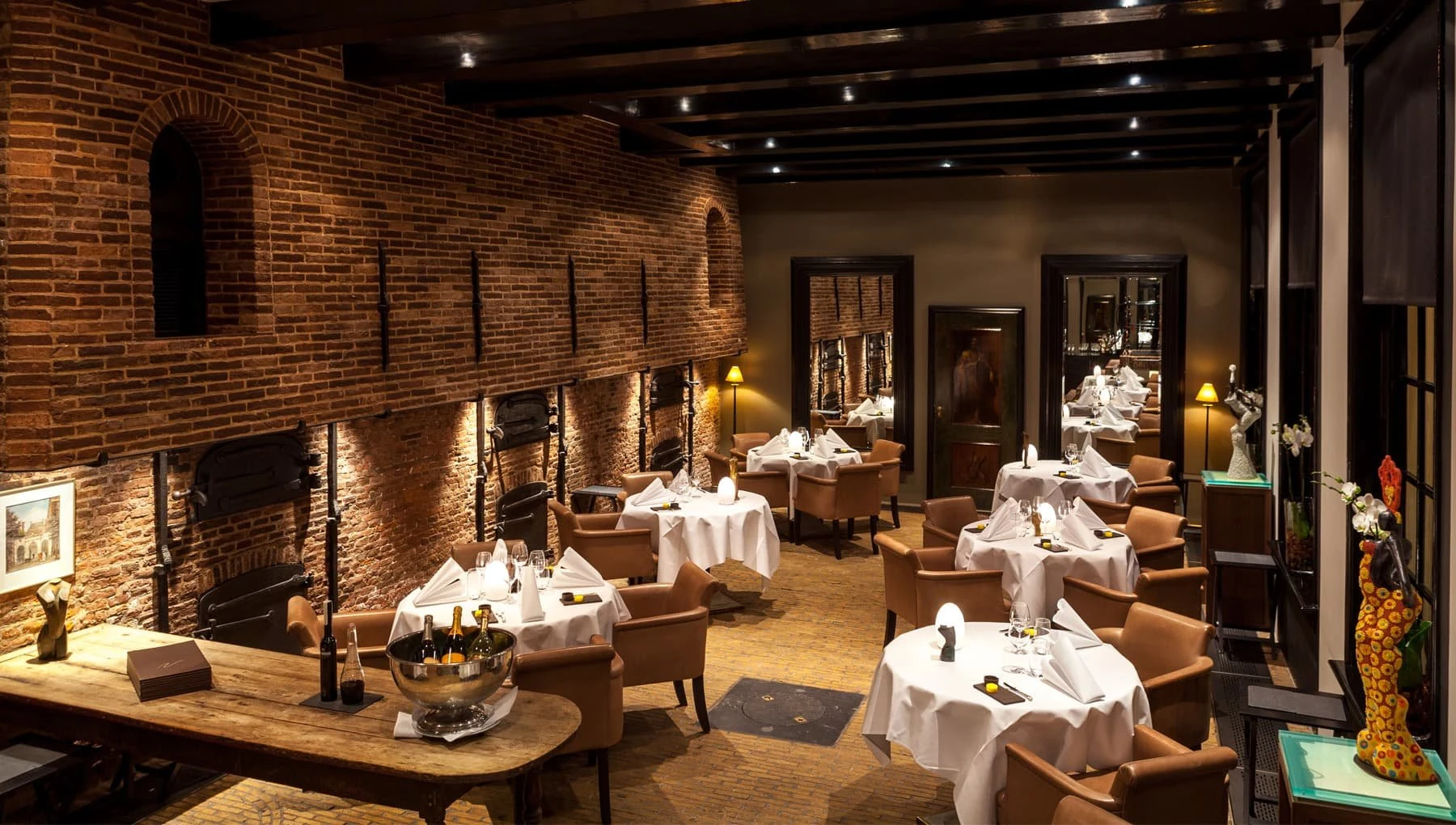
The 1926 greenhouse architecture does work that no interior designer could replicate with a brief and a budget. During lunch service, the glass panels flood the room with northern European daylight at an intensity that makes the planting beds and the food itself appear almost luminous. Evening service shifts the dynamic: diners eat under the actual night sky, filtered through iron and glass, which gives the room a quality that no conventional dining room achieves. The garden terrace, accessible when weather permits, extends that relationship with the physical environment further still.
Atmosphere reads as relaxed rather than formal, which aligns with De Kas's Michelin Green Star classification and its position in the OAD Casual Europe ranking rather than the fine-dining list. Service is attentive but the room's character discourages the kind of stiff ceremony that accompanies multi-course tasting menus at the €€€€ tier. The cooking is technically accomplished, but the experience is not built around performance. It is built around produce.
Sustainability as an Operating Model, Not a Marketing Position
Sustainability argument at many restaurants in this segment amounts to supplier relationships with certified farms, composting programs, and seasonal menus that rotate quarterly. At De Kas, the structure is materially different. Owning the means of production, as this team does across the on-site greenhouse and the Beemster field, removes several layers of uncertainty from the supply chain and closes the gap between what grows and what plates. Waste generated by over-ordering from an external supplier becomes less relevant when the kitchen determines what gets harvested. The 300-variety growing program also reflects an approach to biodiversity that goes well beyond what most procurement-only restaurants can credibly claim.
Michelin Green Star, awarded in 2024 alongside the conventional Michelin Star, is the guide's formal recognition of that operational commitment. It is worth noting that the Green Star was introduced in 2020 precisely to distinguish restaurants where sustainability is embedded in the business model from those where it is a communication strategy. De Kas has held both stars simultaneously, which places it in a small cohort of Dutch restaurants achieving recognition on both culinary and environmental criteria at once.
Planning a Visit
De Kas is located at Kamerlingh Onneslaan 3 in Amsterdam's Watergraafsmeer district, within Frankendael park on the city's eastern side. The address sits outside the main tourist circuit of the canal ring, which means the crowd skews local and reservation-led rather than walk-in. Given the fixed-format, daily-changing menu structure, advance booking is the practical approach; tables are not typically available on short notice. The Star Wine List recognition, published in November 2025, adds a wine program dimension worth factoring into the booking decision. The restaurant is reachable by tram and is a manageable cycling distance from the city centre, consistent with how most Amsterdam residents approach a dinner reservation in this part of the city.
Questions
Frequently asked
What recognition does De Kas hold?
De Kas holds 1 Michelin star.
Who works at De Kas?
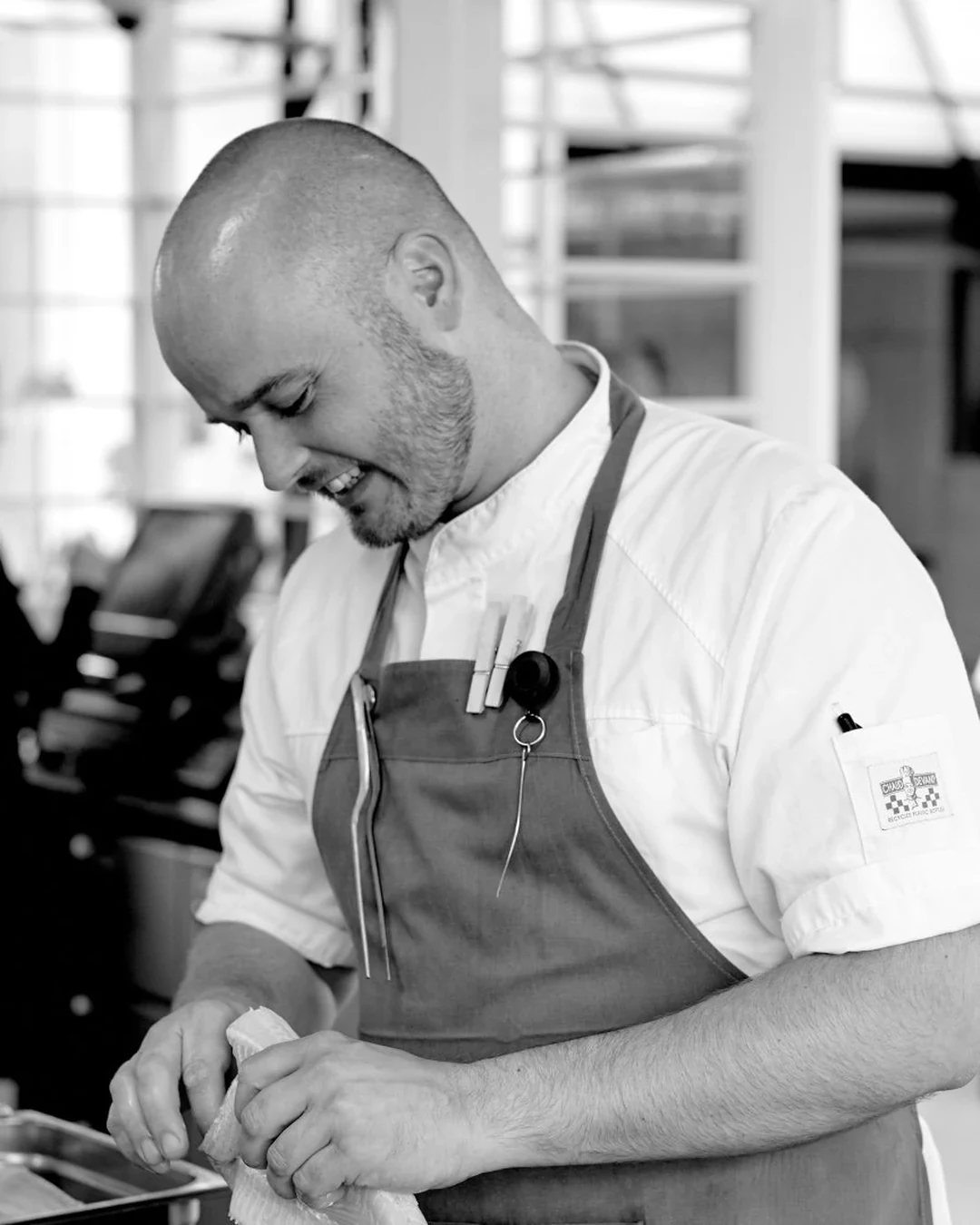
Made By profiles Jos Timmer (Chef) and Wim de Beer (Chef) at De Kas.
How expensive is De Kas?
De Kas is listed at a price level of $$$.
Where is De Kas and what does it serve?
De Kas is in Frankendael, Amsterdam, serving Seasonal Farm-to-Table Fine Dining.
The field
How it compares
| Place | Awards | Cuisine | Notes |
|---|---|---|---|
| De Kas | Michelin 1 Star | Seasonal Farm-to-Table Fine Dining | Frankendael, $$$ |
| 212 | Michelin 2 Stars | Modern Fine Dining | Amsterdam |
| Bolenius | Michelin 1 Star | Modern Dutch Farm-to-Table | Amsterdam |
| Choux | Michelin 1 Star | Modern Dutch Vegetable-Forward Fine Dining | Amsterdam |
| Ciel Bleu | Michelin 2 Stars | Modern French Fine Dining | Amsterdam |
| RIJKS® | Michelin 1 Star | Modern Dutch Low Countries Cuisine | Amsterdam |
| Vinkeles | Michelin 2 Stars | Modern French Fine Dining | Amsterdam |
In residence
Similar places
Modern Fine Dining
212
Amsterdam, Netherlands
★★
Modern Dutch Farm-to-Table
Bolenius
Amsterdam, Netherlands
★
Modern Dutch Vegetable-Forward Fine Dining
Choux
Amsterdam, Netherlands
★
Modern French Fine Dining
Ciel Bleu
Amsterdam, Netherlands
★★
Modern Dutch Low Countries Cuisine
RIJKS®
Amsterdam, Netherlands
★
Modern French Fine Dining
Vinkeles
Amsterdam, Netherlands
★★
The Sunday letter
Get the next Made By story in your inbox.
We send one email every Sunday morning with the places and people we covered that week.
See a sample of the Sunday emailOne email a week. Unsubscribe from any issue.