Die Forelle
- 01CuisineAlpine Regional Fine Dining
- 02CityWeissensee, Austria
- 03RecognitionOne Michelin Star
Dry-aged trout from Weissensee
- 1 Michelin Star · Michelin Guide
- Star Wine List · 2026
- Falstaff Restaurant - 98 Falstaff Points · 2026
- Michelin 1 Star · 2026
- La Liste Top Restaurants: 87pts · 2026
- Michelin 1 Star · 2025
- La Liste Top Restaurants: 95pts · 2025
- Michelin 1 Star · 2024
The trout sets the discipline
A dry-aged trout asks for patience before it reaches the pass. Hannes Müller, chef and patron of Die Forelle in Techendorf, works inside a kitchen shaped by Weissensee fish, alpine herbs, and the farm above the lake. His method is described in one word, Querdenken, and it puts ingredient origin, quality and natural flavour ahead of imports, with the house close to fully self-sufficient. At Die Forelle, that reads less as a philosophy than as a habit of repetition, a trade learned by standing close to the lake and the land until the gesture holds.
The restaurant’s own discipline is more severe than nostalgia. The kitchen draws from the adjacent Weissensee, from mountain brooks, from Austrian agriculture, and from the family’s 90-hectare organic farm, Zöhrer-Bauernhof, where sheep, pigs, vegetables, fruit, herbs, and wood for heating belong to the same working system. The house calls its cooking BERG.SEE.KÜCHE., mountain, lake, kitchen. That is not a mood board. It is a limit placed on the bench: no lobster, no foie gras, little room for ingredients that cannot answer to the valley.
A menu held to the valley
The tasting menu moves by season and by supply, with the house describing an evening program that is 99% free of imports. That number matters because it changes the cook’s hand. Preserved work from the previous season, pickled, frozen, dried, or fermented, sits beside what the lake and fields can give now; wild herbs such as yarrow, meadowsweet, bear garlic blossoms, and deadnettle sharpen the line rather than decorate it.
Fish carries the clearest signature. Dry-aged trout, raw carp, char from Weissensee, and mountain brook trout appear in combinations that keep the plate close to its source: brook trout with rhubarb, carrot, yarrow, and sunflower seeds; venison with red cabbage, celery, and miso; celery in root dashi. The method is regional without becoming antiquarian. Fermentation gives the kitchen another season to work with. Dry-aging gives freshwater fish a different texture and a longer thought. The menu can run across several courses, but the structure is not the point. Constraint is the point.
The room keeps its voice low
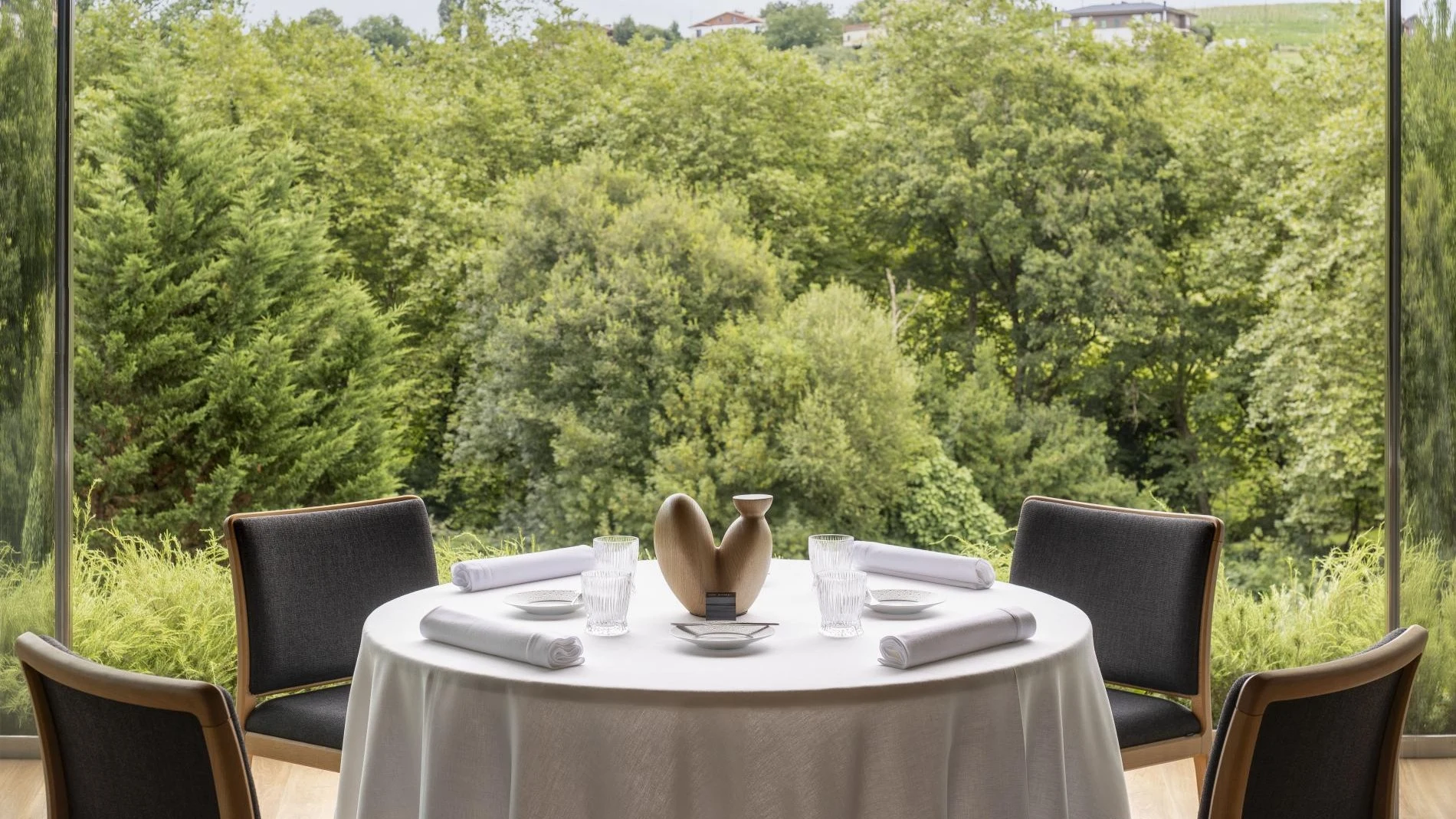
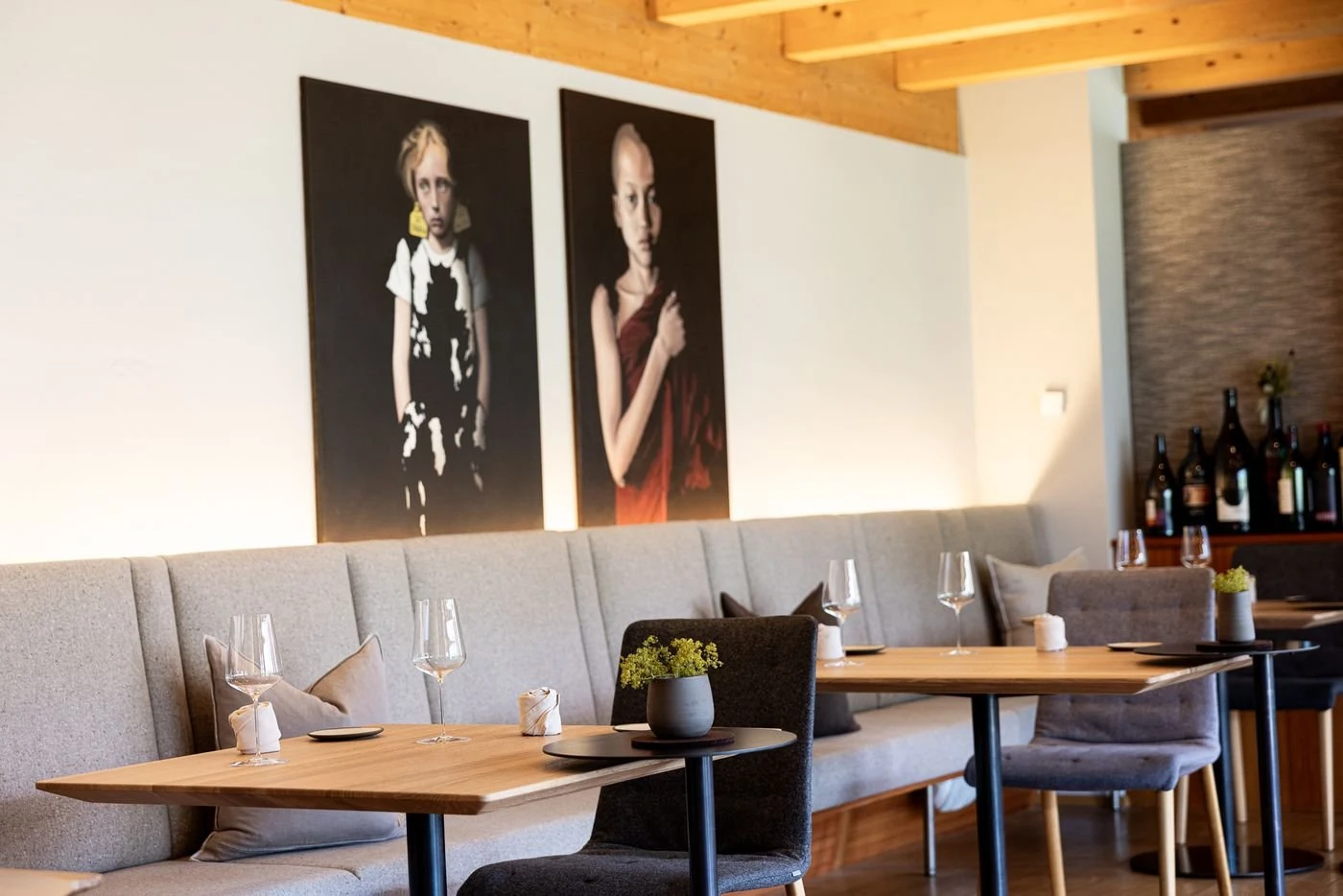
The room looks across meadows to the Weissensee, and the restraint inside lets the lake do its part without turning dinner into scenery. Natural light, quiet service, and a modern dining room with little visual noise give the pass room to speak. This is formal dining, but not stiff in the old sense; the warmth comes from the house rhythm, from plates arriving with enough space around them, from a wine program that stays with Austria and makes room for natural, biodynamic, and orange wines.
The counterpoint is the farm. Zöhrer-Bauernhof is not a decorative supplier’s name placed on a menu; it is the base of the kitchen’s self-sufficiency, tied to animals, vegetables, fruit, herbs, composting, solar energy, and woodchips for heat. The dining room feels quiet because the labor has already happened elsewhere, on the field, at the lake edge, in the cellar, and at the bench.
One star, one shoreline
Die Forelle holds one Michelin star in the 2025 Guide, and the award belongs to this lakeside restaurant rather than to a borrowed mythology. Awards do not explain the cooking here. The kitchen beside Weissensee chooses dry-aged trout, raw carp, yarrow, and Zöhrer-Bauernhof over imported luxury.
Questions
Frequently asked
Who cooks at Die Forelle?
Hannes Müller is the chef and patron of Die Forelle in Techendorf.
What kind of cooking does the restaurant do?
The cooking is Alpine regional fine dining, described by the house as BERG.SEE.KÜCHE., or mountain, lake, kitchen.
What ingredients shape the menu?
The menu draws from Weissensee fish, mountain brooks, Austrian agriculture, alpine herbs, and the family’s 90-hectare organic farm, Zöhrer-Bauernhof. It is built around ingredients such as dry-aged trout, raw carp, char from Weissensee, mountain brook trout, venison, and seasonal herbs like yarrow.
Is booking required?
Reservations are essential.
What recognition does Die Forelle hold?
Die Forelle holds one Michelin star in the 2025 Guide.
The field
How it compares
| Place | Awards | Cuisine | Notes |
|---|---|---|---|
| Die Forelle | Michelin 1 Star | Alpine Regional Fine Dining | Techendorf, $$$$ |
| Arca | World's 50 Best | Modern Yucatan Fire-Cooked Small Plates | Tulum |
| Jaan by Kirk Westaway | Michelin 2 Stars, World's 50 Best | Modern British Fine Dining | Singapore |
| Le Bernardin | Michelin 3 Stars, World's 50 Best | French Seafood Fine Dining | New York City |
| Les Amis | Michelin 3 Stars, World's 50 Best | Classic French Haute Cuisine | Singapore |
| Martin Berasategui | Michelin 3 Stars, World's 50 Best | Modern Basque Fine Dining | Lasarte - Oria |
| Paco Roncero | Michelin 2 Stars | Avant-Garde Spanish Fine Dining | Madrid |
Similar places
Modern Yucatan Fire-Cooked Small Plates
Arca
Tulum, Mexico
50 Best
Modern British Fine Dining
Jaan by Kirk Westaway
Singapore, Singapore
★★ · 50 Best
French Seafood Fine Dining
Le Bernardin
New York City, United States
★★★ · 50 Best
Classic French Haute Cuisine
Les Amis
Singapore, Singapore
★★★ · 50 Best
Modern Basque Fine Dining
Martin Berasategui
Lasarte - Oria, Spain
★★★ · 50 Best
Avant-Garde Spanish Fine Dining
Paco Roncero
Madrid, Spain
★★