Made ByWinery
- Falstaff Winery - Listed · 2026
- Michelin 1 Grape · 2026
- Pearl 2 Star Prestige · 2025
The Sunday letter
Find new places through the people who run them.
Our Sunday email brings you the chefs, winemakers and hoteliers behind our newest stories. See a sample before you subscribe.
See a sample of the Sunday emailOne email a week. Unsubscribe from any issue.
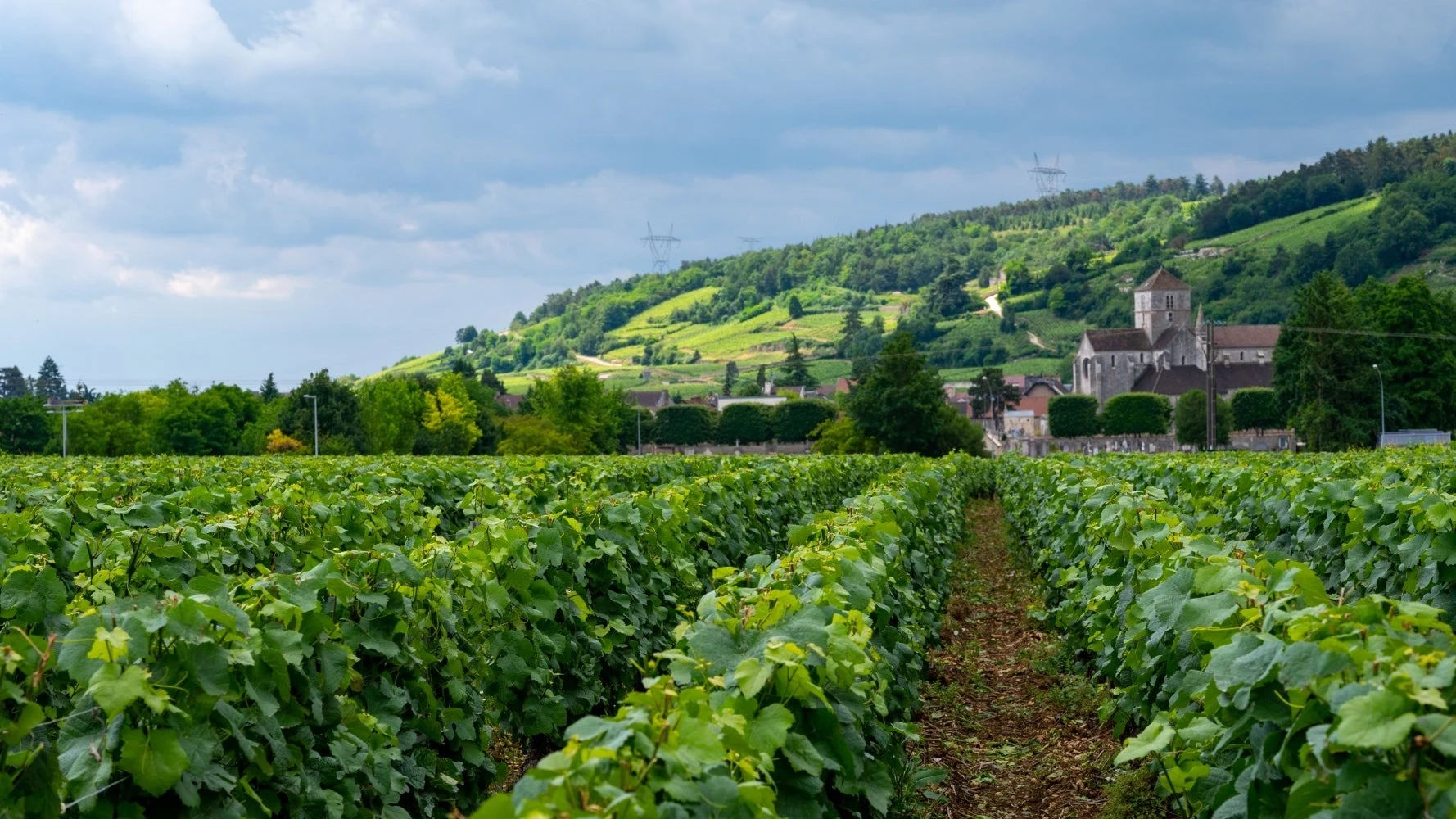
Chambolle-Musigny sits at the geographic and stylistic center of Burgundy's Côte de Nuits, a commune whose premiers crus and grand cru, Musigny and Bonnes-Mares, define the high register of Pinot Noir: silky structure, aromatic lift, and a tension between power and refinement that marks the appellation against its neighbors. Domaine Ghislaine Barthod occupies a precise position inside that tradition, working 5.86 hectares of exclusively Chambolle vineyards, with holdings in nine premiers crus and the village appellation, and a winemaking program shaped by three generations of estate ownership and a lineage that runs through Gaston Barthod's replanting campaigns in the mid-twentieth century, his daughter Ghislaine's cellar direction from 1982 through 2019, and her son Clément Boillot's succession in 2020. The domaine has never bottled fruit from outside Chambolle, a constraint that focuses the entire production on the commune's typicity and on the differentiation between its premier cru climats, Les Cras, Les Charmes, Les Beaux Bruns, Les Fuées, Les Baudes, Aux Combottes, Les Véroilles, Les Châtelots, each of which the estate bottles separately.
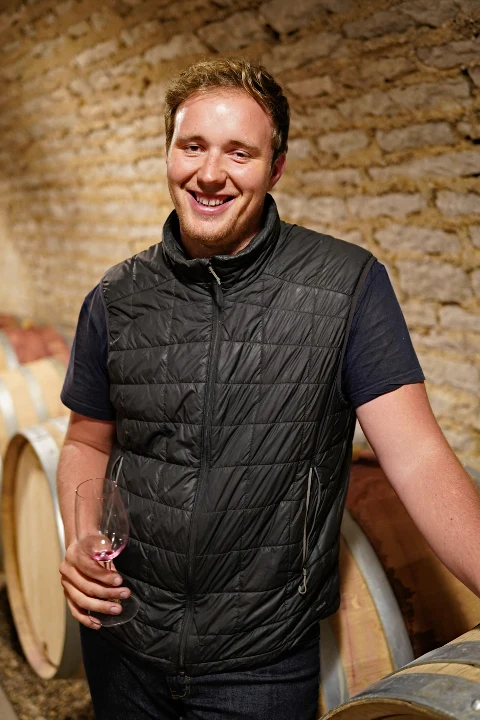
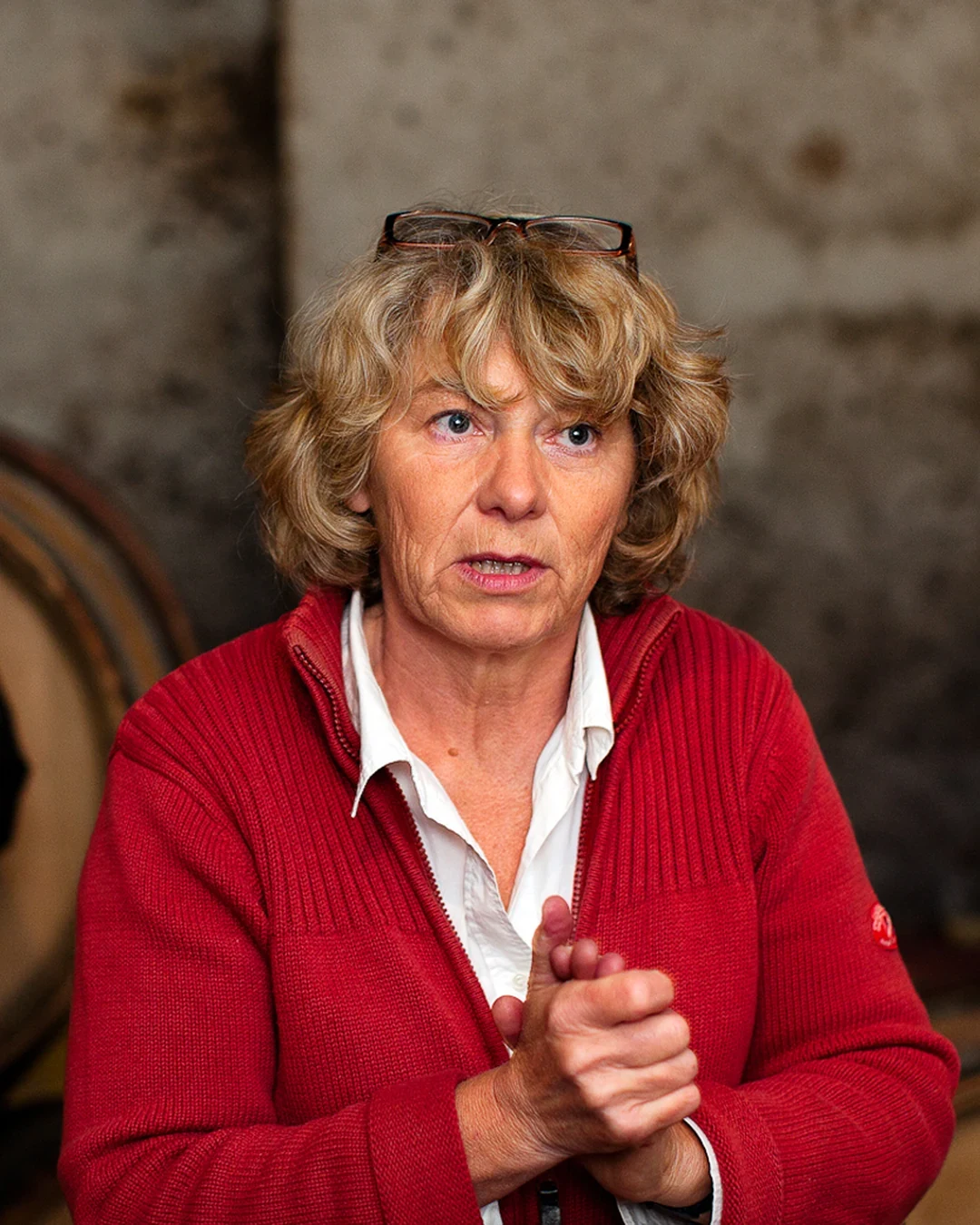
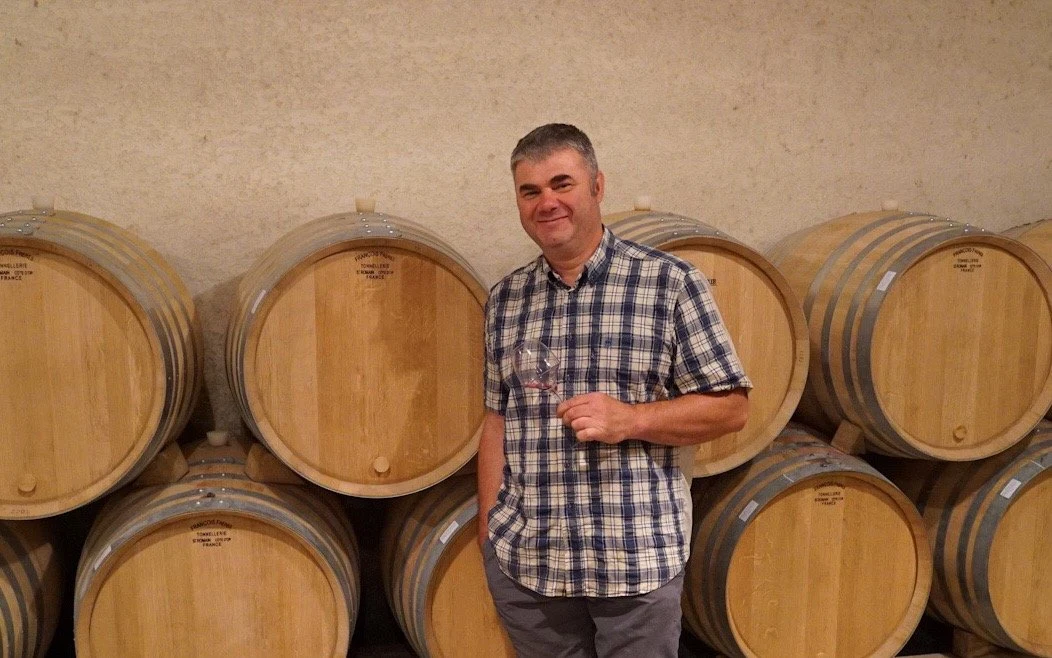
Clément Boillot trained at Domaine Louis Boillot in Chambolle and Volnay, his paternal family's estate where his father Fabrice Boillot works Chambolle and Musigny holdings alongside Volnay premiers crus. The Boillot lineage itself descends from Jean-Marc Boillot in Pommard and Henri Boillot in Meursault, a family network that has shaped Burgundy winemaking across four appellations for a century. Clément returned to Domaine Ghislaine Barthod in 2015 as assistant winemaker, took operational control in 2018, and assumed full legal direction at vintage 2020, marking the first generational transition in the domaine's modern era since Ghislaine succeeded her father in 1982. The Barthod holdings themselves date to Gaston Barthod's acquisition and replanting work in the 1950s and 1960s, a period that saw the domaine's current parcel structure stabilize around long-term contracts and vineyard purchases that consolidated nine premiers crus inside Chambolle. The estate does not own grand cru land; the 5.86 hectares break into premiers crus and village Chambolle holdings, planted to Pinot Noir and a single small plot of Chardonnay for Bourgogne Blanc.
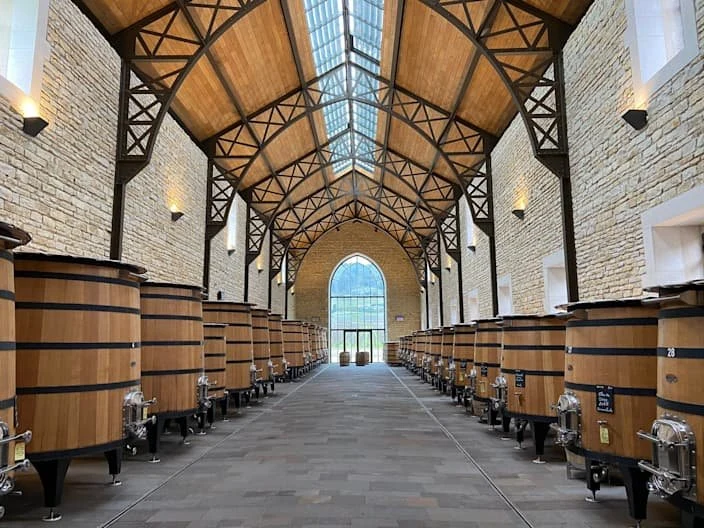
The cellar program under both Ghislaine and Clément has held to whole-cluster fermentation for all premiers crus, with cluster percentages typically running 80 to 100 percent depending on stem ripeness and vintage conditions. Fermentation happens in open wooden vats without temperature control, a protocol that allows ambient cellar temperatures, usually 12 to 15°C in October and November, to govern the maceration curve. Extraction is minimal: a single daily pigeage during active fermentation, no remontage, no cold soak, and a total cuvaison of 16 to 21 days including post-fermentation maceration. The resulting wines typically sit at 12.5 to 13 percent alcohol, a restraint that marks the domaine against the higher-alcohol Chambolle bottlings coming from warmer-year protocols or from estates that favor longer hangtime. Oak aging runs 14 to 18 months in French barrels, with new-oak percentages held at 20 to 30 percent for premiers crus and zero to 10 percent for village Chambolle. The low new-oak regime is a structural choice: Chambolle's aromatic lift and fine tannin structure do not tolerate heavy oak influence, and the Barthod cellar treats oak as a vessel for slow oxidative maturation rather than as a flavor contributor.
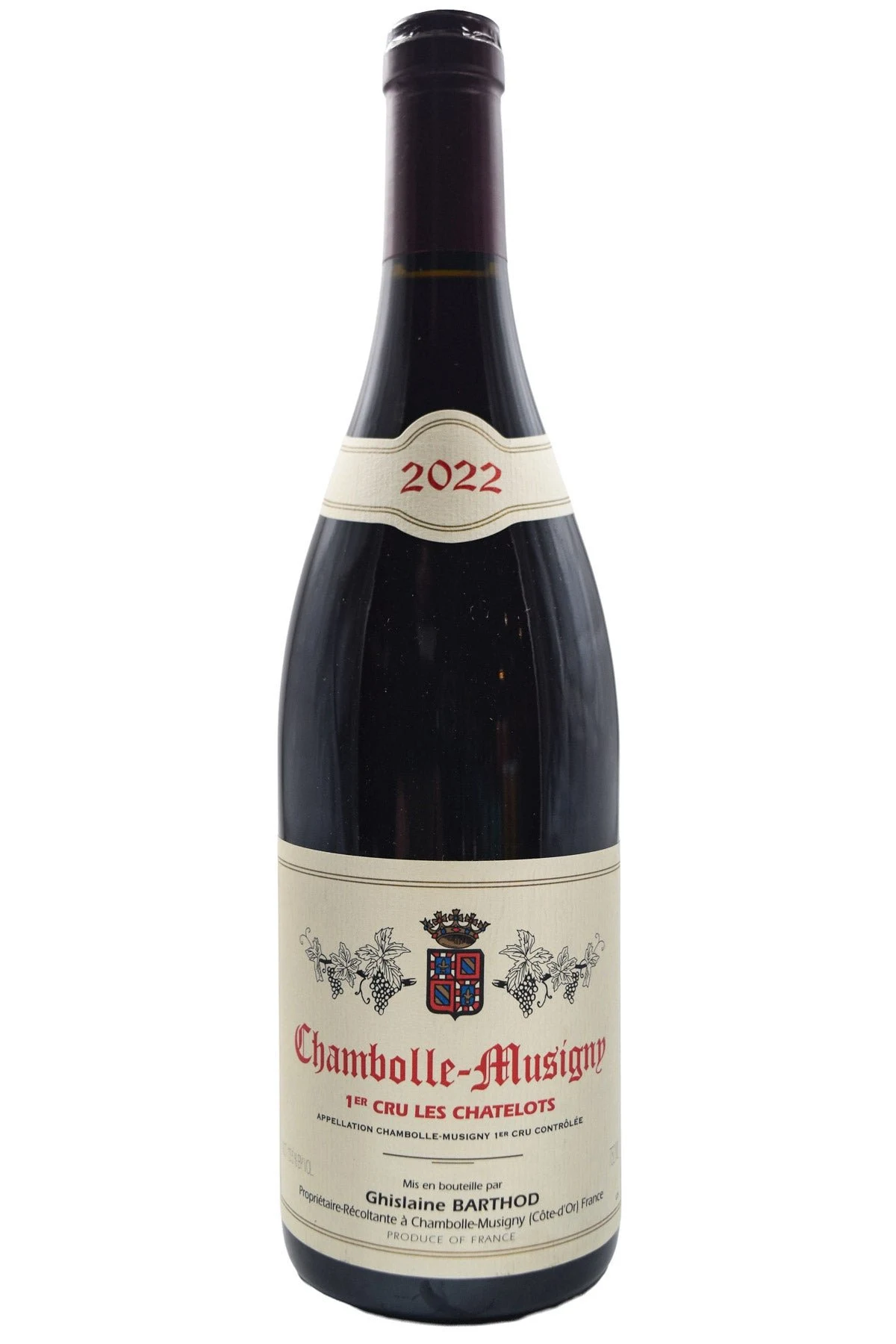
The estate bottles nine premiers crus as single-climat cuvées: Les Cras, Les Charmes, Les Beaux Bruns, Les Fuées, Les Baudes, Aux Combottes, Les Véroilles, Les Châtelots, and Les Plantes. Each climat occupies a distinct position on the slope and expresses a different facet of Chambolle's typicity. Les Cras sits at the northern edge of the commune, adjacent to Morey-Saint-Denis, with east-facing exposure and shallow limestone soils that produce a firmer, more mineral-driven wine than the softer midslope premiers crus. Les Charmes, directly below the grand cru Musigny, is particularly aromatic of the Barthod bottlings, with red-fruit lift and silky tannins that define the classic Chambolle register. Les Beaux Bruns sits at the southern edge of the appellation near Vosne-Romanée, on deeper clay-limestone soils that yield a denser, darker wine with more extraction and structure than the northern parcels. Les Fuées, adjacent to Bonnes-Mares, carries more power and mineral weight than Les Charmes, with a firmer tannic backbone and longer aging potential. The remaining premiers crus, Baudes, Combottes, Véroilles, Châtelots, Plantes, occupy smaller parcels and are bottled in limited quantities, typically 200 to 600 bottles per climat depending on the vintage.
Barthod style sits inside the cooler, lower-extraction tradition of Chambolle winemaking that emerged in the 1980s and 1990s as a reaction against the over-oaked, high-alcohol Burgundy of the preceding decades. The whole-cluster protocol, the open-vat fermentation, the minimal pigeage, and the low new-oak regime all point to the same cellar philosophy: let the vineyard site and the vintage conditions govern the wine's structure, and intervene only to preserve that structure through the aging process. The resulting wines are light in color, typically garnet to pale ruby rather than the deeper opaque reds of Gevrey or Vosne, and high in aromatic lift, with primary red-fruit notes (cherry, raspberry, cranberry) dominating over secondary oak or tertiary aging notes in the first decade. Tannins are fine-grained and integrated early, a function of whole-cluster fermentation combined with low extraction, and the wines typically drink well at 7 to 12 years of age, though the leading premiers crus (Les Cras, Les Charmes, Les Fuées) age well into their second decade.
Clément Boillot's first vintages, 2018, 2019, and 2020, were marked by warm growing seasons and the challenges of climate adaptation that now define Burgundy winemaking in the 2020s. The 2018 vintage was the warmest on record at the time, with harvest beginning in late August and finished must sugars that required active management to avoid over-alcohol. Boillot responded by picking earlier than the domaine's historical norm, by increasing whole-cluster percentages to 100 percent across all premiers crus (the stems contribute acidity and structure in warm vintages), and by shortening the cuvaison to 14 to 16 days to avoid over-extraction. The 2019 vintage was similarly warm but with better acid retention; the 2020 vintage was cooler and more classically structured, allowing a return to the domaine's standard 18 to 21-day cuvaison. The adaptive protocol, earlier picking, higher whole-cluster percentages, shorter maceration in warm years, marks Boillot's cellar direction as responsive to vintage variation rather than fixed to a single house style, and the shift is consistent with broader climate-adaptation trends across the Côte de Nuits.
The domaine releases wines through a traditional Burgundy allocation system: long-term négociant contracts with Maison Louis Jadot and a handful of other Beaune houses account for roughly 40 percent of production, while the remaining 60 percent is allocated to direct importers in Europe, the United States, and Asia. The direct allocation list is small, typically 20 to 30 importers worldwide, and heavily oversubscribed, with demand running at five to eight times available supply for the leading premiers crus (Les Cras, Les Charmes, Les Fuées) and three to five times supply for the midtier premiers crus (Les Baudes, Les Véroilles). Retail pricing in the United States for recent vintages sits at $90 to $120 for village Chambolle, $140 to $180 for the lesser premiers crus, and $200 to $280 for Les Cras, Les Charmes, and Les Fuées.
The generational transition from Ghislaine Barthod to Clément Boillot in 2020 marked the significant structural change in the domaine's history since its founding, and the wine press has tracked the transition closely. Ghislaine's final vintages, 2017, 2018, and 2019, were widely reviewed as continuations of her long-established house style, with high marks from Vinous, Burghound, and Decanter for the clarity and typicity of the premiers crus. Clément's first solo vintage, 2020, received similarly strong reviews, with Vinous noting the wines' precision and balance despite the challenges of the vintage, and Burghound highlighting the successful adaptation to warmer growing conditions. The critical consensus is that the domaine's cellar direction has remained stable through the transition, with Clément maintaining the whole-cluster fermentation protocol, the low new-oak regime, and the climat-specific bottling structure that defined his mother's tenure. The continuity is intentional: Clément worked alongside Ghislaine for five years before taking full control, and the cellar equipment, the fermentation protocols, and the barrel-aging regime have not changed. The stylistic positioning is toward the cooler, more restrained end of the Chambolle spectrum: the wines are lighter in extraction and lower in alcohol than the Roumier bottlings, and sit closer in structure to the Mugnier house style. The peer-set comparison is not a ranking, Roumier, Mugnier, and Barthod are all working at the summit tier of Chambolle production, but a positioning inside the stylistic range that Chambolle permits.
Access to the domaine is restricted to trade professionals and members of the direct allocation list. The cellar does not offer public tastings, does not sell wine direct to consumers, and does not maintain a tasting room. Visitors must arrange appointments through the domaine's importing partners or through direct contact with the estate, and visits are typically limited to trade buyers, sommeliers, and wine writers with professional credentials. The access structure is standard for small-production Burgundy estates at this quality tier: demand far exceeds supply, and the domaine has no economic incentive to open the cellar to the public. For collectors and sommeliers seeking to secure allocations, the pathway runs through established importers in the United States (Kermit Lynch Wine Merchant, Chambers Street Wines, and a handful of regional distributors), in the United Kingdom (Corney & Barrow, Berry Bros. & Rudd), and in Asia (Tokyo distributors handle the domaine's Japanese allocation). The allocation system is stable and long-term: most importers have worked with the domaine for a decade or more, and new allocations are rare.
The broader context for Domaine Ghislaine Barthod is the ongoing recalibration of Burgundy winemaking in response to climate change, economic pressure from global luxury markets, and the generational transition now underway across the Côte d'Or. Clément Boillot's succession is part of a cohort of younger winemakers, Cécile Tremblay in Morey, Loïc Dugat-Py at Domaine Dugat-Py in Gevrey, Thomas Bouley at Jean-Marc & Thomas Bouley in Volnay, who are adapting their family estates' winemaking protocols to warmer vintages while maintaining the structural continuity that defines each domaine's reputation. The adaptation is visible in earlier picking dates, higher whole-cluster percentages, shorter cuvaisons, and lower target alcohols, all of which shift the stylistic baseline of Burgundy Pinot Noir toward lighter extraction and higher acidity than the house styles of the 1990s and 2000s. The shift is not universal, some producers are pushing in the opposite direction, toward riper fruit and higher extraction, but the Barthod cellar is clearly aligned with the cooler, lower-intervention wing of the generational cohort.
Questions
Frequently asked
Who works at Domaine Ghislaine Barthod?
Made By profiles Clément Boillot (Winemaker) and Ghislaine Barthod (Winemaker) at Domaine Ghislaine Barthod.
How expensive is Domaine Ghislaine Barthod?
Domaine Ghislaine Barthod is listed at a price level of $$$.
The field
How it compares
| Place | Notes |
|---|---|
| Domaine Ghislaine Barthod | Chambolle-Musigny, $$$ |
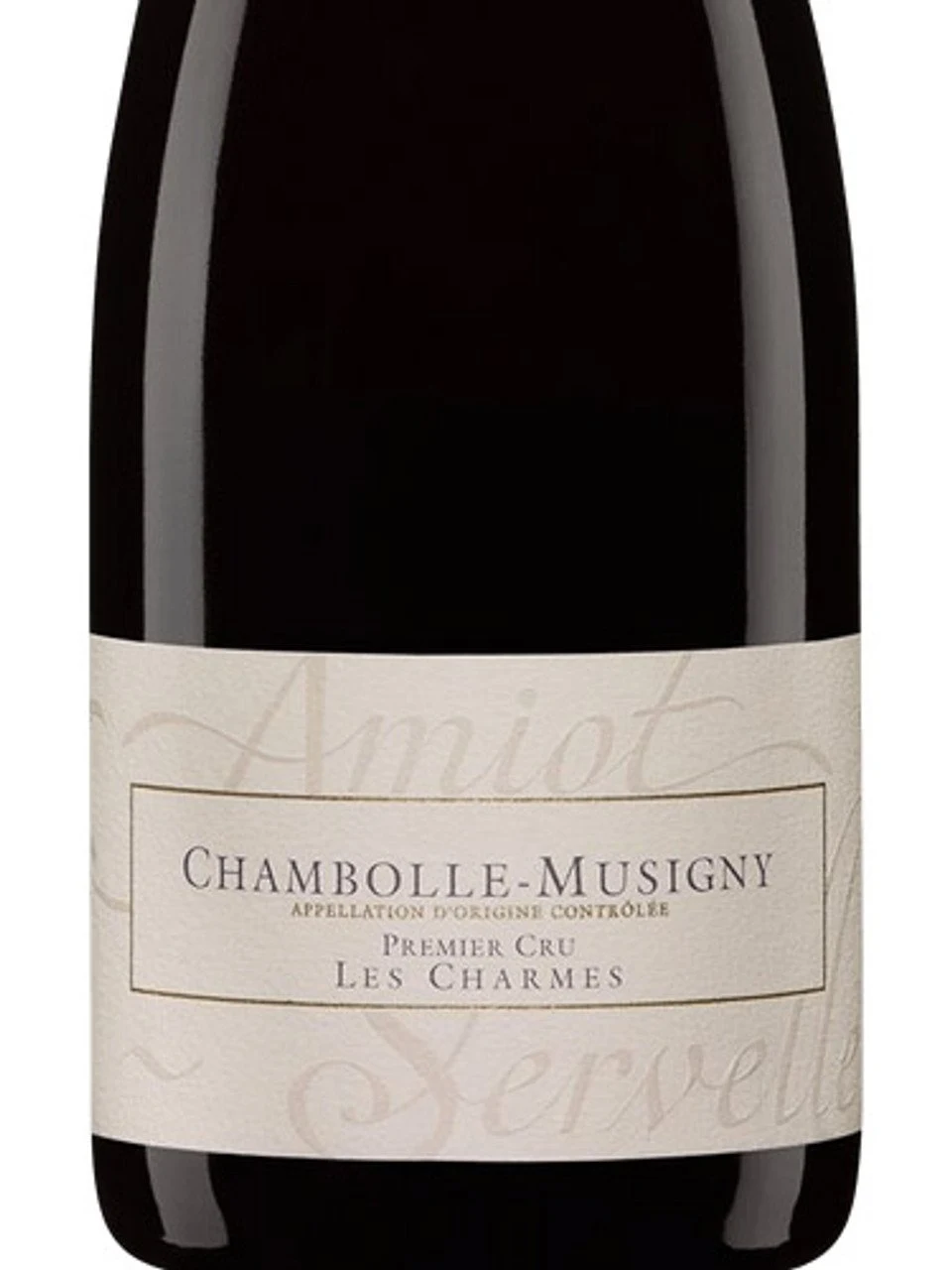
| Domaine Amiot-Servelle | Chambolle-Musigny |
| Domaine Comte Georges de Vogüé | Chambolle-Musigny |
| Domaine Felettig | Chambolle-Musigny |
| Domaine Georges Roumier | Chambolle-Musigny |
| Domaine Hudelot-Baillet | Chambolle-Musigny |
| Domaine Hudelot-Noëllat | Chambolle-Musigny |
In residence
Similar places
The Sunday letter
Get the next Made By story in your inbox.
We send one email every Sunday morning with the places and people we covered that week.
See a sample of the Sunday emailOne email a week. Unsubscribe from any issue.