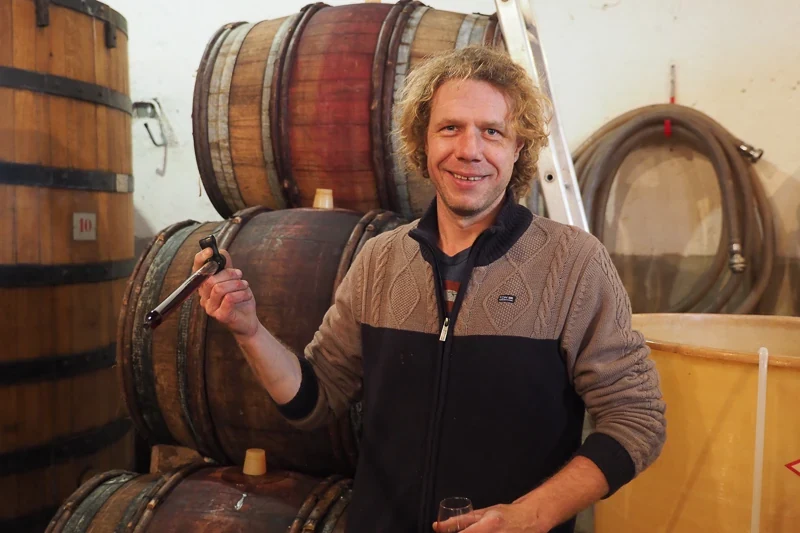
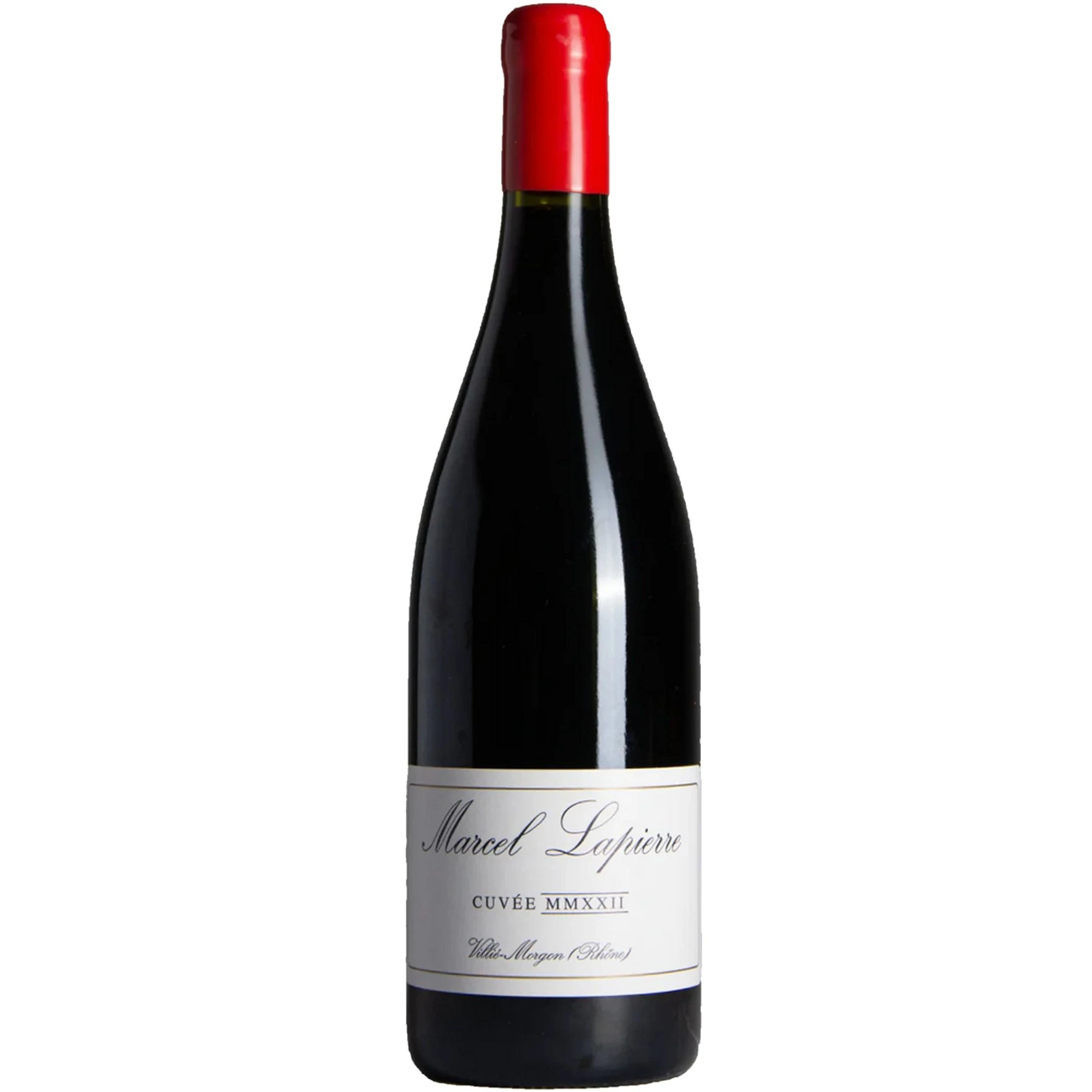
Domaine Marcel Lapierre is one of Villié-Morgon's most closely watched addresses, holding a Pearl 2 Star Prestige rating from EP Club in 2025. The domaine operates within Beaujolais' natural wine tradition, where Morgon's granite-rich Côte du Py terroir has long rewarded low-intervention viticulture. For collectors focused on the Gamay crus, this is a reference point.
<h2>Where Beaujolais Stops Being Misunderstood</h2><p>The village of Villié-Morgon sits at the southern edge of the Haut-Beaujolais, where the appellation's geology shifts from the limestone and clay typical of the wider region toward granitic and schist-rich soils that produce wines of an entirely different register. Morgon, the cru centred here, has spent the last three decades shaking off the indignity of being confused with the light, carbonic-maceration wines that made Beaujolais synonymous with cheap Nouveau. It is now one of France's most seriously discussed red wine appellations, and the address at 588 Rue Rabelais is among the names most cited when that conversation happens.</p><p>Domaine Marcel Lapierre carries an EP Club Pearl 2 Star Prestige rating for 2025. That rating matters here partly because of what it implies about positioning: in a cru where several producers compete for critical attention, a prestige-tier designation signals sustained rather than occasional excellence.</p><h2>The Natural Wine Tradition and What It Actually Means in Morgon</h2><p>Low-intervention winemaking in Beaujolais did not begin as a marketing concept. It emerged in the late 1970s and early 1980s from a practical and philosophical response to the industrialisation of Beaujolais production, where high yields, heavy chaptalization, and aggressive filtration had flattened the character of what the cru's terroir was capable of producing. The Lapierre domaine became one of the defining addresses of that countermovement, working with Jules Chauvet, the chemist and negociant whose research into carbonic maceration without sulphur additions underpinned much of what is now understood as natural winemaking in the region.</p><p>What distinguishes the Morgon produced in this tradition from conventional interpretations is not simply the absence of additives. The Côte du Py, the volcanic basalt and granite hillside that produces the appellation's most age-worthy fruit, delivers wines with structural density that can read almost Burgundian in their depth and tannic architecture. Vinified without the chemical shortcuts that ease conventional production, these wines require patience: the primary fruit of young Morgon from granite soils can appear austere, the tannins grippy, the aromatics closed. Three to five years in bottle typically unlocks the characteristic Morgon profile of kirsch, iron, and earthy reduction. A decade in can resemble serious northern Rhône more than anything typically associated with Gamay.</p><p>That lineage connects Domaine Marcel Lapierre to a broader Beaujolais natural wine comparable set that includes <a href="https://www.enprimeurclub.com/wineries/domaine-jean-foillard-villie-morgon-winery">Domaine Jean Foillard</a>, whose wines also follow the Chauvet approach and draw from the same granite hillsides. The two domaines are frequently discussed together in collector circles as the twin reference points for understanding what Morgon can do at its most serious.</p><h2>The Winemaking Philosophy as a Lens on the Wines</h2><p>Framing a wine through its production philosophy risks abstraction. The more useful question is what the approach actually produces in the glass and why it matters to the collector or visitor. At Domaine Marcel Lapierre, the commitment to working without sulphur dioxide additions during vinification produces wines that are inherently more fragile in transport and storage than conventionally made alternatives. That fragility has a practical implication: the wines reward careful cellaring and are more sensitive to temperature fluctuation than, say, a sulphur-protected Pauillac like <a href="https://www.enprimeurclub.com/wineries/chateau-batailley-pauillac-winery">Château Batailley</a> or a Sauternes like <a href="https://www.enprimeurclub.com/wineries/chateau-bastor-lamontagne">Château Bastor-Lamontagne</a> where the production parameters are engineered for stability.</p><p>It also produces wines that age differently. The absence of sulphur does not mean shorter-lived; many vintage Lapierre Morgons from the 1990s have developed with far greater complexity than their fragile-seeming youth suggested. But it does mean the window for drinking is less forgiving at the extremes: these wines are not suited to the same hold-indefinitely cellar logic that applies to the leading Saint-Emilion producers like <a href="https://www.enprimeurclub.com/wineries/chateau-belair-monange-saint-emilion-winery">Château Bélair-Monange</a> or Pomerol estates like <a href="https://www.enprimeurclub.com/wineries/chateau-clinet-pomerol">Château Clinet</a>. They reward attention and intention.</p><p>The domaine also produces a sulphite-added cuvée alongside its traditional no-sulphur bottling, a distinction that matters for buyers who want approachability at a younger age or are cellaring wines in less than ideal conditions. Both bottlings come from the same terroir and vinification base, differing at the stabilisation stage rather than in the vineyard or fermentation.</p><h2>Villié-Morgon as a Wine Destination</h2><p>The village itself offers a concentrated version of what the Beaujolais crus have become as a visitor proposition: small domaines accessible by appointment, a range of low-trained Gamay vines on hillside plots with good views toward the Saône plain, and an atmosphere that contrasts sharply with the formality of Bordeaux's Médoc châteaux or the tourist infrastructure of Burgundy's Côte d'Or. This is working wine country in the old sense, where caves are genuinely functional and visits are not theatrically staged.</p><p> For visitors combining the domaine with wider French wine travel, the comparison set is instructive: the Alsatian precision of <a href="https://www.enprimeurclub.com/wineries/albert-boxler-niedermorschwihr-winery">Albert Boxler in Niedermorschwihr</a>, the Bordeaux château tradition represented by estates like <a href="https://www.enprimeurclub.com/wineries/chateau-boyd-cantenac-cantenac-winery">Château Boyd-Cantenac</a> or <a href="https://www.enprimeurclub.com/wineries/chateau-branaire-ducru-st-julien">Château Branaire Ducru</a>, and even the scale of a destination like <a href="https://www.enprimeurclub.com/wineries/chartreuse-voiron-winery">Chartreuse in Voiron</a> all sit within a day's drive, giving serious wine travellers a dense itinerary across French traditions.</p><p></p><h2>Planning a Visit</h2><p>Visits to Domaine Marcel Lapierre are by appointment. Approaching through a specialist importer or wine merchant who carries the range is typically the most reliable route to securing a visit, particularly for buyers outside France.</p><p>The address at 588 Rue Rabelais puts the domaine within the village itself, walkable from other small producers and the cave coopérative that gives visitors a useful reference point for the appellation's range. For wine travellers also exploring further afield, producers in neighbouring Haut-Médoc such as <a href="https://www.enprimeurclub.com/wineries/chateau-cantemerle-haut-medoc">Château Cantemerle</a> or California estates like <a href="https://www.enprimeurclub.com/wineries/accendo-cellars">Accendo Cellars in St. Helena</a> offer useful contrast in how different regions approach small-production prestige viticulture. The Sauternes comparison is also worth drawing: <a href="https://www.enprimeurclub.com/wineries/chateau-d-arche-sauternes-winery">Château d'Arche</a> operates at a similarly appointment-led pace, though the wines and production context differ entirely. For rosé contrast, <a href="https://www.enprimeurclub.com/wineries/chateau-desclans">Château d'Esclans</a> represents a very different French wine ambition at scale. And for those interested in how aged single malt whisky compares to the patient cellaring logic of no-sulphur Beaujolais, <a href="https://www.enprimeurclub.com/wineries/aberlour-aberlour-winery">Aberlour</a> is a useful reference on the role of time in fermented and distilled production.</p>
Domaine Marcel Lapierre has received recognition including: Pearl 2 Star Prestige (2025).
Domaine Marcel Lapierre is located at 588 Rue Rabelais, 69910 Villié-Morgon, Villié-Morgon.
The estate's Morgon is its defining release — a gamay from the Villié-Morgon appellation made using low-intervention methods that the domaine helped establish in Beaujolais from the late 1970s onward. Specific cuvée details and current vintages are best confirmed directly with the domaine at the time of appointment.
Lapierre is the reference point for natural-method Morgon: wines that express the appellation's granitic soils without heavy sulphur additions or technological correction. The domaine earned a Pearl 2 Star Prestige rating from EP Club in 2025, placing it among the most credentialled producers in Beaujolais.
Yes. Visits to the domaine at 588 Rue Rabelais, Villié-Morgon are by appointment only. The estate does not publish contact details centrally or operate a public-facing booking platform, so reaching out through local wine trade contacts or direct correspondence is the standard approach.
The domaine holds a Pearl 2 Star Prestige designation from EP Club for 2025, a tier that recognises producers of documented distinction within their appellation. In Villié-Morgon specifically, this positions Lapierre among the cru's most closely followed estates, reflecting the domaine's role in shaping how Morgon is discussed internationally.
For anyone tracing the origins of the natural wine movement in France, Lapierre is as close to a primary source as the Beaujolais crus offer. The domaine suits serious wine travellers who want to visit a working estate rather than a tasting room, and who understand that access depends on prior arrangement.
588 Rue Rabelais, 69910 Villié-Morgon
Villié-Morgon