El Brote
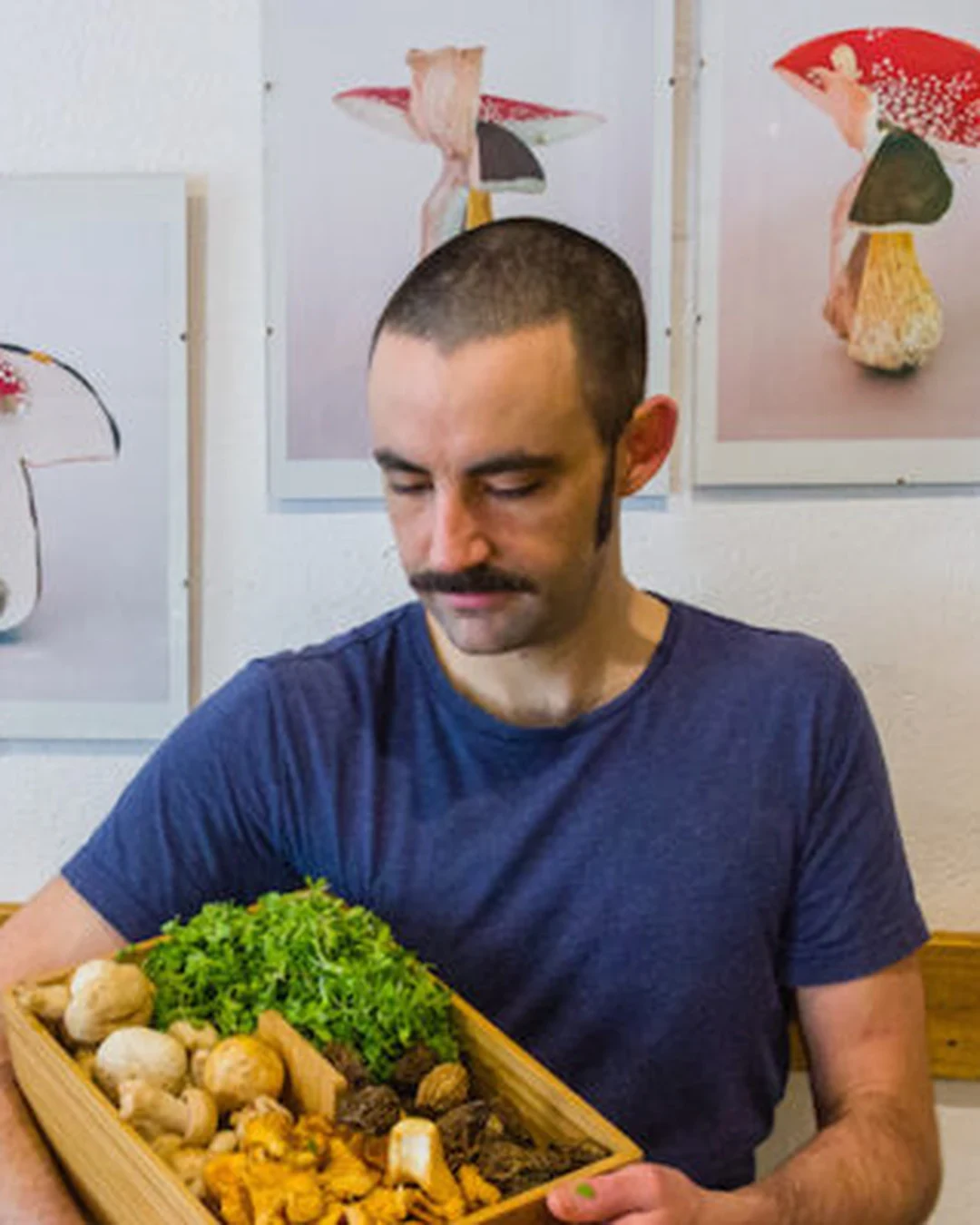
In Residence
Pablo Roncal
Chef
- 01CuisineContemporary Spanish Wild Mushroom Tasting
- 02CityMadrid, Spain
- Michelin Plate · 2026
- Opinionated About Dining Newly Added European Restaurants · 2026
- Macarfi 7.1 Food Rating · 2026
- Opinionated About Dining Casual in Europe Recommended · 2026
Where the Menu Begins and Ends with Fungi
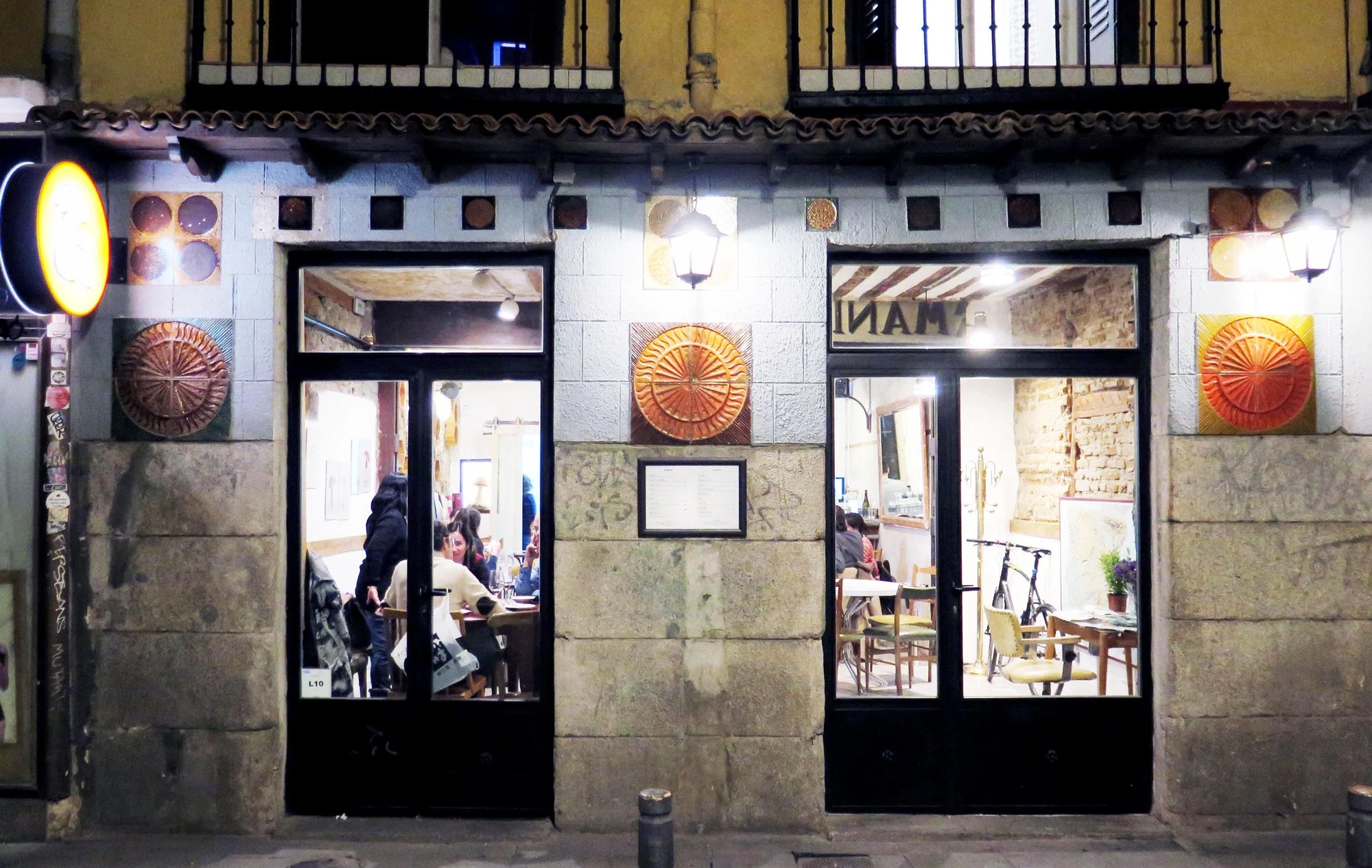
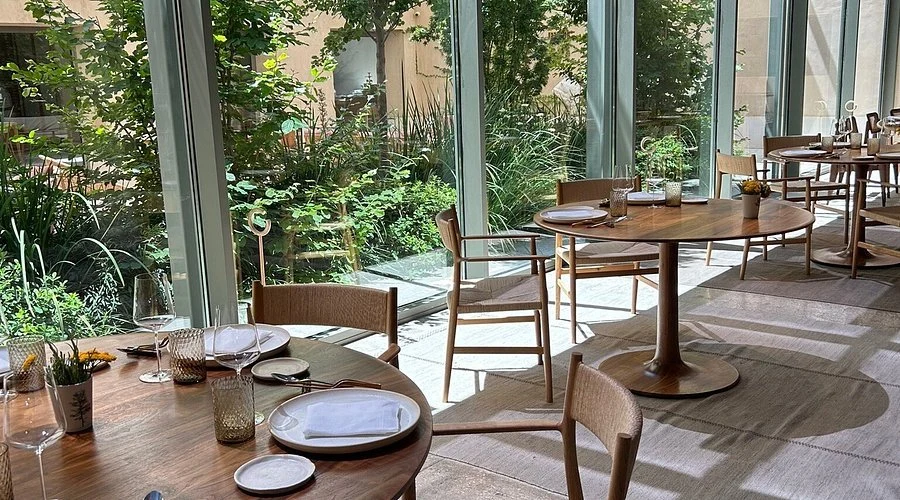
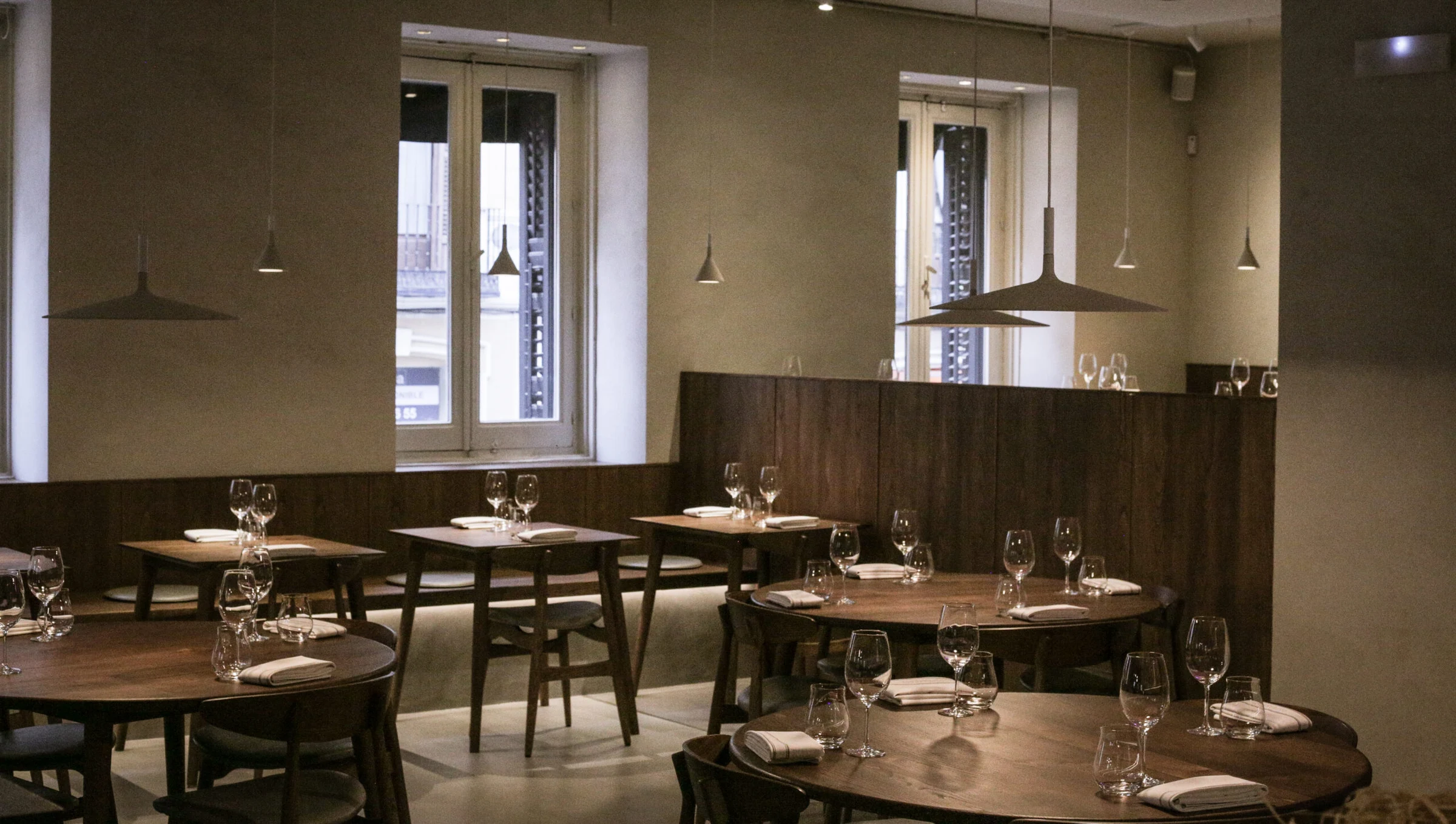
Madrid's La Latina neighbourhood is better known for its weekend rastro crowds and tapas crawls along Calle Cava Baja than for any single-subject dining format. El Brote, on Calle de la Ruda a short walk from the Mercado de La Cebada, sits at an unusual remove from that pattern. The dining room signals its subject immediately: the décor references mycology directly, a modern-rustic interior where the visual language of mushrooms, spore prints, and foraging informs the atmosphere before the menu arrives. It reads less like a restaurant that happens to like fungi and more like a place that has organised itself entirely around a single ingredient family.
That kind of singular focus is rare in a Madrid restaurant scene that tends toward abundance and variety. Where the city's celebrated creative kitchens, from DiverXO to DSTAgE, earn recognition by pulling from wide palettes of technique and reference, El Brote argues for a different logic: depth over breadth, seasonal specificity over year-round consistency, and the education of a guest's palate through progression rather than surprise.
The Sunday letter
Find new places through the people who run them.
Our Sunday email brings you the chefs, winemakers and hoteliers behind our newest stories. See a sample before you subscribe.
See a sample of the Sunday emailOne email a week. Unsubscribe from any issue.
The Architecture of a Mushroom Menu
The menu is built around five seasonal mushroom varieties, selected to reflect what is available and at its leading at any given time of year. This is not a token nod to seasonality. The entire offering rotates with the fungi calendar, which means a visit in autumn, when European wild mushroom harvests peak, delivers a different experience from a spring or early-summer meal. Spain's mycological diversity is considerable: from boletus to níscalos, from chanterelles to the intensely flavoured rovellons of Catalonia and the Aragonese Pyrenees, the country's varied geography supports a broad annual cycle. El Brote positions itself at the end of that supply chain, translating the harvest into a menu with a traditional Spanish base and a personal sensibility applied to sequencing and preparation.
The tasting progression at this kind of focused venue follows its own internal logic. Because the central ingredient does not change from course to course, the arc of a meal is built through contrast within a family rather than contrast between families. Texture, intensity, preparation method, and the supporting cast of ingredients carry the narrative forward. A raw or lightly dressed mushroom preparation opens the palate differently than a slow-cooked reduction or a mushroom-led rice dish. The kitchen's job is to make that arc feel earned rather than repetitive, and the seasonal rotation ensures the starting material keeps the menu honest.
For context on how this compares across Spain's broader fine-dining map, the country's most-discussed restaurants tend toward comprehensive tasting menus where no single ingredient dominates across multiple courses. El Celler de Can Roca in Girona, Arzak in San Sebastián, and Azurmendi in Larrabetzu each represent a different interpretation of Spanish culinary ambition at scale and price. El Brote occupies a different tier and a different proposition entirely: it is a specialist restaurant, and the metrics that matter here are not Michelin stars but ingredient knowledge, sourcing consistency, and the ability to communicate that knowledge to a curious guest.
What distinguishes this format from a standard seasonal menu is the explicit educational dimension. The staff at El Brote welcome questions about mushrooms and supplement conversation with books and reference materials. In practical terms, this transforms the meal from a passive consumption experience into something closer to a guided tasting with a subject matter expert. For guests with an existing interest in mycology, this is a meaningful differentiator. For those coming without specific knowledge, it suggests the kitchen and floor are prepared to bring the guest up to speed rather than assuming prior familiarity.
This approach has precedent in specialist restaurant formats internationally. Wine-focused restaurants have long operated on the principle that the sommelier's ability to contextualise a pairing deepens the guest's engagement with the food. A mushroom-centric restaurant that treats its ingredient with the same rigour as a cellar treats its bottles is a natural extension of that model, even if it remains relatively rare in the Spanish context.
La Latina as a Setting
The Mercado de La Cebada, adjacent to El Brote, is one of Madrid's working neighbourhood markets, serving the residents of La Latina with fresh produce rather than performing for tourists. Its presence anchors the restaurant in a part of the city where food culture runs through daily life rather than through destination dining. The neighbourhood sits within the Centro district, walkable from the historic core and from the tapas density of Cava Baja, but sufficiently off the main tourist circuit to attract a local and food-interested clientele rather than a passerby crowd.
Madrid's broader restaurant map has room for multiple registers. The city's most technically ambitious kitchens, including Coque, Deessa, and Paco Roncero, require advance planning and significant spend. El Brote is a different kind of commitment: narrower in scope, more accessible in setting, and defined by its subject matter rather than its production values.
Internationally, ingredient-driven tasting formats with a strong educational component have found their most refined expression in places like Le Bernardin in New York City and Atomix in New York City, where the menu's coherence comes from absolute focus rather than eclecticism.
Know Before You Go
- Address: C. de la Ruda, 14, Centro, 28005 Madrid, Spain
- Location: La Latina district, adjacent to the Mercado de La Cebada
- Menu format: Five seasonal mushroom varieties forming the core of the menu
- Seasonality: Menu rotates with the mushroom calendar; autumn visits coincide with the peak European wild harvest season
- Booking: Reservations are essential.
- Price range: About $45 per person.
- Phone / Website: Not currently listed; check recent local sources before visiting
Questions
Frequently asked
Who works at El Brote?
Made By profiles Pablo Roncal (Chef) at El Brote.
How expensive is El Brote?
El Brote is listed at a price level of $$.
Where is El Brote and what does it serve?
El Brote is in Embajadores, Madrid, serving Contemporary Spanish Wild Mushroom Tasting.
The field
How it compares
| Place | Cuisine | Notes | Awards |
|---|---|---|---|
| El Brote | Contemporary Spanish Wild Mushroom Tasting | Embajadores, $$ | · |
| Coque | Modern Spanish Fine Dining | Madrid | Michelin 2 Stars |
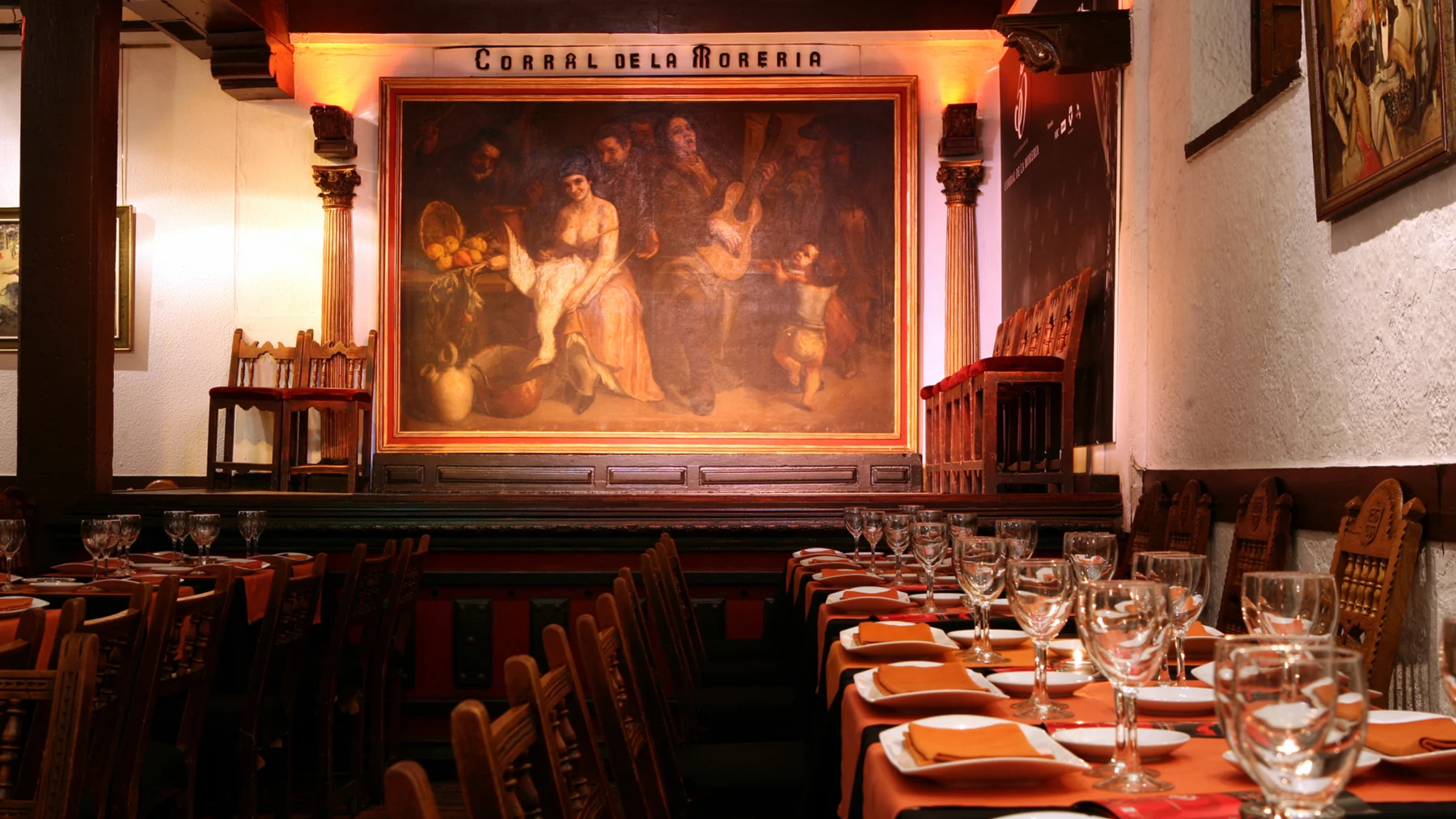
| Corral de la Morería | Modern Spanish Fine Dining with Flamenco | Madrid | Michelin 1 Star |
| Desde 1911 | Premium Seafood Fine Dining | Madrid | Michelin 1 Star |
| DiverXO | Avant-Garde Spanish Tasting Menu | Madrid | Michelin 3 Stars, World's 50 Best |
| DSTAgE | Avant-Garde Spanish Tasting Menus | Madrid | Michelin 2 Stars |
| Paco Roncero | Avant-Garde Spanish Fine Dining | Madrid | Michelin 2 Stars |
In residence
Similar places
Modern Spanish Fine Dining
Coque
Madrid, Spain
★★
Modern Spanish Fine Dining with Flamenco
Corral de la Morería
Madrid, Spain
★
Premium Seafood Fine Dining
Desde 1911
Madrid, Spain
★
Avant-Garde Spanish Tasting Menu
DiverXO
Madrid, Spain
★★★ · 50 Best
Avant-Garde Spanish Tasting Menus
DSTAgE
Madrid, Spain
★★
Avant-Garde Spanish Fine Dining
Paco Roncero
Madrid, Spain
★★

The Sunday letter
Get the next Made By story in your inbox.
We send one email every Sunday morning with the places and people we covered that week.
See a sample of the Sunday emailOne email a week. Unsubscribe from any issue.