El Conjuro
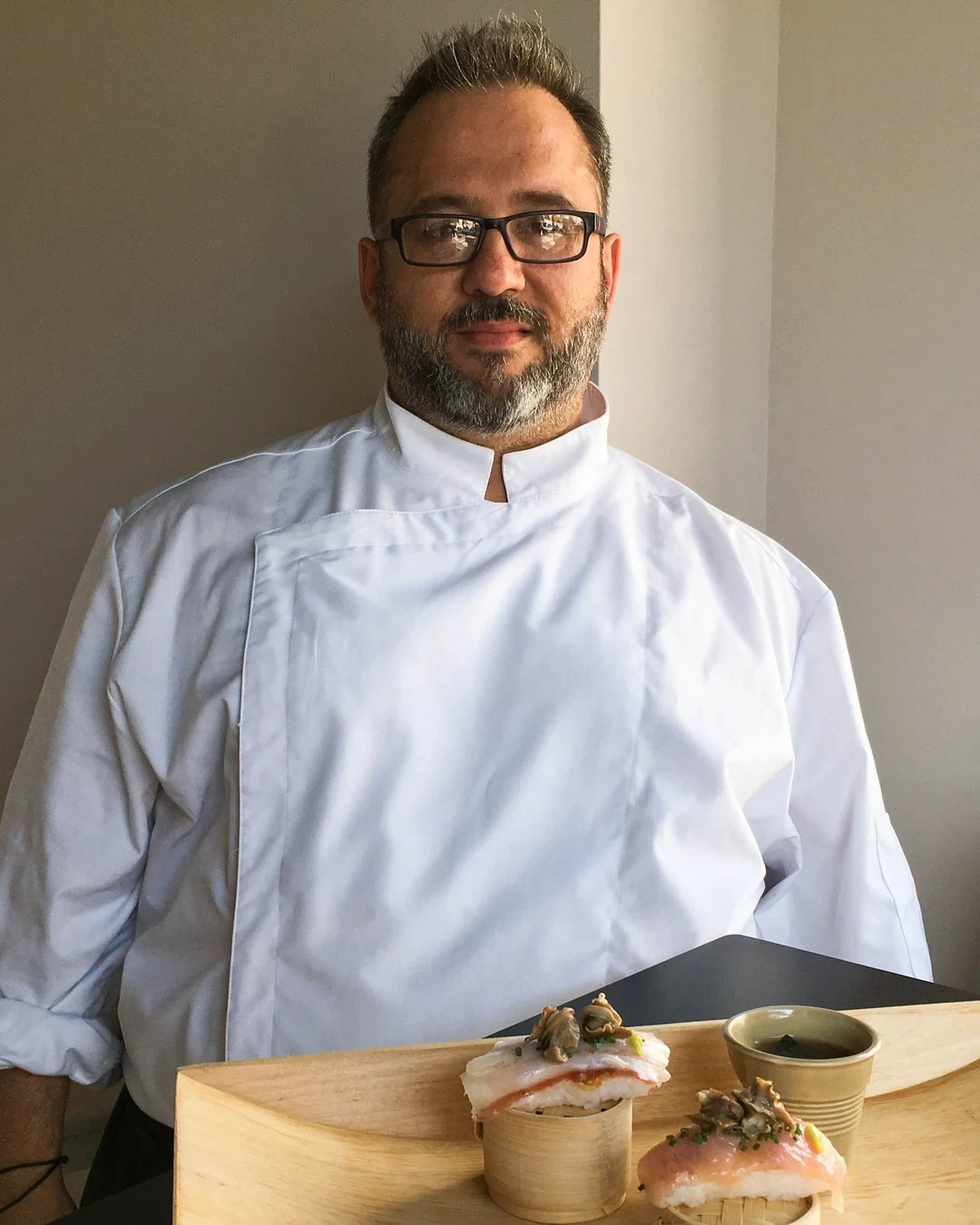
In Residence
Antonio Lorenzo
Chef
- 01CuisineContemporary Mediterranean Fusion
- 02CityCalahonda, Spain
- Guía Repsol 1 Sol · 2026
- Michelin Plate · 2026
- Opinionated About Dining Casual in Europe Recommended · 2026
- Opinionated About Dining Casual in Europe · 2025
- Michelin Plate · 2025
- Michelin Plate · 2024
A Quiet Village, a Serious Kitchen
The Costa Tropical between Motril and Salobreña is not where most visitors to Andalusia go looking for contemporary cooking. Calahonda is a small coastal settlement, calm even in July and August when the broader southern coast fills up. That relative quiet suits El Conjuro: the kitchen works without resort-town volume pressure, and the produce it draws on from the immediate coastline and the hinterland of Granada province rarely travels far before it reaches a plate.
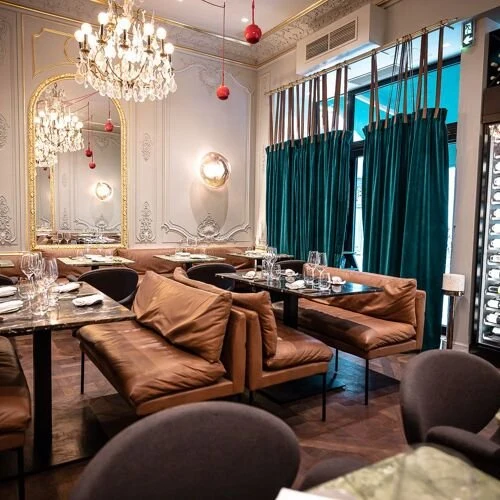
The physical approach sets expectations accurately. The address on Avenida de los Geranios puts you in a residential pocket of the village, away from the seafront promenade bustle of larger Costa del Sol towns. The room reads as minimalist and family-run because it is both: a space where the cooking is the argument, not the decor.
Where the Ingredients Come From, and Why That Matters
Spain's southern Atlantic and Mediterranean coasts produce seafood of real range, the proximity to the Strait of Gibraltar means cold-water and warm-water species overlap in local catches, and the rocky Costa Tropical shoreline yields ingredients that are genuinely specific to the zone. El Conjuro's menu is built around that coastal produce, supplemented by select meats and a considered use of Asian condiments that appears throughout contemporary Spanish cooking influenced by the generation of chefs who trained alongside or watched the Basque and Catalan avant-garde.
The house classics on record illustrate the sourcing logic directly. Ortiguillas, sea anemones, pulled from local rocks and fried, appear regularly on the menu. They are hyper-local in a literal sense: a product with almost no distribution beyond the immediate region, requiring both proximity to source and a kitchen confident enough to make them a signature rather than a novelty. The kimuchi tuna preparation places the same coastal fish inside a fermented-condiment tradition imported from East Asia, a move that has become a recognizable pattern in Spanish modern cooking from Quique Dacosta in Dénia down through smaller regional restaurants. Here, the combination reflects a kitchen thinking about contrast and fermentation, not simply following a trend.
The fried egg with cured yolk signals a different kind of sourcing discipline: the kind that treats humble ingredients with the same technical attention given to premium seafood. Curing a yolk requires time, precision, and a reason. In the context of a menu that also runs an offal section, it suggests a kitchen interested in the full range of animal and agricultural products rather than the prestige cuts alone.
The Menu's Architecture
Menu at El Conjuro divides into distinct registers. There are the house classics that appear consistently, the offal section that marks the kitchen's willingness to go beyond crowd-pleasing territory, and the rice dishes for two, a format that demands both planning and commitment, since most of them are only available on reservation. That last detail matters for anyone visiting without a booking: arrive without one and you may find particularly substantial dishes on the menu unavailable.
Rice cooked for two, in the Spanish tradition that stretches from Valencian socarrat culture through the Alicantine caldosos, is a format requiring a minimum diner count and a fixed preparation time. It is not adaptable to late requests. El Conjuro's decision to anchor part of its menu to this format is a statement about how the kitchen wants to operate, at a rhythm that produces technically correct food rather than food delivered fast. The rice section alone gives the restaurant a distinct identity among coastal Andalusian kitchens, most of which either ignore the form or treat it as a secondary offering.
The broader contemporary Spanish dining scene that El Conjuro sits within stretches from the three-Michelin-star tier, Aponiente in El Puerto de Santa María, El Celler de Can Roca in Girona, Arzak in San Sebastián, Azurmendi in Larrabetzu, DiverXO in Madrid, Mugaritz in Errenteria, Cocina Hermanos Torres in Barcelona, Martin Berasategui in Lasarte - Oria, Ricard Camarena in València, and Atrio in Cáceres, down through mid-tier contemporary kitchens operating at the €€€ price point in smaller cities and coastal towns. El Conjuro operates in that lower tier geographically and by price, but its Michelin Plate in both 2024 and 2025, combined with listing in Opinionated About Dining Casual in Europe 2025, places it in a recognised peer group of serious regional kitchens rather than the anonymous coastal restaurant mass.
Recognition and What It Signals
A Michelin Plate is not a star, but it is a declaration that the inspectors consider the cooking worth recording. In a coastal village of this size, consecutive Plate recognition across 2024 and 2025 is a meaningful credential. The Opinionated About Dining listing adds a second point of recognition. Together, they position El Conjuro as a kitchen that has drawn attention from two distinct evaluation frameworks, which is a more reliable signal than a single award from a single source. For context on how Spanish modern cooking is assessed internationally, see our coverage of Frantzén in Stockholm and FZN by Björn Frantzén in Dubai, which illustrates how Scandinavian and Spanish influence on contemporary technique has spread well beyond its origin cities.
At €€€ pricing on the Costa Tropical, that volume of review at that rating suggests a restaurant drawing both committed visitors and a returning local base.
Planning a Visit
Calahonda sits on the Costa Tropical of Granada province, between Motril to the east and Salobreña to the west, roughly 70 kilometres east of Málaga. The village is accessible by car from the A-7 coastal road. If the rice dishes are the reason you are making the trip, and they may well be, contact the restaurant to confirm reservation requirements before you travel. Given that most rice dishes require advance notice, treating the booking as mandatory rather than optional is the practical approach. See our full Calahonda restaurants guide for further context on the local dining scene, and our Calahonda hotels guide, bars guide, wineries guide, and experiences guide for building a broader stay around a meal here.
The Sunday letter
Get new places like El Conjuro every Sunday.
One email a week with the restaurants, bars and hotels we have just written up, and the people who run them.
One email a week. Unsubscribe from any issue.
Questions
Frequently asked
Who works at El Conjuro?
Made By profiles Antonio Lorenzo (Chef) at El Conjuro.
How expensive is El Conjuro?
El Conjuro is listed at a price level of $$$.
Where is El Conjuro and what does it serve?
El Conjuro is in Calahonda, Calahonda, serving Contemporary Mediterranean Fusion.
The field
How it compares
| Place | Cuisine | Notes | Awards |
|---|---|---|---|
| El Conjuro | Contemporary Mediterranean Fusion | Calahonda, $$$ | · |
| Alkimia | Modern Catalan Fine Dining | Barcelona | Michelin 1 Star |
| De Librije | Modern Dutch Fine Dining | Zwolle | Michelin 3 Stars, World's 50 Best |
| Lasarte | Modern Basque-Mediterranean Fine Dining | Barcelona | Michelin 3 Stars |
| Les Amis | Classic French Haute Cuisine | Singapore | Michelin 3 Stars, World's 50 Best |
| Saison | Modern Fire-Forward Fine Dining | San Francisco | Michelin 2 Stars, World's 50 Best |
| Steirereck im Stadtpark | Modern Austrian Fine Dining | Vienna | Michelin 3 Stars, World's 50 Best |
In residence
Similar places
Modern Catalan Fine Dining
Alkimia
Barcelona, Spain
★
Modern Dutch Fine Dining
De Librije
Zwolle, Netherlands
★★★ · 50 Best
Modern Basque-Mediterranean Fine Dining
Lasarte
Barcelona, Spain
★★★
Classic French Haute Cuisine
Les Amis
Singapore, Singapore
★★★ · 50 Best
Modern Fire-Forward Fine Dining
Saison
San Francisco, United States
★★ · 50 Best
Modern Austrian Fine Dining
Steirereck im Stadtpark
Vienna, Austria
★★★ · 50 Best
The Sunday letter
Get the next Made By story in your inbox.
We send one email every Sunday morning with the places and people we covered that week.
One email a week. Unsubscribe from any issue.