Enoteca La Torre
In Residence
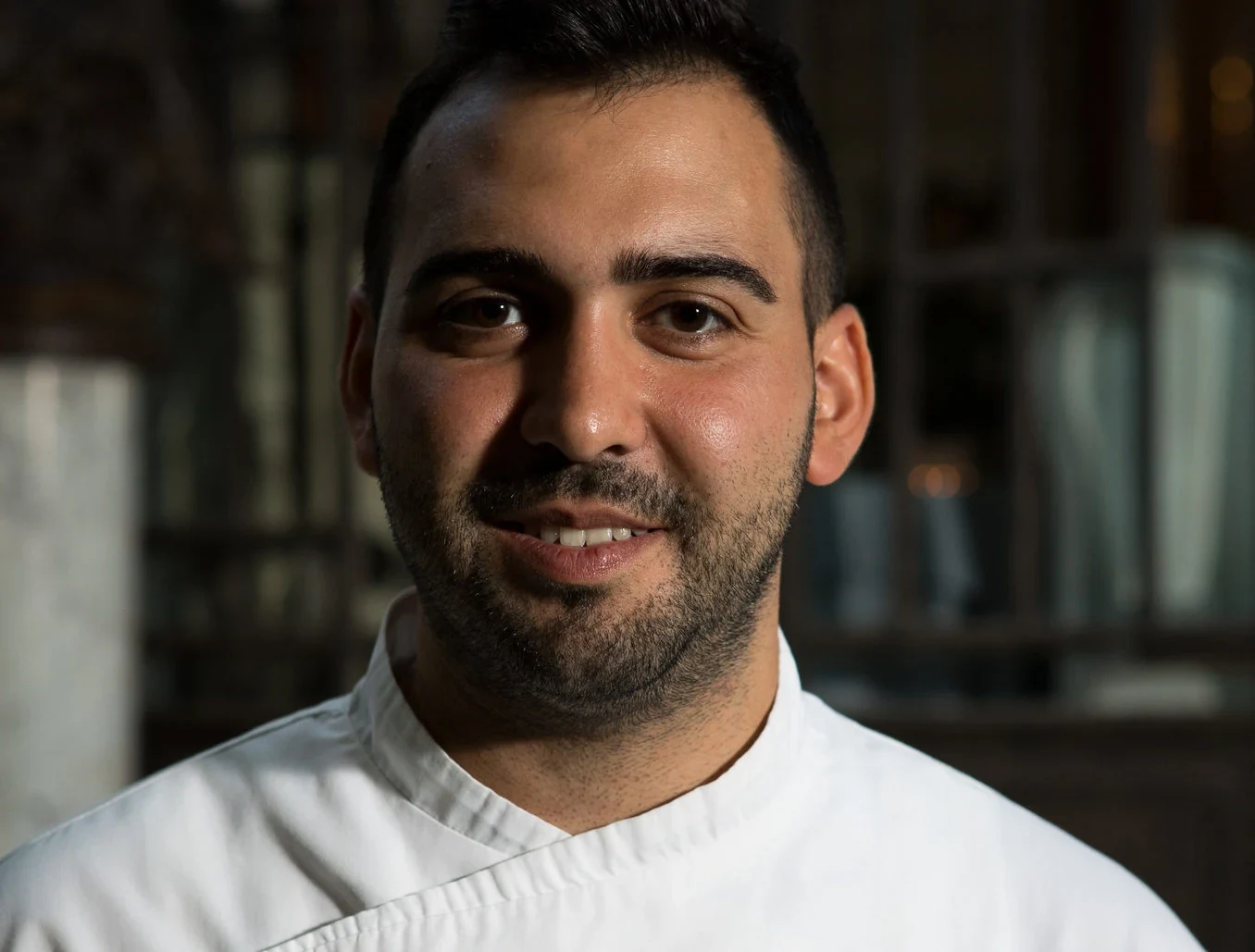
Domenico Stile
Chef
- 01CuisineModern Italian Fine Dining
- 02CityRome, Italy
- 03RecognitionTwo Michelin Stars
Smoked buffalo butter in Villa Laetitia
- 2 Michelin Stars · Michelin Guide
- La Liste Top Restaurants: 87pts · 2026
- Michelin 2 Stars · 2026
- Falstaff Restaurant - 97 Falstaff Points · 2026
- Michelin 2 Stars · 2025
- Opinionated About Dining Classical in Europe Ranked #256 · 2025
- La Liste Top Restaurants: 89pts · 2025
- Michelin 2 Stars · 2024
- Opinionated About Dining Classical in Europe Ranked #208 · 2024
The pass held since February 2016
At the pass, Domenico Stile leads as Head Chef at Enoteca La Torre Villa Laetitia in Rome, sending Campanian memory through a room built for formal quiet. He was born in Castellammare di Stabia, near the Sorrentine Peninsula, on August 1, 1989, and began at hotel school at age 15.
Stile has held this station since February 2016. Enoteca La Torre earned a Michelin star in 2017, when he was 27, and a second in 2022; the house also holds three forks from Gambero Rosso and four caps from L'Espresso. Those numbers matter because the cooking remains more specific than the applause. Smoked buffalo butter, red mullet, and lamb sit in the vocabulary of the restaurant not as trophies, but as working materials, handled through a modern Italian frame inside Villa Laetitia.
The Sunday letter
Find new places through the people who run them.
Our Sunday email brings you the chefs, winemakers and hoteliers behind our newest stories. See a sample before you subscribe.
See a sample of the Sunday emailOne email a week. Unsubscribe from any issue.
Mediterranean structure at the table
The program moves between tasting menu and à la carte, with the tasting format giving Stile the longer line. His cooking favors clean Mediterranean flavors, table-side finishes, and a controlled sequence of intensity rather than theatrical excess. Published menus and accounts have pointed to ricotta ravioli with sage butter, beef tartare seasoned with truffle oil, egg with truffles and buffalo taleggio, cod on scorzonera, rice with cannolicchi clams and asparagus, and Saint Honoré with thyme and lemon. The list reads like a station map: dairy, shellfish, bitter roots, citrus, herb, heat.
The wine program is treated as part of the method, not a second act. Rudy Travagli, the restaurant manager and sommelier, leads an Italian-leaning cellar described for its breadth and pairing work, matching Stile's progression with bottles that can carry both fat and acidity. In a room where the service is formal and the menu often unfolds course by course, that pairing discipline has to be exact. A red mullet dish asks a different kind of attention than lamb. The glass has to know the difference.
A villa room with the river outside
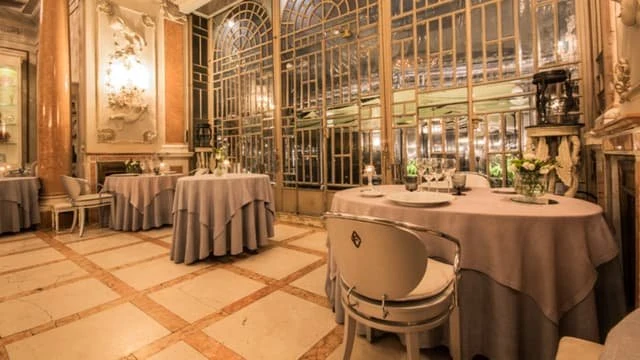
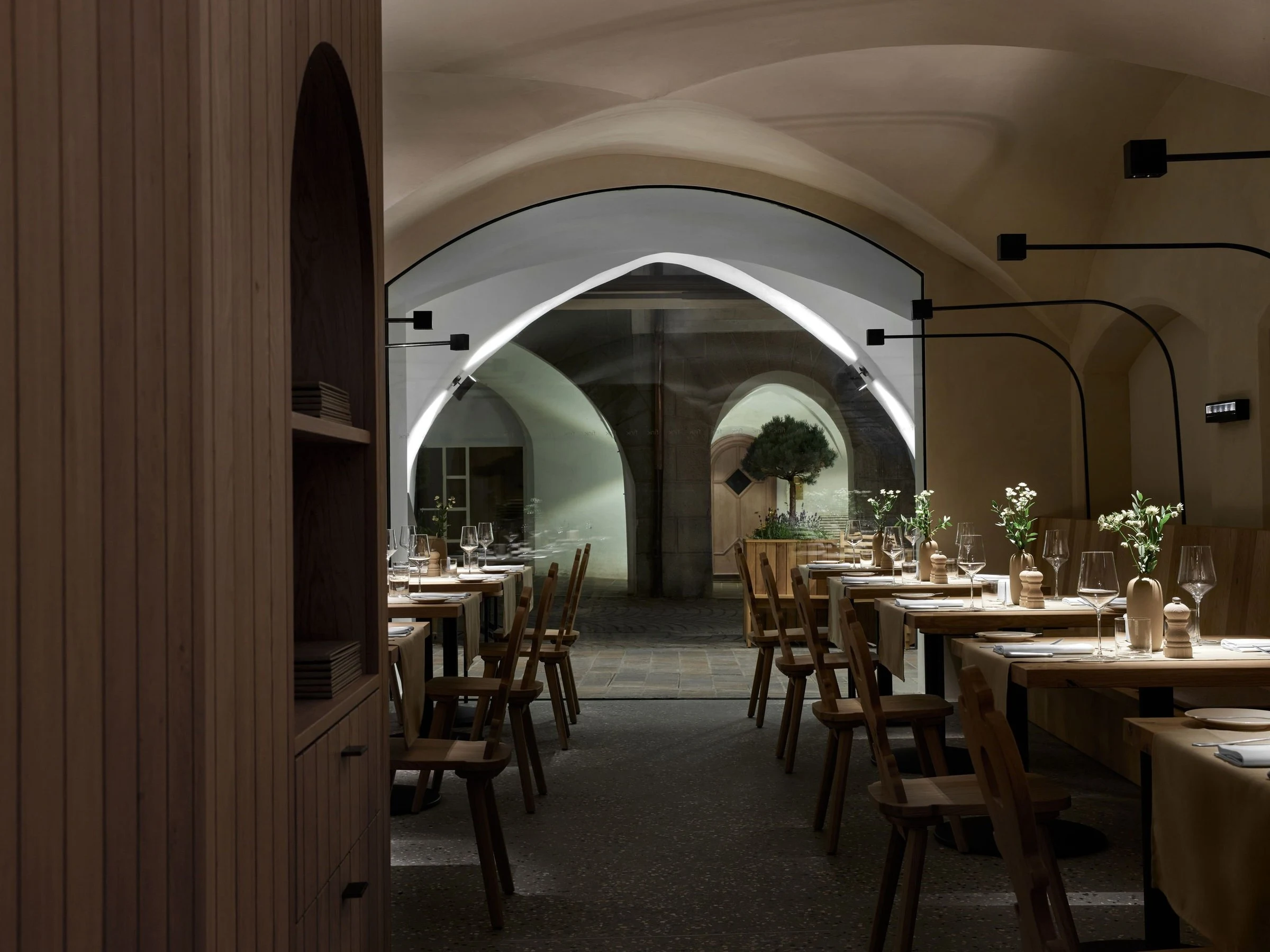
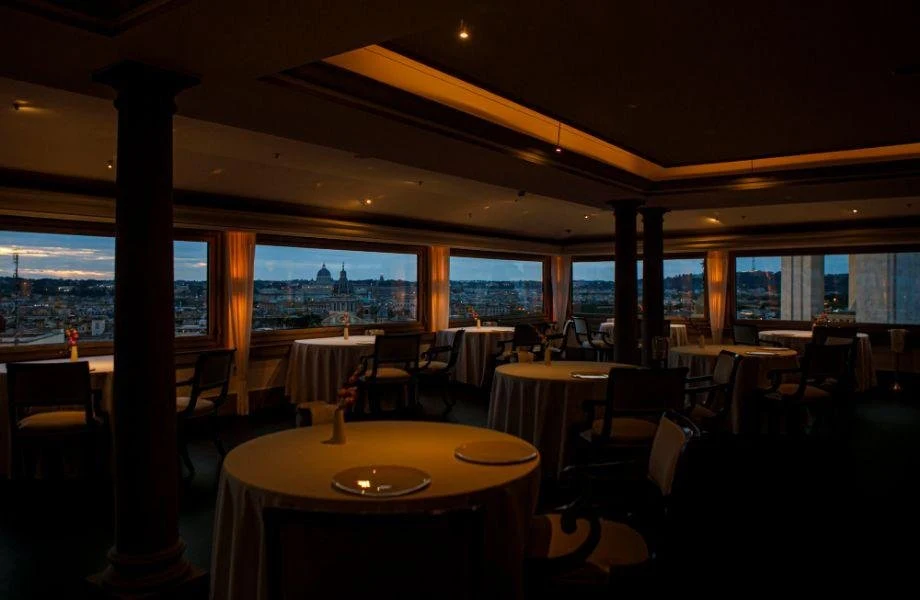
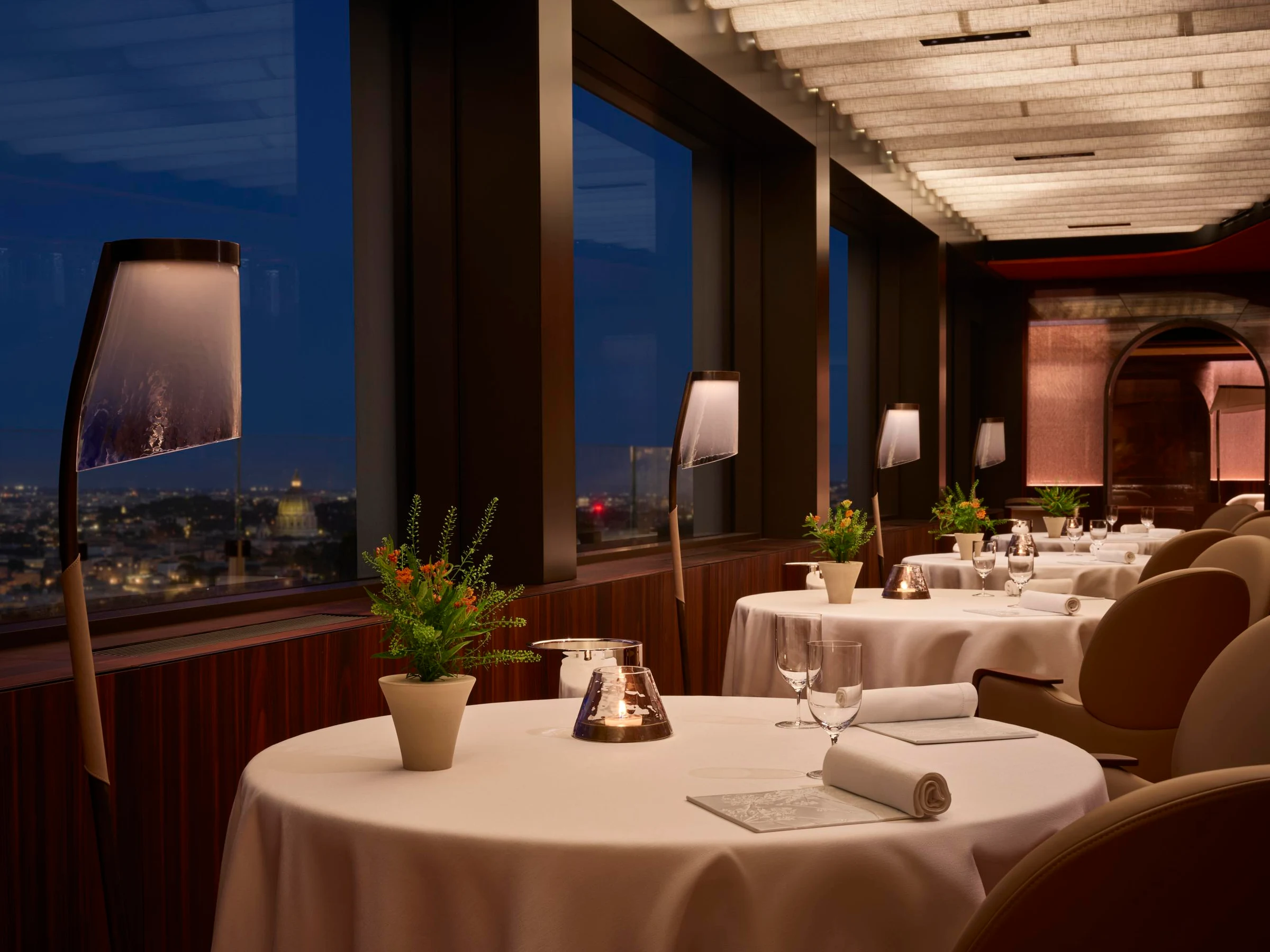
The room sits inside Villa Laetitia in Prati, on Lungotevere delle Armi, in a restored Liberty villa associated with Anna Fendi Venturini and curated by Giulio Cesare Delettrez Fendi. Vast glass windows look toward the Tiber and the gardens, bringing daylight and distance into a dining room that stays intimate rather than grandstanding. Marble floors, refined furnishings, a tea room, a bar for aperitifs, and the Sala Castellani give the house its sequence before the plate arrives.
At service, the pass and the room keep different kinds of silence. The kitchen sends out measured modern Italian cooking; the floor receives it with a slower rhythm, enough space between tables for conversation to remain private. This is not a trattoria version of Rome, and it does not need to borrow that energy. Its register is villa, cellar, table, garden, and the last impression can rest on smoked buffalo butter at Villa Laetitia.
Questions
Frequently asked
Who is the chef at Enoteca La Torre?
Domenico Stile is the head chef at Enoteca La Torre, and he has held the position since February 2016.
What kind of cooking does Enoteca La Torre serve?
The restaurant serves modern Italian fine dining, with tasting menus and à la carte service. Its cooking is described as favouring clean Mediterranean flavours, table-side finishes, and a controlled sequence of intensity.
What recognition does Enoteca La Torre hold?
Enoteca La Torre holds two Michelin stars. The venue page also notes three forks from Gambero Rosso and four caps from L'Espresso.
What dishes is Enoteca La Torre known for?
Smoked buffalo butter, red mullet, and lamb are among the dishes associated with the restaurant. Published menus and accounts have also mentioned ricotta ravioli with sage butter, beef tartare with truffle oil, egg with truffles and buffalo taleggio, cod on scorzonera, rice with cannolicchi clams and asparagus, and Saint Honoré with thyme and lemon.
What should diners know before booking?
Reservations are essential, and bookings are handled through Quandoo. The dress code is smart casual, and the restaurant is open Wednesday to Sunday for lunch and dinner, with Monday and Tuesday closed.
The field
How it compares
| Place | Awards | Cuisine | Notes |
|---|---|---|---|
| Enoteca La Torre | Michelin 2 Stars | Modern Italian Fine Dining | Della Vittoria, $$$$ |
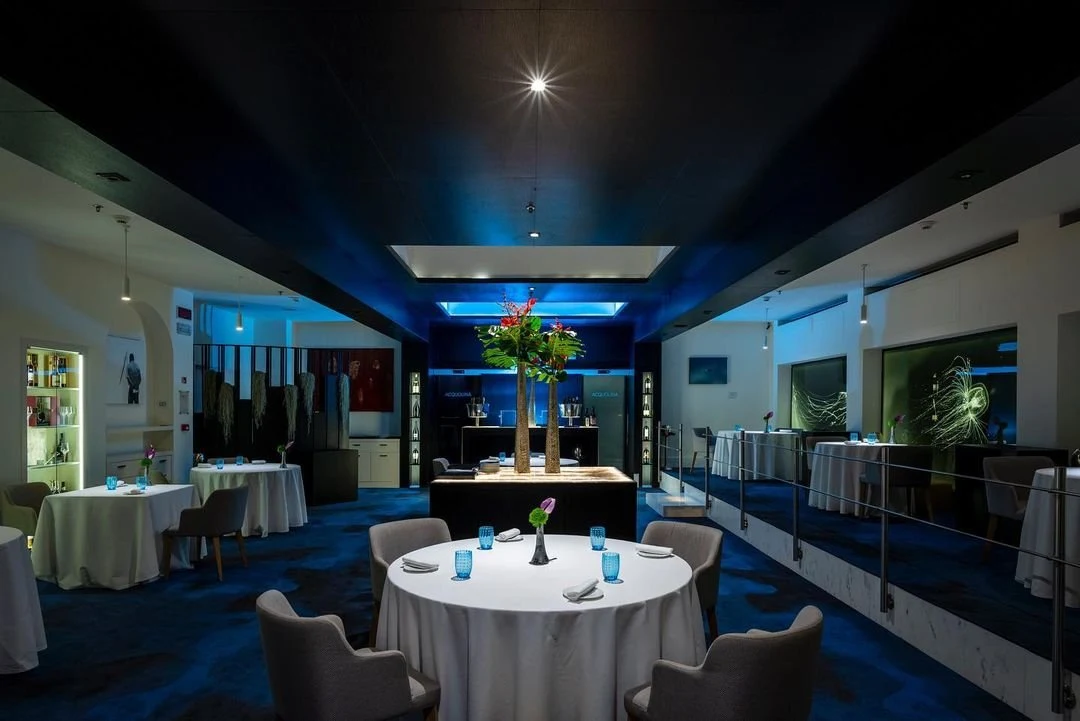
| Acquolina | Michelin 2 Stars | Modern Mediterranean Seafood Fine Dining | Rome |
| Idylio by Apreda | Michelin 1 Star | Modern Mediterranean-Asian Fusion | Rome |
| Il Pagliaccio | Michelin 2 Stars | Modern Italian-Japanese Fusion Fine Dining | Rome |
| Imàgo | Michelin 1 Star | Modern Italian Fine Dining | Rome |
| La Pergola | Michelin 3 Stars | Modern Italian Fine Dining | Rome |
| Pipero Roma | Michelin 1 Star | Modern Roman Fine Dining | Rome |
In residence
Similar places
Modern Mediterranean Seafood Fine Dining
Acquolina
Rome, Italy
★★
Modern Mediterranean-Asian Fusion
Idylio by Apreda
Rome, Italy
★
Modern Italian-Japanese Fusion Fine Dining
Il Pagliaccio
Rome, Italy
★★
Modern Italian Fine Dining
Imàgo
Rome, Italy
★
Modern Italian Fine Dining
La Pergola
Rome, Italy
★★★
Modern Roman Fine Dining
Pipero Roma
Rome, Italy
★
The Sunday letter
Get the next Made By story in your inbox.
We send one email every Sunday morning with the places and people we covered that week.
See a sample of the Sunday emailOne email a week. Unsubscribe from any issue.