Entenstuben
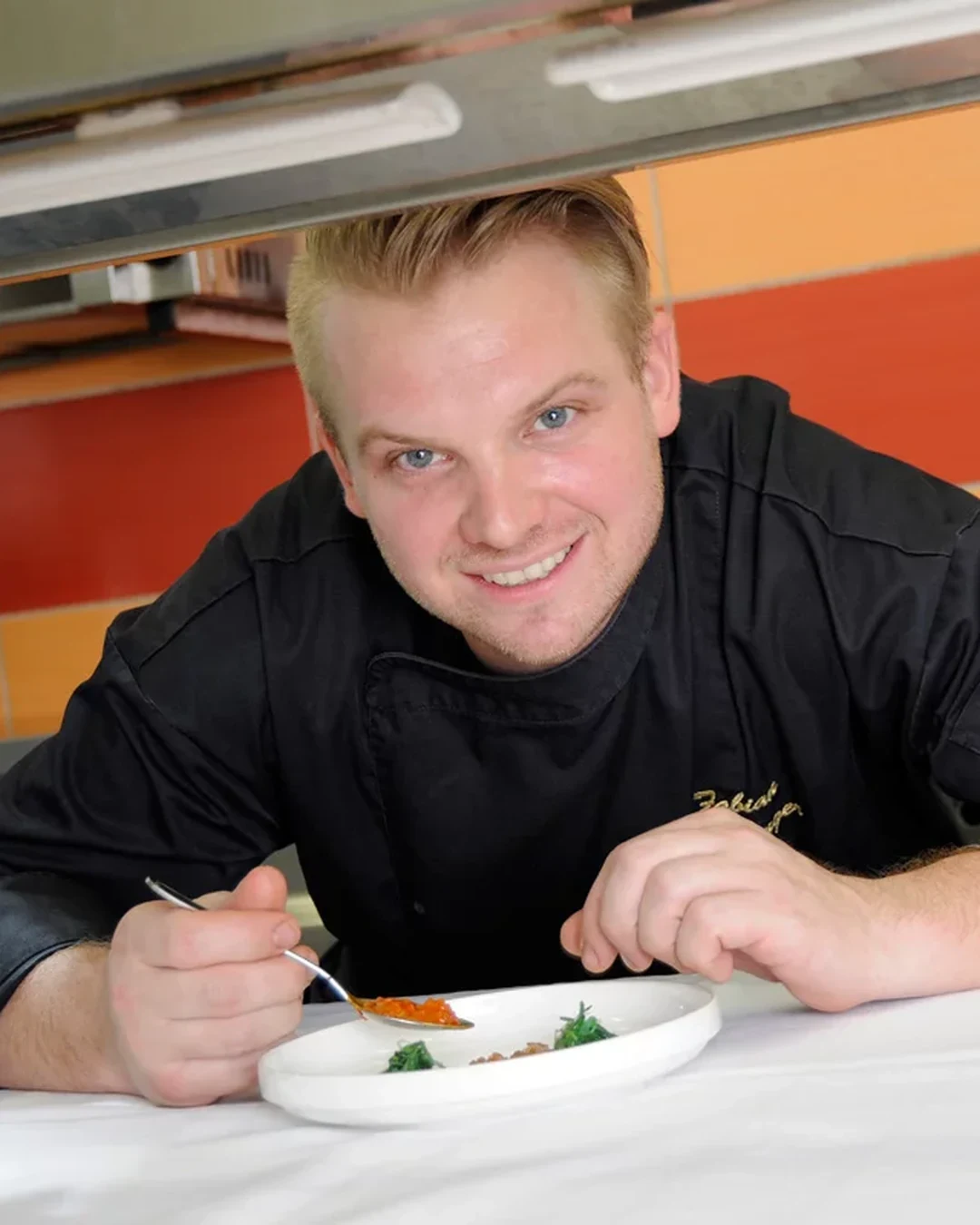
In Residence
Fabian Denninger
Chef
- 01CuisineModern French Fine Dining
- 02CityNuremberg, Germany
- 03RecognitionOne Michelin Star
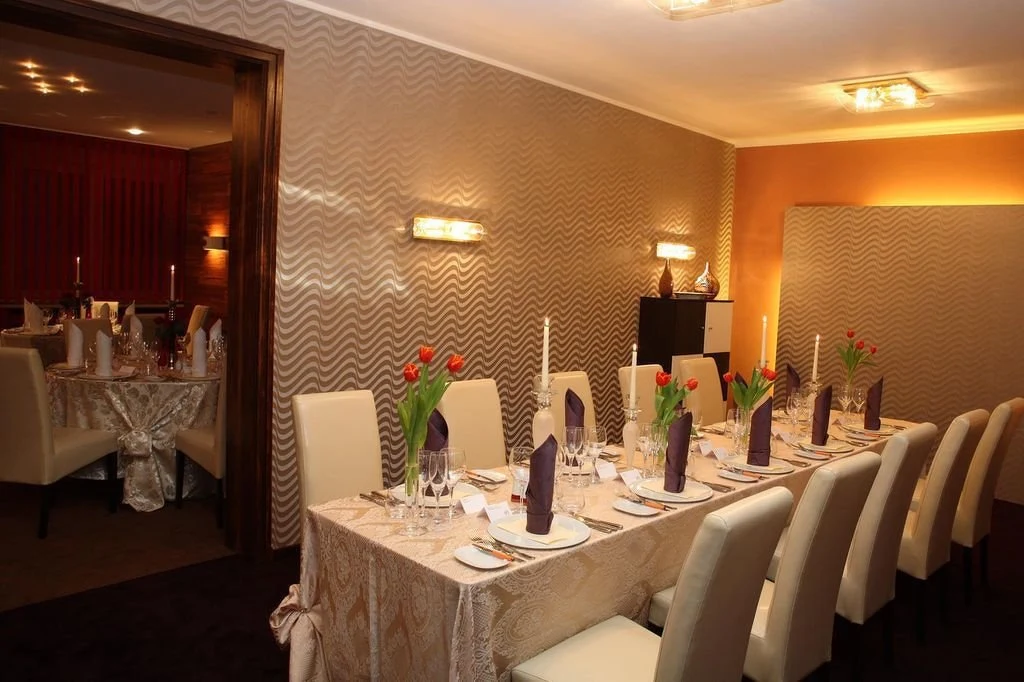
- 1 Michelin Star · Michelin Guide
- Michelin 1 Star · 2026
- Michelin 1 Star · 2025
Where Franconian Cooking Meets Modern Discipline
Nuremberg's fine-dining tier is a small, defined group. The city does not have the volume of starred addresses you find in Munich or Berlin, which means each arrival in the Michelin rankings carries a different weight here. Entenstuben, awarded a Michelin star in 2025 under chef Fabian Denninger, entered that conversation at a moment when the city's upper bracket is already occupied by a handful of strong incumbents. Understanding where it sits requires knowing what those incumbents represent.
At the €€€€ price tier, Entenstuben prices against Essigbrätlein and etz, both operating at two Michelin stars, and Tisane, which holds one star with a modern European orientation. That comparable set is not large. The city's starred scene is concentrated enough that a single new entrant changes the calculus for visitors deciding how to allocate dinners across a two- or three-night stay.
The Sunday letter
Find new places through the people who run them.
Our Sunday email brings you the chefs, winemakers and hoteliers behind our newest stories. See a sample before you subscribe.
See a sample of the Sunday emailOne email a week. Unsubscribe from any issue.
The Cultural Weight of Franconian Tradition
Franconia's food culture is one of the most locally specific in Germany. It is not Bavarian, despite the geographic proximity, Franconians are precise about the distinction. The regional canon runs from Schäufele (braised pork shoulder) to Sauerbraten marinated in a distinctly tart brine, from white asparagus in late spring to game in autumn. Bratwurst in Nuremberg means something specific: finger-length, seasoned with marjoram, cooked over beechwood. These are not vague regional gestures; they are tight, almost codified preparations that have survived across generations without much drift.
Modern cuisine in this context operates under productive tension. The question for any fine-dining address working in or adjacent to Franconian tradition is how far to move before the regional signal disappears. Some addresses, like Würzhaus, work explicitly with local producers and regional vocabulary. Others, like Veles, which holds one star at the €€€ tier, deploy modern technique in a way that sits more loosely within any single culinary tradition. Entenstuben's classification as Modern Cuisine suggests it occupies a similar space, where technique and contemporary format carry the structure, and regional material appears as ingredient rather than doctrine.
The address on Schranke 9 places the restaurant in a part of the city removed from the heavy tourist footfall around the Hauptmarkt and the castle district. That positioning is consistent with how Germany's more considered fine-dining addresses tend to locate themselves: not in the centre of leisure traffic, but accessible enough to draw from it without being defined by it. For comparison, Waidwerk takes a similar approach to address, pairing quieter surroundings with a focused culinary program.
The Michelin Signal in Context
A first Michelin star awarded in 2025 communicates specific things. It means the kitchen is operating with a level of consistency, across technique, service, and concept, that the Guide considers worth directing a reader to make a journey for. The one-star tier in Germany is not a consolation bracket; some of the most interesting cooking in the country sits there, in restaurants that have opted for a depth of focus over the full orchestration that the upper tiers require. JAN in Munich and ES:SENZ in Grassau illustrate the range of what one-star modern cuisine looks like at the German regional level.
The 4.8 Google rating across 382 reviews adds a second layer of signal. Ratings at that level, across a sample of that size, are difficult to sustain on novelty alone; they typically reflect a dining experience that lands close to expectation across a wide range of visits and contexts. That combination, critical recognition from Michelin alongside broad guest satisfaction, is less common than either signal alone, and it shapes how Entenstuben should be read against its comparable set.
At the €€€€ tier in Nuremberg, the competition includes ZweiSinn Meiers | Bistro and Koch und Kellner, which operate at different price points and with different format ambitions. The fine-dining tier, by contrast, is genuinely small, which means Entenstuben's arrival at the starred level matters to anyone building a serious dining itinerary in the city.
Modern Cuisine as a Category
The classification Modern Cuisine is deliberately broad, and that breadth is worth unpacking. Across Germany's most discussed restaurants working in this mode, from CODA Dessert Dining in Berlin to Vendôme in Bergisch Gladbach to Schwarzwaldstube in Baiersbronn, the common thread is technique-led cooking that draws on classical foundations while refusing to be constrained by them. What distinguishes individual kitchens within that broad category is usually the specific regional or seasonal material they prioritise, the format they use to present it, and the degree to which the kitchen's own identity comes through the plate.
For a kitchen operating at the €€€€ level in Nuremberg, the pull of Franconian ingredients, game, river fish, forest produce, local grain, is a practical as much as an aesthetic question. The region's agricultural and artisan food culture offers a sourcing advantage that kitchens in more generic urban centres do not have. Whether and how Denninger's kitchen uses that advantage is precisely the kind of question a visit resolves better than any description.
Internationally, the Modern Cuisine category has been shaped in part by kitchens like Frantzén in Stockholm and its derivative formats, and the approach has moved from Nordic capitals into Central European cities in ways that have influenced how younger German chefs frame their own programs. That broader movement is context for understanding what a newly starred modern kitchen in Nuremberg is likely to be reaching toward, even without specific menu detail in hand.
Planning a Visit
Entenstuben sits at Schranke 9, 90489 Nuremberg, a short distance from the city centre. At the €€€€ price tier with a newly awarded Michelin star, booking ahead is sensible; newly recognised restaurants in Germany's smaller cities tend to fill quickly in the weeks following a Guide announcement, when both local interest and inbound travel queries spike simultaneously. Given the limited size of Nuremberg's starred tier, Entenstuben is treated as an anchor booking around which the rest of an itinerary is built, rather than a fallback option.
Questions
Frequently asked
What recognition does Entenstuben hold?
Entenstuben holds 1 Michelin star.
Who works at Entenstuben?
Made By profiles Fabian Denninger (Chef) at Entenstuben.
How expensive is Entenstuben?
Entenstuben is listed at a price level of $$$.
Where is Entenstuben and what does it serve?
Entenstuben is in Wöhrd, Nuremberg, serving Modern French Fine Dining.
The field
How it compares
| Place | Awards | Cuisine | Notes |
|---|---|---|---|
| Entenstuben | Michelin 1 Star | Modern French Fine Dining | Wöhrd, $$$ |
| Essigbrätlein | Michelin 2 Stars | Modern German Gewürzküche | Nuremberg |
| etz | Michelin 2 Stars | Modern Bavarian Fine Dining | Nuremberg |
| Tisane | Michelin 1 Star | Modern Creative Fine Dining | Nuremberg |
| Wonka | Michelin 1 Star | Modern European Fusion with Asian and Franconian Influences | Nuremberg |
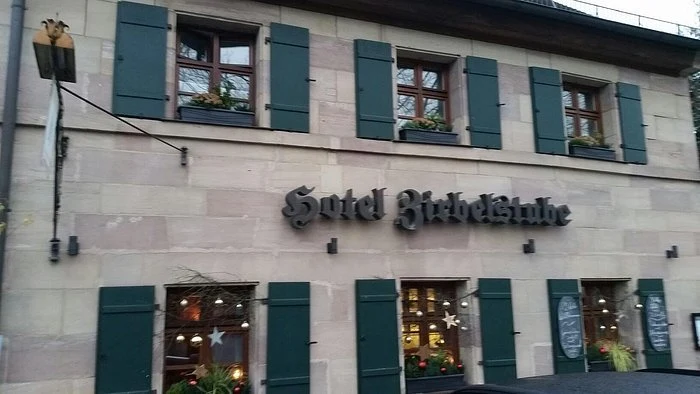
| Zirbelstube | · | Regional Franconian Fine Dining | Nuremberg |
| ZweiSinn Meiers | Fine Dining | Michelin 1 Star | Modern French-Mediterranean Fine Dining | Nuremberg |
In residence
Similar places
Modern German Gewürzküche
Essigbrätlein
Nuremberg, Germany
★★
Modern Bavarian Fine Dining
etz
Nuremberg, Germany
★★
Modern Creative Fine Dining
Tisane
Nuremberg, Germany
★
Modern European Fusion with Asian and Franconian Influences
Wonka
Nuremberg, Germany
★
Regional Franconian Fine Dining
Zirbelstube
Nuremberg, Germany
Modern French-Mediterranean Fine Dining
ZweiSinn Meiers | Fine Dining
Nuremberg, Germany
★
The Sunday letter
Get the next Made By story in your inbox.
We send one email every Sunday morning with the places and people we covered that week.
See a sample of the Sunday emailOne email a week. Unsubscribe from any issue.