Glicine
In Residence
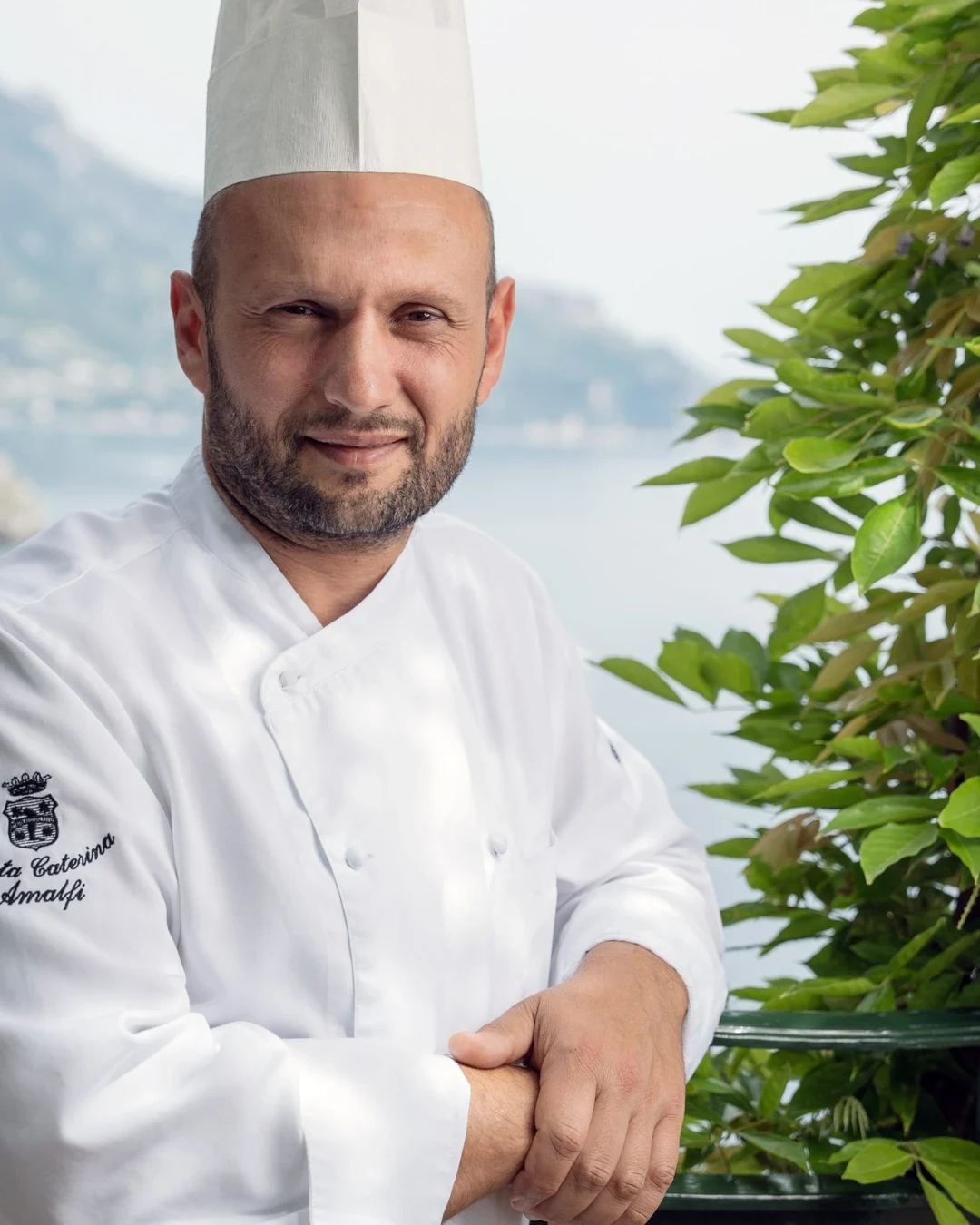
Giuseppe Stanzione
Chef
- 01CuisineModern Mediterranean Fine Dining
- 02CityAmalfi, Italy
- 03RecognitionOne Michelin Star
- 1 Michelin Star · Michelin Guide
- Michelin 1 Star · 2026
- Opinionated About Dining Classical in Europe Ranked #484 · 2025
- Michelin 1 Star · 2025
- We're Smart World 4 Radishes · 2025
- Michelin 1 Star · 2024
- Opinionated About Dining Classical in Europe Ranked #380 · 2024
Where the Terrace Meets the Tyrrhenian
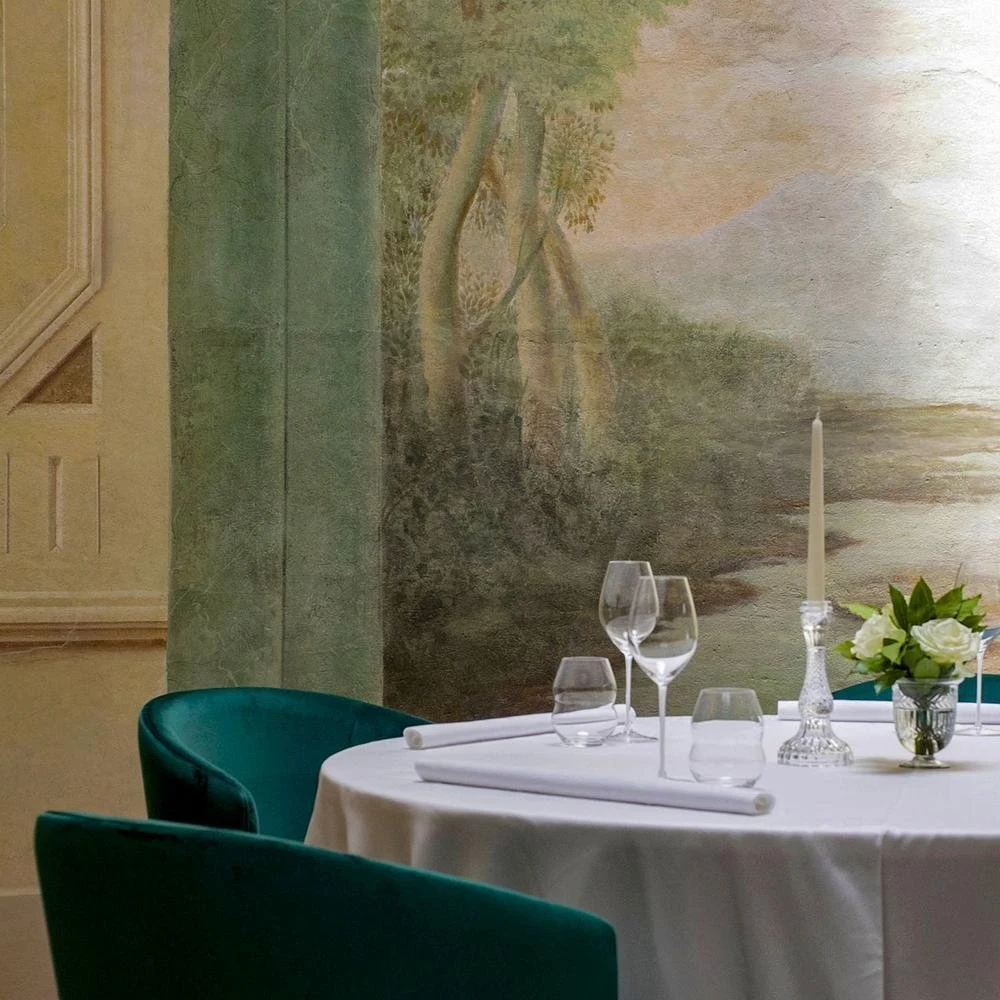
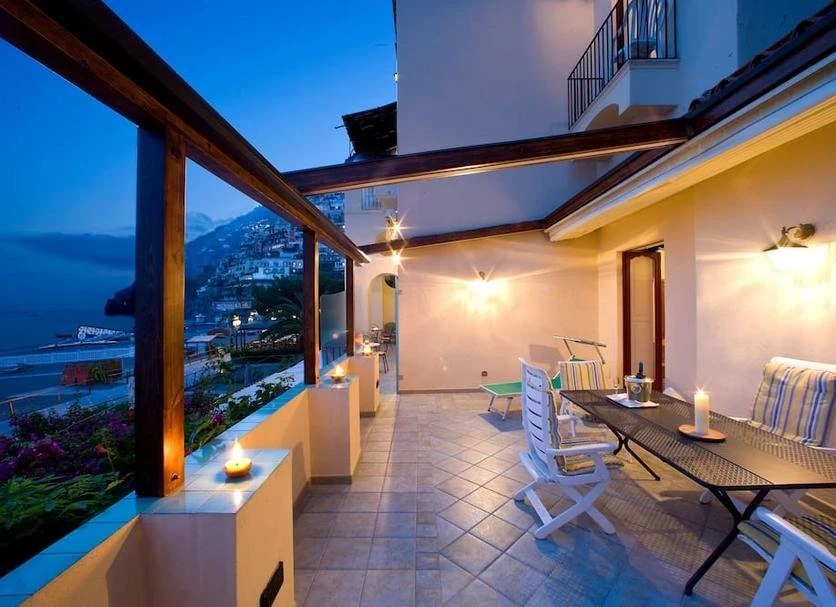
The approach to Glicine begins with elevation. The restaurant occupies the uppermost terrace of Hotel Santa Caterina, a five-star property positioned on the cliffs just outside the town centre of Amalfi, and the climb through the hotel's gardens, wisteria overhead, sea visible through breaks in the stone, calibrates your expectations before a single dish arrives. At the table, the horizon flattens the distinction between sky and water, and live piano carries across the open terrace. These are not incidental details. At the top tier of Amalfi Coast dining, environment and food share roughly equal billing, and Glicine understands that contract.
The restaurant holds one Michelin star. Those two reference points together describe the territory accurately: classical in technique and product sourcing, but not frozen in it. That positioning distinguishes Glicine from the purely traditional trattorie down in the port, and from the more aggressively creative Italian restaurants in major northern cities, such as Osteria Francescana in Modena or Enrico Bartolini in Milan.
The Sunday letter
Find new places through the people who run them.
Our Sunday email brings you the chefs, winemakers and hoteliers behind our newest stories. See a sample before you subscribe.
See a sample of the Sunday emailOne email a week. Unsubscribe from any issue.
The Olive Oil Foundation
Campanian cooking is structured around a relatively short list of foundational ingredients, and olive oil sits at the top of that list. The region produces several distinct cultivars, Ravece, Pisciottana, Rotondella, and the smaller-fruited Minucciola among them, each carrying different profiles of bitterness, fruitiness, and pepper finish. In serious Campanian kitchens, oil is a primary flavour rather than a cooking medium, and the decision about which variety to use, at what stage, and in what quantity shapes a dish as fundamentally as salt or acid.
At Glicine, this logic extends to technique in a way that signals genuine engagement with the region's agricultural identity. One of the kitchen's signature preparations involves spaghetti cooked not in water but in an extract of Taggiasca olives. Taggiasca is a Ligurian cultivar, smaller and more delicate than most Campanian varieties, with a milder bitterness and a clean, almost sweet mid-palate. Using it as a cooking medium concentrates those flavours into the pasta itself, producing a result that is fundamentally about fat-carried aroma rather than sauce. It is an argument for olive oil as a structural ingredient, not a garnish, and it is the kind of move that places Glicine alongside the more technically considered end of southern Italian fine dining, where Quattro Passi in Marina del Cantone occupies a comparable commitment to Campanian product intelligence.
Across the broader category, fine-dining restaurants in southern Italy have increasingly used olive oil not just as a marker of local identity but as a vehicle for differentiation within the tasting menu format. The contrast between an entry-level olive oil poured tableside and a cultivar-specific preparation cooked into a pasta base is the difference between a gesture and a position. Glicine takes the latter approach.
Asia as Accent, Campania as Structure
Chef Giuseppe Stanzione trained across Michelin-starred kitchens in California, Australia, China, and Thailand before returning to his native region of Salerno to take the helm at Glicine. The menu reflects that trajectory in specific and measured ways. A preparation of tuna in a sake and soy infusion, accompanied by smoked aubergine cream, crispy saffron onions, and yuzu, demonstrates how the kitchen introduces Asian technique. The umami depth of the soy works with the sweetness of the aubergine; the yuzu's acidity does the work that a southern Italian would give to lemon. But the underlying product logic, locally sourced tuna, the aubergine's centrality to Campanian cooking, remains intact. The global reference is a modifier, not a replacement.
This approach to international technique applied over regional foundations has a clear precedent in northern Italian fine dining. Dal Pescatore in Runate and Le Calandre in Rubano each demonstrate how Italian cooking can absorb contemporary influence without losing its regional grammar. At Glicine, that grammar is specifically Campanian: coastal fish, preserved citrus, the nightshade vegetables that define the area's agricultural output, and olive oil as the binding agent across almost every course.
The kitchen also maintains dedicated vegetarian and vegan menu tracks, alongside gluten-free options. This is a fully structured programme, appropriate for a tasting menu format where dietary-specific guests need parallel depth rather than a reduced version of the main menu.
The Competitive Set on the Coast and Beyond
The Amalfi Coast's fine-dining tier is smaller than its international profile might suggest. The area's geography limits year-round operation for many addresses, and the logistics of running a serious kitchen in a town accessible primarily by coastal road or sea ferry create real constraints on supply chain and staffing. Glicine's position within Hotel Santa Caterina provides operational stability that independent coastal restaurants rarely have, and the hotel's five-star infrastructure supports the level of service that a Michelin one-star implies.
Nationally, Glicine's OAD Classical in Europe ranking places it within the conversation of serious Italian fine-dining rooms, though it operates in a different register from the three-Michelin-star addresses that dominate Italy's international profile, such as Enoteca Pinchiorri in Florence or Piazza Duomo in Alba. Internationally, the combination of coastal product, olive oil technique, and Asian inflection finds interesting parallel at Le Bernardin in New York City, where coastal seafood and precise technique from a different tradition also produce a highly specific menu identity, though the stylistic execution differs substantially. For an Italian restaurant that integrates cultural cross-reference more structurally, Atomix in New York City provides a useful comparison point on methodology, even if the cuisines share nothing directly.
Within the southern Italian fine-dining category, Uliassi in Senigallia and Reale in Castel di Sangro both operate with similar commitments to coastal and regional product at comparable price tiers, offering useful context for what Glicine's approach means within the broader map of Italian fine dining below the Michelin three-star level. Further north, Atelier Moessmer Norbert Niederkofler in Brunico and Casa Perbellini 12 Apostoli in Verona demonstrate how regional specificity operates in different Italian culinary contexts.
Planning Your Visit
Glicine is a four-price-tier (€€€€) restaurant, placing it at the top of the Amalfi dining market. The restaurant sits within Hotel Santa Caterina on Via Mauro Comite, 9. Advance reservations are essential. The live piano adds an audio dimension to the terrace.
Questions
Frequently asked
What recognition does Glicine hold?
Glicine holds 1 Michelin star.
Who works at Glicine?
Made By profiles Giuseppe Stanzione (Chef) at Glicine.
How expensive is Glicine?
Glicine is listed at a price level of $$$$.
Where is Glicine and what does it serve?
Glicine is in Amalfi, Amalfi, serving Modern Mediterranean Fine Dining.
The field
How it compares
| Place | Awards | Cuisine | Notes |
|---|---|---|---|
| Glicine | Michelin 1 Star | Modern Mediterranean Fine Dining | Amalfi, $$$$ |
| BonAmb | Michelin 2 Stars | Modern Mediterranean Fine Dining | Xàbia |
| Casadelmar | Michelin 2 Stars | Modern Mediterranean Fine Dining | Porto-Vecchio |
| La caravella | Michelin 1 Star | Traditional Italian Fine Dining | Amalfi |
| La Table du Castellet | · | Modern Mediterranean Fine Dining | Le Castellet |
| La Vague d'Or - Cheval Blanc St-Tropez | Michelin 3 Stars | Modern Mediterranean Fine Dining | Saint-Tropez |
| Riff | Michelin 1 Star | Modern Mediterranean Fine Dining | València |
In residence
Similar places
Modern Mediterranean Fine Dining
BonAmb
Xàbia, Spain
★★
Modern Mediterranean Fine Dining
Casadelmar
Porto-Vecchio, France
★★
Traditional Italian Fine Dining
La caravella
Amalfi, Italy
★
Modern Mediterranean Fine Dining
La Table du Castellet
Le Castellet, France
Modern Mediterranean Fine Dining
La Vague d'Or - Cheval Blanc St-Tropez
Saint-Tropez, France
★★★
Modern Mediterranean Fine Dining
Riff
València, Spain
★
The Sunday letter
Get the next Made By story in your inbox.
We send one email every Sunday morning with the places and people we covered that week.
See a sample of the Sunday emailOne email a week. Unsubscribe from any issue.