HA'
- 01CuisineModern Mexican Fine Dining
- 02CityPlaya del Carmen, Mexico
- 03RecognitionOne Michelin Star
Nine courses shaped by water
- 1 Michelin Star · Michelin Guide
- Forbes 4-Star · 2026
- La Liste Top Restaurants: 87pts · 2026
- AAA Top 10 Mexico Restaurants: 200pts · 2026
- AAA 5 Diamond · 2025
- La Liste Top Restaurants: 94pts · 2025
- Michelin 1 Star · 2025
- Forbes 4-Star · 2025
- Michelin 1 Star · 2024
Descending Into the Dining Room
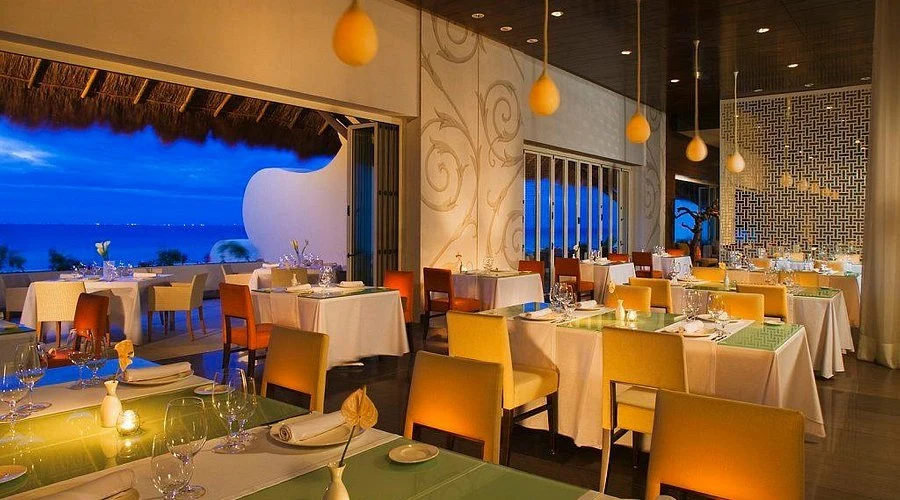
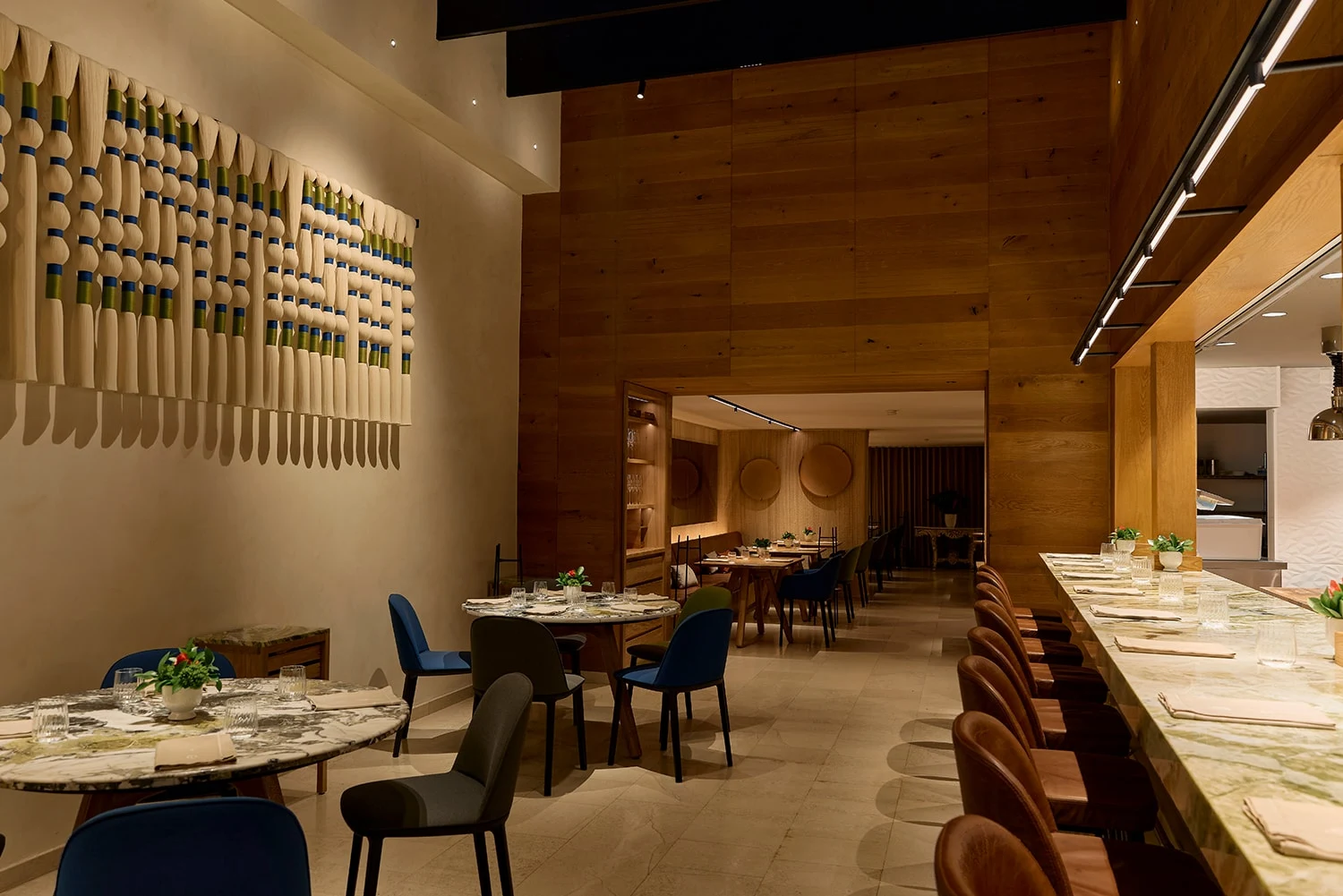
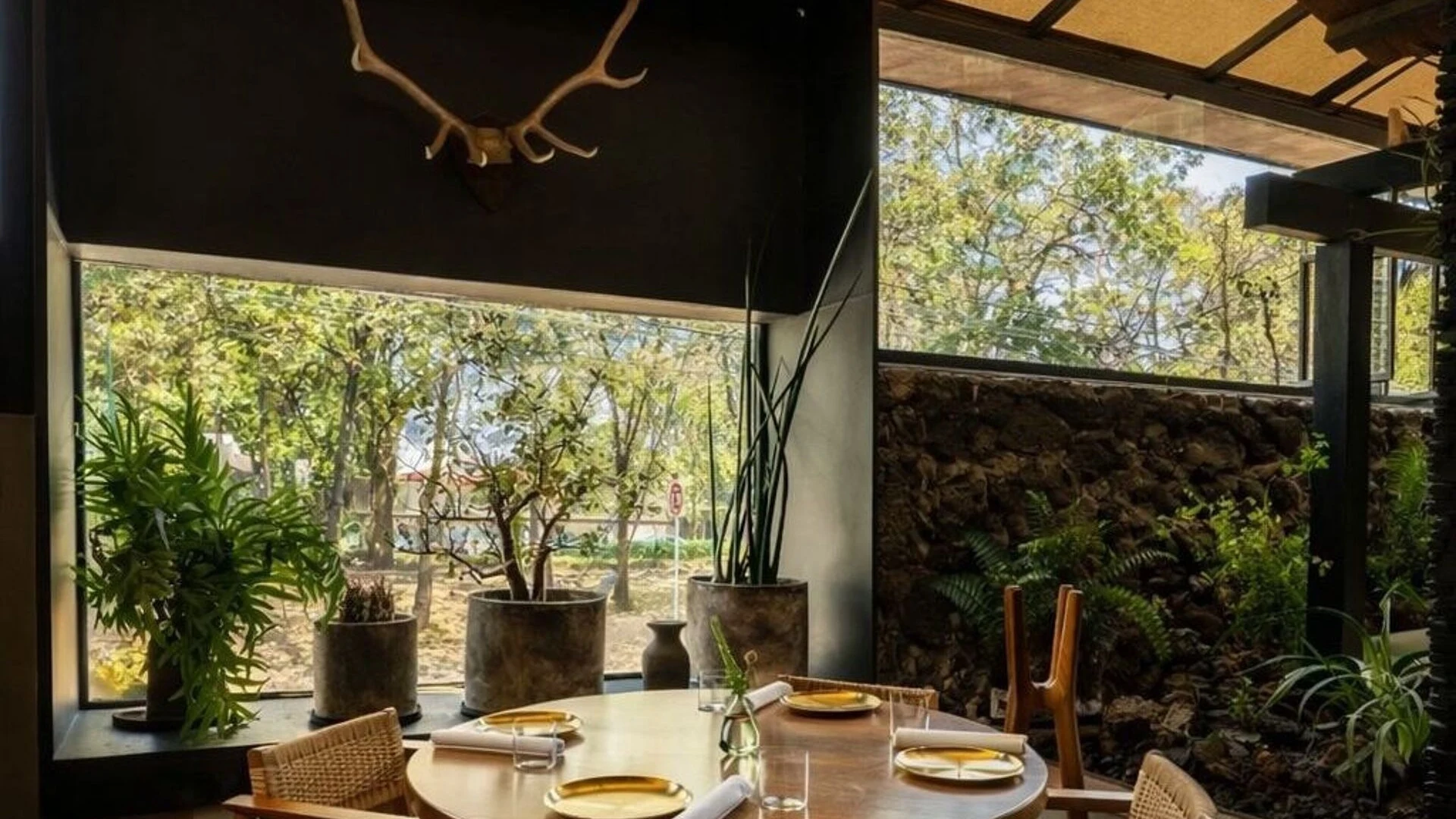
The approach to HA' does something most resort restaurants do not attempt: it removes you from the property rather than reminding you of it. Guests walk down a ramp flanked by cascading water before arriving at a dining room where floor-to-ceiling windows open the interior to the surrounding jungle and, on clear evenings, to moonlight that moves across the room as the meal progresses. The restaurant operates in Playa del Carmen, serves modern Mexican fine dining, and holds one Michelin star. The architecture functions as a compositional choice, framing stillness rather than spectacle.
This matters because the broader Riviera Maya resort circuit tends toward volume, scale, and show. HA' operates on different terms, with a format built around low capacity, a set tasting menu, and a room quiet enough to register the wine service. Among high-end resort restaurants along this coastline, that combination is less common than the price point might suggest.
Where HA' Sits in the Playa del Carmen Scene
Playa del Carmen's restaurant range is wider than it once was. At one end, taco counters and casual Mexican along Avenida Constituyentes hold their own, with El Fogón representing the accessible end of that spectrum at a single dollar sign. In the mid-range, Axiote Cocina de Mexico works the same regional larder at a two-dollar-sign price point, and KI'IS occupies the three-dollar-sign tier with a tighter focus on Yucatecan tradition. At the four-dollar-sign ceiling, HA' and Cocina de Autor Riviera Maya compete for the same diner, though with meaningfully different editorial frameworks: Cocina de Autor reads as European-inflected creative cooking; HA' stays anchored to Mexican sourcing throughout.
Michelin awarded HA' a star in both 2024 and 2025, and La Liste placed the restaurant at 94 points in 2025, dropping to 87 in the 2026 ranking. Those numbers position the restaurant inside a credentialed comparable set that extends well beyond the peninsula. For regional comparison, Le Chique in Puerto Morelos holds similar institutional recognition and sits within the same resort-dining format. Nationally, the conversation includes Pujol in Mexico City and Levadura de Olla in Oaxaca as the markers of what serious Mexican tasting menus are doing with indigenous ingredients and technique. HA' is the Riviera Maya's answer to that conversation.
The Menu and Its Ingredients
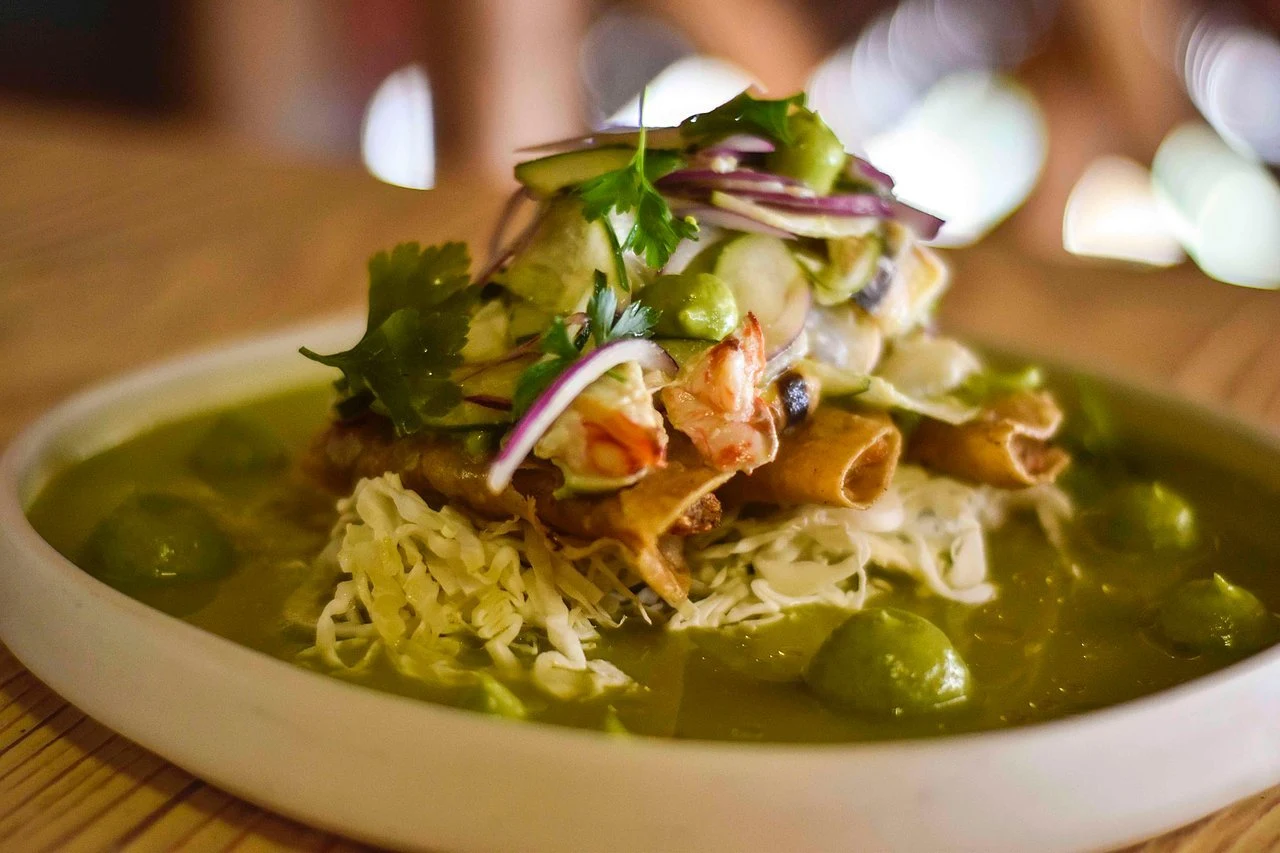
The nine-course format is the only option, and that discipline produces a menu with genuine internal logic rather than a collection of set pieces. Carlos Gaytán, a prominent Latin American chef whose name anchors the restaurant, builds from a pre-Hispanic larder: escamoles (ant eggs treated here with yuzu and salsa matcha), cured Campeche shrimp in leche de tigre, and Yucatecan lime and cucumber in a pre-dessert called Desde el Cielo. Amuse-bouches and bonbons extend the sequence beyond nine courses in practice, and the pacing allows the room's architecture to work as a second element of the meal.
The editorial angle that applies here is not smoke and open flame in the barbacoa sense, but fire in its subtler form: the acidity of a citrus marinade acting as a curing agent, the heat of salsa matcha applied with restraint against the iron-cold chill of ant egg caviar, the truffle-cauliflower-mint combination in a beignet that subverts a New Orleans format with unmistakably Mexican logic. This is cooking that uses temperature and acidity as the working elements rather than charcoal and mesquite. The closest national analog in technique would be the laboratory-adjacent approach of the Mexico City fine dining tier, though HA' keeps its references grounded in regional Yucatecan and Gulf ingredients rather than reaching for abstraction. For a contrasting take on how Mexican fine dining handles open-flame technique more directly, Animalón in Valle de Guadalupe builds its entire identity around wood fire and the Baja terroir, while KOLI Cocina de Origen in Monterrey approaches northern Mexican ingredient sourcing with comparable institutional seriousness.
Dietary restrictions and preferences are accommodated within the set menu format, which is a meaningful operational commitment at this length. Bu'ul in Playa del Carmen takes a different approach to that same challenge, leaning plant-forward by design rather than by accommodation.
The Wine Program
The wine list is deliberately and entirely Mexican, selected by sommelier Sandra Fernandez. That editorial stance deserves attention because it is a rarer position than the price tier might suggest. Most four-dollar-sign tasting menus at this latitude default to French or Spanish pours for the classical courses and include a few Mexican bottles as tokens of local pride. Fernandez inverts that structure completely.
The list draws from Valle de Guadalupe and Coahuila, both established on the premium Mexican wine map, and extends into Querétaro, Guanajuato, and San Luis Potosí, regions that international visitors are far less likely to know. The pairing for the Campeche shrimp dish is a specific reference point: an orange verdejo from Puerta de Lobos winery, a textural match that positions Mexican skin-contact white wine against a leche de tigre cure. A rare Mexican pinot noir appears on the list as well, a variety that Baja California is beginning to coax into credibility but which remains unusual outside specialist circles. For those planning to cross-reference Mexico's wine regions in more depth, our full Playa del Carmen wineries guide provides additional context on what is available locally.
Cocktail menu runs parallel logic: national distillates only, with names drawn from cenotes across the Yucatan Peninsula, including references to Chichen Itza. Seasonal ingredients cycle through the list on a rolling basis, which means the drink program changes more frequently than the food menu.
Craft and Material Detail
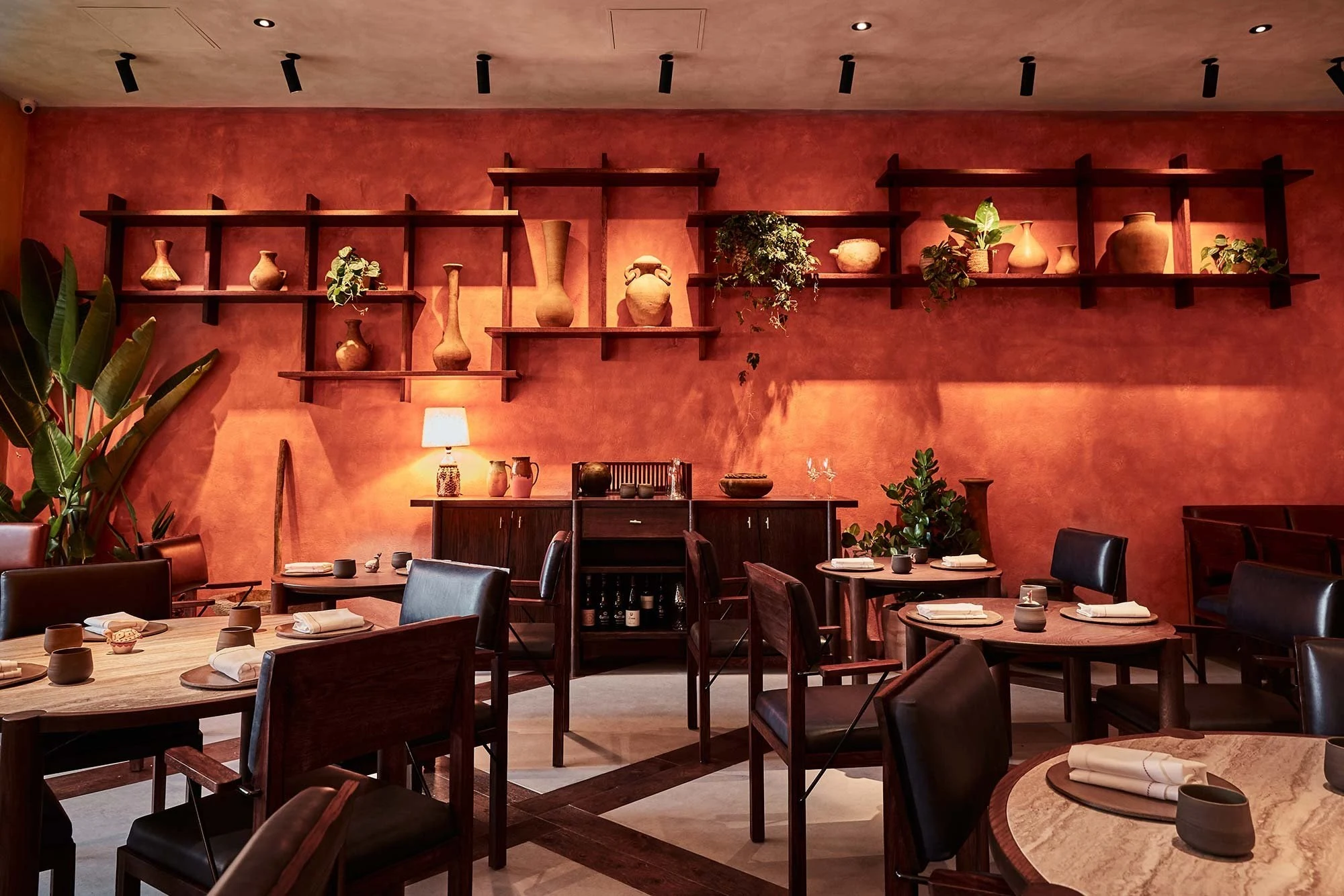
Room itself signals where the kitchen's cultural priorities lie before the first course arrives. Salt sculptures and ceramic work produced through Mexican artisan traditions are integrated into the service sequence, functioning as edible or tactile reference points for the ingredients being discussed. This is a device used at several high-end Mexican tasting menus to anchor the food in craft lineage rather than technique alone. At HA', the execution is reportedly coherent enough that the objects read as part of the argument rather than as decor.
AAA 5 Diamond designation, held in 2025, confirms the operational standard of the service independently of the kitchen's output. That credential addresses the room management, front-of-house consistency, and facilities, each assessed by a separate inspection protocol from Michelin. Holding both simultaneously places the restaurant in a small cohort of properties where the dining room and kitchen are operating at aligned levels.
Planning the Visit
HA' operates within Hotel Xcaret Mexico on the Carretera Chetumal-Puerto Juárez at Kilometer 282, in the Solidaridad municipality outside central Playa del Carmen proper. The address places it south of the main Quinta Avenida pedestrian corridor, accessible by car or hotel transfer. Valet parking is available. Reservations are recommended, and given the format, that means booking in advance rather than walking in on a given evening. Business casual dress is the stated standard. Private dining is available for groups requiring a separated format.
Questions
Frequently asked
Who is behind HA'?
Carlos Gaytán leads HA' in Playa del Carmen. The restaurant’s published work centres on reinvention rather than replacement, with Mexican ingredients, Mexican wines, and French technique kept in close view.
What kind of meal does HA' serve?
HA' works from a fixed nine-course tasting menu. The progression is presented as a structured sequence, with snacks, starters, fish, deeper courses, and dessert arranged as part of the same flow.
What is the restaurant known for on the plate?
The kitchen uses ingredients such as escamoles, hoja santa, corn, pink mole, and regional memory in a formal setting. Signature dishes include Mushroom Beignet, Wagyu A5 Tartare, and Pink Mole.
What recognition does HA' hold?
HA' holds one Michelin star, awarded in 2025. Gaytán is also recognised as the first Mexican chef to earn Michelin stars in Mexico and abroad.
What should a booking there be like?
Reservation is essential, and bookings are made through OpenTable. The restaurant is open every day from 6:00 PM to 11:45 PM, and the dress code is smart casual.
The field
How it compares
| Place | Awards | Cuisine | Notes |
|---|---|---|---|
| HA' | Michelin 1 Star | Modern Mexican Fine Dining | Hotel Xcaret México, $$$$ |
| Axiote Cocina de Mexico | · | Modern Mexican Cocina | Playa del Carmen |
| Cocina de Autor Riviera Maya | Michelin 1 Star | Avant-Garde Molecular Fusion Tasting | Playa del Carmen |
| KOL | Michelin 1 Star, World's 50 Best | Modern Mexican Fine Dining | London |
| Pujol | Michelin 2 Stars, World's 50 Best | Modern Mexican Fine Dining | Mexico City |
| Quintonil | Michelin 2 Stars, World's 50 Best | Modern Mexican Fine Dining | Mexico City |
| Sud 777 | Michelin 1 Star, World's 50 Best | Modern Mexican Fine Dining | Mexico City |
Similar places
Modern Mexican Cocina
Axiote Cocina de Mexico
Playa del Carmen, Mexico
Avant-Garde Molecular Fusion Tasting
Cocina de Autor Riviera Maya
Playa del Carmen, Mexico
★
Modern Mexican Fine Dining
KOL
London, United Kingdom
★ · 50 Best
Modern Mexican Fine Dining
Pujol
Mexico City, Mexico
★★ · 50 Best
Modern Mexican Fine Dining
Quintonil
Mexico City, Mexico
★★ · 50 Best
Modern Mexican Fine Dining
Sud 777
Mexico City, Mexico
★ · 50 Best