Restaurant
<strong>Ginza sushi</strong> at this level is less about spectacle than controlled proximity: 12 counter seats, a private room, and a late-evening rhythm built around Edomae technique. <strong>Harutaka</strong> sits in Tokyo’s high-price sushi tier, with Michelin <strong>three-star recognition</strong> in 2024 and 2025, <strong>La Liste</strong> scores, <strong>Tabelog</strong> awards, and a dinner budget listed at JPY 60,000 to JPY 79,999.
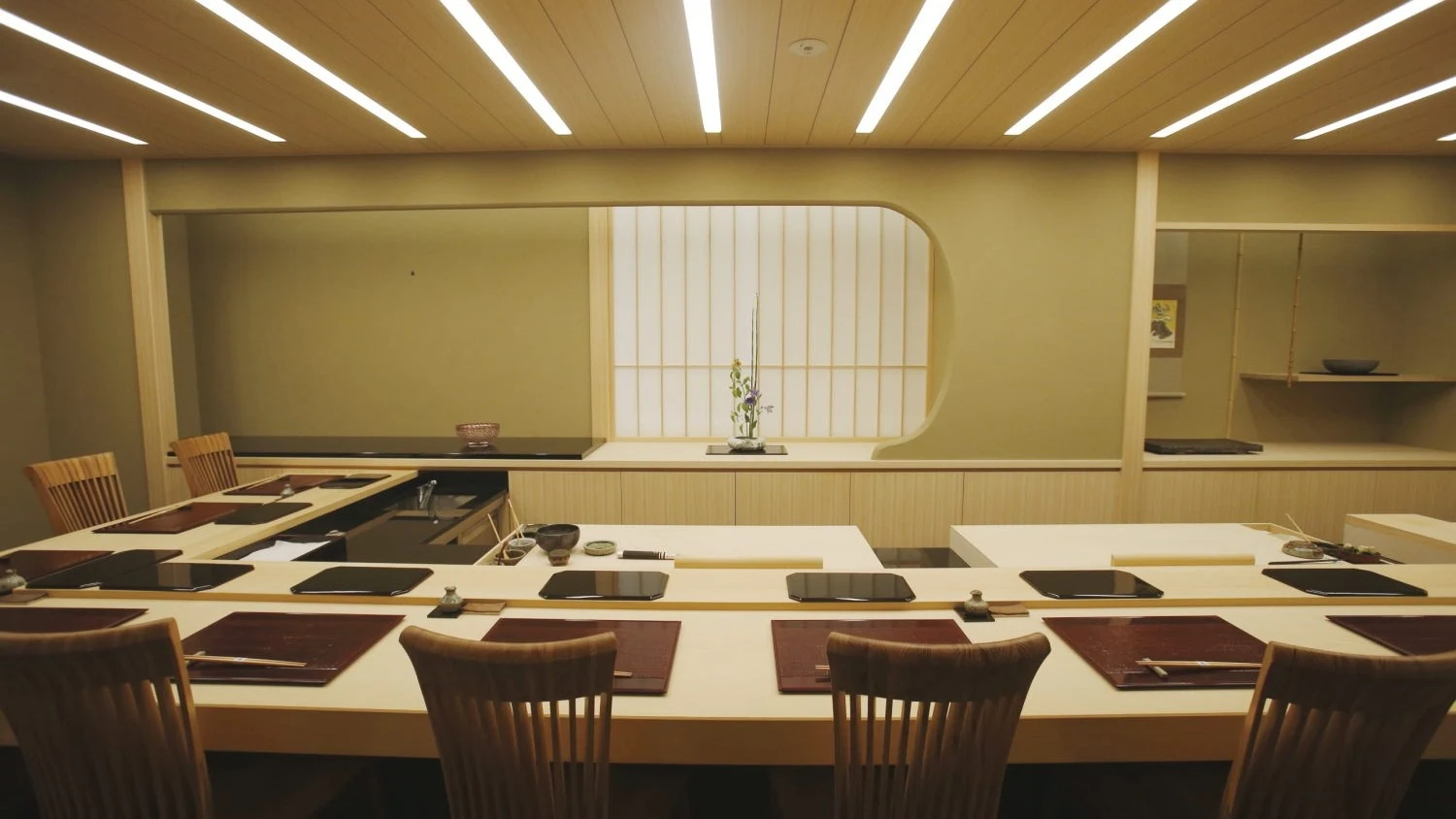
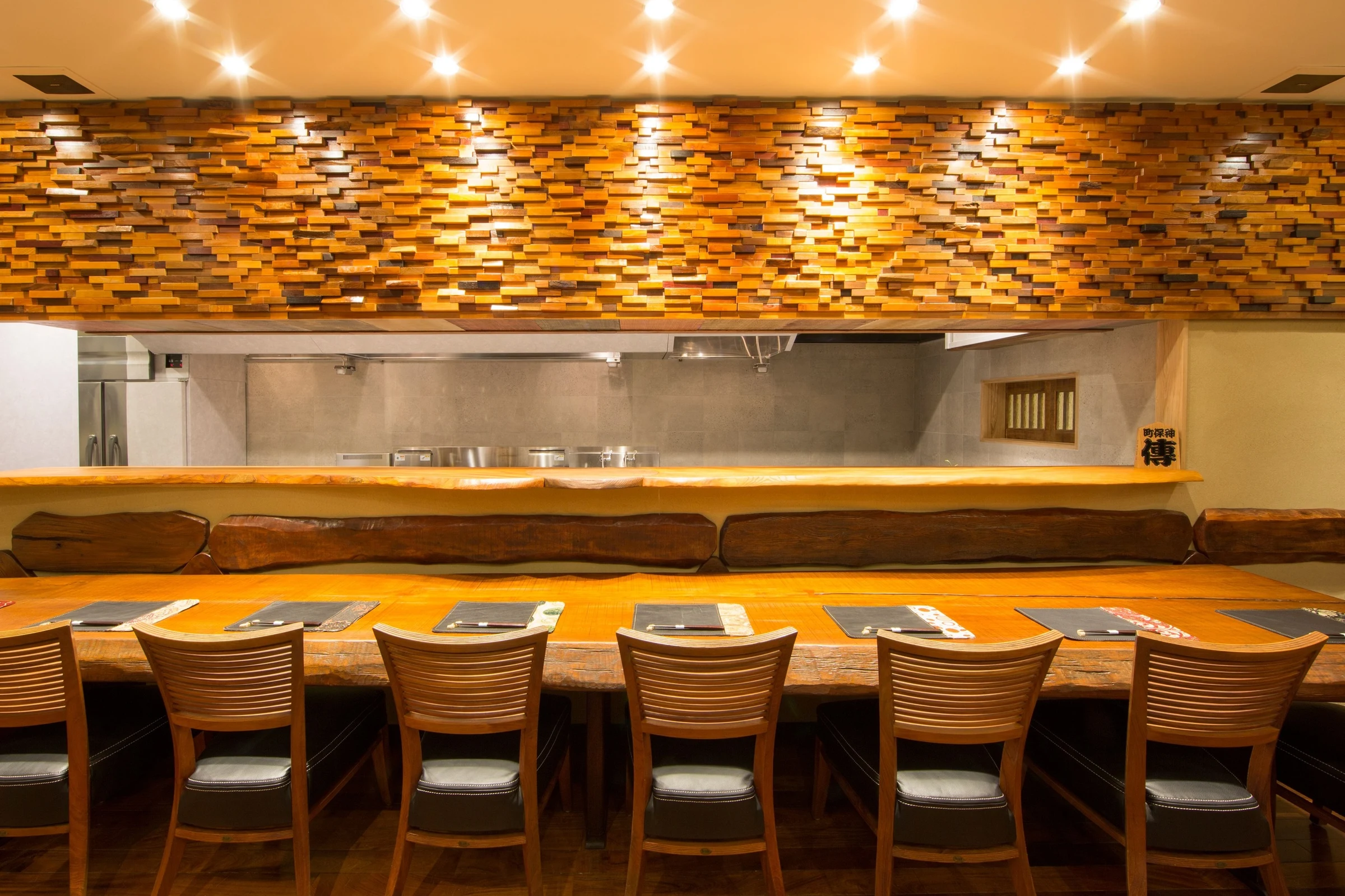
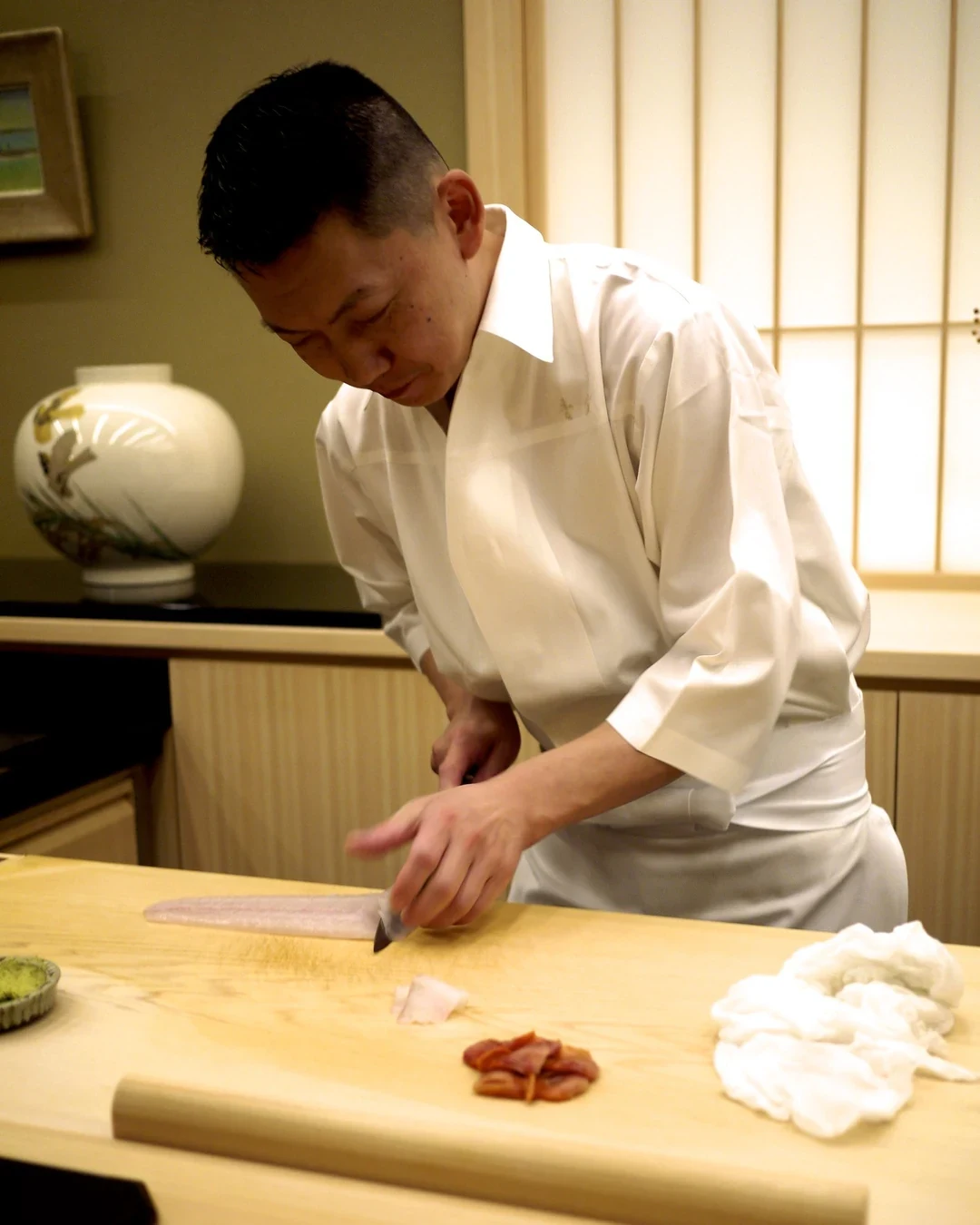
<p>Ginza’s sushi rooms rarely announce themselves from the street. The drama is vertical rather than theatrical: an address in an upper-floor building, a lift ride, then a counter where the distance between hand, rice, fish, and guest collapses to a few feet. At this price level, the room is not decoration; it is the operating system. Twelve counter seats and a four-person private room create a format in which timing, sequence, and silence carry as much weight as sourcing. Harutaka belongs to the upper Ginza Edomae bracket, where the counter is theatre not because it performs loudly, but because every movement is visible.</p><p><strong>Tokyo sushi</strong> has a split personality. On one side are international shorthand names, often used by travellers as symbols of the city’s dining prestige; on the other are counters whose reputation is built through Japanese rating culture, repeat diners, and long-running award records. Harutaka sits in both conversations. Michelin awarded it three stars in 2024 and 2025, and the Michelin Guide noted that "Restaurant Harutaka is newly awarded <strong>Three MICHELIN Stars</strong>. One restaurant newly receives Two MICHELIN Stars"<a href="https://guide.michelin.com/us/en/articles/michelin-guide-ceremony/page/12" target="_blank" rel="nofollow noopener noreferrer" class="citation-link"><sup data-citation-id="80021768cf87">3</sup></a>. Tabelog lists a 2026 Silver award with a 4.36 score, a 2025 Bronze award, and selections for Tabelog Sushi TOKYO "Tabelog 100" in 2025, 2022, and 2021. La Liste scored it 90.5 points in 2025 and 89 points in 2026, while <strong>Opinionated About Dining</strong> ranked it #113 in Japan in 2024 and #117 in 2025. That range of recognition matters because <strong>Ginza sushi</strong> is not judged by a single audience.</p><h2>The counter, not the dining room, defines the experience</h2><p>Counter sushi in Tokyo is a study in reduced scale. The guest is close enough to read tempo: the pause before a piece is set down, the handover rhythm, the gradual progression from lighter material to stronger flavours. Michelin describes the format clearly, writing that "guests can either choose to sit at the counter, or book a private dining room to enjoy authentic Edo-style sushi"<a href="https://guide.michelin.com/us/en/article/michelin-guide-ceremony/michelinguide-tokyo-2024-en" target="_blank" rel="nofollow noopener noreferrer" class="citation-link"><sup data-citation-id="3d50b960cded">1</sup></a>. That distinction is practical rather than cosmetic. A private room may suit a small group, and Tabelog lists one for four people, but the 12-seat counter is where the logic of the meal is easiest to understand.</p><p><strong>Edomae sushi</strong> grew from the old Tokyo bay tradition of preservation, seasoning, and precise handling rather than raw-fish display alone. In modern Ginza, that history has become a luxury language: vinegared rice temperature, fish preparation, seasoning, and pacing define the house identity. Harutaka’s database record does not publish a dish-by-dish menu, and a serious reader should be wary of any guide that invents one. What is verifiable is the structure. Michelin writes that "Meals begin with small appetisers and proceed to sushi, flowing from delicate to more strong flavours."<a href="https://guide.michelin.com/us/en/tokyo-region/tokyo/restaurant/sushi-kagura" target="_blank" rel="nofollow noopener noreferrer" class="citation-link"><sup data-citation-id="be0eb0420a7c">2</sup></a> That progression places the meal inside the classic omakase grammar, where appetite is managed through escalation rather than abundance.</p><blockquote data-citation-id="d0d691e02dbf"><p>"Like Ravel’s Bolero, sushi here is presented with a particular rhythm, building toward a crescendo of sweetness, sourness and temperature in harmony."</p><cite><a href="https://guide.michelin.com/us/en/tokyo-region/tokyo/restaurant/harutaka" target="_blank" rel="nofollow noopener noreferrer" class="citation-link">— Michelin Guide, </a></cite></blockquote><p>The useful comparison is not with casual sushi bars or hotel omakase counters, but with Tokyo’s small room, high-tariff Edomae circuit. <a href="https://www.enprimeurclub.com/restaurants/sukiyabashi-jiro-roppongiten-tokyo-restaurant">Sukiyabashi Jiro Roppongiten</a> carries the Jiro name into a separate Roppongi context, while <a href="https://www.enprimeurclub.com/restaurants/sushi-kanesaka-tokyo-restaurant">Sushi Kanesaka</a> represents another lineage through which international diners often learn Ginza sushi. <a href="https://www.enprimeurclub.com/restaurants/edomae-sushi-hanabusa-tokyo-restaurant">Edomae Sushi Hanabusa</a> signals the tradition directly in its positioning. Harutaka’s relevance lies in how it competes within that peer set: small capacity, premium pricing, and a recognition record that extends across Michelin, Tabelog, La Liste, and OAD rather than depending on one badge.</p><h2>Ginza, Shimbashi, and the late-service sushi economy</h2><p>The address places the restaurant at Ginza 8-chome, on the sixth floor of <strong>Ginza Jiden Building</strong>, with Tabelog listing it as five minutes on foot from Shimbashi Station, eight minutes from Ginza Station, and 326 metres from Shimbashi. That edge-of-Ginza position is useful. It is close to the expense-account polish of Ginza but also near the after-work density of Shimbashi, a neighbourhood with a different appetite: counters, drinking rooms, and late dinners rather than department-store formality. The listed hours, Monday through Saturday from 17:00 to 00:00 with final entry until 22:00, make it better suited to dinner than lunch planning. Sunday and public holidays are closed.</p><p>For visitors mapping a Tokyo evening, that timing changes the strategy. A 17-seat restaurant, including the counter and private room, has limited natural inventory, and reservations are listed as available rather than walk-in led. The late closing time does not mean casual access; it means the meal can sit after galleries, hotel check-in, or a Ginza shopping itinerary without pushing into rushed dining. Payment is more flexible than at many older Japanese counters: Tabelog lists credit cards accepted, including VISA, Master, JCB, AMEX, and Diners, plus QR code payment through d Barai; electronic money is not accepted. Parking is unavailable, which is normal for this part of central Tokyo and reinforces the station-led plan.</p><p>Tokyo’s luxury sushi scene often asks travellers to choose between legend, access, and language comfort. Harutaka’s published data gives a clearer shape than many counters: reservations available, non-smoking, 17 seats, private use available, drinks covering sake, shochu, and wine, and a listed dinner budget of JPY 60,000 to JPY 79,999. That price places it firmly in the serious Ginza bracket. It should not be compared with mid-tier omakase rooms, nor with the high-volume counters that sell luxury mainly through imported fish and glossy interiors. The point here is small-room choreography at a price that assumes the diner already understands what Edomae sushi is asking for.</p><h2>Credentials without the biography trap</h2><p>Chef <strong>Harutaka Takahashi</strong> is the named chef in the venue record, and La Liste’s published note links his early career to Sukiyabashi Jiro through a personal connection involving a tempura master and a potter uncle. That story has colour, but it should not be mistaken for the substance of the meal. In Tokyo sushi, lineage matters because it signals technical formation and peer context, not because the chef’s biography is the main event. The better reading is structural: a Jiro-linked background, three Michelin stars in 2024 and 2025, Tabelog award continuity from 2017 through 2026, and a 2025 Tabelog 100 sushi selection place the counter in a tight competitive band.</p><p>That band includes different Japanese dining categories beyond sushi, and travellers often misread the country by treating every luxury meal as equivalent. Kyoto kaiseki, Osaka contemporary gastronomy, Nara destination dining, and Fukuoka modern cooking follow different rules. Compare the counter discipline here with <a href="https://www.enprimeurclub.com/restaurants/hajime-osaka-restaurant">HAJIME in Osaka</a>, <a href="https://www.enprimeurclub.com/restaurants/gion-sasaki-kyoto-restaurant">Gion Sasaki in Kyoto</a>, <a href="https://www.enprimeurclub.com/restaurants/tsukumo-nara-restaurant">Tsukumo in Nara</a>, <a href="https://www.enprimeurclub.com/restaurants/goh-fukuoka-restaurant">Goh in Fukuoka</a>, or <a href="https://www.enprimeurclub.com/restaurants/aji-arai-oita-restaurant">Aji Arai in Oita</a>. The comparison is not about ranking them against one another. It is about format: sushi compresses the relationship between maker and guest into minutes and inches, while other Japanese fine-dining forms often use architecture, procession, or course composition on a broader canvas.</p><p>Within sushi itself, regional and international comparisons clarify the Ginza standard. <a href="https://www.enprimeurclub.com/restaurants/sushi-shikon-hong-kong-restaurant">Sushi Shikon — Sushi in Hong Kong</a> shows how Edomae technique travels into a different luxury market, while <a href="https://www.enprimeurclub.com/restaurants/sushi-harasho-osaka-restaurant">Sushi Harasho, Sushi in Osaka</a> places high-end sushi outside the Tokyo centre of gravity. In Hokkaido, seafood context shifts again at places such as <a href="https://www.enprimeurclub.com/restaurants/aotsuka-shokudo-hokkaido-otaru-restaurant">Aotsuka Shokudo in Hokkaido (Otaru)</a>, where the regional relationship to fish is not filtered through Ginza’s counter culture. Harutaka’s case is specifically Tokyo: restrained scale, premium tariff, and a form of service where the room’s geometry is part of the craft.</p><h2>What the awards actually say</h2><p>Awards should be read with care in Japan. Michelin, Tabelog, La Liste, and OAD measure different constituencies, and their overlap is more informative than any single score. Michelin’s three-star status in 2024 and 2025 signals international critical confidence. Tabelog’s 2026 Silver award and 4.36 score matter because the platform’s Japanese user base is notoriously demanding in high-end categories. The <strong>Tabelog 100 Sushi TOKYO</strong> 2025 selection reinforces category relevance rather than general fame. La Liste’s 90.5 points in 2025 and 89 points in 2026 add another external scoring system, while OAD’s Japan rankings in 2024 and 2025 show presence among experienced destination diners.</p><p>Those signals also explain the price. A JPY 60,000 to JPY 79,999 dinner budget is not an incidental detail; it is the economic threshold for this corner of Ginza sushi. At that level, the diner is paying for constrained capacity, fish procurement, skilled labour, and the discipline of a format where there is little room to hide. The counter makes errors legible. Rice temperature, hand speed, seasoning, sequence, and portion size all happen in open view. A restaurant with 12 counter seats cannot use scale to create atmosphere. It has to generate tension through order.</p><blockquote data-citation-id="1141b7520da2"><p>"Prawns have their sweetness drawn out at a freshly-boiled temperature, with their innards carefully sandwiched between the prawn and the rice for optimal taste"</p><cite><a href="https://guide.michelin.com/vn/en/article/travel/must-try-dishes-tokyo-inspectors" target="_blank" rel="nofollow noopener noreferrer" class="citation-link">, Michelin Guide, 2023</a></cite></blockquote><p>That Michelin description is useful because it illustrates a principle rather than merely naming an ingredient. Edomae sushi at this level is not passive freshness. It is intervention: temperature, timing, seasoning, and assembly used to make a piece read clearly in a single bite. The database record also notes that the food is particular about fish, a modest phrase that says less than the awards record but points in the same direction. For travellers, the practical lesson is to judge the meal by progression and control, not by a checklist of luxury seafood.</p><h2>Planning a meal around a 17-seat Ginza counter</h2><p>Harutaka is open Monday to Saturday from 5 pm to midnight, with entry listed until 10 pm; Sunday and public holidays are closed. The address is Japan, 〒104-0061 Tokyo, Chuo City, Ginza, 8 Chome−3−1, 6th floor, also listed by Tabelog as 東京都中央区銀座8-3-1 銀座時傳ビル 6F. Shimbashi Station is the nearer station in the record, with Ginza Station also within walking range. Because parking is unavailable, rail or taxi planning is sensible, especially for late dinners.</p><p>The room has 17 seats: 12 at the counter and a private room for four. Private use is listed as available, the restaurant is non-smoking, and drinks include sake, shochu, and wine. Credit cards are accepted, including VISA, Master, JCB, AMEX, and Diners; electronic money is not accepted, while QR code payment through d Barai is listed. The published phone number in the Tabelog record is 03-3573-1144, and the English database record does not list an official website. Reservations are available, and given the capacity, the counter should be treated as a limited-seat booking rather than a flexible dinner option.</p><p>For broader trip design, place this meal inside a Tokyo plan rather than treating it as an isolated trophy. <a href="https://www.enprimeurclub.com/restaurants/tokyo">Our full Tokyo restaurants guide</a> can frame other dining formats around it, while <a href="https://www.enprimeurclub.com/hotels/tokyo">Our full Tokyo hotels guide</a> helps with the geography of staying near Ginza, Marunouchi, Roppongi, or the west side. After dinner planning can draw from <a href="https://www.enprimeurclub.com/bars/tokyo">Our full Tokyo bars guide</a>, and category completists can scan <a href="https://www.enprimeurclub.com/wineries/tokyo">Our full Tokyo wineries guide</a> or <a href="https://www.enprimeurclub.com/experiences/tokyo">Our full Tokyo experiences guide</a>. Nearby comparisons across sushi and Japanese dining include <a href="https://www.enprimeurclub.com/restaurants/hiroo-ishizaka-tokyo-restaurant">Hiroo Ishizaka</a> and <a href="https://www.enprimeurclub.com/restaurants/jizozushi-tokyo-restaurant">Jizozushi</a>, which help show how Tokyo’s serious dining culture is distributed beyond a single Ginza counter.</p><h2>FAQ</h2><h3>What's the signature at Harutaka?</h3><p>The venue record does not list a named signature dish, so the safer answer is format rather than a single item: Edomae sushi served through a counter-led omakase sequence by chef Harutaka Takahashi. Michelin’s notes point to small appetisers followed by sushi that moves from delicate to stronger flavours, and its 2023 description of prawn preparation gives a verified example of the restaurant’s temperature and assembly discipline. The broader signature is the rhythm of the counter, supported by Michelin <strong>three-star recognition</strong> in 2024 and 2025, <strong>Tabelog Silver</strong> in 2026, and repeated Tabelog Sushi TOKYO 100 selections.</p>
Harutaka has received recognition including: {"Year":"2026","Award Source":"Tabelog","Award Type":"The Tabelog Award","Award Group":"silver","Award Group Rank":"31","Restaurant Name":"Harutaka","Score":"4.36","Budget":"Dinner: JPY 60,000 - JPY 79,999; Lunch: -","Budget Dinner":"JPY 60….
Hours at Harutaka: Hours: Monday 5 pm–12 am Tuesday 5 pm–12 am Wednesday 5 pm–12 am Thursday 5 pm–12 am Friday 5 pm–12 am Saturday 5 pm–12 am Sunday Closed.
Harutaka is categorized in our database as Sushi.
Pricing at Harutaka is listed as ¥¥¥¥.
Harutaka is located at Japan, 〒104-0061 Tokyo, Chuo City, Ginza, 8 Chome−3−1 6階, Tokyo.
The chef associated with Harutaka is Harutaka Takahashi.
The restaurant’s defining format is Edomae sushi at a 17-seat counter in Ginza, led by chef Harutaka Takahashi. Its awards history backs that focus: Tabelog’s 2026 Silver Award and repeated selections for Tabelog Sushi TOKYO "Tabelog 100".
Japan, 〒104-0061 Tokyo, Chuo City, Ginza, 8 Chome−3−1 6階
Ginza

French
Sézanne
Tokyo, Japan
★★★ · 50 Best
Modern Chinese Fine Dining
Sazenka
Tokyo, Japan
★★★ · 50 Best

Modern Japanese Satoyama Fine Dining
Narisawa
Tokyo, Japan
★★ · 50 Best

Modern French-Japanese Plant-Based Fine Dining
Florilège
Tokyo, Japan
★★ · 50 Best

Modern Japanese Kaiseki
Den
Tokyo, Japan
★★ · 50 Best

Modern French Fine Dining
Quintessence
Tokyo, Japan
★★★