Héritages
- 01CuisineModern French Fine Dining
- 02CityParis, France
- Opinionated About Dining Classical in Europe Ranked #147 · 2026
- Opinionated About Dining Classical in Europe Ranked #135 · 2025
- Gault & Millau Remarkable Restaurant: 15.5pts · 2025
The 8th Arrondissement's Quieter Register
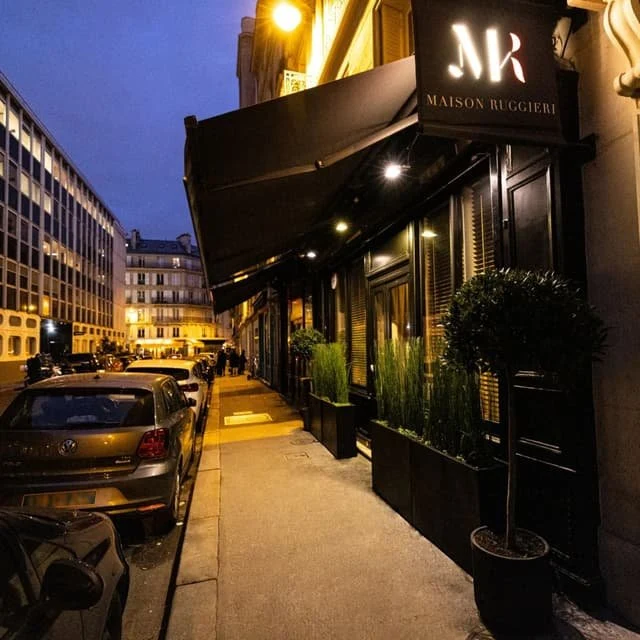
Paris's 8th arrondissement has long been a study in contrasts. The triangle formed by the Champs-Élysées, Avenue Montaigne, and the grands boulevards contains some of the city's most financially serious dining rooms, from the theatrical excess of Le Cinq at the Four Seasons Hôtel George V to the Ledoyen esplanade anchored by Alléno Paris au Pavillon Ledoyen. Tucked onto Rue Treilhard, however, Héritages is a modern French fine dining restaurant in Paris's 8th arrondissement. The address is residential in character, several blocks removed from the arrondissement's most trafficked dining corridors, and the room reflects that remove: this is not a restaurant where the architecture announces itself before the food does.
That spatial remove is partly the point. Paris's classical fine dining scene has bifurcated over the past decade. One strand moved toward maximalist spectacle, where room design and social-media-ready presentation absorb as much investment as the kitchen. The other strand retreated toward concentrated, room-as-frame-not-subject formats, where atmosphere is controlled through restraint: tight spacing, considered acoustics, light that arrives without drama. Héritages belongs to the second cohort, and the Rue Treilhard address is both a practical and tonal choice.
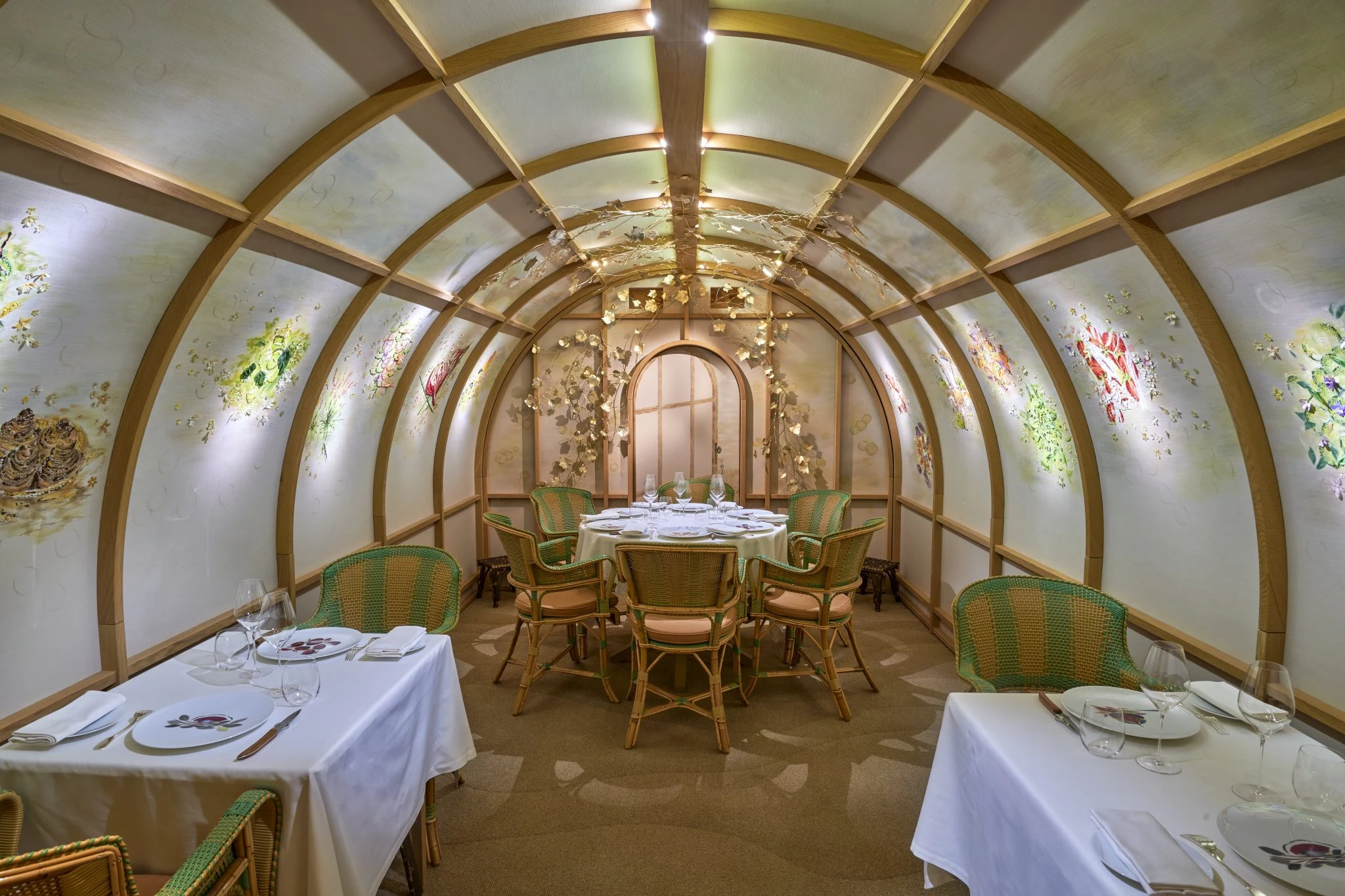
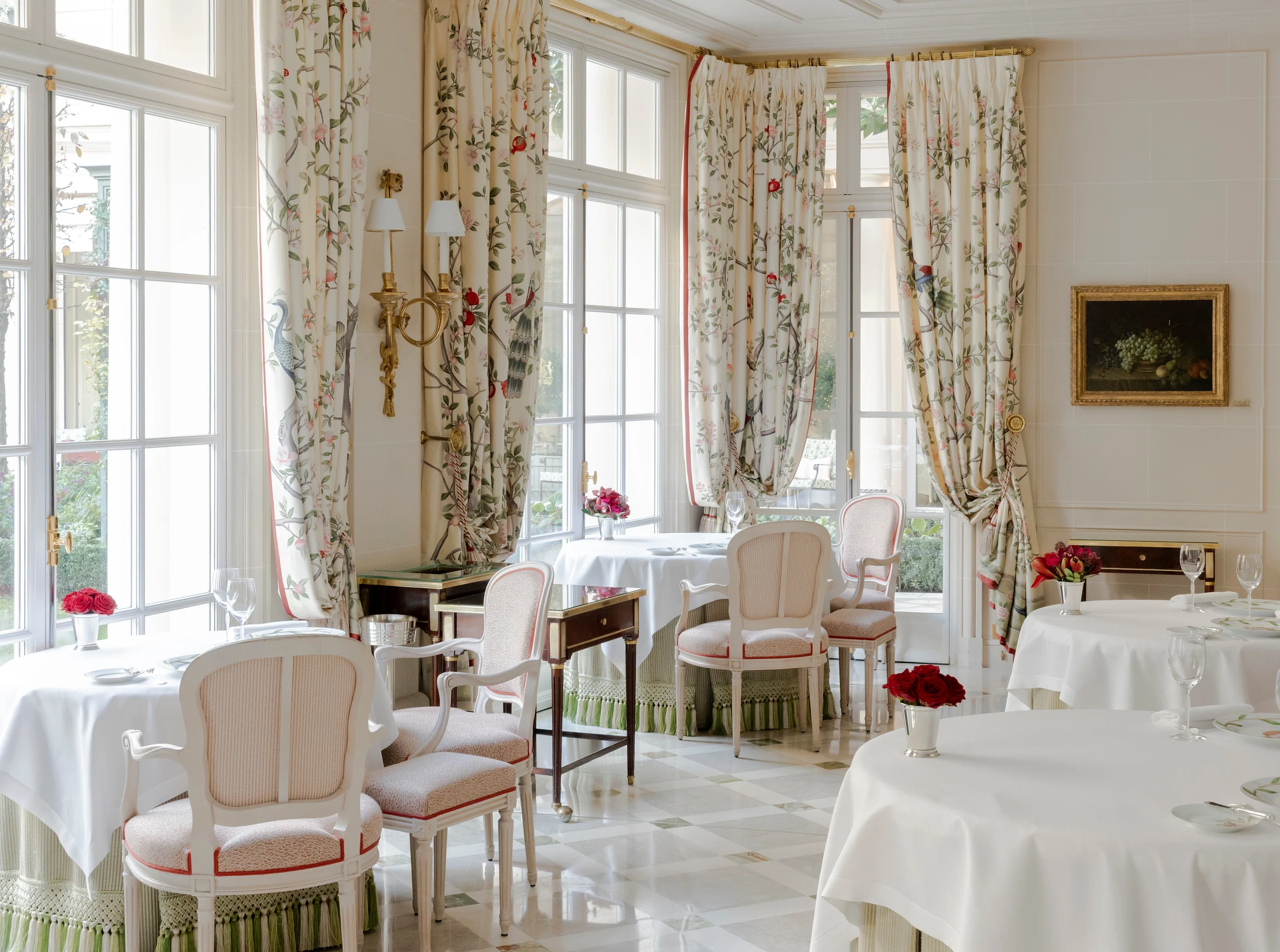
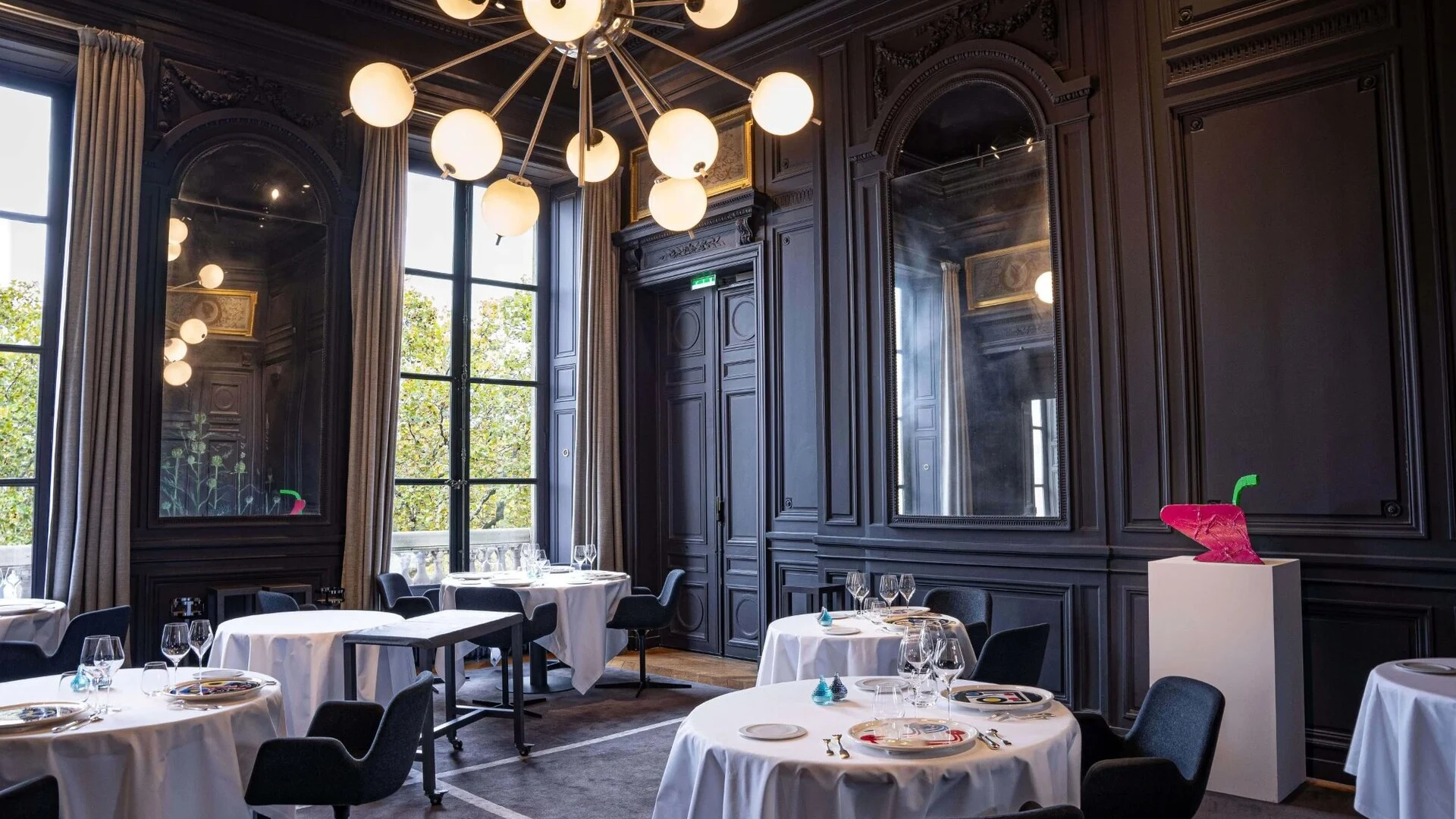
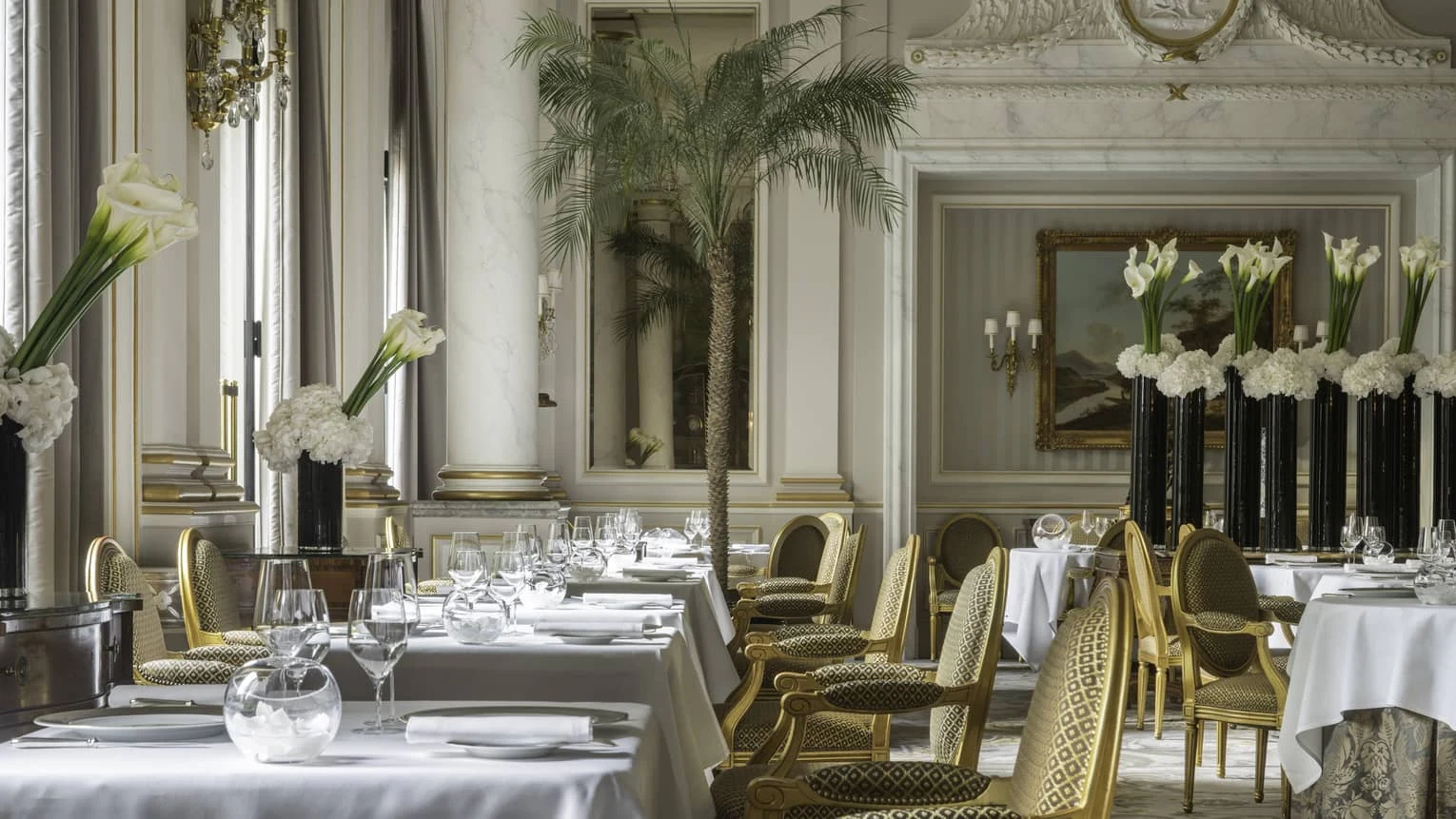
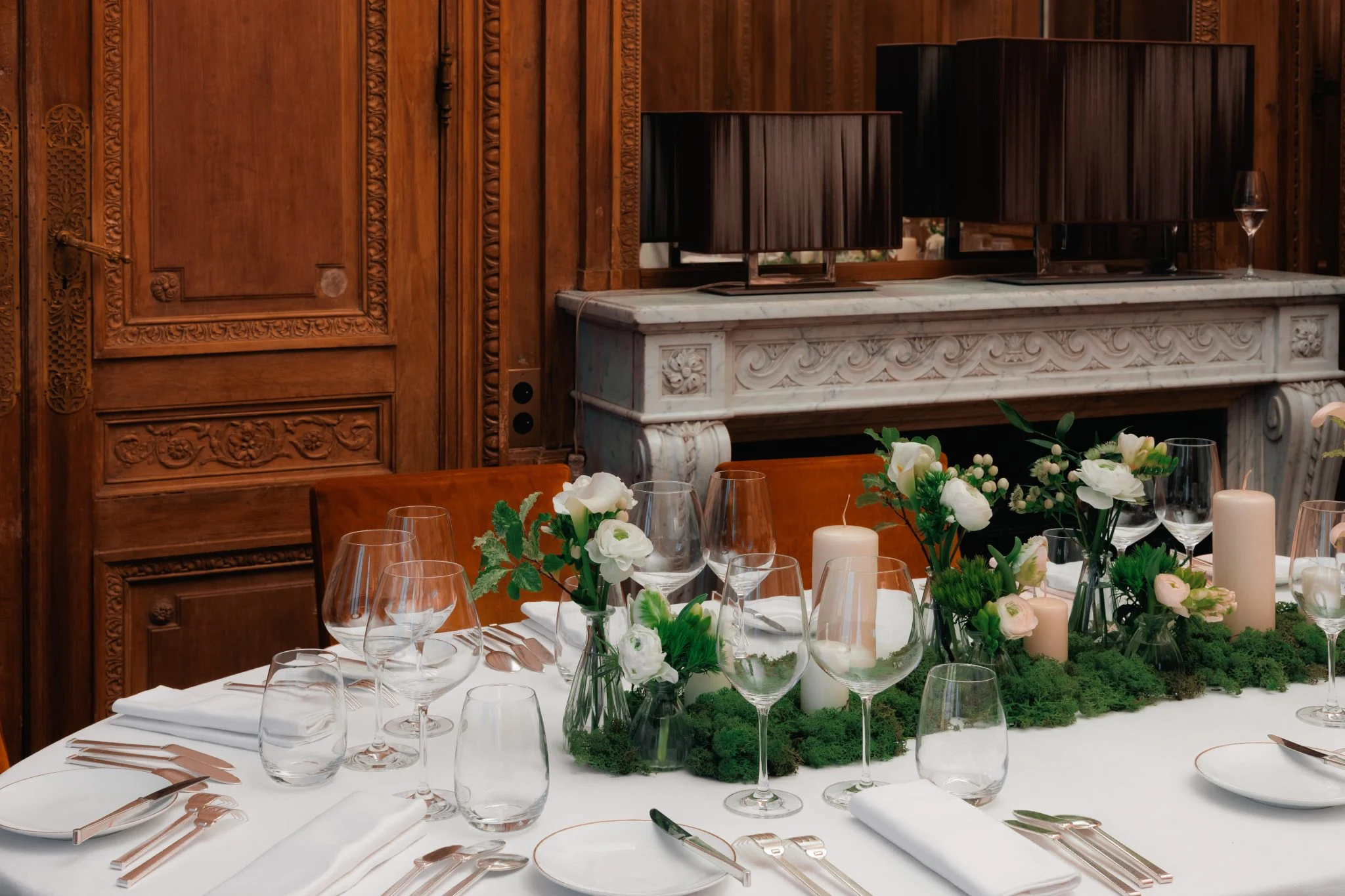
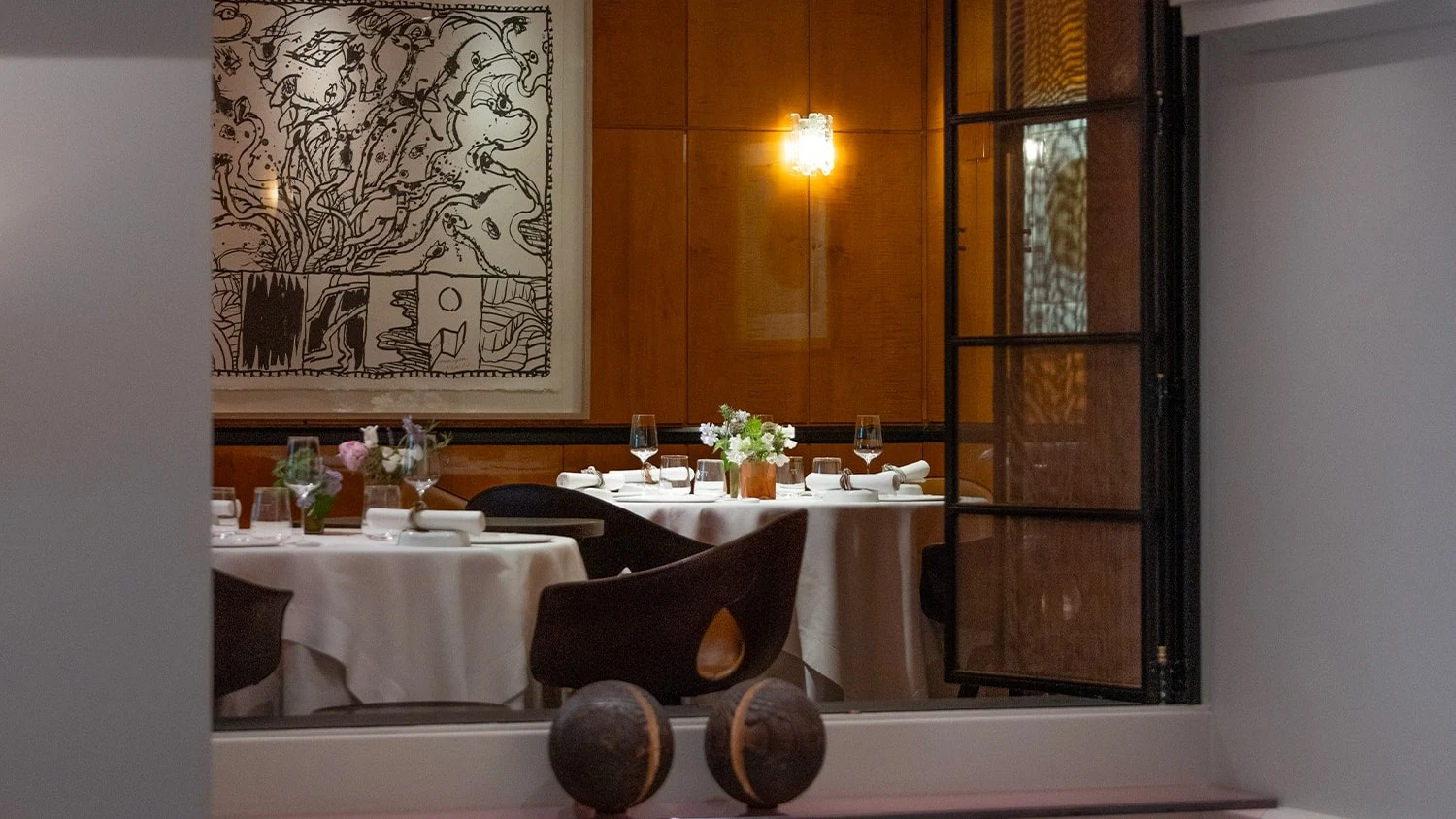
Atmosphere Constructed Through Restraint
The sensory experience at this category of Paris restaurant is worth examining structurally. Classical French dining rooms in the 8th were historically organized around ceremony: the choreography of silver, the distance between tables that signaled expense, the acoustics engineered to prevent neighboring conversations from bleeding together. Many of those conventions have eroded at the city's newer prestige addresses, replaced by the calculated informality that Arpège pioneered and dozens of successors adopted at varying degrees of authenticity.
Héritages occupies a middle register. The room is neither the hushed vault of L'Ambroisie on the Place des Vosges, where silence functions almost as a design element, nor the energized open-kitchen formats that have become a default signal of modern intent. The lighting at this price tier in Paris typically runs warm and directed rather than ambient, the effect being that each table exists in partial separation from the wider room, a condition that focuses attention downward onto the plate and the conversation rather than outward onto spectacle.
Sound matters at this scale. A room seating fewer than forty covers, as many of Paris's focused classical addresses do, produces a noise envelope distinct from both the brasserie roar and the cathedral hush. Conversation carries without echoing. The kitchen signals its presence through scent before sound, a feature of service-heavy classical formats where food travels covered and arrives with some ceremony of reveal. These sensory coordinates are worth naming because they define the category of experience Héritages represents, not the venue in isolation.
The Cooking: Italian Lineage in a French Frame
Chef Martino Ruggieri's Italian background places Héritages in a subset of Paris classical dining that the city has historically accommodated well. The French kitchen's technical vocabulary, developed across centuries at addresses like Paul Bocuse's Auberge du Pont de Collonges and the lineage houses of the French provinces including Auberge de l'Ill and Bras, has always absorbed foreign inflections without losing its structural grammar. What Italian training tends to contribute is a particular sensitivity to acidity, to pasta and grain textures as serious courses rather than afterthoughts, and to vegetable preparation that treats the produce as a destination rather than a support.
In Paris, the Italian-French synthesis has a specific competitive position. Kei works a Japanese-French register that the Michelin guide has recognized persistently. The question at Héritages is how the Italian sensibility reads against a city where French classical technique is both the native tongue and the expected baseline. The answer, based on critical positioning, is that the synthesis reads as refinement rather than novelty, a point supported by the venue's placement in the Opinionated About Dining classical rather than contemporary category.
Critical Position: What the OAD Ranking Tells You
Héritages has received two awards. OAD's classical category rewards fidelity to technique, consistency across visits, and a kind of cooking that measures itself against a long tradition rather than against this season's trend cycle. Ranking 135 in that field, across the whole of Europe, places Héritages in a tier where the competition includes addresses with decades of accumulated reputation, from multi-generational Alsatian institutions to Lyon's historical references. Within France alone, the field includes Troisgros in Ouches, Flocons de Sel in Megève, and Mirazur in Menton, each carrying significant accrued status.
Holding a 'Remarkable' designation at position 135 in that context signals a restaurant that the traveling critical community has found consistently worth the visit. The Google rating is 5.0 from 121 reviews, a strong signal of consistency.
Contextually, Héritages is priced at about $300 per person. That gap is significant. It places Ruggieri in the tier occupied by serious one- and two-star kitchens where the cooking absorbs the kitchen's full attention and the room's energy isn't divided between serving the food and managing the production budget of a theatrical dining experience. For the diner whose reference set includes Le Bernardin in New York or Atomix's precision-driven format, the 8th arrondissement address at this price point represents a specific kind of value proposition.
Planning a Visit
The Rue Treilhard address sits in the 8th arrondissement, within the dense formal dining corridor between Parc Monceau and the Champs-Élysées. The area is most easily reached via the Miromesnil or Saint-Augustin métro stops.
| Venue | Arrondissement | Price Range | Category | OAD / Award Status |
|---|---|---|---|---|
| Héritages | 8th | €85–€120 | Classical French (Italian inflection) | OAD #135 Classical EU, Remarkable (2025) |
| L'Ambroisie | 4th | €€€€ | French Classic | 3 Michelin stars |
| Le Cinq | 8th | €€€€ | French Modern | 2 Michelin stars |
| Kei | 1st | €€€€ | Contemporary French / Japanese | 3 Michelin stars |
Questions
Frequently asked
How expensive is Héritages?
Héritages is listed at a price level of $$$$.
Where is Héritages and what does it serve?
Héritages is in Palais Royal, Paris, serving Modern French Fine Dining.
The field
How it compares
| Place | Cuisine | Notes | Awards |
|---|---|---|---|
| Héritages | Modern French Fine Dining | Palais Royal, $$$$ | · |
| Arpège | Vegetable-Focused French Fine Dining | Paris | Michelin 3 Stars, World's 50 Best |
| Epicure | Contemporary French Fine Dining | Paris | Michelin 3 Stars |
| Guy Savoy | Classic French Fine Dining | Paris | Michelin 2 Stars, World's 50 Best |
| Le Cinq | Modern French Fine Dining | Paris | Michelin 3 Stars, World's 50 Best |
| Le Taillevent | Classic and Modern French Fine Dining | Paris | Michelin 2 Stars, World's 50 Best |
| Pierre Gagnaire | Avant-Garde French Fine Dining | Paris | Michelin 3 Stars, World's 50 Best |
Similar places
Vegetable-Focused French Fine Dining
Arpège
Paris, France
★★★ · 50 Best
Contemporary French Fine Dining
Epicure
Paris, France
★★★
Classic French Fine Dining
Guy Savoy
Paris, France
★★ · 50 Best
Modern French Fine Dining
Le Cinq
Paris, France
★★★ · 50 Best
Classic and Modern French Fine Dining
Le Taillevent
Paris, France
★★ · 50 Best
Avant-Garde French Fine Dining
Pierre Gagnaire
Paris, France
★★★ · 50 Best