Le Cinq
In Residence
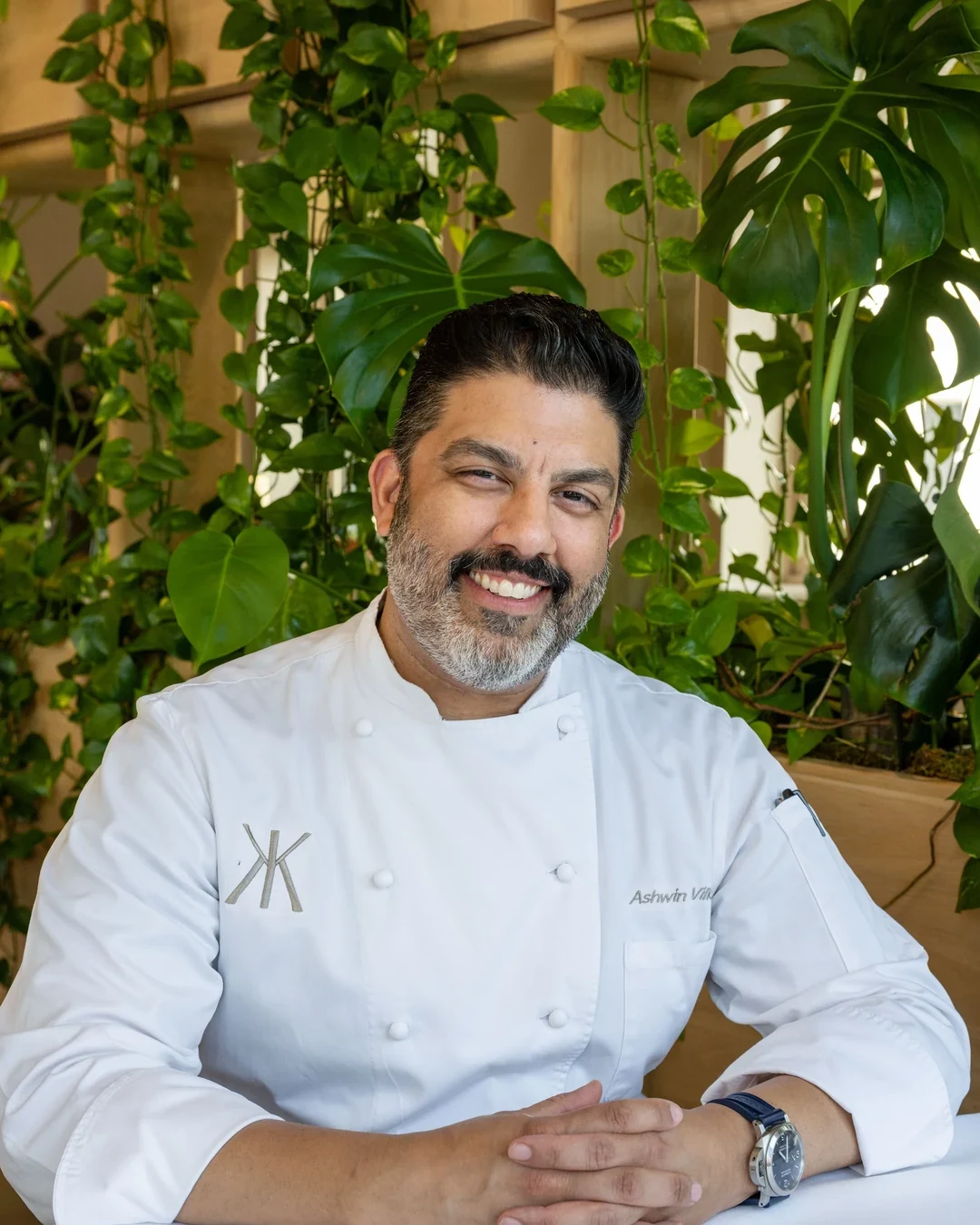
Christian Le Squer
Chef
- 01CuisineModern French Fine Dining
- 02CityParis, France
- 03RecognitionThree Michelin Stars
From the people index
Recommended by
One trusted voice points here.
- 3 Michelin Stars · Michelin Guide
- World's 50 Best · #17 · World's 50 Best Restaurants
- Wine Spectator · Tier 2
- Opinionated About Dining Classical in Europe Ranked #26 · 2026
- Falstaff Restaurant - 100 Falstaff Points · 2026
- Les Grandes Tables du Monde Member · 2026
- La Liste Top Restaurants: 97pts · 2026
- Opinionated About Dining Classical in Europe Ranked #132 · 2026
- Michelin 3 Stars · 2026
- Wine Spectator Best of Award of Excellence · 2026
- World Culinary Awards Europe's Best Fine Dining Hotel Restaurant 2025 #1
- La Liste Top Restaurants: 97.5pts · 2025
- The Best Chef Two Knives · 2025
- World Culinary Awards France's Best Hotel Restaurant 2025 #1
- Michelin 3 Stars · 2025
The Room Before the Meal
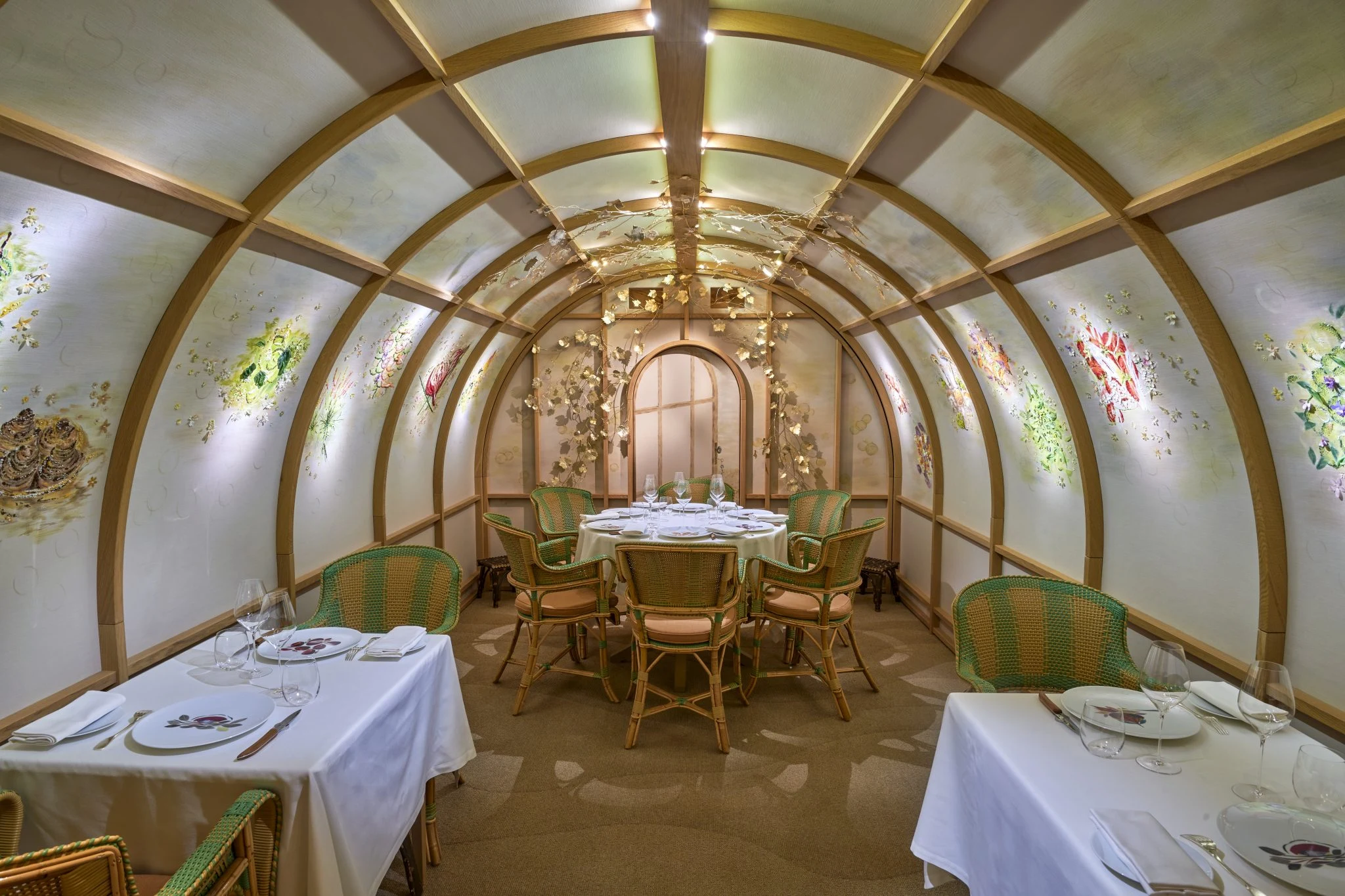
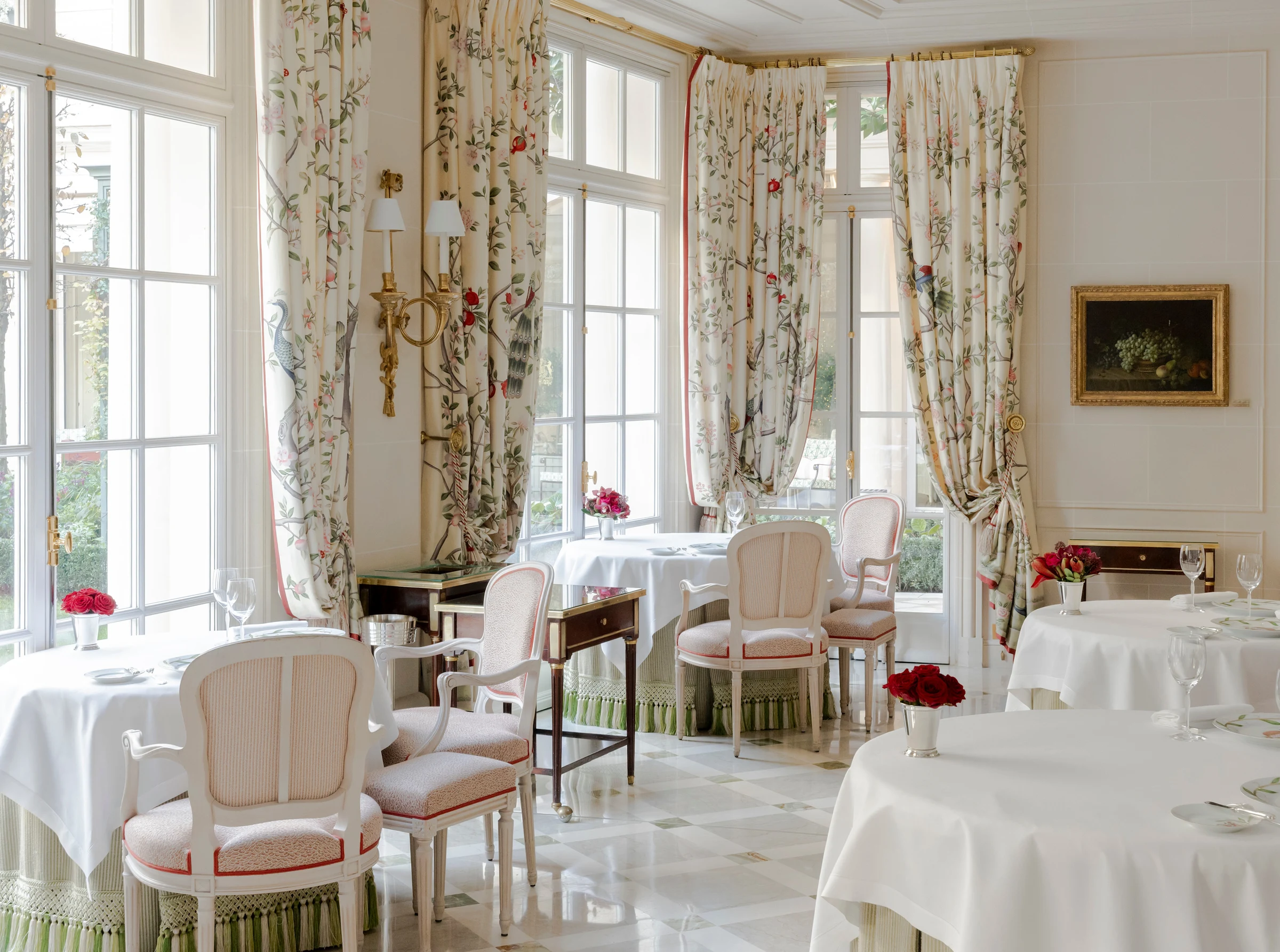
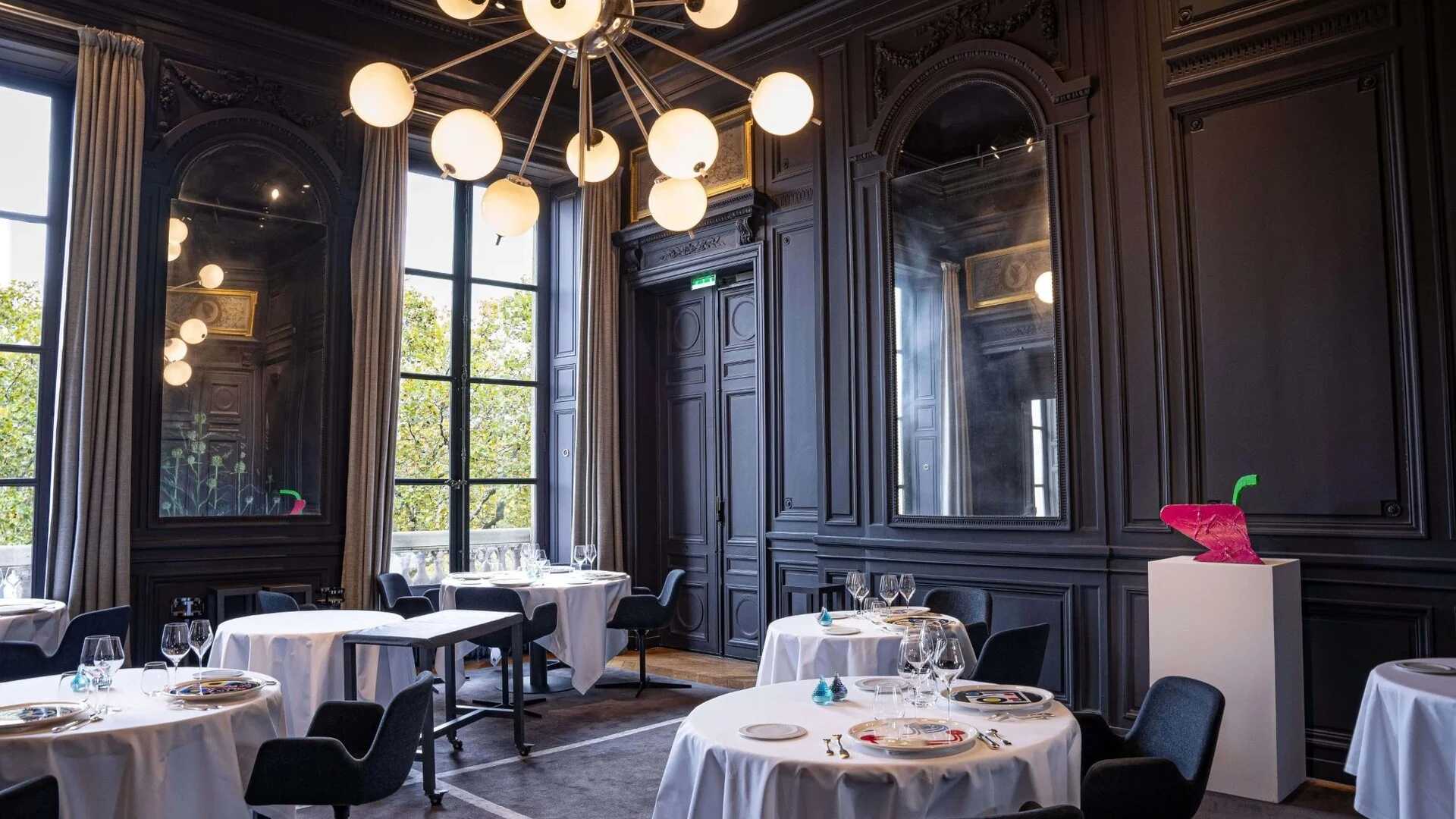
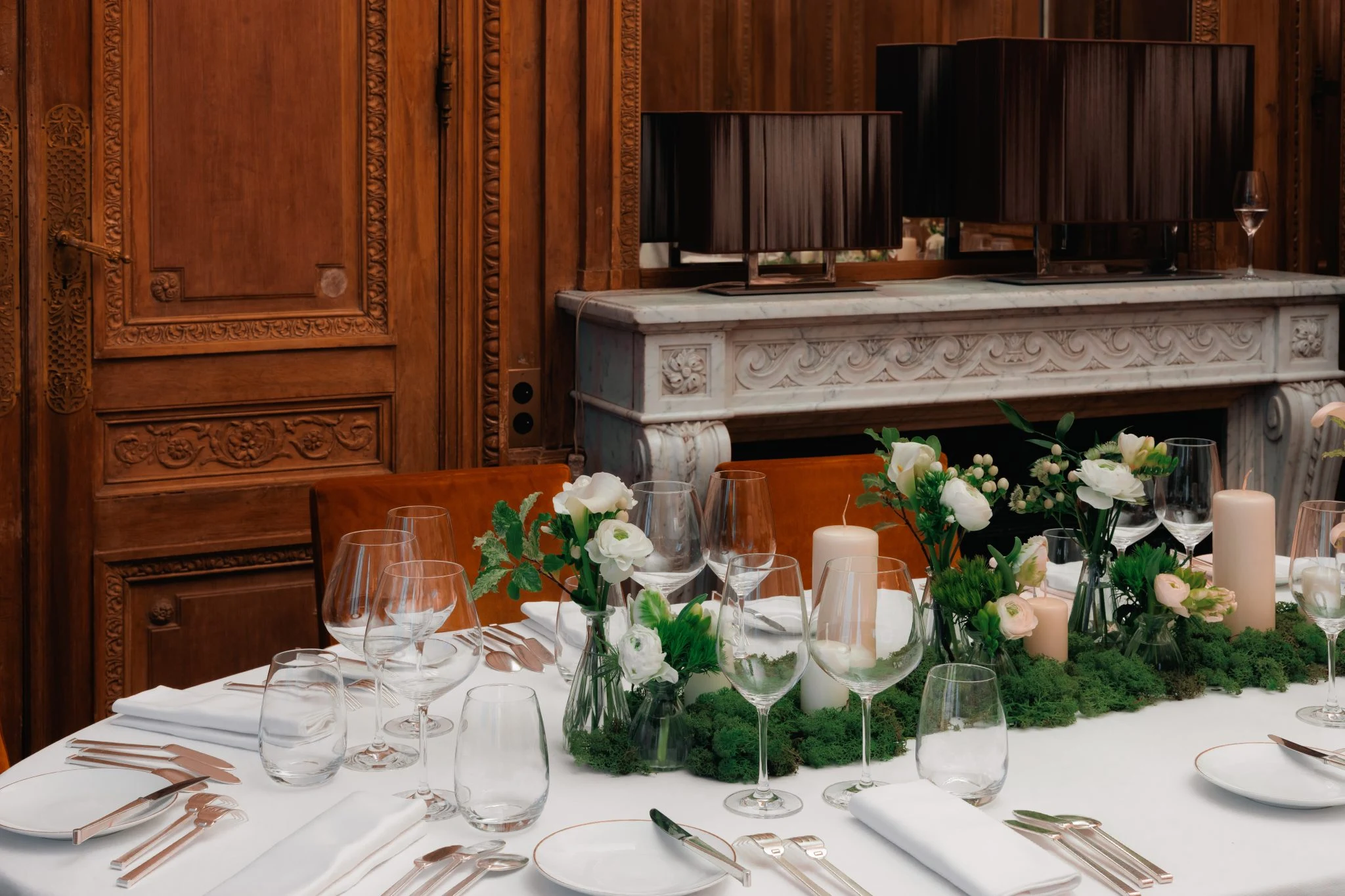
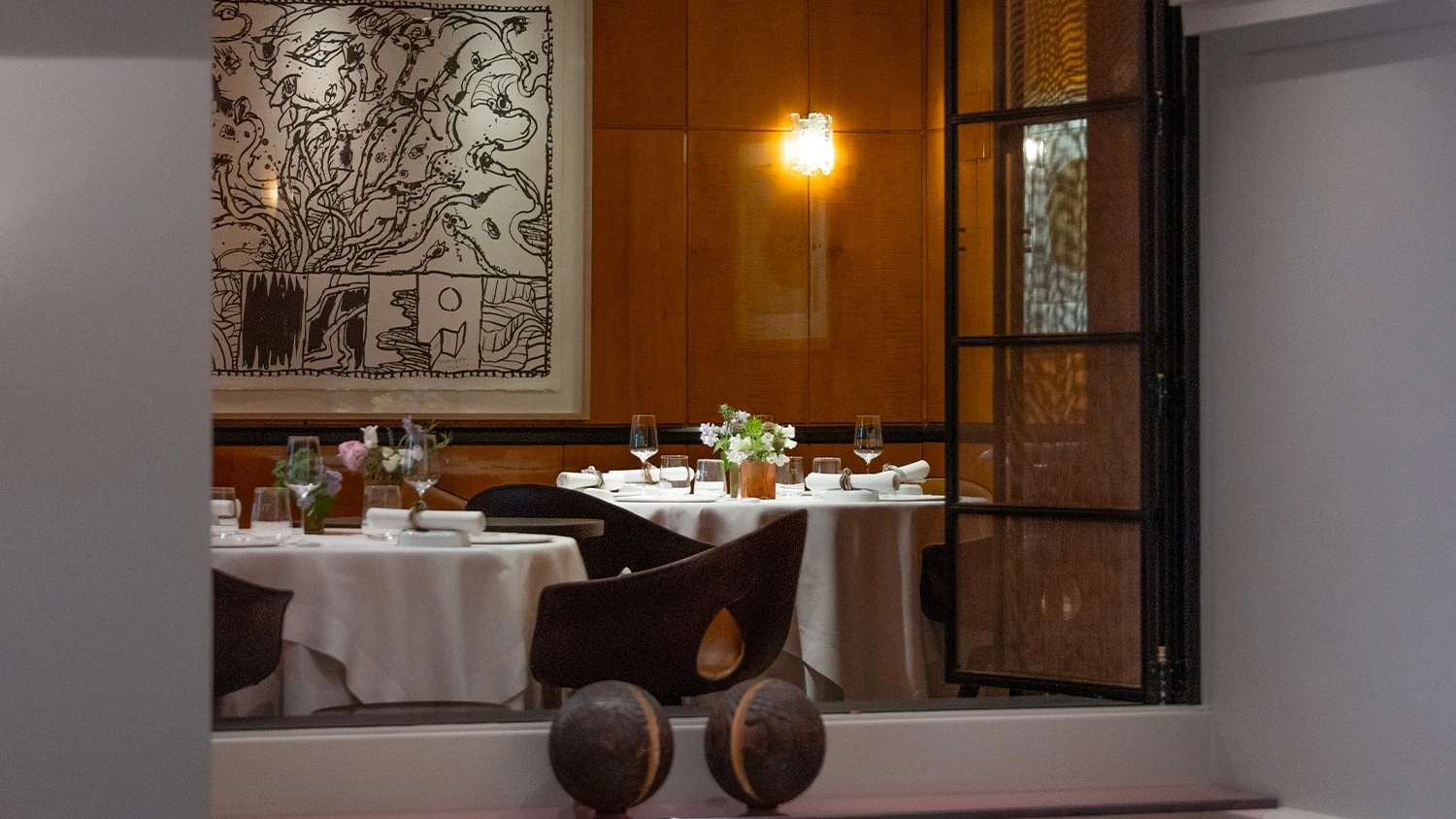
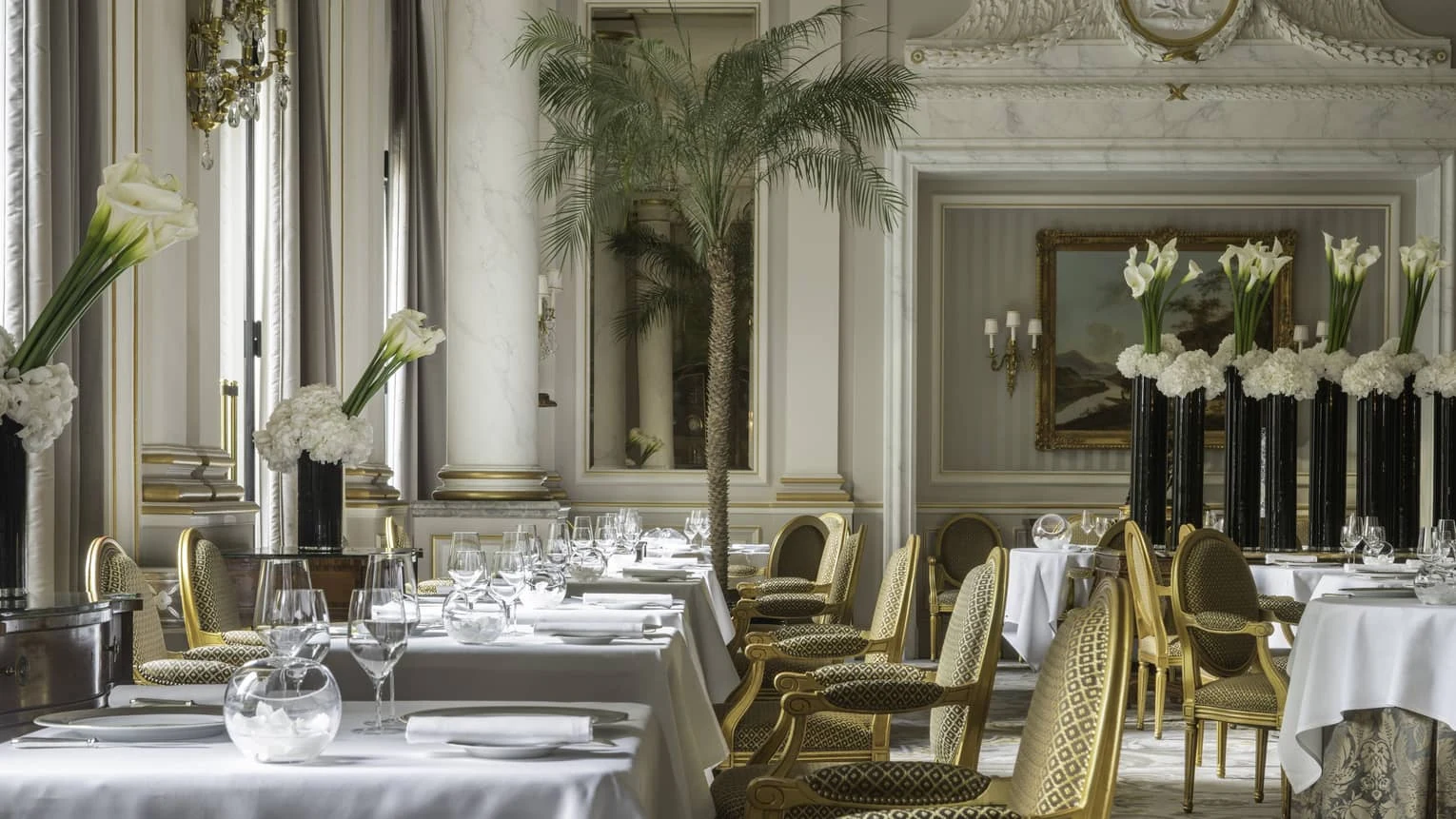
Avenue George V operates at a register that few Parisian streets attempt: grand without being theatrical, expensive without needing to prove it. The Four Seasons Hôtel George V sits on that register comfortably, and Le Cinq, the hotel's three-Michelin-star dining room, extends the same logic inward. The entrance from the hotel lobby passes through a sequence of spaces that narrow and quiet as you move toward the restaurant itself. By the time you reach the dining room, the ambient temperature, the weight of the linen, and the calibrated distance between tables all signal that this is a room designed to hold your attention while appearing to demand nothing of it.
That physical composition is not incidental. Paris's top-tier classical French restaurants, among them Guy Savoy, L'Orangerie, and Tour d'Argent, each maintain a distinct spatial identity that functions as a first argument for the cooking. At Le Cinq, the argument is formality in full possession of itself: tall ceilings, warm stone tones, floral arrangements on a scale that reads as architectural rather than decorative. The room has enough weight to absorb silence and enough warmth to make silence comfortable.
Where Le Cinq Sits in the Paris Three-Star Field
Paris currently holds a concentration of three-Michelin-star restaurants that forces any serious newcomer to position clearly. Le Cinq's position is classical, not experimental. Where peers like Pierre Gagnaire and Alléno Paris au Pavillon Ledoyen operate further into creative and contemporary territory, Le Cinq under Chef Christian Le Squer maintains a French classical frame while executing at three-star precision. That distinction matters when choosing between the city's leading tables: this is not the room for boundary-pushing technique or conceptual provocation. It is the room for classical French cooking at its most technically controlled.
The awards data confirms the positioning. Le Cinq holds three Michelin stars, ranks 17th on The World's 50 Best Restaurants list, and has 15 total awards. Earlier World's 50 Best placement, 17th, indicates longevity at a high level rather than recent arrival. The Les Grandes Tables du Monde designation adds a further layer of institutional recognition within the classical French tradition specifically. Across the comparable Paris tier, La Scène and Plénitude also operate at €€€€ with serious ambition, but OAD's classical-specific ranking places Le Cinq in a different competitive frame from those more contemporary formats.
Nationally, Le Cinq belongs to a cohort of French restaurants where decades of accumulated reputation function as part of the offering. Establishments like Auberge de l'Ill in Illhaeusern, Paul Bocuse - L'Auberge du Pont de Collonges, and Troisgros - Le Bois sans Feuilles in Ouches represent the longer arc of French grand dining. Le Cinq, while rooted in a hotel context, operates with equivalent institutional seriousness. The comparison to destination restaurants like Mirazur in Menton, Bras in Laguiole, or Flocons de Sel in Megève illustrates how France distributes its highest-rated classical cooking across regions, Le Cinq being the capital's clearest representative of that tradition in a hotel setting.
The Wine Program as a Separate Argument
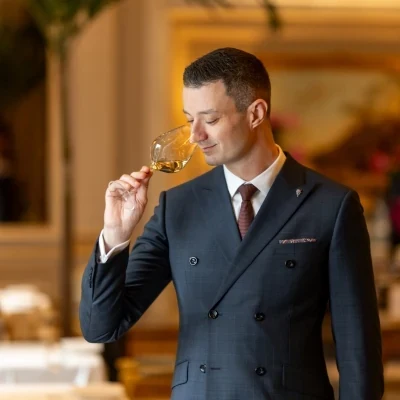
The cellar at Le Cinq does not require the food to justify it. With 50,000 bottles across 2,800 selections, it operates at a scale that positions it among the more serious hotel wine programs in Europe. Wine Director Eric Beaumard and Sommelier Thierry Hamon oversee a list with documented strengths across Champagne, Loire, Alsace, Burgundy, Bordeaux, and notable Italian regions including Piedmont and Tuscany, as well as Spain, Portugal, and Germany. The pricing tier ($$$ in OAD's system, indicating many bottles above $100) reflects both the depth of older vintages and the cost structure of the 8th arrondissement address.
The corkage fee of $300 is a data point worth registering: it signals that the program expects guests to drink from the list rather than bring their own bottles. At this price tier and with a cellar of this depth, that expectation is supported. For guests with specific vintage interests, a particular Burgundy producer, older Champagne houses, aged Bordeaux, the list length suggests the cellar can engage those interests at detail. The sommelier team's involvement in the dining experience at this level tends to be active rather than passive; expect a conversation, not just a transaction.
Wine program also distinguishes Le Cinq from closer Paris peers. Nomicos, operating in a similar classical French register in the 16th arrondissement, functions at a different cellar scale. Within the 8th, the George V address itself carries wine-program gravity that influences procurement and storage possibilities unavailable to smaller independent operations.
The Sensory Register of a Classical French Evening
Classical French dining at three-star level operates through accumulation rather than surprise. The sequence of a dinner at Le Cinq follows a grammar that French grand cuisine has refined over generations: arrival of breads and amuse-bouches that set the kitchen's technical register; courses paced at intervals that allow conversation without losing momentum; tableside service components that make the room itself part of the preparation. The sensory experience is built from layered quietness, the sound of service that moves without announcing itself, the visual weight of the room's proportions, the temperature of spaces calibrated for comfort over hours rather than minutes.
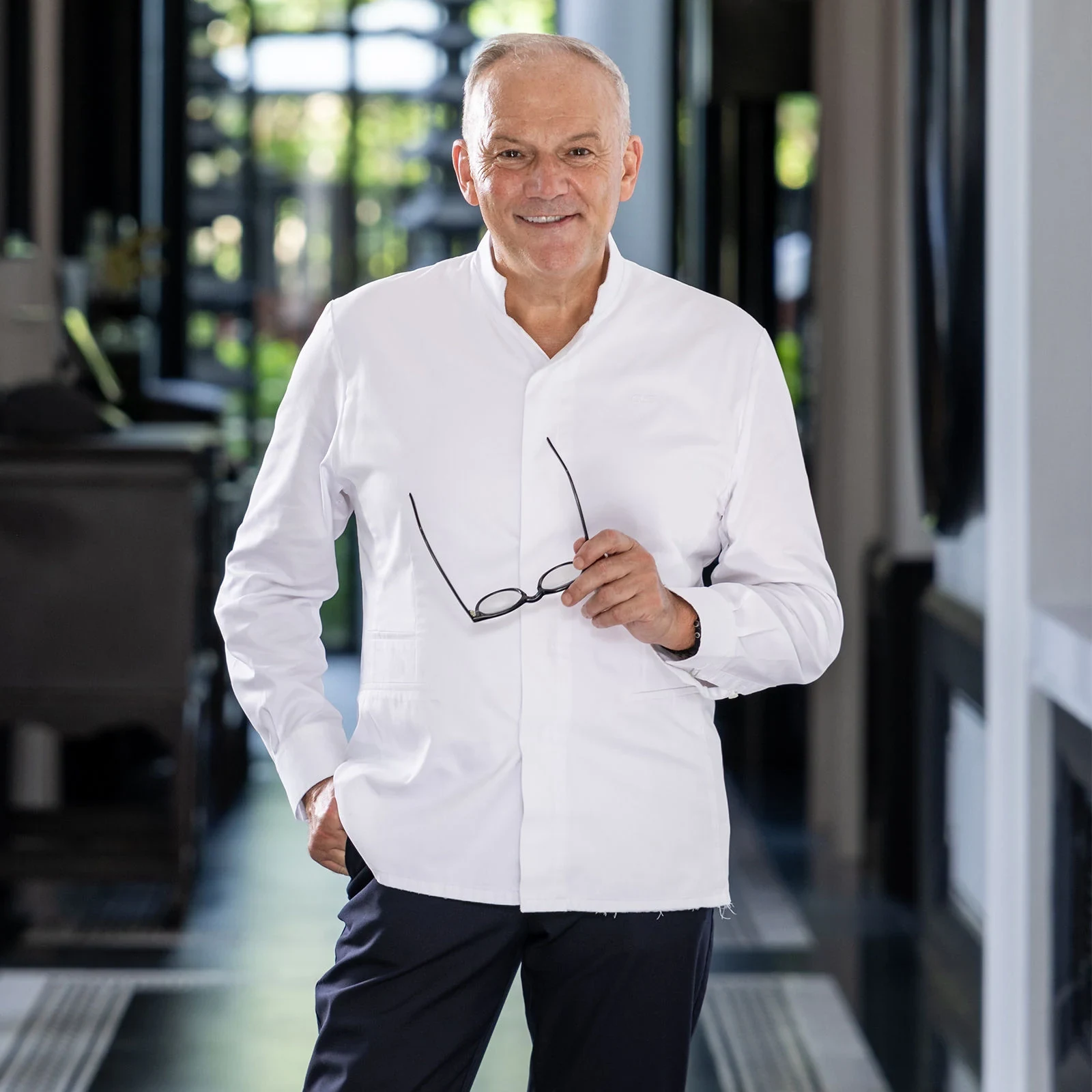
Chef Christian Le Squer's kitchen position within this framework is that of a practitioner with serious institutional credentials. The cooking is French in the fullest classical sense, and the three-star recognition reflects execution at a level where consistency across hundreds of covers and years of service is itself a form of achievement.
Who This Room Is For
Le Cinq operates at a price and formality register that places it outside casual consideration. The €€€€ pricing, the three-star context, and the hotel address all position this as a deliberate, occasion-driven choice. For visitors to Paris comparing options across the classical top tier, the choice between Le Cinq, Guy Savoy, and L'Ambroisie ultimately turns on atmosphere and format preference rather than quality differential: all three operate at a level where the cooking is beyond reproach, and the room becomes the differentiating variable. Le Cinq's hotel context provides a spatial completeness, aperitif in the lobby bar, dinner, post-dinner cognac in the same building, that freestanding restaurants cannot replicate.
For guests interested in comparing modern French cooking at high levels elsewhere in Europe, Hélène Darroze at The Connaught in London and La Fourchette des Ducs in Obernai represent different expressions of French culinary tradition at serious levels, each in distinct geographic and cultural contexts. The George V address puts Le Cinq at the centre of Paris's 8th arrondissement luxury concentration.
Planning a Reservation
Questions
Frequently asked
What recognition does Le Cinq hold?
Le Cinq holds 3 Michelin stars and a place on the World's 50 Best list at number 17.
Who works at Le Cinq?
Made By profiles Christian Le Squer (Chef) and David Piquet (Director of Wine and Head Sommelier) at Le Cinq.
How expensive is Le Cinq?
Le Cinq is listed at a price level of $$$$.
Where is Le Cinq and what does it serve?
Le Cinq is in 8e Arr. – Élysée, Paris, serving Modern French Fine Dining.
The field
How it compares
| Place | Awards | Cuisine | Notes |
|---|---|---|---|
| Le Cinq | Michelin 3 Stars, World's 50 Best #17 | Modern French Fine Dining | 8e Arr. – Élysée, $$$$ |
| Arpège | Michelin 3 Stars, World's 50 Best | Vegetable-Focused French Fine Dining | Paris |
| Epicure | Michelin 3 Stars | Contemporary French Fine Dining | Paris |
| Guy Savoy | Michelin 2 Stars, World's 50 Best | Classic French Fine Dining | Paris |
| Le Taillevent | Michelin 2 Stars, World's 50 Best | Classic and Modern French Fine Dining | Paris |
| Pierre Gagnaire | Michelin 3 Stars, World's 50 Best | Avant-Garde French Fine Dining | Paris |
| Restaurant David Toutain | Michelin 2 Stars | Modern French Fine Dining | Paris |
In residence
Similar places
Vegetable-Focused French Fine Dining
Arpège
Paris, France
★★★ · 50 Best
Contemporary French Fine Dining
Epicure
Paris, France
★★★
Classic French Fine Dining
Guy Savoy
Paris, France
★★ · 50 Best
Classic and Modern French Fine Dining
Le Taillevent
Paris, France
★★ · 50 Best
Avant-Garde French Fine Dining
Pierre Gagnaire
Paris, France
★★★ · 50 Best
Modern French Fine Dining
Restaurant David Toutain
Paris, France
★★