Hika
In Residence
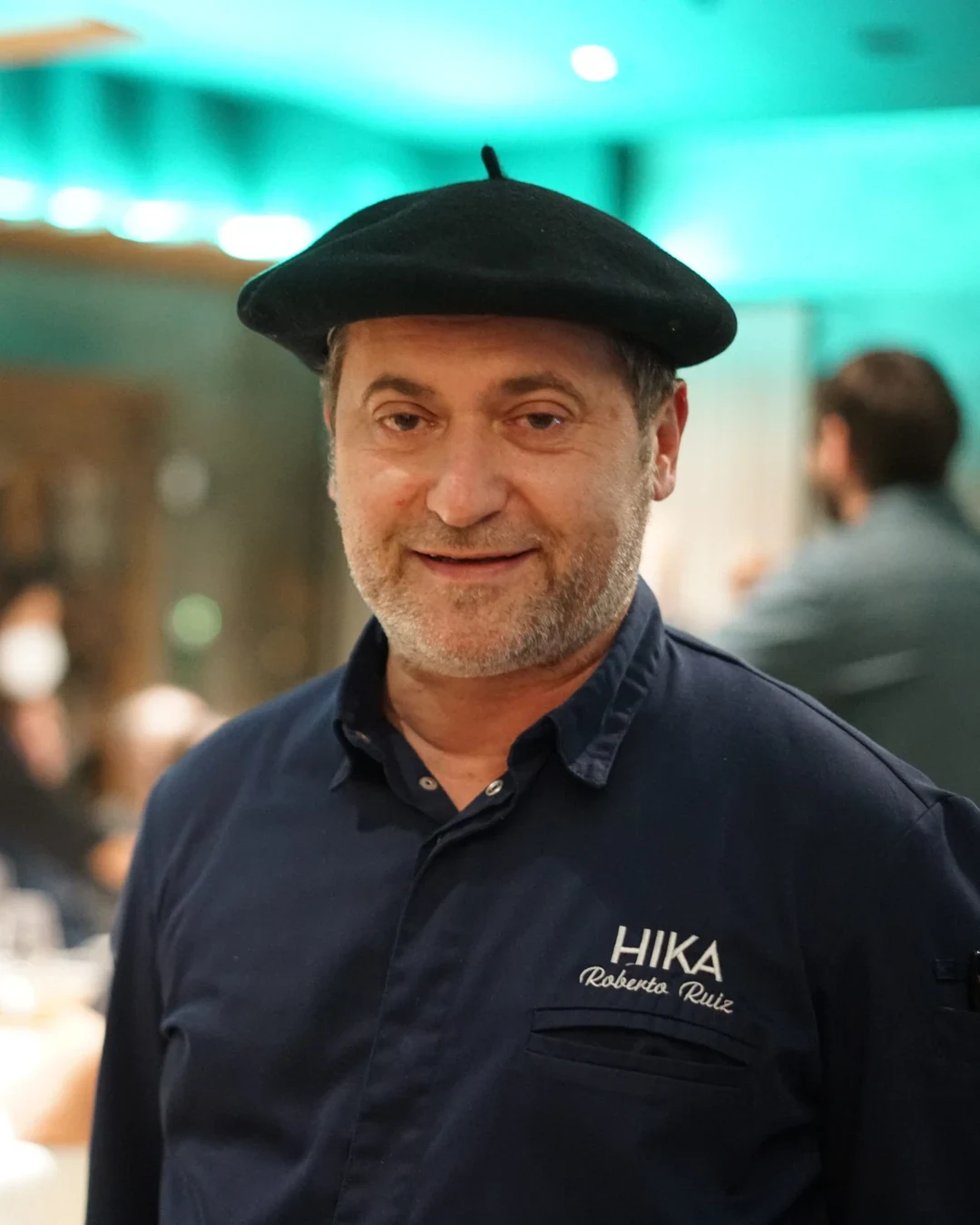
Roberto Ruiz
Chef
- 01CuisineTraditional Basque Steakhouse & Grill
- 02CityVillabona, Spain
- Guía Repsol 2 Soles · 2026
- Macarfi 8.7 Food Rating · 2026
- Michelin Plate · 2026
- Opinionated About Dining Top Restaurants in Europe Recommended · 2026
- Opinionated About Dining Top Restaurants in Europe Ranked #288 · 2025
- Opinionated About Dining Top Restaurants in Europe Ranked #307 · 2024
A Winery Table in the Basque Hills
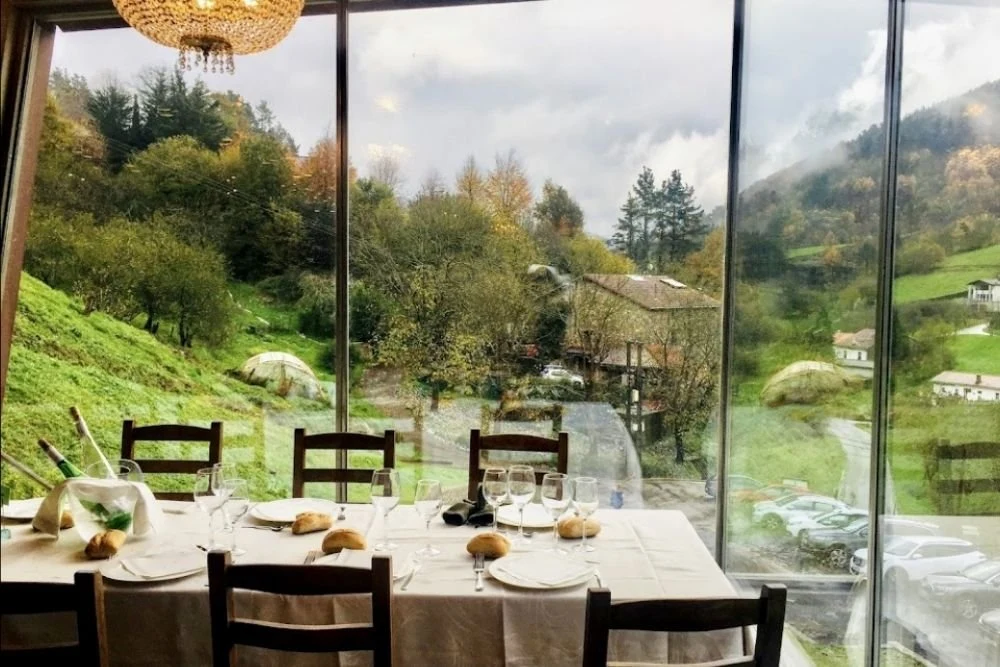
The approach to Hika sets expectations clearly: rows of txakoli vines slope toward a building whose large windows frame the mountain backdrop like a fixed composition. This is not a restaurant that happens to serve local wine; it is a winery that has built a serious kitchen inside its walls. That combination, common enough in Burgundy or Tuscany, remains relatively rare in the Basque Country, where the region's dining culture has historically concentrated in urban pintxo bars and destination restaurants rather than rural estate tables. Hika occupies a specific and under-served niche.
The broader context for a meal here is the txakoli tradition itself. Txakoli, the bone-dry, lightly effervescent white wine produced almost exclusively in the Basque provinces of Gipuzkoa, Bizkaia, and Álava, has spent the last two decades moving from local curiosity to internationally recognised category. Gipuzkoan txakoli, produced under the Getariako Txakolina denomination, tends toward high acidity and briny minerality, properties that make it a functional pairing partner for the seafood and vegetable-forward cooking that defines the area's table traditions. Drinking txakoli at the source, looking out over the vines that produced it, changes the frame around every dish that follows.
How the Kitchen Works
Hika's cooking is grounded in Basque tradition, with Roberto Ruiz at the helm. While Spain's headlining restaurant addresses, Arzak in San Sebastián, Mugaritz in Errenteria, Azurmendi in Larrabetzu, have built their reputations on reinvention of Basque material, a separate tier of restaurants in the region has chosen to go deeper into the canon rather than away from it. Hika sits in that second category.
Chef Roberto Ruiz works from produce grown in the kitchen garden and cooks on a traditional economic kitchen, a wood- and charcoal-fired stove type still in use across rural Basque households, that produces a flavour register distinct from modern induction or gas cooking. The stew-making tradition of the Basque interior, built on slow application of steady heat, requires exactly this kind of equipment.
The appetiser sequence draws directly from the garden, which places Hika in a growing category of Basque restaurants that treat their own land as the first course of the story. This is not the same as the farm-to-table framing familiar from international fine dining; in the Basque Country it connects to an older, less mediated relationship between the huerta and the kitchen. The menu and tasting menu formats offer two ways into the same kitchen. For a sense of range without total commitment to the tasting progression, the menu format allows selective ordering across the kitchen's main reference points.
The Sharing Logic of a Basque Table
The editorial angle assigned here, the social ritual of shared eating, maps naturally onto what Basque restaurant culture actually looks like at the table. Pintxos culture in San Sebastián has been written about extensively, but the sharing logic extends well beyond the bar counter into the sit-down restaurant format. Dishes like Tolosa beans or txangurro are not designed for solo consumption; they arrive as communal reference points, topics for conversation as much as courses. The correct approach at a table like Hika's is to order broadly, taste across the range, and let the txakoli do its work between plates. A meal here is structured around that rhythm rather than the vertical progression of a multi-course tasting.
That social architecture distinguishes rural Basque restaurant culture from the more performance-oriented format of urban destination dining. Tables at Hika's winery setting are configured for groups who have made a deliberate trip, not for solo travellers passing through. The Saturday dinner service and Sunday lunch slot indicate the kitchen's understanding of how people actually use a destination like this: as a punctuation mark in a weekend in the region, a reason to drive into the hills rather than stay in the city.
Recognition and Peer Context
Hika holds consecutive rankings in the Opinionated About Dining Leading Restaurants in Europe list, placed at number 307 in 2024 and moving up to number 288 in 2025. OAD rankings are generated from aggregated scores by food-focused travellers rather than anonymous inspector systems, which means they tend to reflect consistent repeat performance for a specific audience rather than a single high-stakes visit. A ranking in the European top 300 for a winery restaurant in a village outside Villabona signals genuine traction in the segment of the market that seeks out this kind of address.
The comparable set for Hika is not the three-Michelin-star bracket occupied by Arzak or Martin Berasategui in Lasarte-Oria. The more instructive comparisons are with places like Ama Taberna in Tolosa and iBAi by Paulo Airaudo in San Sebastián: Basque restaurants working within the tradition rather than deconstructing it, recognised by a specialist audience rather than the broadest critical consensus. Within the wider Spanish dining picture, where addresses like El Celler de Can Roca in Girona, DiverXO in Madrid, and Aponiente in El Puerto de Santa María define one end of the spectrum, Hika represents a different and complementary argument about what Spanish cooking is for.
Planning a Visit
Hika is located at Barrio Otelarre 40, 20150 Villabona, Gipuzkoa, in the Oria River valley roughly between San Sebastián and Pamplona. The kitchen runs Monday through Friday from 9 am to 5:30 pm, Saturday from 1 pm to 4 pm and 8:30 pm to 11 pm, and Sunday from 1:30 pm to 4 pm. Given the rural location and the specificity of the address, arriving by car is the practical approach; the Gipuzkoan road network connecting San Sebastián to the interior valleys is well maintained and the drive provides its own context for the landscape that frames the meal.
Questions
Frequently asked
Who works at Hika?
Made By profiles Roberto Ruiz (Chef) at Hika.
How expensive is Hika?
Hika is listed at a price level of $$$$.
Where is Hika and what does it serve?
Hika is in Otelarre, Villabona, serving Traditional Basque Steakhouse & Grill.
The field
How it compares
| Place | Cuisine | Notes | Awards |
|---|---|---|---|
| Hika | Traditional Basque Steakhouse & Grill | Otelarre, $$$$ | · |
| Kato | Modern Taiwanese Fine Dining | Los Angeles | Michelin 2 Stars, World's 50 Best |
| Miramar | Modern Mediterranean Seafood | Llançà | Michelin 2 Stars |
| Mugaritz | Avant-Garde Basque Fine Dining | Errenteria | Michelin 2 Stars, World's 50 Best |
| Piazza Duomo | Modern Piedmontese Fine Dining | Alba | Michelin 3 Stars, World's 50 Best |
| Quintonil | Modern Mexican Fine Dining | Mexico City | Michelin 2 Stars, World's 50 Best |
| Steirereck im Stadtpark | Modern Austrian Fine Dining | Vienna | Michelin 3 Stars, World's 50 Best |
In residence
Similar places
Modern Taiwanese Fine Dining
Kato
Los Angeles, United States
★★ · 50 Best
Modern Mediterranean Seafood
Miramar
Llançà, Spain
★★
Avant-Garde Basque Fine Dining
Mugaritz
Errenteria, Spain
★★ · 50 Best
Modern Piedmontese Fine Dining
Piazza Duomo
Alba, Italy
★★★ · 50 Best
Modern Mexican Fine Dining
Quintonil
Mexico City, Mexico
★★ · 50 Best
Modern Austrian Fine Dining
Steirereck im Stadtpark
Vienna, Austria
★★★ · 50 Best