Made ByRestaurant
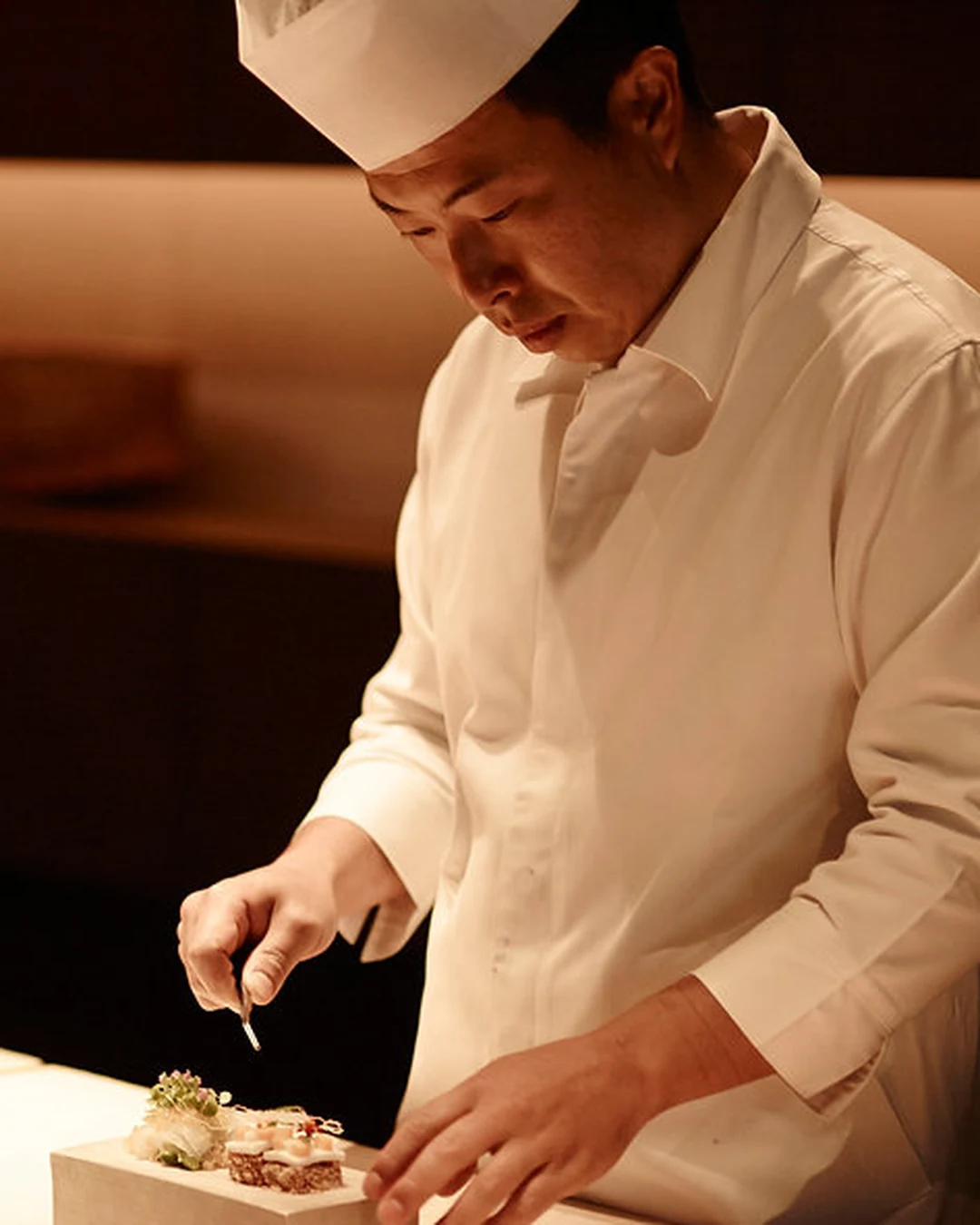
Chef chiro Kubota shapes Kyoto cuisine at HOSHINOYA Kyoto in Kyoto, Japan, with kaiseki discipline from Kappo Hassun and Tsuruya.
At a glance
- Cuisine
- Kyoto Cuisine
Control before display
The knife work stays small before the course reaches the room; chef chiro Kubota carries that discipline at HOSHINOYA Kyoto in Kyoto, Japan. His working grammar was set in Kyoto at Kappo Hassun, then in Osaka at Tsuruya main restaurant, kitchens where timing, restraint and repetition matter more than flourish. That training later moved with him to London, where he became head chef at Umu in 2004, and then back to Kyoto as executive chef at Hoshino Kyoto, Hoshinoya Resort. Here, the point is not biography as decoration. It is the way a cook trained in kappo and formal restaurant service reads a ryokan dining room: the course must arrive calm, the plate must hold its place in the sequence, and the hands must leave no argument on the surface. HOSHINOYA Kyoto opened in 2009 in a renovated century-old villa in Arashiyama, but the kitchen work sits closer to habit than spectacle. Kyoto cuisine asks for that. The gesture is controlled, then repeated until it disappears into service.
Kaiseki by season and pressure
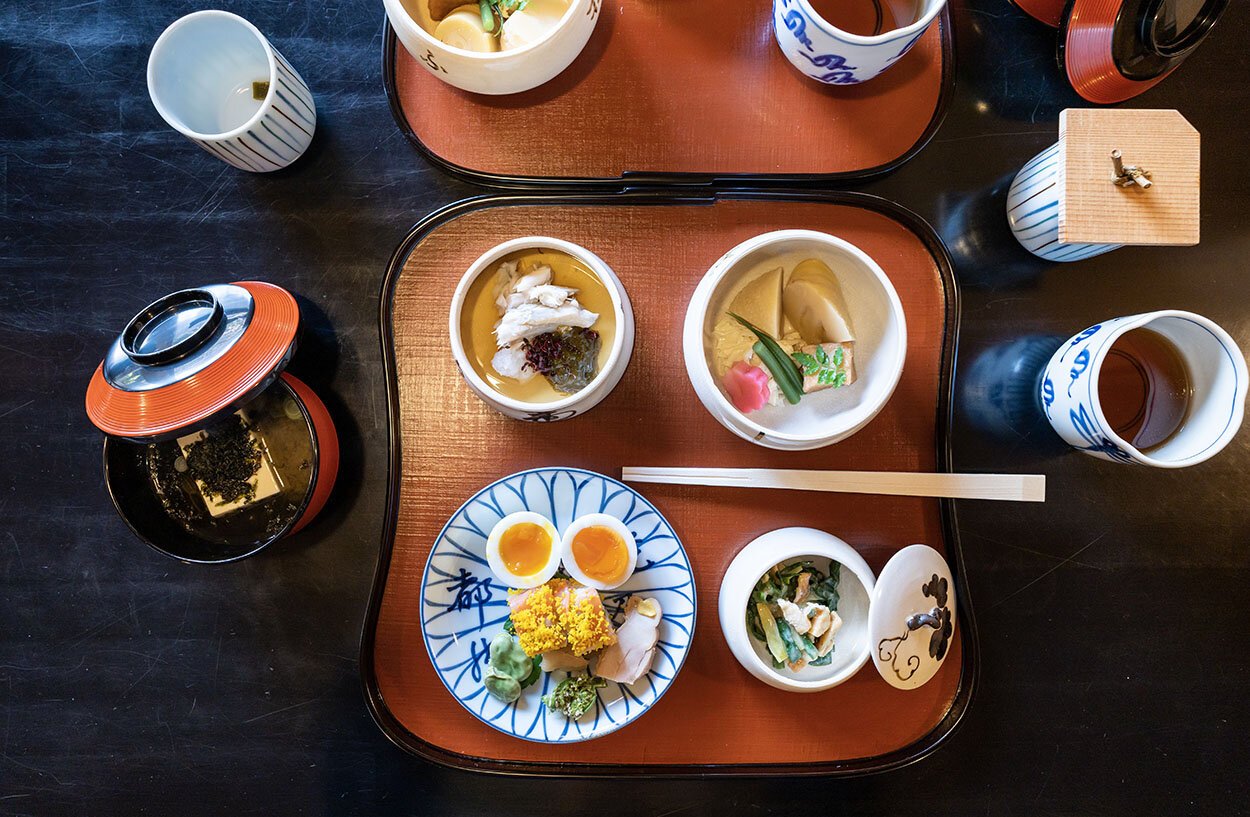
The restaurant works in the kaiseki register, with Kyoto produce, river fish, preserved forms and small shifts of acidity carrying the meal rather than weight. The house has described its cooking through Gomijizai, five tastes without restraint, a phrase that gives the kitchen permission to use Kyoto technique alongside French and London instincts without turning the plate into a declaration. Past courses have included fan shell clam with citrus vinaigrette, simmered baby eel with ponzu, charcoal-grilled lake gudgeon with sweet soy, mackerel sushi wrapped in bamboo leaf, lotus root with smoked salmon, asparagus mousse, tiny simmered lake gobies, sake-flavoured soup with deep-fried fish, and grilled baby ayu. Those dishes matter less as a catalogue than as a map of the method: bitterness, smoke, vinegar, fat, broth and river sweetness placed in succession. Breakfast keeps a quieter register, with small Japanese dishes and a bubbling hot pot of vegetables served in the room. The restaurant holds a Michelin star, while the wider house received a MICHELIN One Key hotel recognition for 2025.
The room above the Ōi River
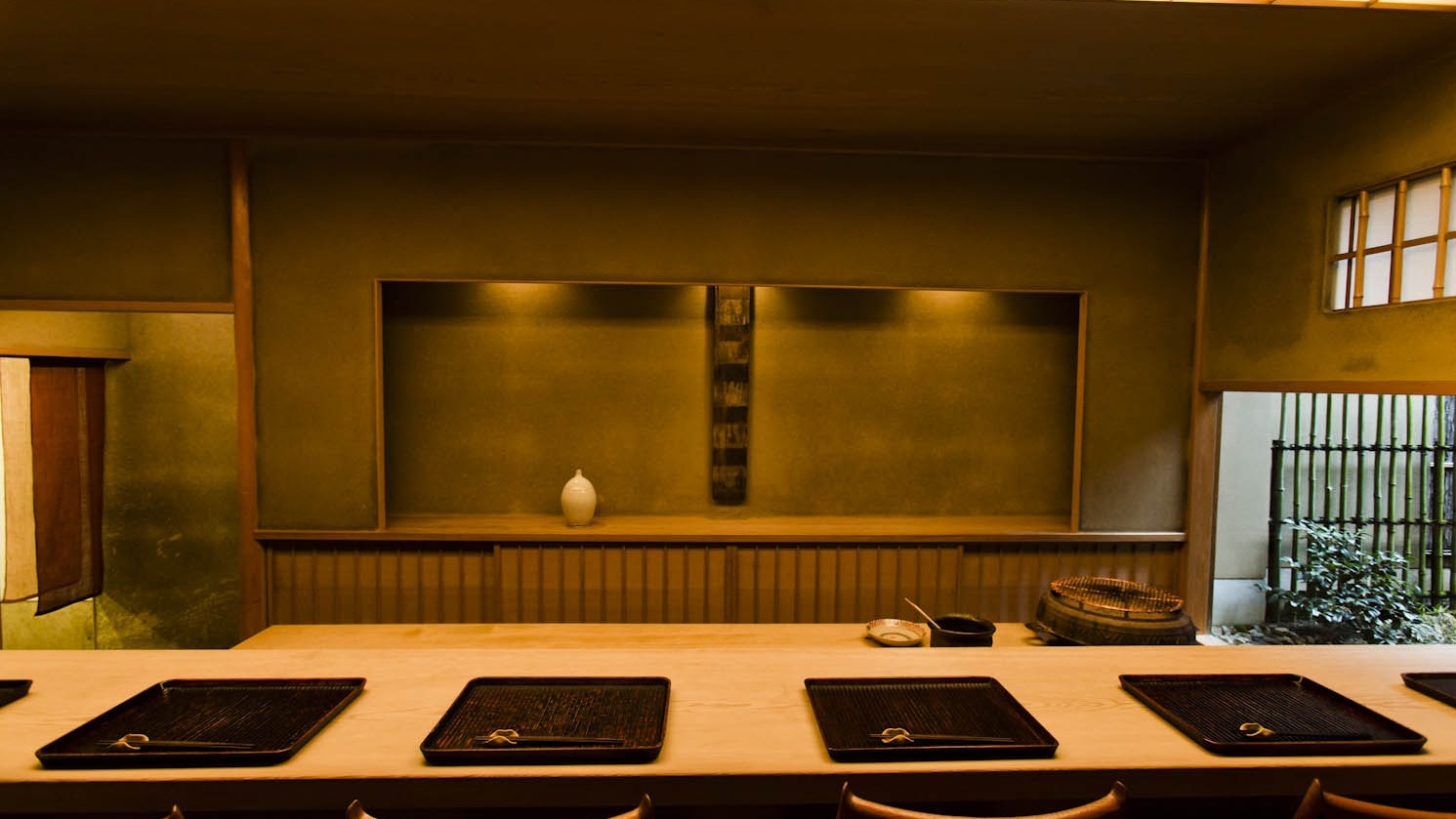
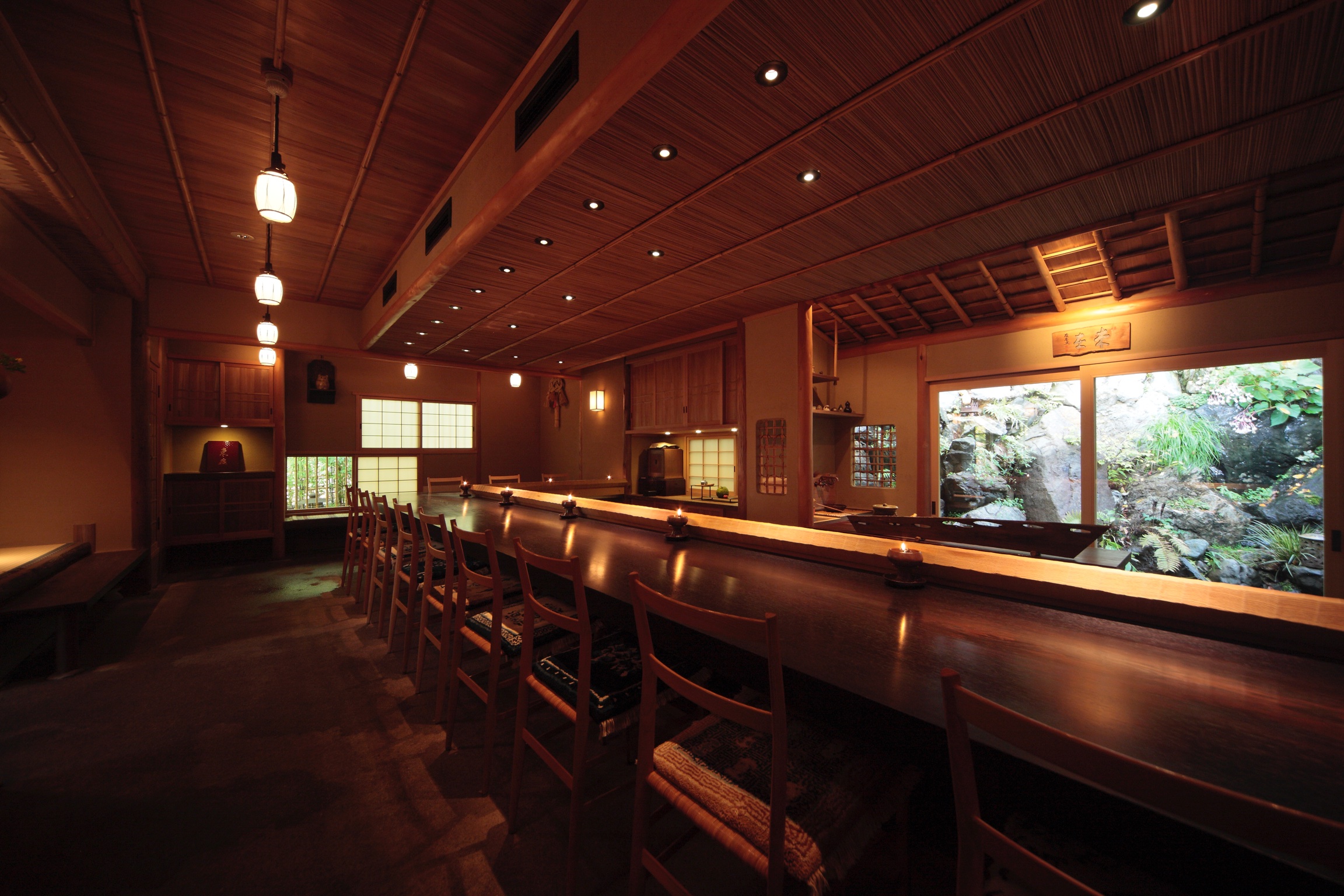
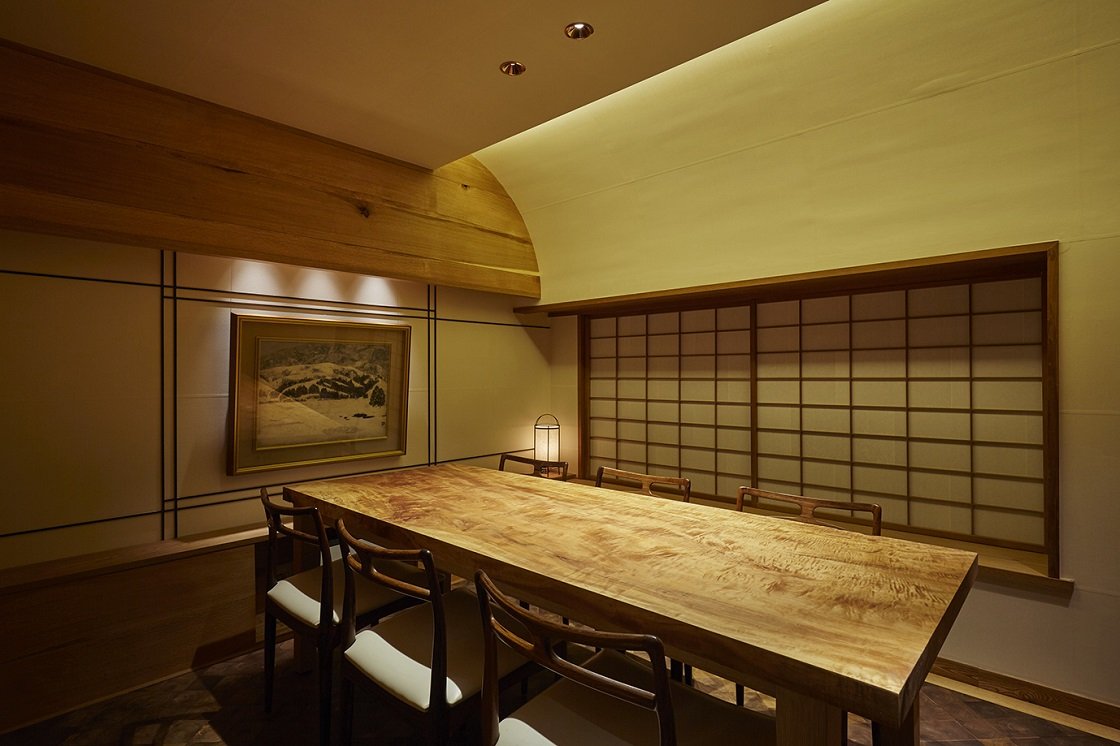
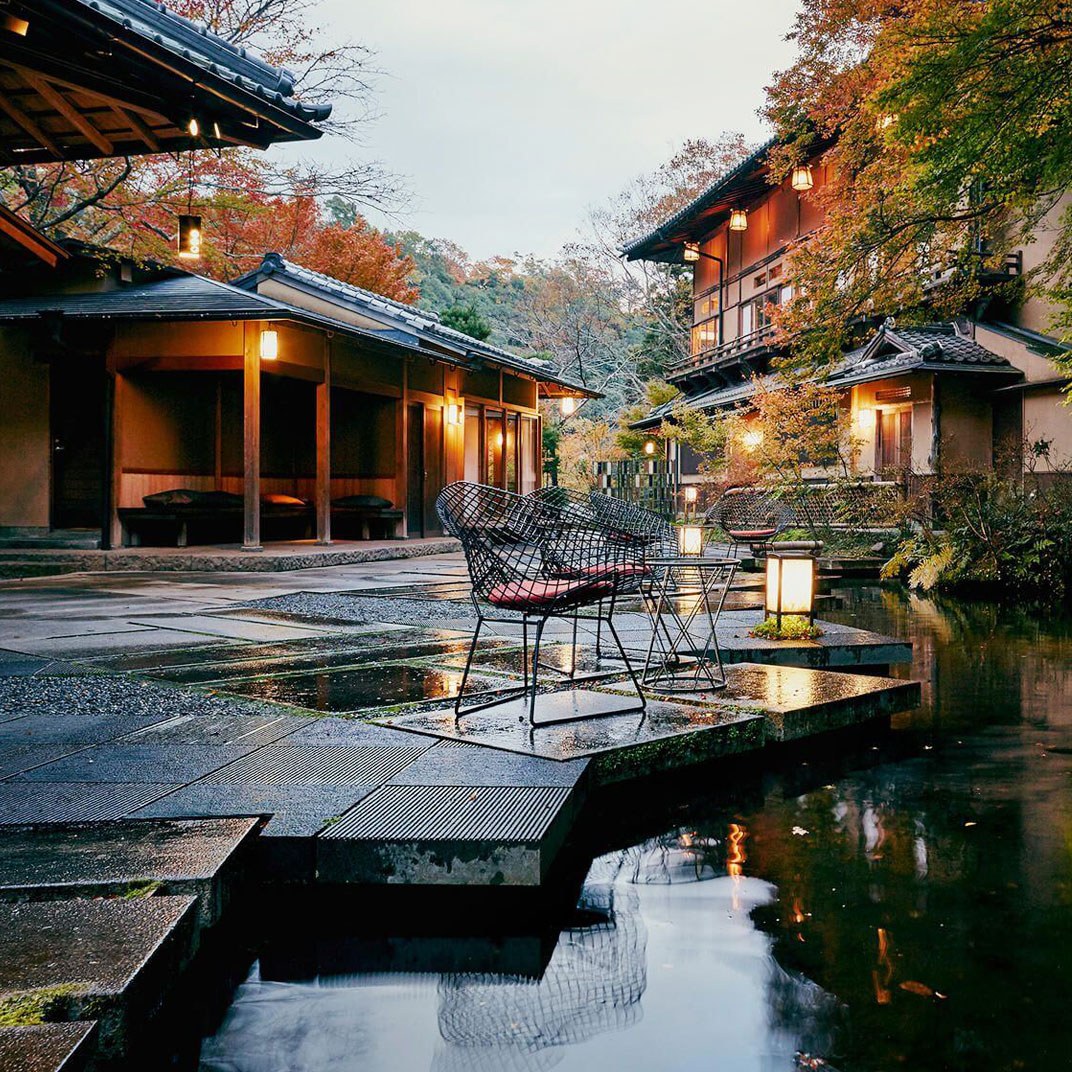
Before the pass, there is the boat. Guests reach the property by a 15-minute private ride up the Ōi River from near Togetsukyo Bridge, and that approach changes the tempo before anyone sits down to eat. The dining room belongs to a ryokan set along the water in Arashiyama, with Mt. Ogura above it and river views running through the house. Shoji screens, karakami paper, tatami and garden views do not ask the kitchen to be louder. They ask it to keep pace with the room. The service language is formal, and the place gives each course plenty of space once it lands: the counter, the room, the sound of water beyond the wall, the clean interval before the next bowl. In that setting, a citrus vinaigrette or a piece of grilled baby ayu has room to register.
A Kyoto station held in sequence
What matters here is continuity rather than a new claim. Kubota's path runs from Kappo Hassun and Tsuruya main restaurant to Umu, then back into the Hoshinoya kitchen, carrying the same concern for order at each station. The next sentence does not need to point beyond the house; the craft is already specific enough in the sequence of ponzu, sweet soy, hot pot and grilled baby ayu at HOSHINOYA Kyoto.
Address
11-2 Arashiyama Genrokuzancho, Nishikyo Ward, Kyoto, 616-0007, Japan