Kikunoi Honten
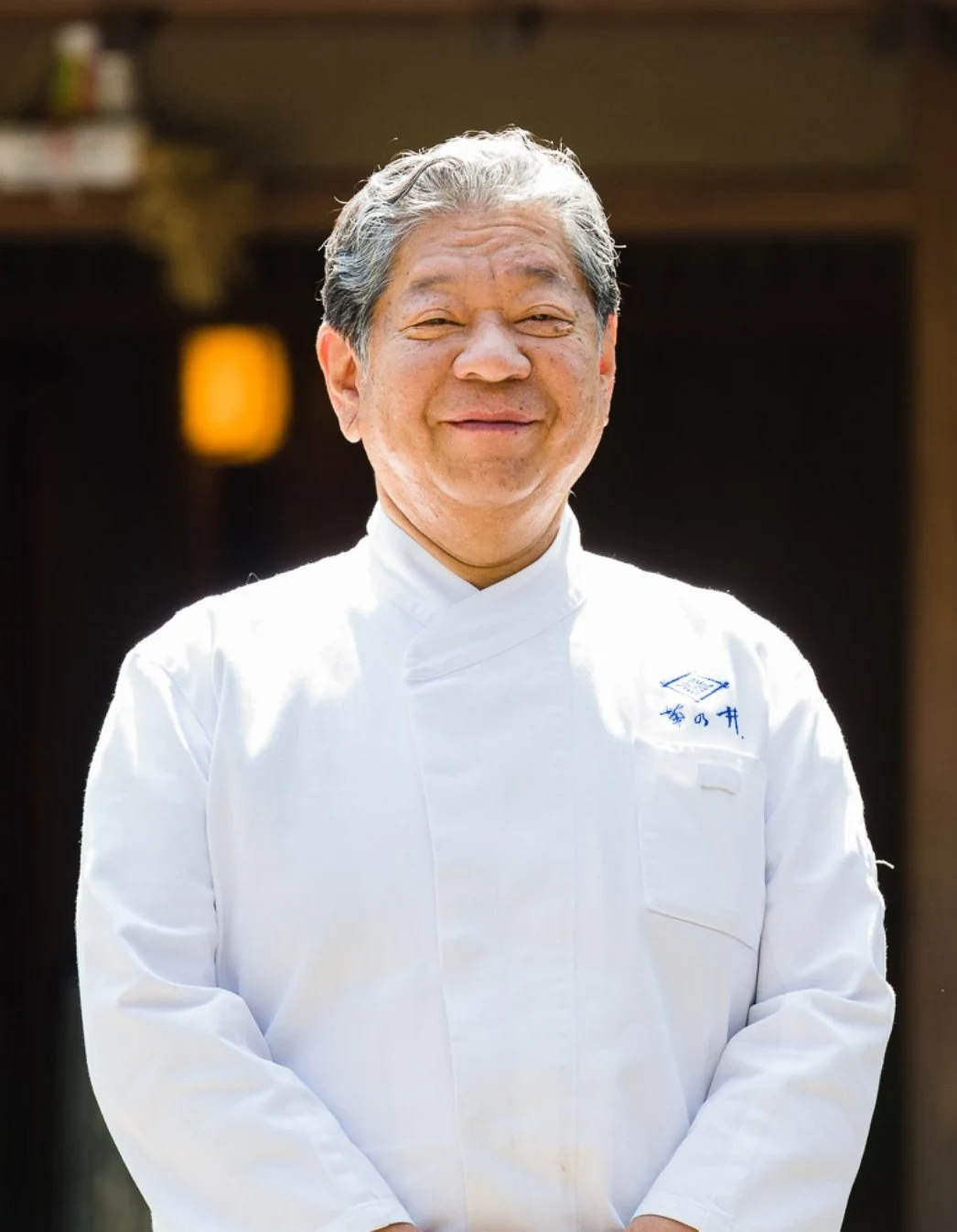
In Residence
Yoshihiro Murata
Chef
- 01CuisineKyoto Kaiseki Ryotei
- 02CityKyoto, Japan
- 03RecognitionThree Michelin Stars
From the people index
Recommended by
One trusted voice points here.
Dashi from the Chrysanthemum Well
- 3 Michelin Stars · Michelin Guide
- La Liste Top Restaurants: 95pts · 2026
- Tabelog Bronze #176: 4.2pts · 2026
- Michelin 3 Stars · 2026
- Opinionated About Dining Top Restaurants in Japan Ranked #153 · 2025
- Michelin 3 Stars · 2025
- Tabelog Bronze · 2025
- Tabelog 100 #7: 4.1pts · 2025
- The Best Chef Two Knives · 2025
- La Liste Top Restaurants: 94.5pts · 2025
- Opinionated About Dining Top Restaurants in Japan Ranked #114 · 2024
- Michelin 3 Stars · 2024
- Opinionated About Dining Top Restaurants in Japan Ranked #126 · 2023
Well water at the first station
The dashi begins with water from the Chrysanthemum Well. Yoshihiro Murata, owner and chef at Kikunoi Honten in Higashiyama, Kyoto, builds the house’s kaiseki from that source before any garnish reaches the pass. The well belongs to the family story as much as to the kitchen: Kikunoi traces it to the 16th century, and the Murata family has protected it since the 1500s. The restaurant itself was formally established in 1912, then passed into Murata’s hands in 1993 as the third generation at the original house.
That inheritance is not decorative. Murata’s role here joins daily production to public argument for washoku, through Kikunoi, the Japan Culinary Academy, and the long work of teaching Japanese cuisine without flattening its grammar. His kaiseki keeps Kyoto’s operating system intact: season, vessel, temperature, sequence, restraint. The kitchen can carry memory, palace cuisine, tea ceremony, temple cooking, and obanzai into one meal because the discipline gives each element a place. At Kikunoi Honten, lineage is a working method, not a family photograph.
The Sunday letter
Find new places through the people who run them.
Our Sunday email brings you the chefs, winemakers and hoteliers behind our newest stories. See a sample before you subscribe.
See a sample of the Sunday emailOne email a week. Unsubscribe from any issue.
A kaiseki rhythm set by season
The program moves by the 24-season calendar, with courses changing to catch ingredients at their brief point of use. Murata’s signatures name the spine of the craft plainly: New Style Dashi, Ichiban Dashi, Wagyu Sukiyaki, Wagyu Rei Ribeye Shabu Shabu, wagyu steak with wasabi. The restraint is in the framing. Dashi carries depth through clarity; wagyu arrives with enough structure around it that richness does not take over the meal.
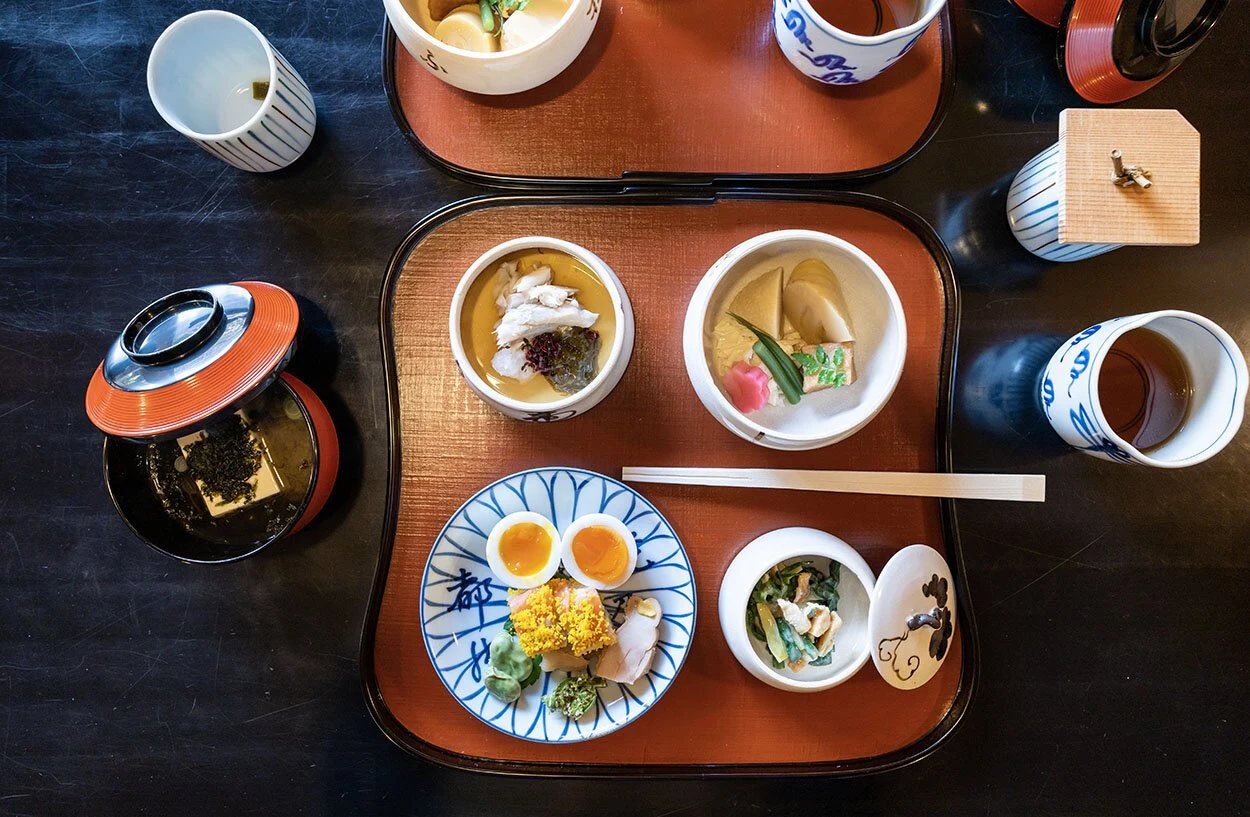
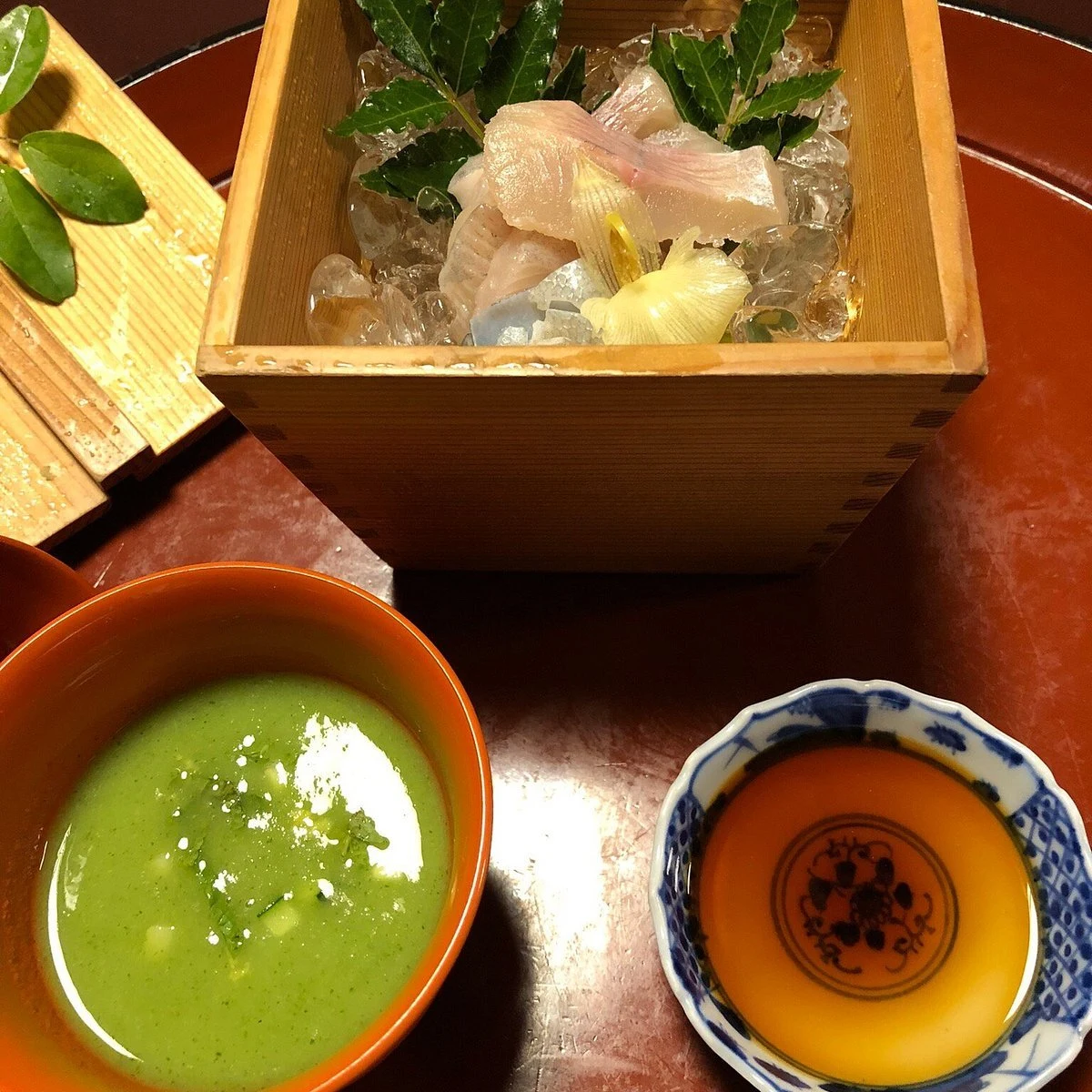
The kitchen works at a scale that still reads bench-side. Kikunoi employs 35 specialized cooks, with 20 visible in the cold section alone for about 40 guests per service. A course may turn on mountain yam, Hokkaido uni, wasabi jelly, and a hollowed lime; another may use bamboo shoot on glowing charcoal, letting steam do part of the work before the first bite. Spring can bring udo, butterbur, urui, and kinome herb vinegar jelly. Sashimi may sit with pickled Chinese chives and iris stalks. The form is formal, yet the best details remain tactile: cut, soak, warm, pour, serve.
Private rooms, garden light, a quiet pass
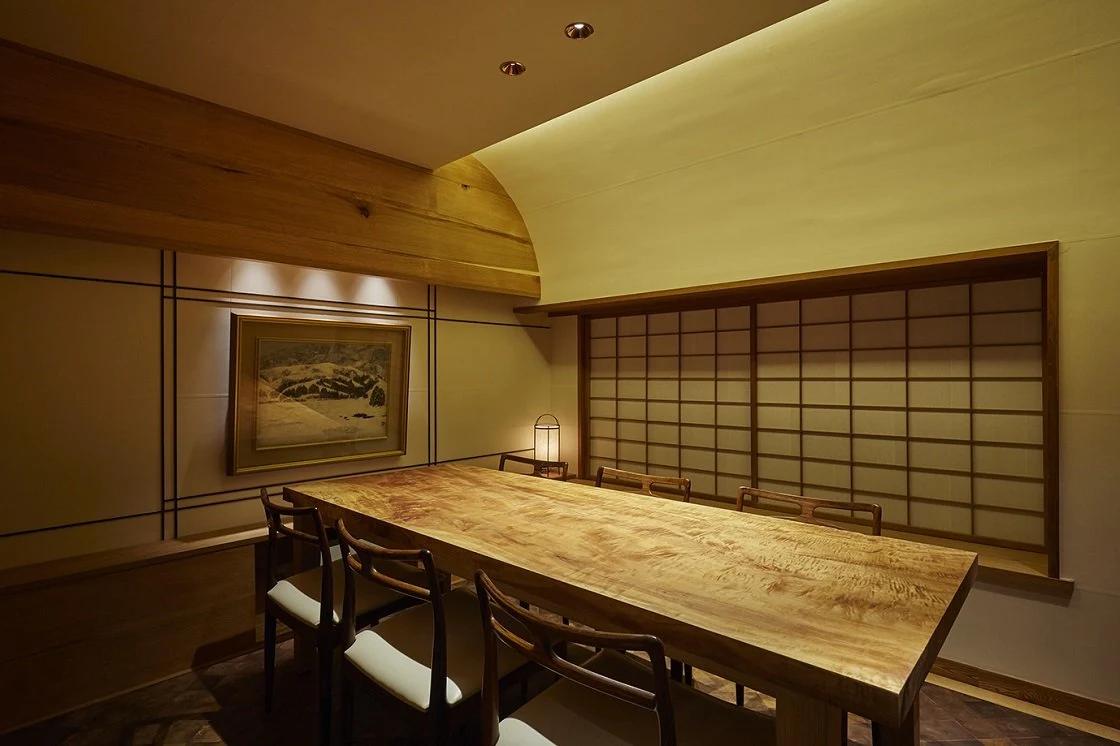
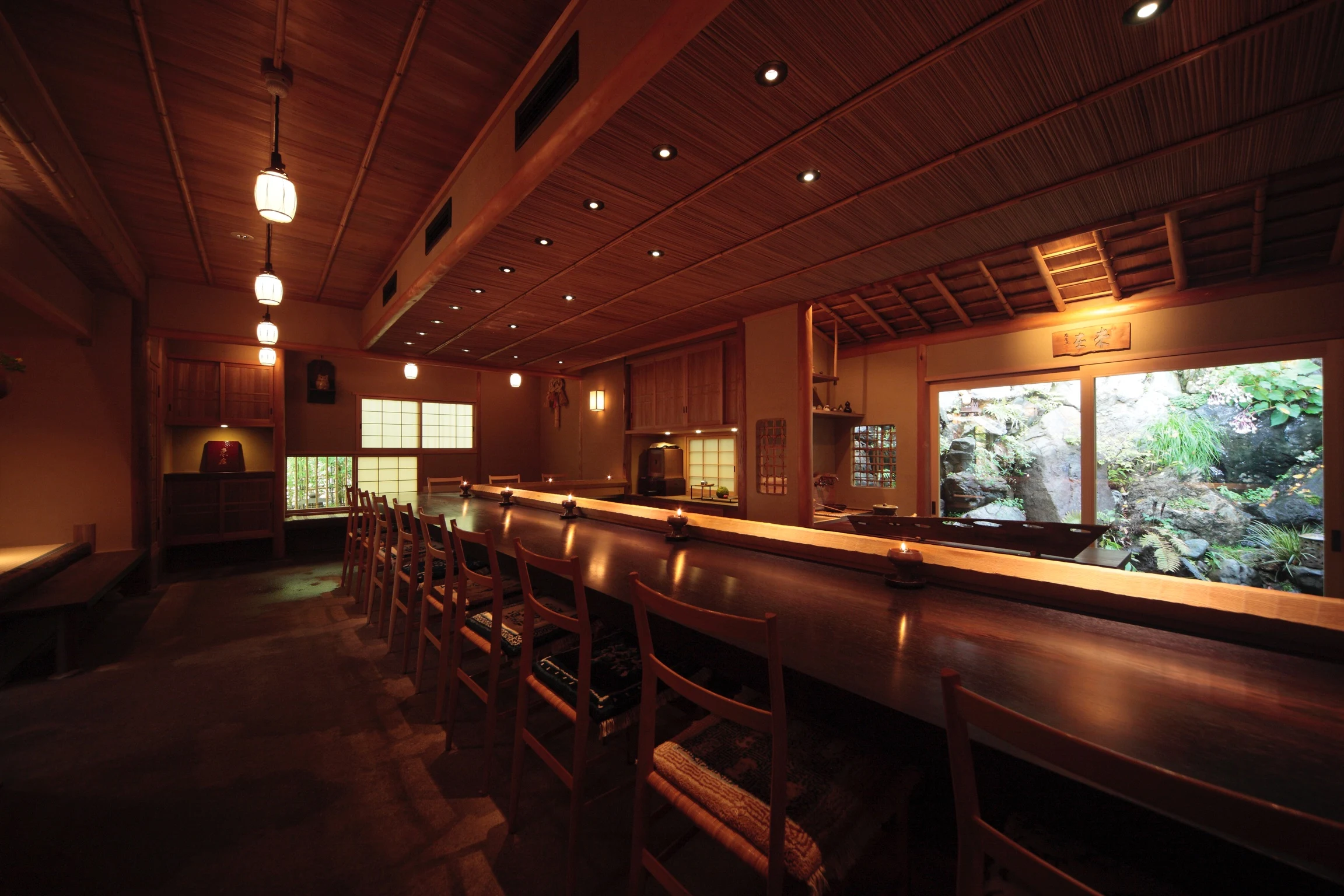
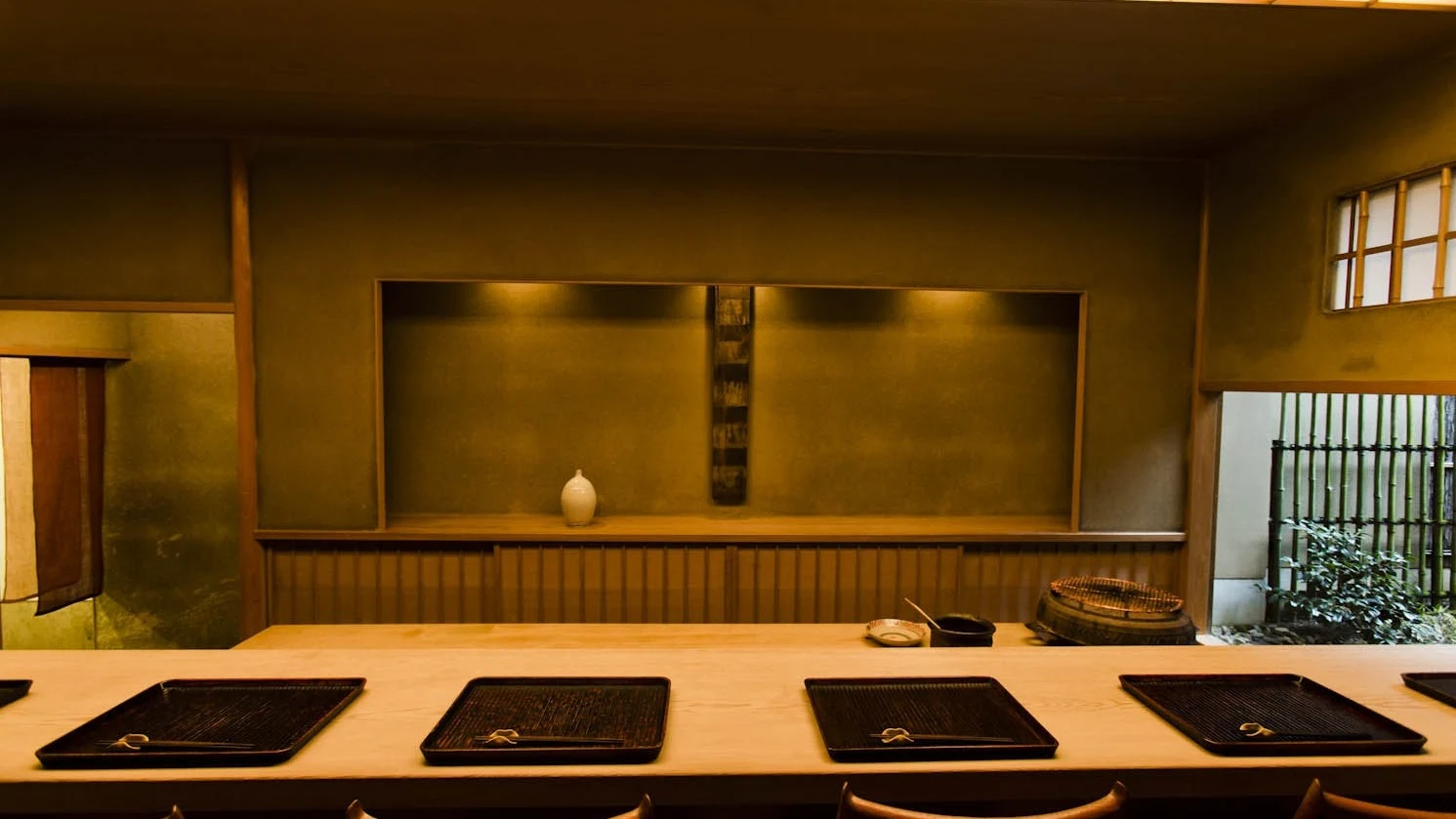
The room gives the cooking enough silence to register. Kikunoi Honten receives guests in private tatami rooms, with garden views and the measured pace expected of a Kyoto ryotei. Servers in kimono bring sake and tea into the sequence without turning service into performance. The architecture keeps the table low, the light soft, and the garden close enough to explain why a course might carry leaf, mist, charcoal, or flower.
Near Maruyama Park and Yasaka Shrine, the house still feels oriented toward the older eastern hills rather than toward the traffic of a dining list. The pass has to meet the room’s restraint. A sauce too heavy, a vessel too loud, a temperature held too long would show. Kikunoi Honten holds 3 Michelin stars, but the meal’s authority sits more quietly, in the way Chrysanthemum Well water enters the Ichiban Dashi.
Questions
Frequently asked
What kind of restaurant is Kikunoi Honten?
Kikunoi Honten is a Kyoto kaiseki ryotei in Higashiyama, Kyoto. It serves formal multi-course dining in private tatami rooms, with garden views and service that follows the rhythm of a traditional ryotei.
Who is behind Kikunoi Honten?
Yoshihiro Murata is the owner and chef at Kikunoi Honten. The restaurant was formally established in 1912 and passed into Murata’s hands in 1993 as the third generation at the original house.
What is Kikunoi Honten known for?
The kitchen builds its kaiseki from water drawn from the Chrysanthemum Well, which has been protected by the Murata family since the 1500s. Its cooking follows season, vessel, temperature, sequence, and restraint, with dishes shaped by the 24-season calendar.
What recognition does Kikunoi Honten hold?
Kikunoi Honten holds three Michelin stars.
Do I need to book, and is there a dress code?
Reservation is essential, and the dress code is formal.
The field
How it compares
| Place | Awards | Cuisine | Notes |
|---|---|---|---|
| Kikunoi Honten | Michelin 3 Stars | Kyoto Kaiseki Ryotei | Higashiyama, $$$$ |
| Gion Sasaki | Michelin 3 Stars | Modern Kaiseki | Kyoto |
| Hyotei | Michelin 3 Stars | Traditional Kaiseki | Kyoto |
| Isshisoden Nakamura | Michelin 3 Stars | Traditional Kyoto Kaiseki | Kyoto |
| Miyama Sou | Michelin 3 Stars | Tsumikusa Kaiseki | Kyoto |
| Mizai | Michelin 3 Stars | Traditional Kaiseki | Kyoto |
| Ogata | Michelin 2 Stars | Kaiseki Omakase | Kyoto |
In residence
Similar places
The Sunday letter
Get the next Made By story in your inbox.
We send one email every Sunday morning with the places and people we covered that week.
See a sample of the Sunday emailOne email a week. Unsubscribe from any issue.