Huguette
- 01CuisineFrench Seafood Bistro
- 02CityParis, France
From the people index
Recommended by
One trusted voice points here.
Rue de Seine and the Architecture of the Left Bank Table
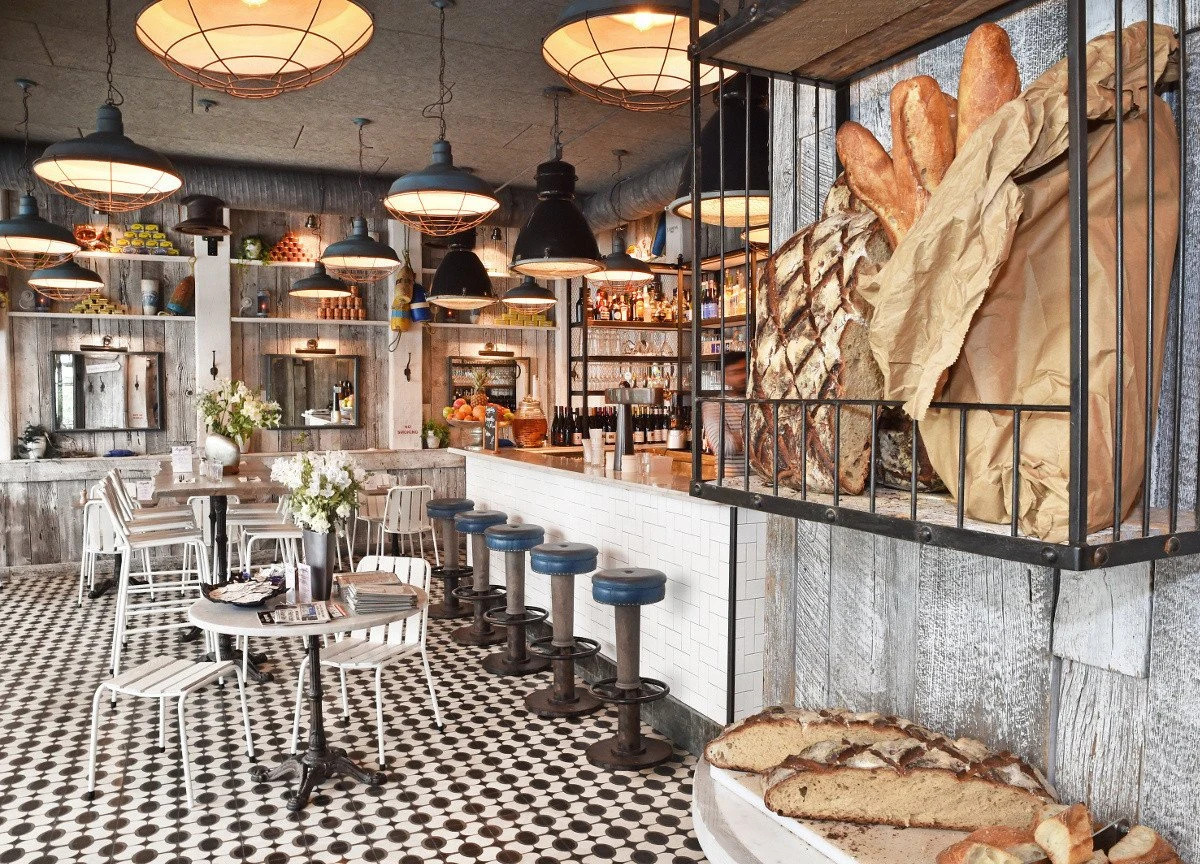
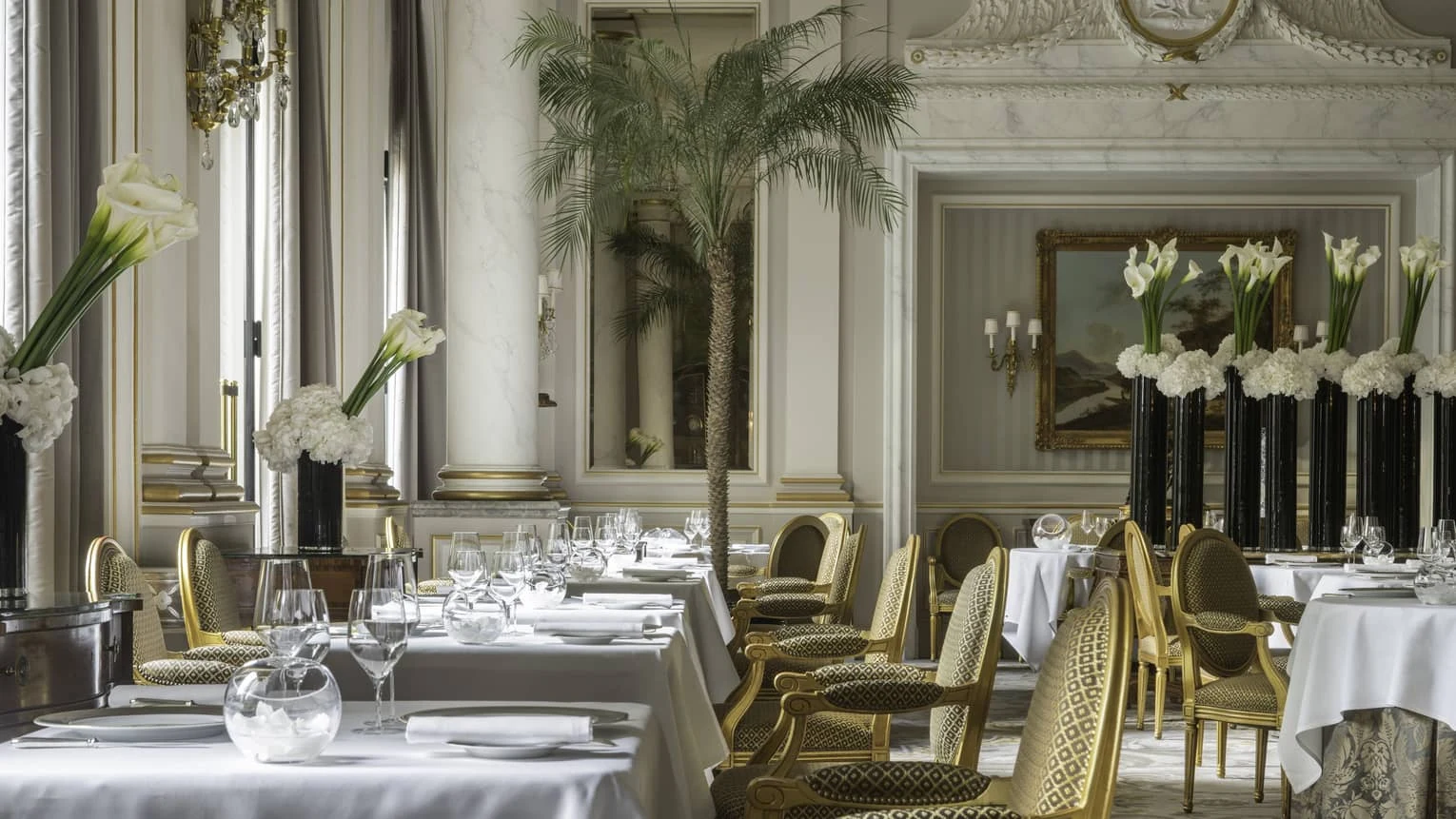
The 6th arrondissement's dining corridor along Rue de Seine and its surrounding streets has functioned, for decades, as a proving ground for a particular Parisian format: the room that takes itself seriously without announcing it loudly. This is not the territory of grand hotel dining rooms like Le Cinq at the Four Seasons Hôtel George V, with its gilded ceilings and brigade formality. Nor does it compete with the architectural spectacle of Alléno Paris au Pavillon Ledoyen, set inside a 19th-century pavilion in the 8th. What the Left Bank has historically offered instead is intimacy at street level: rooms that feel inhabited rather than staged, where the proportions of the space do more work than the décor budget.
Huguette is a French Seafood Bistro at 81 Rue de Seine, Paris, with a Google rating of 4.4 and an average spend of about $50 per person. Huguette, at 81 Rue de Seine, sits inside this tradition. The address alone positions it in a neighborhood where the pedestrian rhythm, gallery openings, the Marché Saint-Germain a short walk away, the foot traffic between the Seine and the Boulevard Saint-Germain, creates a specific kind of diner. These are people who have made considered choices, not tourists working off a list.
The Sunday letter
Find new places through the people who run them.
Our Sunday email brings you the chefs, winemakers and hoteliers behind our newest stories. See a sample before you subscribe.
See a sample of the Sunday emailOne email a week. Unsubscribe from any issue.
The Physical Container as Editorial Statement
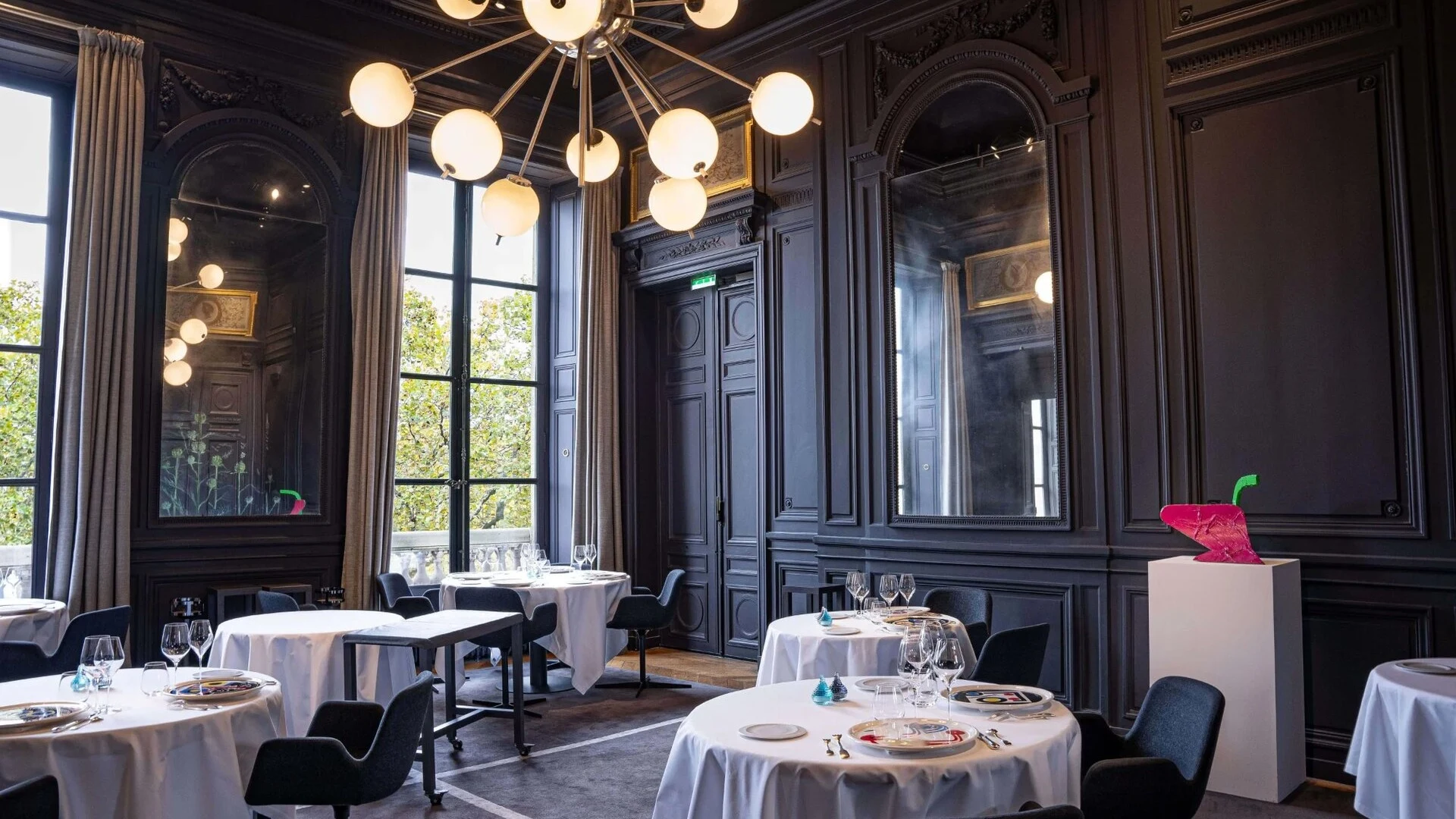
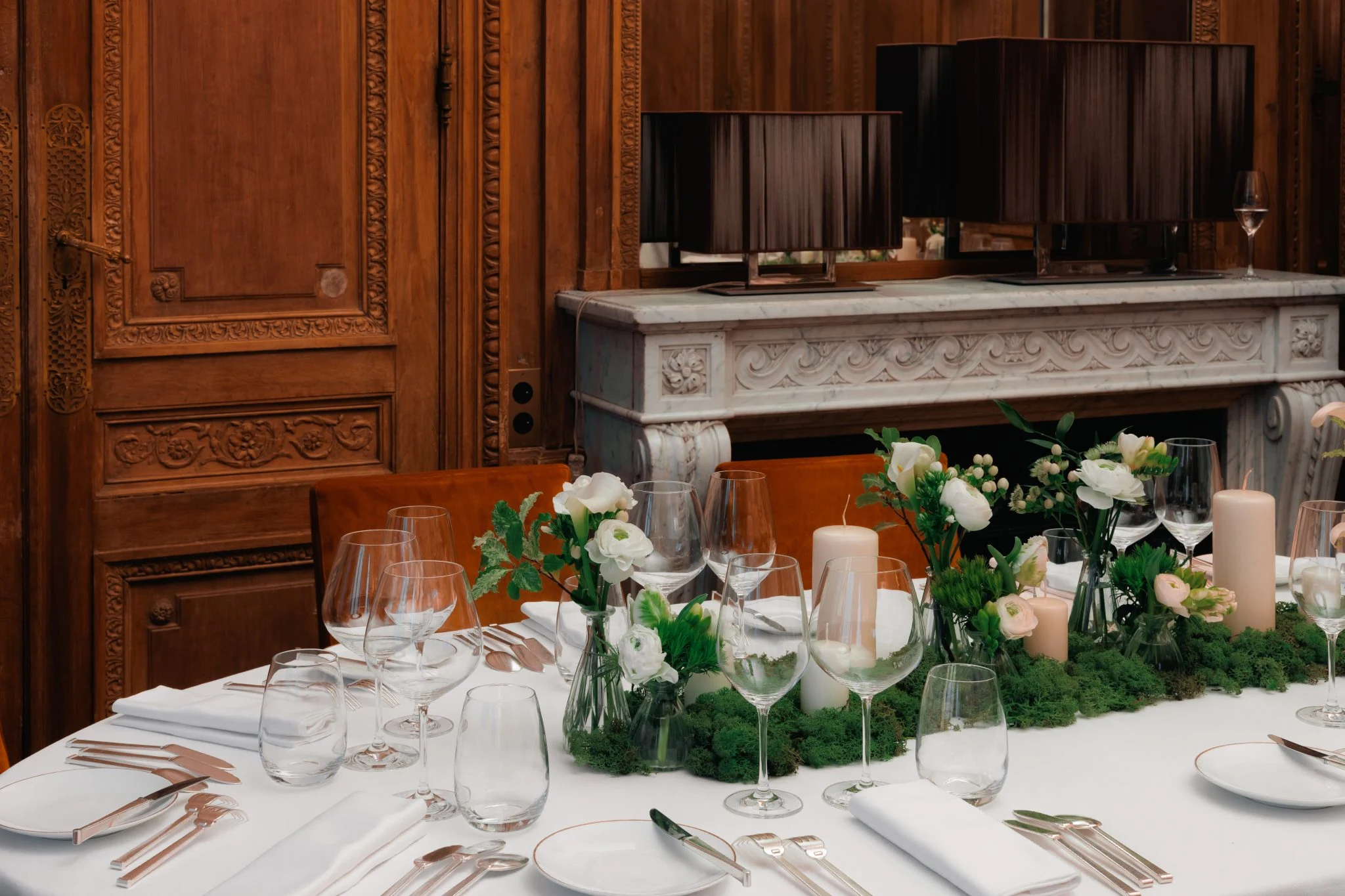
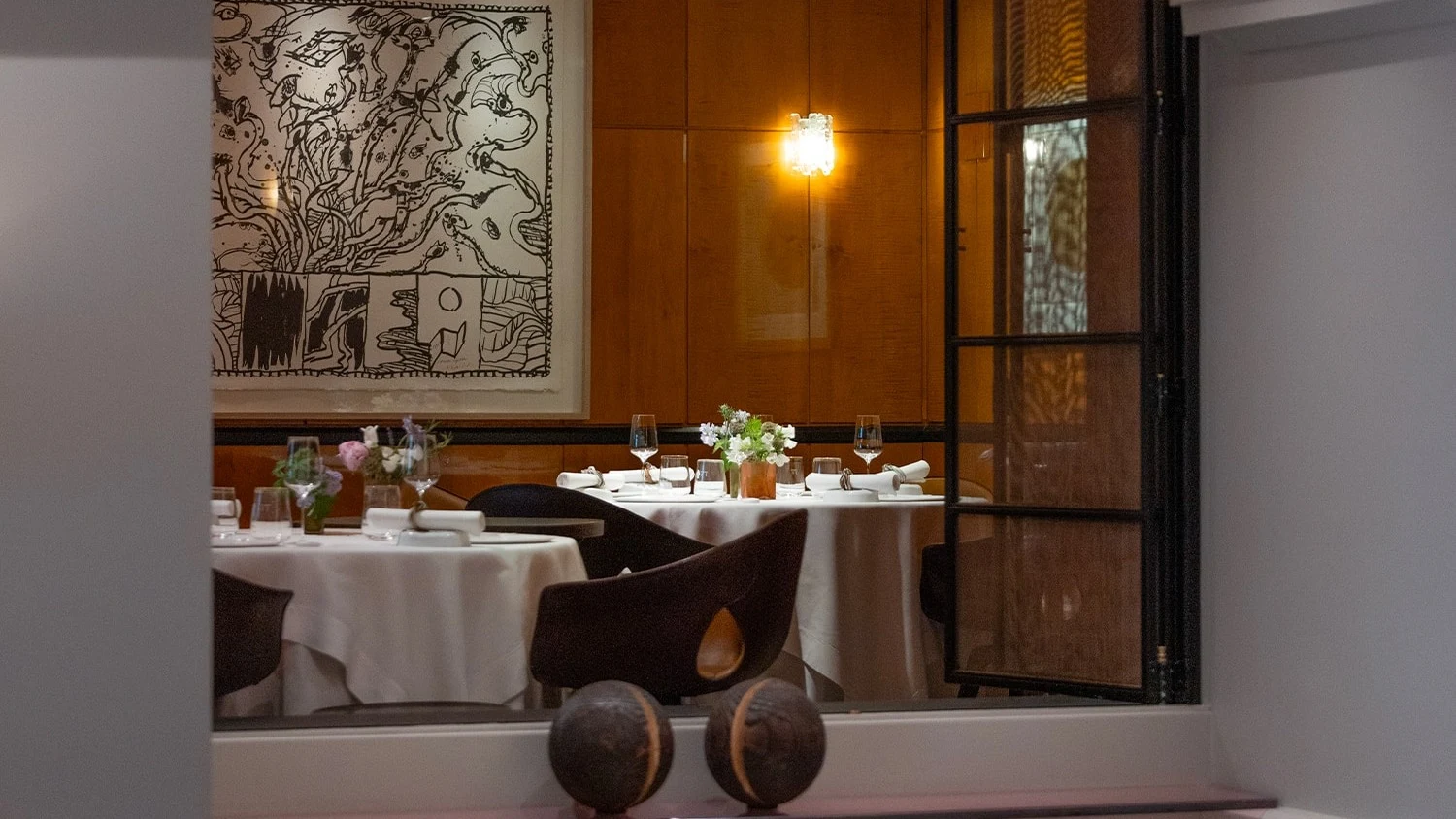
In Paris, the design of a dining room is rarely neutral. At the level of institution, rooms like L'Ambroisie on the Place des Vosges use 17th-century architecture to communicate permanence and weight. At the other end of the spectrum, newer entrants use minimal, spare interiors as a signal of culinary confidence, the message being that the food requires no decorative scaffolding. The middle register, which is where much of Saint-Germain operates, involves rooms that feel considered without feeling designed, where materials and proportions carry the editorial burden without asserting a visual concept.
This is the spatial tradition that Huguette inherits by geography and by address type. A rue-level space on Rue de Seine operates within a set of physical constraints, typically a narrow frontage, a depth that either opens or closes depending on layout decisions, light that shifts depending on the hour and the season, that force a certain economy of design thinking. The room cannot expand outward. It must work with what it has, and how it works with what it has becomes, in effect, the design argument.
For the diner, the consequence of this format is a different kind of attention. Rooms of this scale and street position tend to produce a specific social atmosphere: audible but not loud, populated enough to feel alive but not so dense that conversation requires effort. Paris's most enduring mid-register rooms have understood this for generations, and the design choices that sustain it, ceiling height, material warmth, the distribution of light sources, the interval between tables, are never accidental.
Where This Address Sits in the Paris Dining Hierarchy
The Paris restaurant hierarchy has sharpened considerably over the past decade. At the leading, multi-starred houses like Arpège and the Franco-Japanese crossover of Kei occupy a tier defined by tasting-menu commitment, long booking windows, and price points that require intention. Below that bracket, a far larger middle tier operates across the city's arrondissements, where the competitive logic is different: neighbourhood loyalty, lunch trade, the ability to absorb walk-in demand alongside bookings, and a format that doesn't require the diner to surrender the evening.
Rue de Seine falls into this middle tier, but within it, the 6th has historically attracted a slightly more demanding version of the neighbourhood diner, one with access to the restaurant density of Saint-Germain and the discernment that comes from using it regularly. This is not the 1st or the 8th, where expense-account and occasion dining set the bar. This is a neighbourhood that rewards consistency over spectacle, and where a room that works on a Tuesday in November carries more credibility than one that peaks on a Saturday in June.
For context on how France's serious mid-to-upper dining tier operates beyond the capital, the formats range from the rural institution model of Auberge de l'Ill in Illhaeusern and Bras in Laguiole, to alpine destination dining at Flocons de Sel in Megève, to the Mediterranean-inflected intensity of AM par Alexandre Mazzia in Marseille. Paris operates differently from all of these: the city's density means that reputation is built and lost in a much tighter competitive radius, and that neighbourhood address carries as much signal as any individual accolade.
The longer French tradition of landmark dining, from the multigenerational permanence of Paul Bocuse in Collonges-au-Mont-d'Or to the Champagne-country seriousness of Assiette Champenoise in Reims and the Alsatian institution Au Crocodile in Strasbourg, provides the cultural backdrop against which Paris's mid-register dining continually positions itself. The Left Bank's rooms, including this address on Rue de Seine, are operating in a city where that tradition is felt even when it isn't referenced directly.
For a fuller picture of how Paris's dining options distribute across arrondissements and price tiers, see our full Paris restaurants guide. For comparable international benchmarks, the rigorous seafood focus of Le Bernardin in New York and the precision-driven tasting format of Atomix illustrate how differently top-tier intent manifests when the address and cultural context change. Closer to home, the southwest French depth of Auberge du Vieux Puits in Fontjoncouse and the cross-channel ambition of Troisgros in Ouches and Mirazur in Menton confirm that the gap between Paris and the French regions has narrowed, which in turn raises the stakes for Left Bank addresses trying to hold attention.
Planning a Visit
Rue de Seine is accessible on foot from the Saint-Germain-des-Prés Métro station (line 4) in under ten minutes, or from Odéon (lines 4 and 10) in a similar walk. The street runs between the Seine embankment and the Boulevard Saint-Germain, making it a natural stopping point on a longer Left Bank afternoon. Huguette is recommended for reservations and open daily from 12 to 11 PM.
Questions
Frequently asked
How expensive is Huguette?
Huguette is listed at a price level of $$$.
Where is Huguette and what does it serve?
Huguette is in Saint-Germain-des-Prés, Paris, serving French Seafood Bistro.
The field
How it compares
| Place | Cuisine | Notes | Awards |
|---|---|---|---|
| Huguette | French Seafood Bistro | Saint-Germain-des-Prés, $$$ | · |
| Arpège | Vegetable-Focused French Fine Dining | Paris | Michelin 3 Stars, World's 50 Best |
| Epicure | Contemporary French Fine Dining | Paris | Michelin 3 Stars |
| Guy Savoy | Classic French Fine Dining | Paris | Michelin 2 Stars, World's 50 Best |
| Le Cinq | Modern French Fine Dining | Paris | Michelin 3 Stars, World's 50 Best |
| Le Taillevent | Classic and Modern French Fine Dining | Paris | Michelin 2 Stars, World's 50 Best |
| Pierre Gagnaire | Avant-Garde French Fine Dining | Paris | Michelin 3 Stars, World's 50 Best |
Similar places
Vegetable-Focused French Fine Dining
Arpège
Paris, France
★★★ · 50 Best
Contemporary French Fine Dining
Epicure
Paris, France
★★★
Classic French Fine Dining
Guy Savoy
Paris, France
★★ · 50 Best
Modern French Fine Dining
Le Cinq
Paris, France
★★★ · 50 Best
Classic and Modern French Fine Dining
Le Taillevent
Paris, France
★★ · 50 Best
Avant-Garde French Fine Dining
Pierre Gagnaire
Paris, France
★★★ · 50 Best
The Sunday letter
Get the next Made By story in your inbox.
We send one email every Sunday morning with the places and people we covered that week.
See a sample of the Sunday emailOne email a week. Unsubscribe from any issue.