Il Teatrino da Salone
- 01CuisineItalian-Japanese Fusion Kaiseki
- 02CityTokyo, Japan
- Opinionated About Dining Top Restaurants in Japan Recommended · 2026
- Tabelog 100 #69: 3.8pts · 2025
- Opinionated About Dining Top Restaurants in Japan Ranked #430 · 2025
- Opinionated About Dining Top Restaurants in Japan Ranked #374 · 2024
- Opinionated About Dining Top Restaurants in Japan Highly Recommended · 2023
Below Street Level in Aoyama: Where Tokyo's Italian Tradition Runs Deep
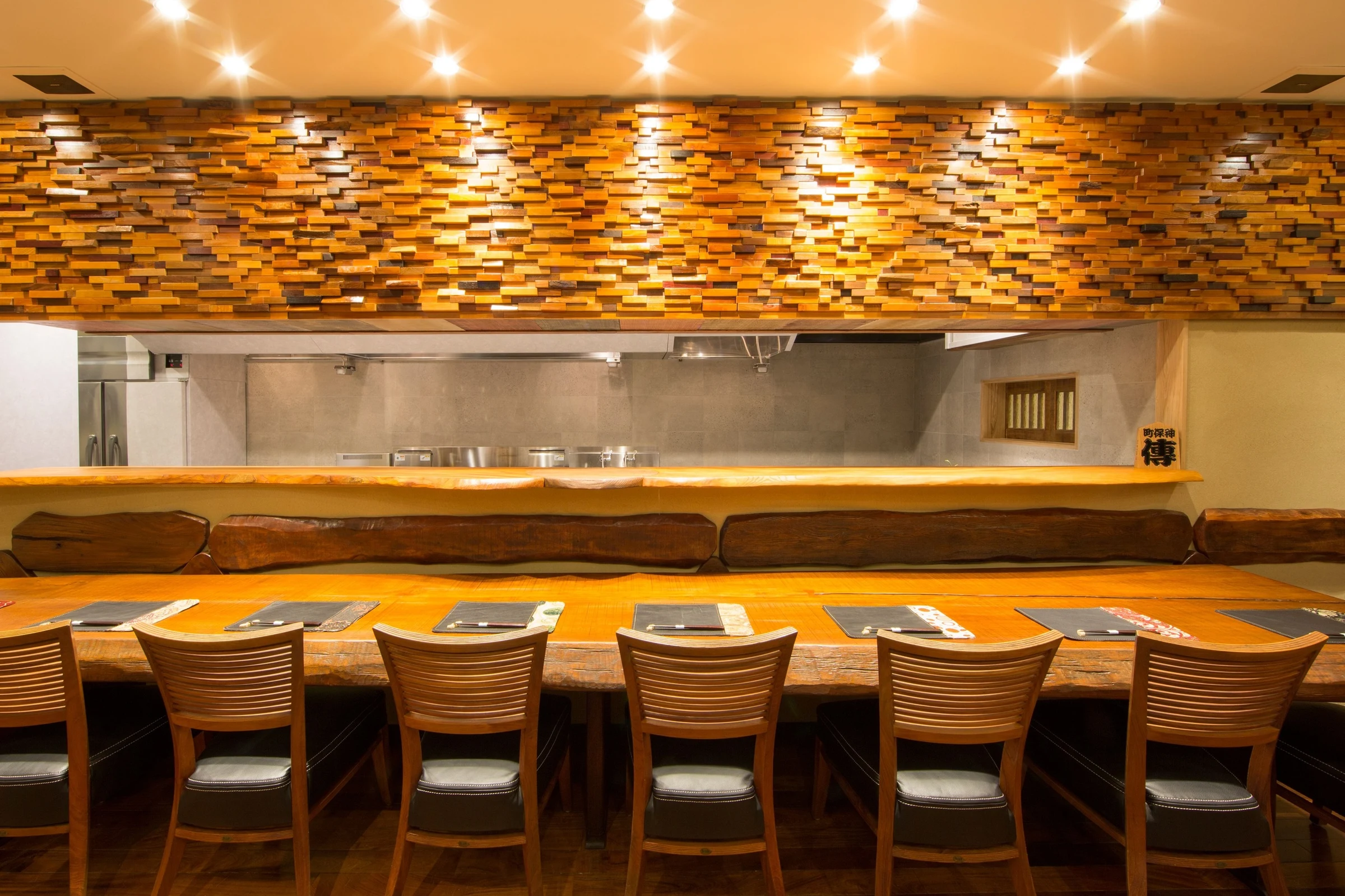
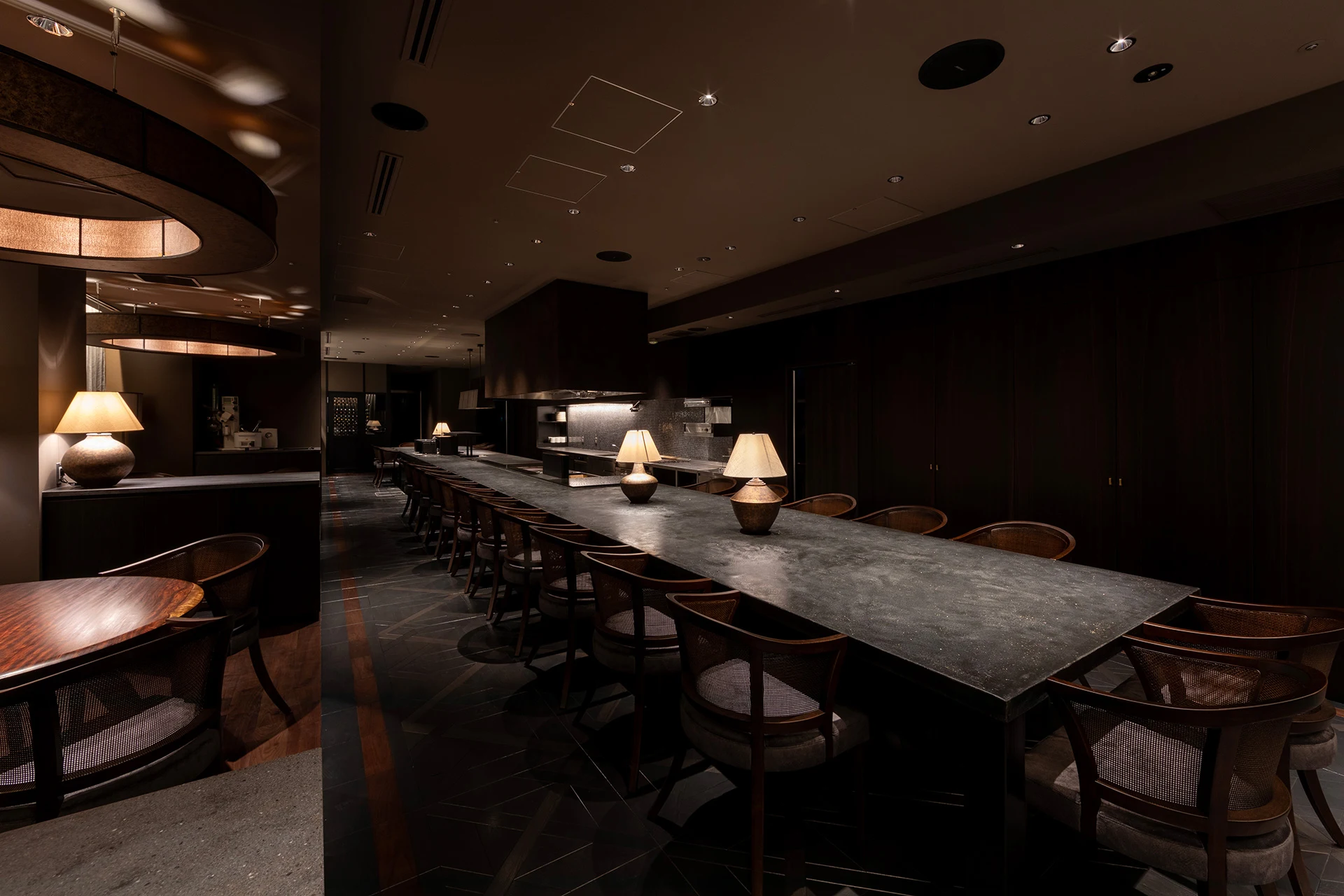
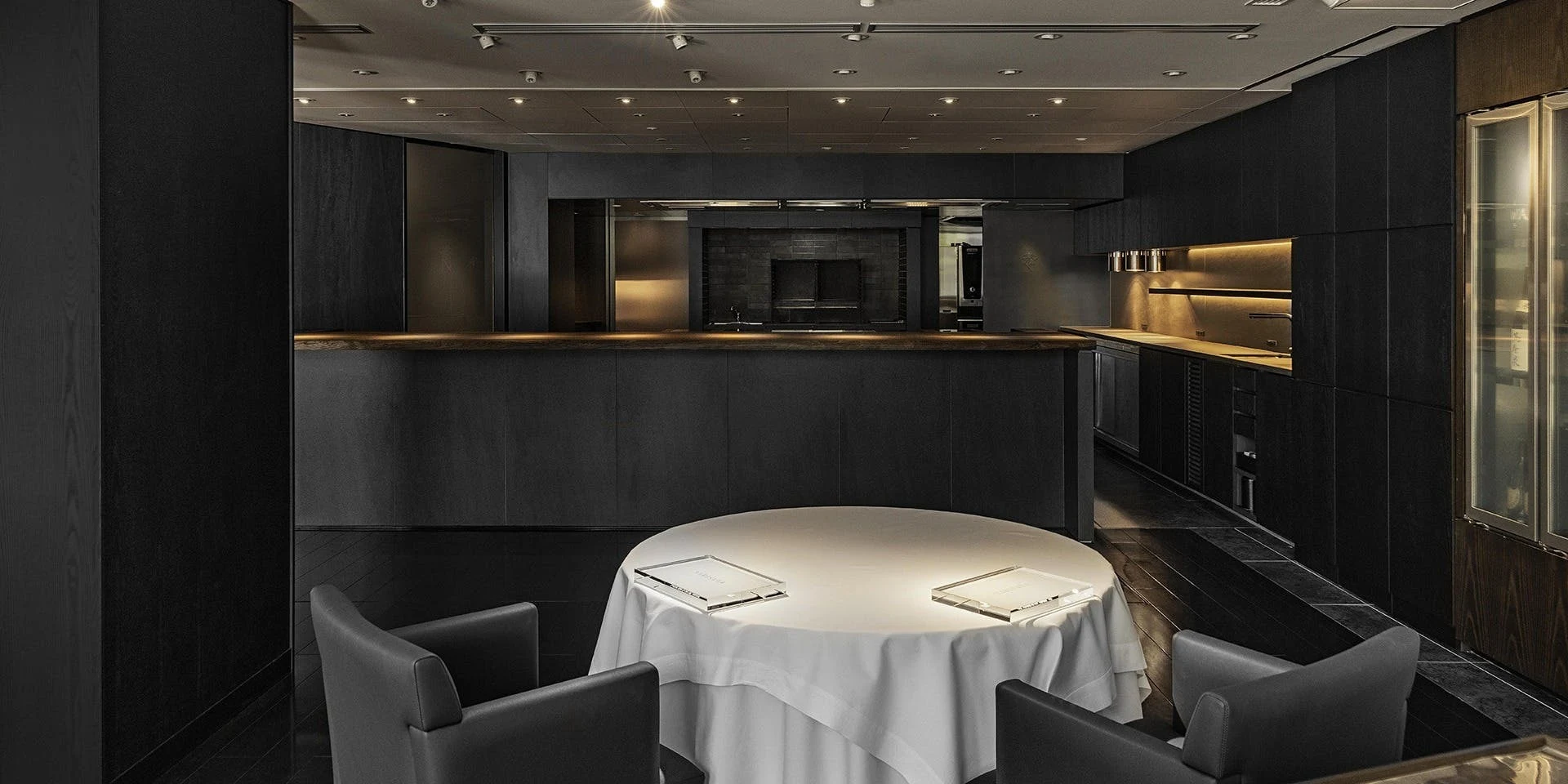
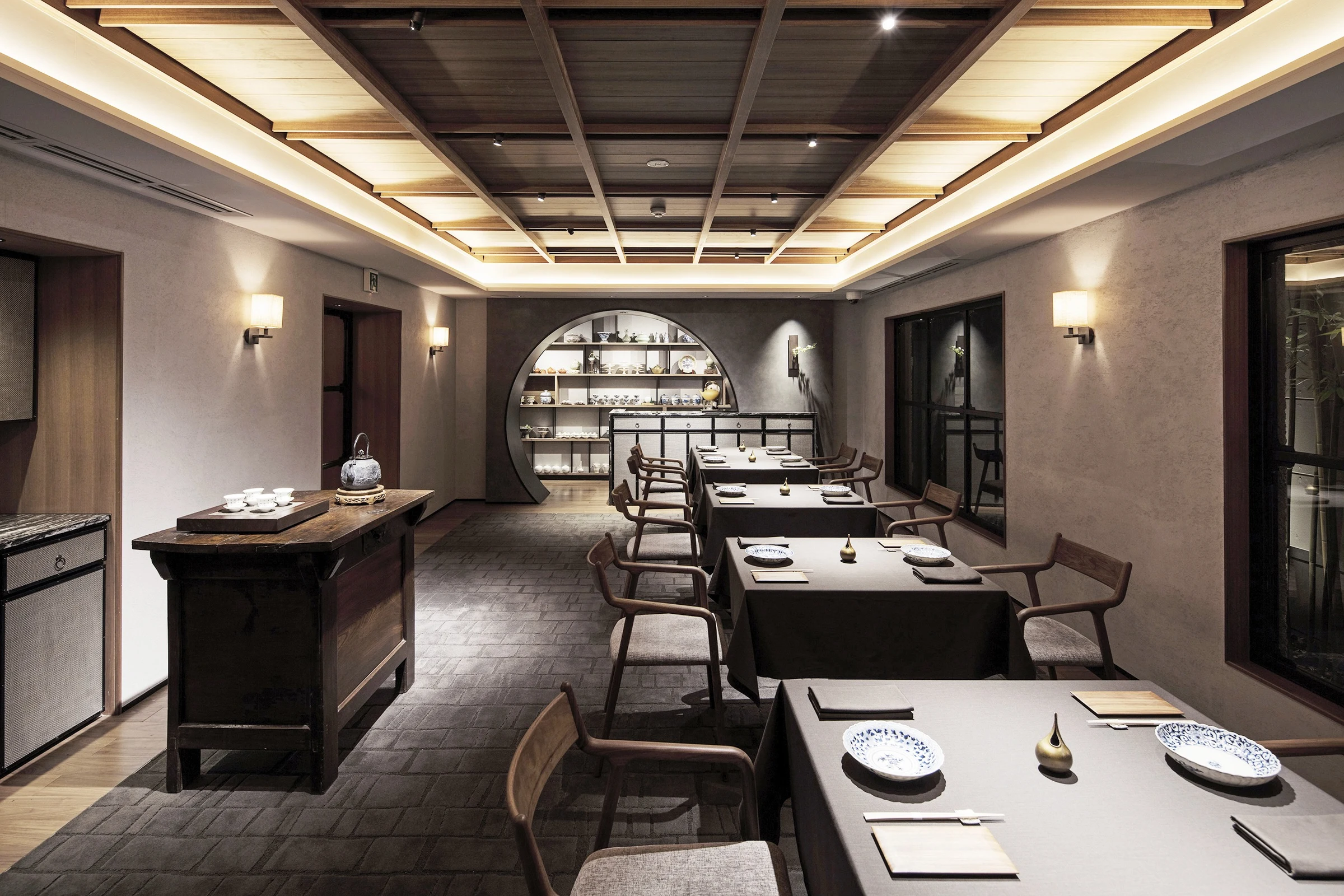
Basement restaurants in Tokyo carry a particular logic. Removed from foot traffic and signage competition, they tend to operate on reservation momentum rather than walk-ins, and their clientele skews toward people who already know what they are coming for. Il Teatrino da Salone sits below street level in Minami-Aoyama's HOUSE7115 building, a neighbourhood that has accumulated a quiet density of serious European dining over the past two decades. The approach, a staircase descent into a room that announces itself through sound and warmth before anything else, is a format Tokyo's Italian scene has used well. It signals commitment over spectacle.
Minami-Aoyama occupies the southern edge of the broader Aoyama district, where the retail energy of Omotesando gives way to smaller streets with architecture studios, independent galleries, and the kind of restaurants that do not need window displays. The Italian presence here is not accidental: the neighbourhood's relatively high concentration of design and fashion professionals has long supported European dining at a serious price point, and the proximity to the Omotesando transport hub makes it accessible without the tourist density of Roppongi or Ginza. For Italian specifically, this part of Tokyo has become one of the more reliable pockets in the city, see also Aroma Fresca and Principio for other expressions of the genre operating at comparable seriousness.
The Italian Kitchen as Inherited Form
Tokyo's relationship with Italian cuisine is now generational in a literal sense. The first wave of serious Italian restaurants arrived in the 1980s and early 1990s, staffed by Japanese chefs who trained in Italy and returned with technique, ingredient knowledge, and a reverence for regional specificity that would eventually outpace many of their European models. That transfer of knowledge did not stop with the first generation. Younger chefs trained under those returnees, learning Italian cooking as a received tradition rather than a foreign import, a cuisine absorbed through apprenticeship, repetition, and the kind of institutional memory that shapes how a sauce is finished or a pasta is sheeted.
Chef Takayuki Taira operates within this lineage. The cooking at Il Teatrino da Salone belongs to a strand of Tokyo Italian that treats the Italian kitchen as an inherited form to be respected and refined, not reinterpreted for novelty. This is not a restaurant making a conceptual point about Japan-meets-Italy fusion. It is a room where the grammar of Italian cooking, its rhythms of antipasto to primo to secondo, its attention to fat and acidity in balance, its seasonal ingredient logic, is executed with the precision that Tokyo kitchens apply to every cuisine they adopt. The result occupies a specific and now well-established niche: Italian cooking done in Japan with Japanese craft standards, by a generation that grew up inside the tradition rather than importing it fresh.
This generational depth is visible in the OAD trajectory. Opinionated About Dining's Japan rankings are a useful proxy for how the specialist dining community tracks quality over time, and the movement from Highly Recommended in 2023 to a numbered ranking of #374 in 2024 reflects a restaurant building recognition through consistency rather than a single moment of critical attention.
Positioning Within Tokyo's Italian Tier
Tokyo's premium Italian scene operates across several distinct competitive sets. At the leading, Michelin-starred addresses like Aroma Fresca and Gucci Osteria da Massimo Bottura Tokyo attract international visitors who cross-reference guide recognition. A mid-tier of OAD-tracked but non-starred restaurants operates on local reputation and word-of-mouth within Tokyo's food community.
The comparison is also useful with venues like AlCeppo and PRISMA, each of which represents a different angle on Tokyo's European dining proposition. What distinguishes the Aoyama Italian cluster is a focus on kitchen craft over concept, these are restaurants where the food is the argument, and the room exists to serve it.
For visitors using Italian dining as a lens for understanding Japanese culinary culture more broadly, the pairing with other serious non-Japanese kitchens in Tokyo is instructive. cenci in Kyoto applies comparable Italian-Japanese craft logic in a different city context, while 8½ Otto e Mezzo Bombana in Hong Kong shows how the same tradition plays across different Asian metropolitan dining cultures. The Tokyo version, at its stronger addresses, tends to be more restrained and technically precise than either.
Across Japan: The Wider Picture
Tokyo remains the gravitational centre of Japan's fine dining scene, but the country's depth extends well beyond it. For those building a Japan itinerary around table-first priorities, HAJIME in Osaka, Gion Sasaki in Kyoto, akordu in Nara, Goh in Fukuoka, 1000 in Yokohama, and 6 in Okinawa each offer serious cooking in distinct regional contexts.
Planning a Visit
Il Teatrino da Salone is located at 7 Chome-11-5 HOUSE7115 B1F, Minami-Aoyama, Minato City, Tokyo. Hours: Monday through Sunday, 12:00 pm to 3:00 pm and 6:00 pm to 10:00 pm. Reservations are essential. Transport: The Minami-Aoyama address is within walking distance of Omotesando Station on the Tokyo Metro Ginza, Chiyoda, and Hanzomon lines. Price: about $150 per person. Dress: smart casual.
FAQ
What's the signature dish at Il Teatrino da Salone?
No specific signature dishes are highlighted for Il Teatrino da Salone. The cuisine type is Italian, executed by chef Takayuki Taira within the tradition of Japan-trained Italian cooking. For current menu specifics, contacting the restaurant directly or checking a current reservation platform is the reliable path. The broader context, Tokyo Italian cooking at this tier, tends toward seasonal ingredient selection, hand-made pasta, and classical European structure rather than fusion or high-concept plating.
Questions
Frequently asked
How expensive is Il Teatrino da Salone?
Il Teatrino da Salone is listed at a price level of $$$$.
Where is Il Teatrino da Salone and what does it serve?
Il Teatrino da Salone is in Minato, Tokyo, serving Italian-Japanese Fusion Kaiseki.
The field
How it compares
| Place | Cuisine | Notes | Awards |
|---|---|---|---|
| Il Teatrino da Salone | Italian-Japanese Fusion Kaiseki | Minato, $$$$ | · |
| Den | Modern Japanese Kaiseki | Tokyo | Michelin 2 Stars, World's 50 Best |
| Florilège | Modern French-Japanese Plant-Based Fine Dining | Tokyo | Michelin 2 Stars, World's 50 Best |
| Narisawa | Modern Japanese Satoyama Fine Dining | Tokyo | Michelin 2 Stars, World's 50 Best |
| Quintessence | Modern French Fine Dining | Tokyo | Michelin 3 Stars |
| Sazenka | Modern Chinese Fine Dining | Tokyo | Michelin 3 Stars, World's 50 Best |
| Sézanne | Modern French Fine Dining | Tokyo | Michelin 3 Stars, World's 50 Best |
Similar places
Modern Japanese Kaiseki
Den
Tokyo, Japan
★★ · 50 Best
Modern French-Japanese Plant-Based Fine Dining
Florilège
Tokyo, Japan
★★ · 50 Best
Modern Japanese Satoyama Fine Dining
Narisawa
Tokyo, Japan
★★ · 50 Best
Modern French Fine Dining
Quintessence
Tokyo, Japan
★★★
Modern Chinese Fine Dining
Sazenka
Tokyo, Japan
★★★ · 50 Best
Modern French Fine Dining
Sézanne
Tokyo, Japan
★★★ · 50 Best