Jean Georges
In Residence
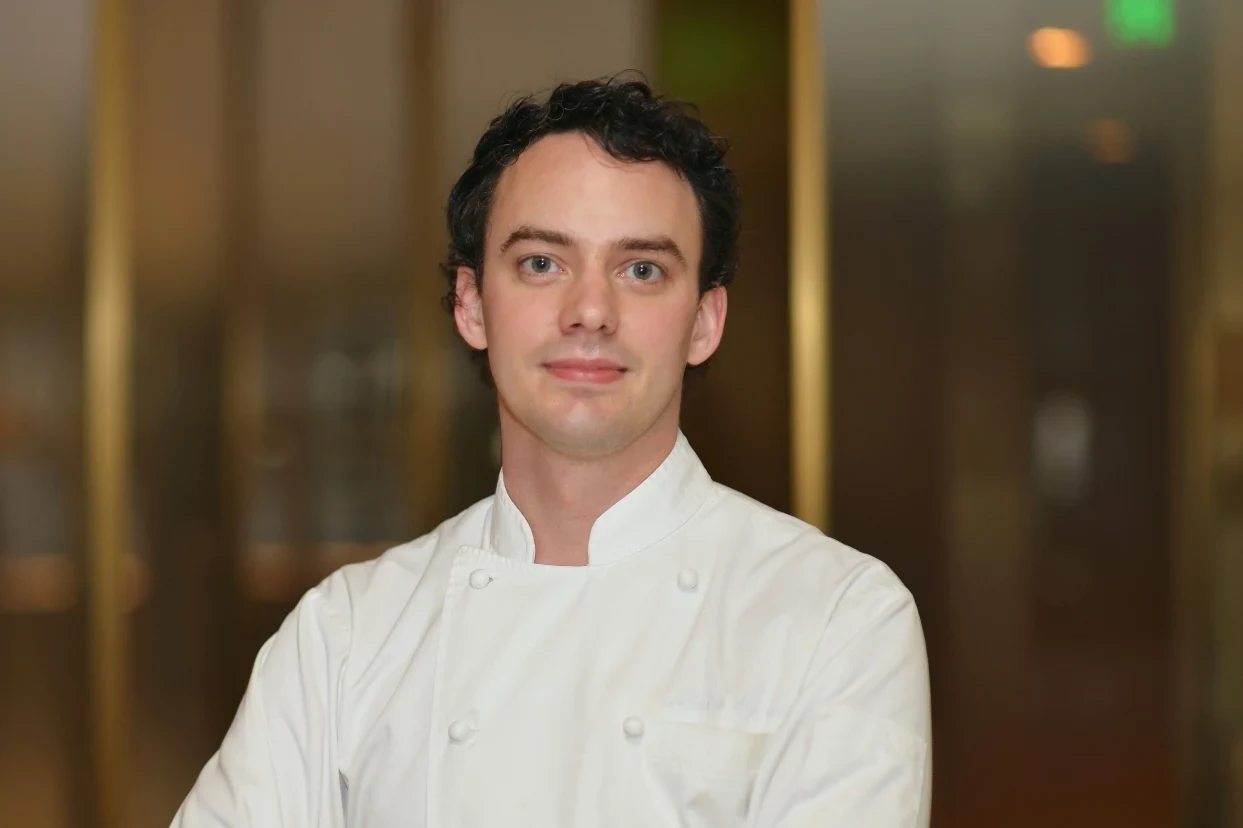
Nikolai Grigorov
Chef
- 01CuisineModern French with Asian Influences
- 02CityShanghai, China
- Black Pearl 1 Diamond · 2026
- Michelin Plate · 2026
- Opinionated About Dining Top Restaurants in Asia Recommended · 2026
- Black Pearl 1 Diamond · 2025
- Opinionated About Dining Top Restaurants in Asia Ranked #179 · 2025
- AAA 5 Diamond · 2025
- Forbes 5-Star · 2025
- Michelin Plate · 2025
- Opinionated About Dining Top Restaurants in North America Ranked #214 · 2025
- Opinionated About Dining Top Restaurants in Asia Ranked #169 · 2024
- Opinionated About Dining Top Restaurants in Asia Highly Recommended · 2023
The Bund Address That Shaped Shanghai's Fine-Dining Benchmark
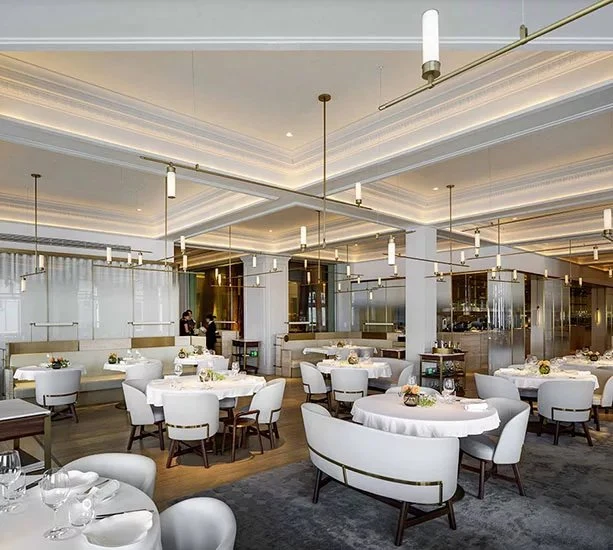
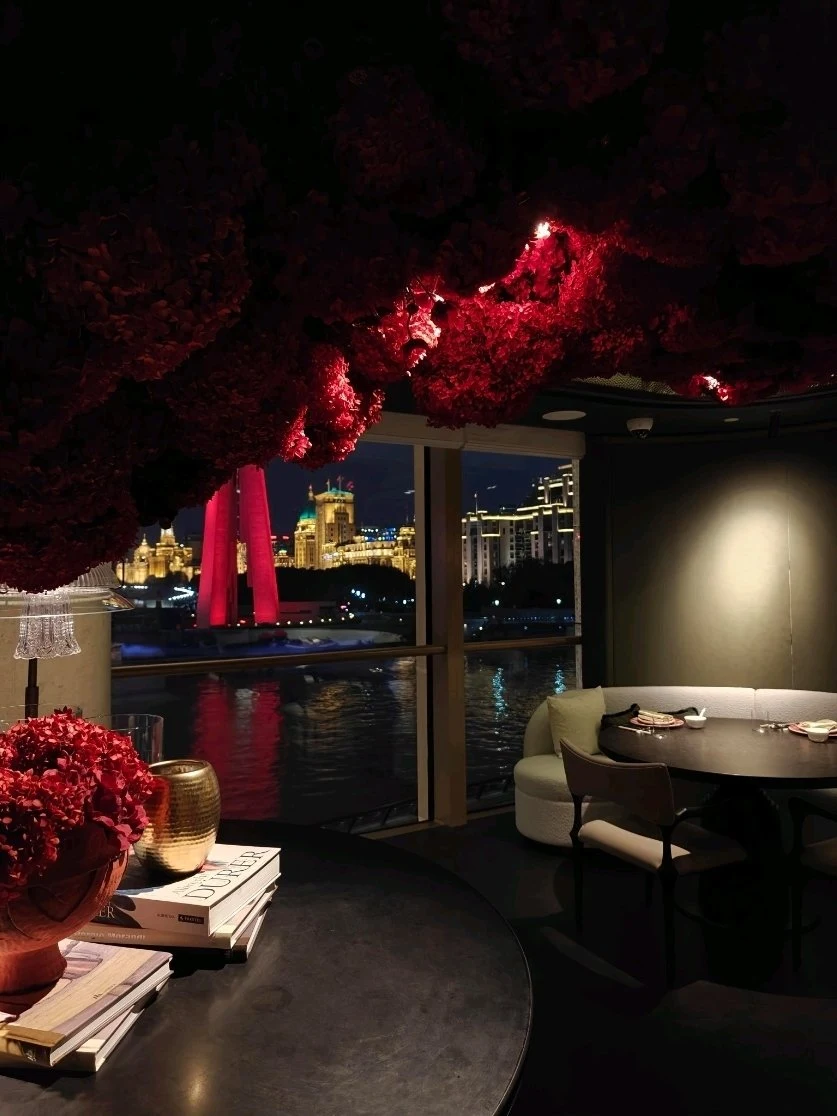
Arriving at Three on the Bund on a clear evening, the Huangpu River sits immediately to the east and the Pudong skyline fills the far bank. The building itself, a 1922 neoclassical structure, sets a particular register before you reach the fourth floor. Fine dining in Shanghai has been repositioning since the early 2000s, when a cluster of international names chose the Bund's historic façades as a staging ground for the city's ambitions as a global table. That experiment produced a stratum of French and European restaurants that now compete not just against each other but against a much sharper local fine-dining scene than existed when the era began. Jean Georges sits inside that stratum, and how it has held its ground across two decades says something substantive about what this end of the market actually rewards.
Two Decades of French Cooking on the Huangpu
The evolution of French cuisine in Shanghai tracks a recognisable arc. In its early phase, international prestige imports largely operated as transplants, applying a metropolitan formula to a new city. The second phase, which accelerated through the 2010s, saw local diners grow more fluent in the conventions of classical French cooking while simultaneously demanding more engagement with Chinese ingredients and regional produce. Restaurants that had simply replicated a Western original found themselves at a disadvantage. Those that adapted the underlying technique to local colour, without abandoning the rigour, consolidated their position.
The Sunday letter
Find new places through the people who run them.
Our Sunday email brings you the chefs, winemakers and hoteliers behind our newest stories. See a sample before you subscribe.
See a sample of the Sunday emailOne email a week. Unsubscribe from any issue.
Jean Georges has navigated this shift with a formula that Vongerichten established in New York and refined internationally: French structure applied with lighter touch, built on fresh juices and clean broths rather than the heavy cream reductions that defined an earlier generation of haute cuisine. That approach, which read as innovation in New York in the 1990s, translates naturally to Shanghai's preference for precise, ingredient-led cooking. The result is a kitchen that feels neither nostalgic nor forced. Executive direction under Chef Nikolai Grigorov has sustained that calibration at the Shanghai outpost.
For editorial context on how French fine dining has spread and evolved across Asia's major cities, the contrast is instructive: Sézanne, French in Tokyo operates in a different idiom, shaped by Tokyo's own precision culture, while Hotel de Ville Crissier, French in Crissier represents the European source tradition against which both Asian outposts can be measured.
Where It Sits in Shanghai's Current Fine-Dining Field
Shanghai's ¥¥¥¥ tier has expanded and diversified considerably. The city now supports serious Chinese fine dining, Fu He Hui's vegetarian tasting format, for example, alongside the European establishment. Within the French category specifically, Le Comptoir de Pierre Gagnaire and L'Atelier de Joël Robuchon (Shanghai) occupy the same prestige bracket with different service philosophies: Robuchon's counter format is considerably more casual in posture, while Gagnaire's operation leans into intellectual provocation. Jean Georges holds the centre ground, a formal dining room, jacket required, with a menu architecture that prizes clarity and seasonal produce over conceptual theatrics.
At a step down in price, Phénix and Coquille address diners who want French-inflected cooking without the full ¥¥¥¥ commitment. The distinction matters: Jean Georges is not competing for casual French evenings. It is competing for the occasions, corporate dinners, special events, international visitors with a specific frame of reference, where the full formal register carries meaning.
M on the Bund occupies a comparable Bund heritage address and offers useful contrast: M's approach to Mediterranean cooking has always been more relaxed in format, which places it in a different competitive conversation despite the geographic proximity.
Awards Trajectory and What the Data Signals
The award profile across 2023 to 2025 is instructive. The Opinionated About Dining rankings show Jean Georges at #214 globally in North America rankings and #179 in the Asia rankings for 2025, with a prior Asia ranking of #169 in 2024 and Highly Recommended status in 2023. The directional movement is notable: the restaurant has climbed consistently within the OAD Asia frame over the three-year window, has tracked favourably with the kitchen's current direction.
The 2025 Michelin Plate recognition sits alongside Black Pearl 1 Diamond and AAA 5 Diamond. The Black Pearl guide, which is China-specific and evaluates restaurants with a particular emphasis on ingredients and technique, places Jean Georges in a comparable set that includes serious Chinese and regional fine-dining operations, not just European transplants. Holding a Diamond in that context is a different credential than Michelin recognition alone.
Across Greater China and the wider region, restaurants at a comparable tier include Chef Tam's Seasons in Macau, Imperial Treasure Fine Chinese Cuisine in Guangzhou, Dai Yuet Heen in Nanjing, Xin Rong Ji (Xinyuan South Road) in Beijing, Xin Rong Ji in Chengdu, and Ru Yuan in Hangzhou. Taken together, that comparable set illustrates how much depth the regional fine-dining field has developed, Jean Georges competes against that full range of ambition, not just against other European names.
Planning a Visit
Jean Georges is located on the fourth floor of Three on the Bund, at No. 3 Zhong Shan Dong Yi Road. The dress code is formal. The menu is structured around modern French cooking with Asian influences. Reservations are essential. The ¥¥¥¥ price tier places it at about US$200 per person.
, our full Shanghai hotels guide, our full Shanghai bars guide, our full Shanghai wineries guide, and our full Shanghai experiences guide cover the city's full range at each price tier.
Questions
Frequently asked
Who works at Jean Georges?
Made By profiles Nikolai Grigorov (Chef) at Jean Georges.
How expensive is Jean Georges?
Jean Georges is listed at a price level of $$$$.
Where is Jean Georges and what does it serve?
Jean Georges is in Lan Ni Du, Shanghai, serving Modern French with Asian Influences.
The field
How it compares
| Place | Cuisine | Notes | Awards |
|---|---|---|---|
| Jean Georges | Modern French with Asian Influences | Lan Ni Du, $$$$ | · |
| 8 1/2 Otto e Mezzo Bombana (Shanghai) | Modern Italian Fine Dining | Shanghai | Michelin 2 Stars |
| Amazing Chinese Cuisine | High-end Chaoshan Cuisine | Shanghai | Michelin 2 Stars |
| Fu He Hui | Modern Seasonal Vegetarian Fine Dining | Shanghai | Michelin 2 Stars, World's 50 Best |
| Ling Long Shanghai | Modern Chinese Fine Dining | Shanghai | Michelin 1 Star, World's 50 Best |
| Meet the Bund | Modern Fujianese Fine Dining | Shanghai | Michelin 1 Star, World's 50 Best |
| Taian Table | Modern European with Asian Influences | Shanghai | Michelin 3 Stars |
In residence
Similar places
Modern Italian Fine Dining
8 1/2 Otto e Mezzo Bombana (Shanghai)
Shanghai, China
★★
High-end Chaoshan Cuisine
Amazing Chinese Cuisine
Shanghai, China
★★
Modern Seasonal Vegetarian Fine Dining
Fu He Hui
Shanghai, China
★★ · 50 Best
Modern Chinese Fine Dining
Ling Long Shanghai
Shanghai, China
★ · 50 Best
Modern Fujianese Fine Dining
Meet the Bund
Shanghai, China
★ · 50 Best
Modern European with Asian Influences
Taian Table
Shanghai, China
★★★
The Sunday letter
Get the next Made By story in your inbox.
We send one email every Sunday morning with the places and people we covered that week.
See a sample of the Sunday emailOne email a week. Unsubscribe from any issue.