Kategna
- 01CuisineAuthentic Ethiopian
- 02CityAddis Ababa, Ethiopia
Where Bole Meets the Injera Tradition
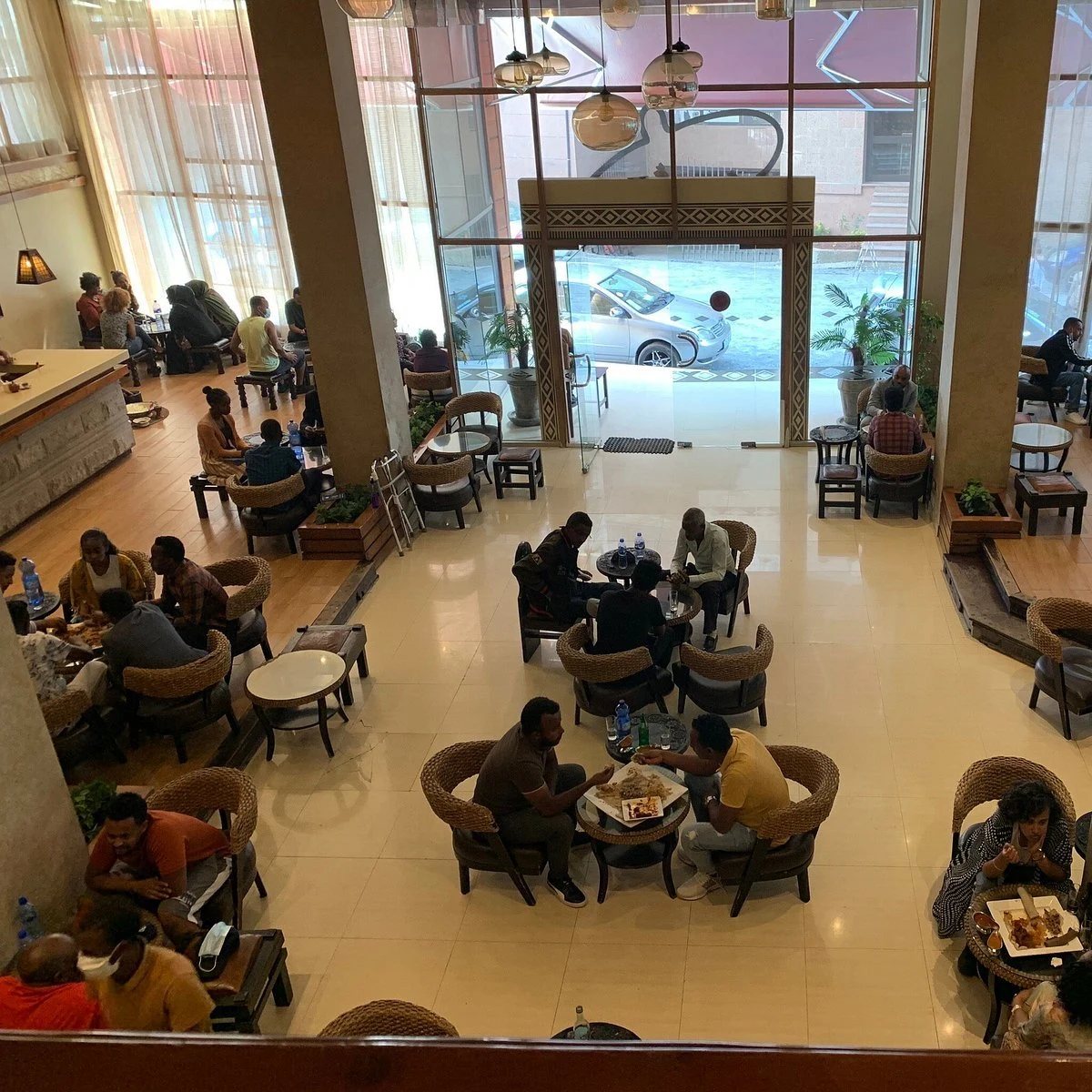
Approach the Bole Medhanialem area on any given evening and the neighbourhood reads as a layered cross-section of Addis Ababa's commercial energy: international hotels, local cafes, and a dense cluster of restaurants pulling from both Ethiopian tradition and the city's growing cosmopolitan appetite. Kategna sits within this orbit, positioned behind Bole Medhanialem church and adjacent to the Swiss Cafe and Parisienne, a location that places it firmly in a well-trafficked pocket of the district rather than on a quieter residential street. That proximity to foot traffic and landmark anchors is deliberate in a city where navigation still runs more on landmark than on street address.
The setting is characteristic of the mid-tier Ethiopian restaurant format that Addis has refined over the past two decades: communal enough to accommodate groups sharing a wide mesob, attentive enough to draw repeat custom from the city's professional and expatriate communities. Kategna occupies that middle register, where the draw is the cooking itself and the ritual of sharing rather than any designed-for-Instagram staging.
The Logic of Ethiopian Sourcing
To understand what Kategna represents in Addis Ababa's dining scene, it helps to start with the ingredient infrastructure that underpins Ethiopian cuisine at this level. Teff, the ancient grain from which injera is fermented and baked, is sourced from highland growing regions, principally in the areas around Mojo, Holeta, and the Amhara plateau, where the altitude and rainfall produce the grain quality that separates a properly sour, aerated injera from the flatter versions found outside the country. This is not a trivial distinction: the fermentation window for teff batter runs between two and three days in Ethiopian kitchen tradition, and the flavour that results, lightly acidic with a spongy texture that holds stews without collapsing, is what anchors the entire format of Ethiopian communal eating.
Berbere, the spice blend that drives the flavour architecture of most Ethiopian meat and vegetable dishes, similarly draws on a sourcing chain that runs through local spice markets, with chilli, fenugreek, korarima (Ethiopian cardamom), and black cumin forming the base. In Addis, kitchens that grind their own berbere from whole spices, rather than using pre-mixed commercial blends, produce a noticeably different result: more aromatic, with more variability between batches. This category of sourcing decision, whether to go to the merkato for whole spices or to buy processed, separates the reference-point Ethiopian restaurants from the convenience-led ones.
Niter kibbeh, the spiced clarified butter that forms the cooking medium for much of the cuisine and contributes a distinctive richness to tibs and key wot, is another ingredient where sourcing and preparation method determine the final flavour. The most respected Ethiopian kitchens in Addis prepare their own niter kibbeh, infused with onion, garlic, ginger, and spices during the clarification process. It is one of those background ingredients that a diner may not consciously identify but would immediately notice by its absence.
Kategna in Its Competitive Set
Addis Ababa's Ethiopian restaurant circuit has a clear structure for the visitor arriving with limited time. At the performance end, Yod Abyssinia combines traditional cooking with cultural dance programmes, positioning itself for groups and first-time visitors who want context alongside the food. 2000 Cultural Ethiopian Restaurant occupies a similar space, with an emphasis on cultural programming alongside the menu. Kategna operates differently: the focus is the food, and the crowd on most evenings is local rather than predominantly tourist-facing, which is itself a signal about where the kitchen's priorities sit.
For visitors who have already done the cultural show format or who are returning to Addis with more specific culinary intent, Kategna represents the kind of meal where the sourcing and preparation are the point rather than the backdrop. That positions it alongside the conversation happening across the city's more everyday but serious kitchens, and it rewards a second or third visit more than a single occasion. The Bole location also makes it logistically accessible for travellers based in the district, the neighbourhood that holds the international airport's approach corridor and a concentration of the city's mid-to-upper-range accommodation.
For reference points further afield in Ethiopia, Four Sisters Restaurant in Gondar and Tasty Cafe in Harar show how regional variations in spice profiles and injera grain ratios diverge significantly from the Addis standard, making Kategna a useful benchmark before exploring the country's culinary geography more broadly. The contrast with international fine dining anchors like Le Bernardin in New York City or Amber in Hong Kong is instructive in a different sense: ingredient sourcing rigour is not exclusive to the haute cuisine tier, and Ethiopian kitchens at Kategna's level often bring a supply-chain intentionality that premium Western restaurants formalise into marketing language but that here simply constitutes how good cooking gets done.
Within Addis, the broader dining picture also includes The Kitchen and The Oriental for visitors who want to map the city's non-Ethiopian options alongside the traditional circuit.
Planning Your Visit
Kategna is located behind Bole Medhanialem church, adjacent to the Swiss Cafe and Parisienne, making it identifiable by landmark rather than numbered address, which is standard practice for navigation in this part of the city. The most reliable approach is to visit directly. The restaurant draws a consistent local crowd, and evening sittings during the week tend to be busy; arriving before the main dinner window, typically before 7:30pm local time, gives the best chance of a quieter table for a group wanting to take time over a full spread.
Questions
Frequently asked
How expensive is Kategna?
Kategna is listed at a price level of $$.
Where is Kategna and what does it serve?
Kategna is in Bole, Addis Ababa, serving Authentic Ethiopian.
The field
How it compares
| Place | Cuisine | Notes | Awards |
|---|---|---|---|
| Kategna | Authentic Ethiopian | Bole, $$ | · |
| Arca | Modern Yucatan Fire-Cooked Small Plates | Tulum | World's 50 Best |
| Atomix | Modern Korean Tasting Menu | New York City | Michelin 2 Stars, World's 50 Best |
| Martin Berasategui | Modern Basque Fine Dining | Lasarte - Oria | Michelin 3 Stars, World's 50 Best |
| Quintessence | Modern French Fine Dining | Tokyo | Michelin 3 Stars |
| Restaurant Tim Raue | Asian-German Fine Dining | Berlin | Michelin 2 Stars, World's 50 Best |
| Woven by Adam Smith | Modern British Fine Dining | Ascot | Michelin 1 Star |
Similar places
Modern Yucatan Fire-Cooked Small Plates
Arca
Tulum, Mexico
50 Best
Modern Korean Tasting Menu
Atomix
New York City, United States
★★ · 50 Best
Modern Basque Fine Dining
Martin Berasategui
Lasarte - Oria, Spain
★★★ · 50 Best
Modern French Fine Dining
Quintessence
Tokyo, Japan
★★★
Asian-German Fine Dining
Restaurant Tim Raue
Berlin, Germany
★★ · 50 Best
Modern British Fine Dining
Woven by Adam Smith
Ascot, United Kingdom
★