Kathakali, An Indian Eatery

In Residence
Ajay Panicker
Chef
- 01CuisineKerala Indian
- 02CityKirkland, United States
- 03RecognitionJames Beard Award
- James Beard Winner · James Beard Foundation
- James Beard Award Semi Finalist · 2025
Indian Regional Cooking on Kirkland's Quieter Side
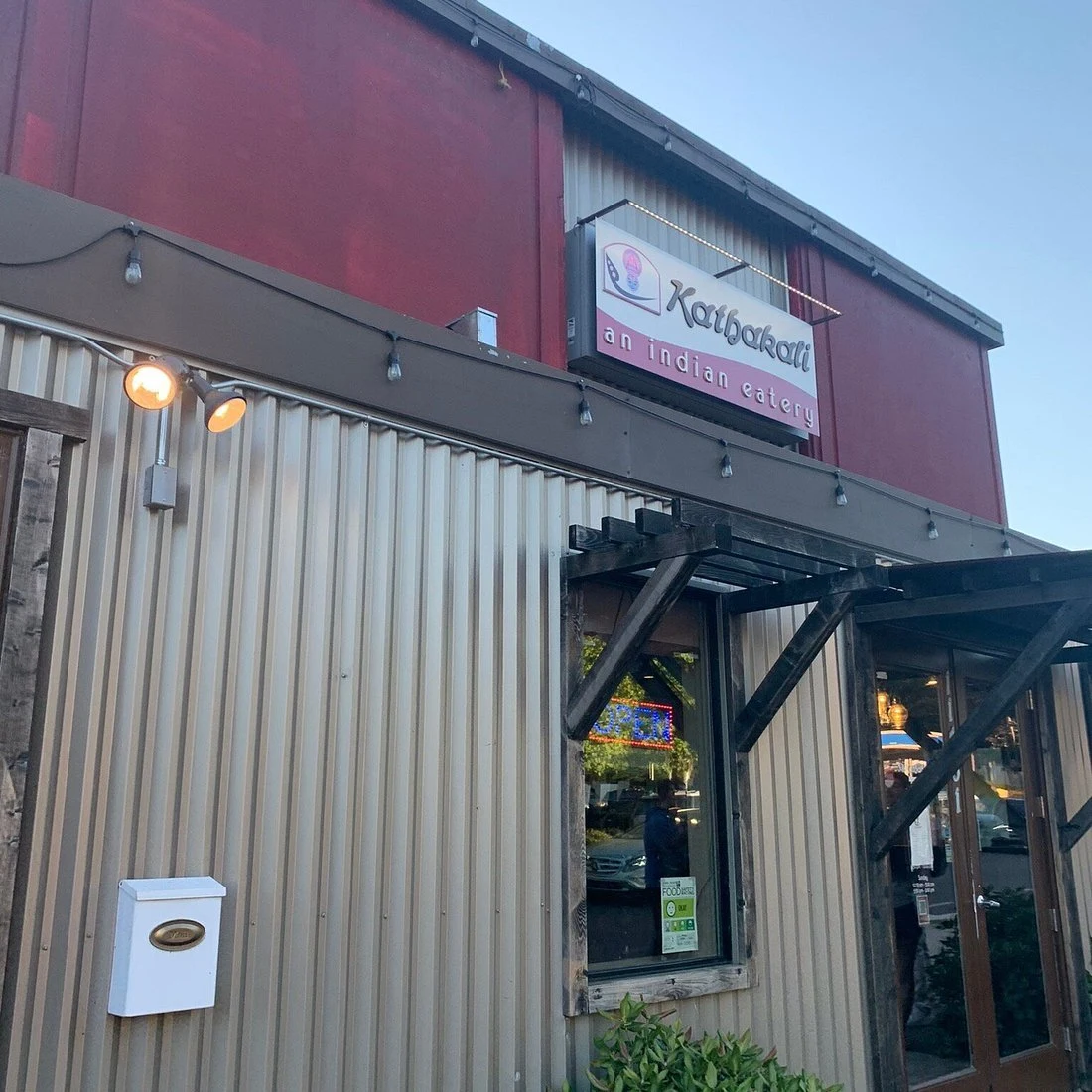
Kirkland's dining identity has consolidated around the waterfront and its immediate surrounds, where spots like Bottle & Bull and COMO draw consistent traffic from the tech-adjacent residential population. But the city's grid extends well beyond that corridor, and 98th Ave NE sits in a quieter pocket. Kathakali, An Indian Eatery operates from that address, 11451 98th Ave NE, and the location itself tells you something about how the kitchen has positioned itself: this is not a place built around passing trade.
In American suburban dining, Indian restaurants have historically occupied a compromised middle ground: menus engineered to read as accessible, spice levels managed downward for a broad audience, and sourcing treated as an afterthought. The more interesting shift in recent years has been a move toward regional specificity, kitchens that make a point of distinguishing Chettinad from Punjabi, Kerala from Hyderabad, and that treat the spice pantry as a sourcing question rather than a standardization exercise. Where a venue sits on that spectrum matters more than its zip code.
The Sunday letter
Find new places through the people who run them.
Our Sunday email brings you the chefs, winemakers and hoteliers behind our newest stories. See a sample before you subscribe.
See a sample of the Sunday emailOne email a week. Unsubscribe from any issue.
The Ingredient Argument in Indian Cooking
Indian cuisine is, at its structural core, a sourcing-dependent tradition. The quality of a dal hinges on the specific lentil variety and how recently it was milled. A proper biryani depends on long-grain basmati with enough age to cook dry and separate rather than clumping into a starchy mass. Mustard oil from Bengal behaves differently from refined vegetable oil, and the difference is not subtle, it carries a pungency that shapes the entire dish. Curry leaves lose most of their volatile oils within a day or two of picking, which is why fresh versus dried represents a genuine flavor distinction rather than a pedantic one.
These are not abstract concerns. They are the material difference between Indian cooking that tastes like something and Indian cooking that tastes like a memory of something. The Eastside of Seattle has enough of a South Asian diaspora population that kitchens sourcing properly have a genuine market, a customer base with calibrated expectations and the ability to recognize when the pantry is doing the work. That demographic pressure is one of the more reliable quality signals in suburban Indian dining.
For context, ingredient-led cooking at the highest tier of American dining, venues like Blue Hill at Stone Barns in Tarrytown or Single Thread Farm in Healdsburg, has normalized the idea that sourcing specificity is a primary editorial point, not a secondary marketing claim. That principle applies just as legitimately to a mustard-seed tempering as to a heritage-breed pork chop.
Kirkland's Eastside Context
The broader Kirkland dining scene has broadened its range over the past several years, with enough variety that a knowledgeable diner can build a genuinely varied week without crossing the 520. Cafe Veloce handles Italian, El Encanto covers Mexican, and Cedar + Elm sits in the contemporary American space. What the scene has lacked, historically, is depth in South and Southeast Asian cooking at a level that goes beyond the reliable-but-predictable neighborhood standard. A venue that applies genuine ingredient discipline to Indian regional cooking occupies a less crowded tier on the Eastside.
That scarcity is partly structural. Kirkland's residential character, high household incomes, relatively low density compared to Seattle proper, creates a market that can support quality but doesn't always generate the competitive pressure that forces kitchens to push their sourcing. The neighborhoods closer to Bellevue and Redmond absorb more of the South Asian population that tends to anchor high-standard Indian restaurants. Kathakali's 98th Ave NE address puts it at the outer edge of that catchment, which makes its presence there a deliberate positioning choice rather than an accident of available real estate.
What the Format Implies
The name Kathakali references a classical Indian dance-drama form from Kerala, one of the most visually elaborate performance traditions in South Asian culture. The use of that reference as a restaurant name tends to signal an intention to move beyond the generic: Kerala is a specific regional identity, and invoking it at the front door is a soft declaration of culinary intent. Whether the kitchen delivers on that implication requires a visit rather than a database record, but the framing matters, it distinguishes the venture from restaurants that trade on generic subcontinental imagery.
American diners comparing Indian restaurants at this tier are making decisions that sit somewhere between the hyper-regional tasting menus of places like Atomix in New York City and the accessible neighborhood standard. Kathakali positions itself in a middle register that prioritizes culinary identity over either extreme. That is the tier where sourcing discipline and menu specificity do the most work, where the kitchen's ingredient decisions are legible to a curious diner without requiring specialist knowledge to appreciate.
Planning Your Visit
Kathakali, An Indian Eatery is located at 11451 98th Ave NE, Kirkland, WA 98033. The address sits in a lower-traffic residential corridor, so arriving by car is the practical default for most diners coming from central Kirkland or the broader Eastside. Hours and booking availability should be checked directly. Walk-in availability can vary by day.
Questions
Frequently asked
What recognition does Kathakali, An Indian Eatery hold?
Kathakali, An Indian Eatery holds a James Beard award.
Who works at Kathakali, An Indian Eatery?
Made By profiles Ajay Panicker (Chef) at Kathakali, An Indian Eatery.
How expensive is Kathakali, An Indian Eatery?
Kathakali, An Indian Eatery is listed at a price level of $$.
Where is Kathakali, An Indian Eatery and what does it serve?
Kathakali, An Indian Eatery is in Juanita, Kirkland, serving Kerala Indian.
The field
How it compares
| Place | Awards | Cuisine | Notes |
|---|---|---|---|
| Kathakali, An Indian Eatery | James Beard | Kerala Indian | Juanita, $$ |
| Azurmendi | Michelin 3 Stars, World's 50 Best | Modern Basque Fine Dining | Larrabetzu |
| Disfrutar | Michelin 3 Stars, World's 50 Best | Avant-Garde Catalan Fine Dining | Barcelona |
| Gabriel Kreuther | Michelin 2 Stars | Modern Alsatian-French Fine Dining | New York City |
| Reale | Michelin 3 Stars, World's 50 Best | Modern Italian Fine Dining | Castel di Sangro |
| Steirereck im Stadtpark | Michelin 3 Stars, World's 50 Best | Modern Austrian Fine Dining | Vienna |
| The Inn at Little Washington | Michelin 3 Stars | Contemporary American Fine Dining with French Influence | Washington |
In residence
Similar places
Modern Basque Fine Dining
Azurmendi
Larrabetzu, Spain
★★★ · 50 Best
Avant-Garde Catalan Fine Dining
Disfrutar
Barcelona, Spain
★★★ · 50 Best
Modern Alsatian-French Fine Dining
Gabriel Kreuther
New York City, United States
★★
Modern Italian Fine Dining
Reale
Castel di Sangro, Italy
★★★ · 50 Best
Modern Austrian Fine Dining
Steirereck im Stadtpark
Vienna, Austria
★★★ · 50 Best
Contemporary American Fine Dining with French Influence
The Inn at Little Washington
Washington, United States
★★★
The Sunday letter
Get the next Made By story in your inbox.
We send one email every Sunday morning with the places and people we covered that week.
See a sample of the Sunday emailOne email a week. Unsubscribe from any issue.