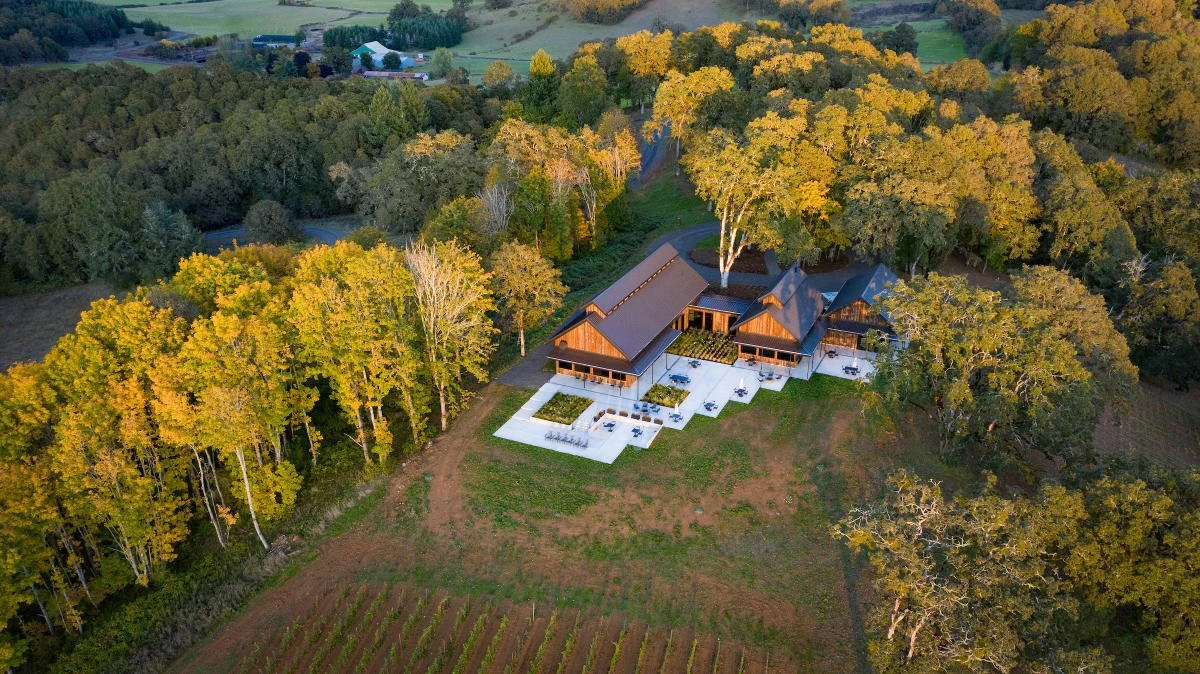
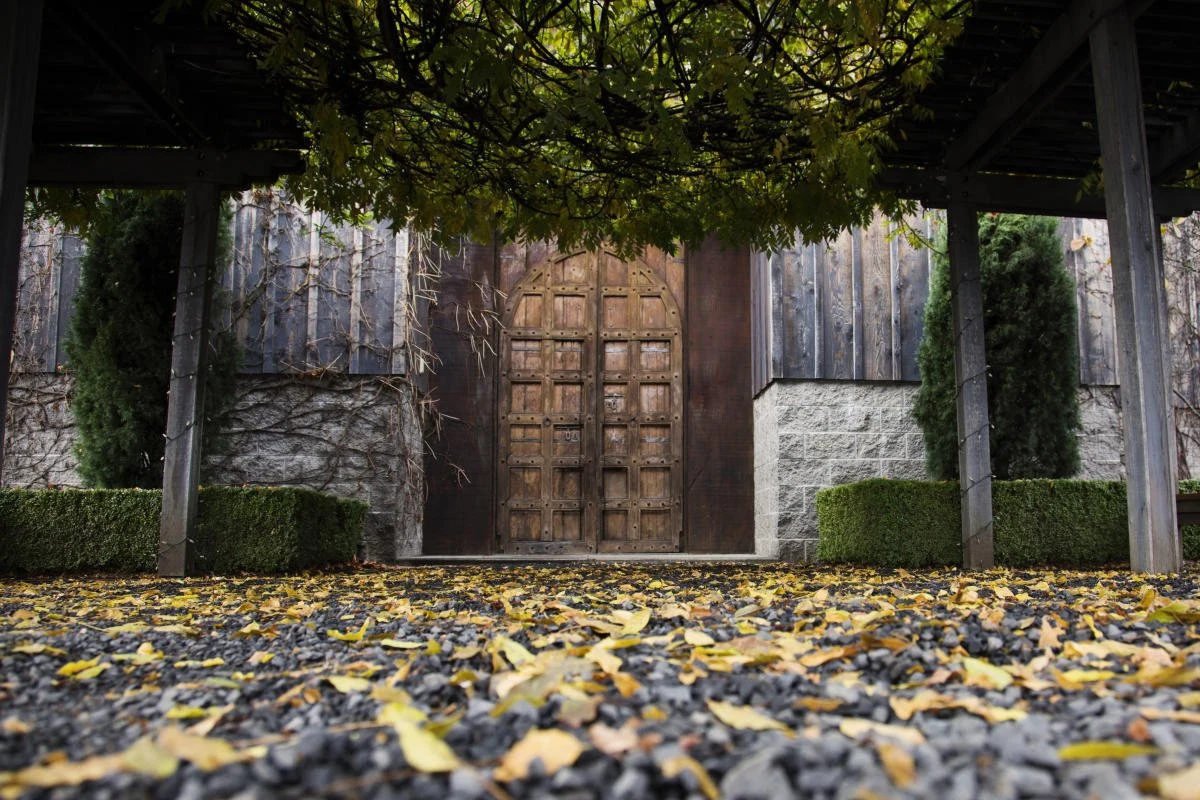
Ken Wright Cellars operates from Carlton's compact downtown at 120 N Pine St, holding a Pearl 2 Star Prestige rating from EP Club (2025). The winery sits at the quieter, more producer-focused end of the Willamette Valley tasting room circuit, where single-vineyard Pinot Noir transparency has become a calling card for the house and a reference point for the broader Carlton wine scene.
<h2>Carlton and the Case for Vineyard Transparency</h2><p>Carlton, Oregon occupies an interesting position within the Willamette Valley hierarchy. It is smaller and quieter than McMinnville to the south, less institution-heavy than Newberg to the east where <a href="https://www.enprimeurclub.com/wineries/adelsheim-vineyard-newberg-winery">Adelsheim Vineyard</a> has operated for decades, and it lacks the tourist infrastructure of the region's main arterials. What it has instead is a walkable downtown with a density of serious producers that rewards visitors who arrive with intention rather than itinerary. The tasting rooms here tend to reflect working wineries rather than hospitality operations built around retail conversion. Ken Wright Cellars, at 120 N Pine St, sits inside that framework. It is a winery in Carlton, Oregon, known for single-vineyard Pinot Noir and a Pearl 2 Star Prestige rating in 2025.</p><p>The address is a former railway depot, which in Carlton's terms means a building with genuine bones: high ceilings, worn timber, the kind of material honesty that does not require designed aging. Approaching along Pine Street, it reads as a working address rather than a curated arrival experience. That positioning is consistent with how the house operates at a broader level: the wines are the argument, and the environment frames them without competing.</p><h2>A Philosophy Grounded in Place, Not Process</h2><p>Willamette Valley Pinot Noir has spent the last two decades sorting itself into tiers. At the entry level, blended Valley-floor fruit and approachable early-drinking styles dominate. Higher up, the producers making the more serious claims have converged around a single-vineyard model that treats specific sites as the primary unit of meaning. Ken Wright Cellars belongs firmly in the second camp, and has for long enough that its commitment reads as foundational rather than fashionable.</p><p>The winemaking philosophy here centers on site expression over house style. Where producers in warmer California appellations such as <a href="https://www.enprimeurclub.com/wineries/aubert-wines">Aubert Wines in Calistoga</a> or <a href="https://www.enprimeurclub.com/wineries/accendo-cellars">Accendo Cellars in St. Helena</a> often work within a more interventionist framework shaped by Cabernet's structural demands, Willamette Pinot producers in the Wright school approach winemaking as an act of restraint. The cellar's job is to not obscure what the vineyard delivered. That sounds obvious stated plainly, but it is harder to execute consistently across multiple single-vineyard bottlings each year, all sourced from sites with different elevations, exposures, and soil compositions across the Chehalem Mountains, Yamhill-Carlton, and Eola-Amity Hills sub-appellations.</p><p>For context on how this approach plays across Oregon's broader producer map: <a href="https://www.enprimeurclub.com/wineries/resonance-jadot-carlton-winery">Resonance, the Carlton project of Burgundy house Louis Jadot</a>, arrives at similar conclusions from a Burgundian institutional framework. The French house's Oregon investment was itself a statement about the Valley's potential for site-driven Pinot at a serious level. Ken Wright's position predates that arrival and operates from a distinctly Oregon sensibility rather than a Burgundy translation.</p><h2>What the EP Club Rating Signals</h2><p>Ken Wright Cellars holds a Pearl 2 Star Prestige rating from EP Club for 2025. In EP Club's framework, this places the winery in the prestige tier, recognising both the quality of the wines and the seriousness of the operation's commitment to its stated approach. It is a rating that positions the house comparably to other producers working at the top of their respective regions, whether that is <a href="https://www.enprimeurclub.com/wineries/adelaida-vineyards">Adelaida Vineyards in Paso Robles</a>, which operates with a similar estate-integrity emphasis in a warmer, Rhône-facing California context, or <a href="https://www.enprimeurclub.com/wineries/alban-vineyards">Alban Vineyards in Arroyo Grande</a>, which pioneered a singular site-specific vision for California Rhône varieties at a comparable level of conviction.</p><p>The Pearl 2 Star designation matters specifically because it signals consistency. Prestige ratings in single-vintage-dependent wine production require that the underlying approach delivers across conditions. Pinot Noir in Oregon is particularly unforgiving in this regard: the variety reads vintage variation more acutely than the Cabernet-dominant regions, so a house maintaining prestige-level recognition across years is demonstrating something more than a single exceptional release.</p><p>For comparison within the EP Club universe, producers such as <a href="https://www.enprimeurclub.com/wineries/00-wines">00 Wines</a> have also built reputations around low-intervention Pinot in Oregon, suggesting a broader pattern of recognition developing around this school of winemaking in the state rather than a single outlier.</p><h2>Carlton as a comparable set</h2><p>The town of Carlton has developed an identity distinct enough from the rest of Willamette Valley's wine corridor that it functions as a sub-scene. The Carlton Winemakers Studio, which opened in 2002, established the idea of a collaborative, shared-production model that drew multiple small producers under one roof and gave Carlton an artisan-producer identity earlier than many of its neighbors. Ken Wright Cellars is part of the broader ecology that grew around and after that development.</p><p>Visitors arriving in Carlton for wine find a different rhythm than the more polished tasting room circuits of Napa or Sonoma. There is no equivalent to the architecture-as-statement approach of <a href="https://www.enprimeurclub.com/wineries/artesa-vineyards-and-winery">Artesa Vineyards and Winery in Napa</a> or the long-established estate hospitality of <a href="https://www.enprimeurclub.com/wineries/alexander-valley-vineyards-geyserville-winery">Alexander Valley Vineyards in Geyserville</a>. Carlton's producer visits tend toward the functional and the wine-forward: the conversation is about the vineyard blocks and the vintage rather than the view or the catering. For a certain kind of wine visitor, that is precisely the point.</p><p>Producers in California's Central Coast and Santa Barbara region represent a useful comparative tradition. <a href="https://www.enprimeurclub.com/wineries/au-bon-climat-santa-barbara-winery">Au Bon Climat in Santa Barbara</a> built its reputation over decades on Burgundian variety commitment in a California context, and <a href="https://www.enprimeurclub.com/wineries/andrew-murray-vineyards">Andrew Murray Vineyards in Los Olivos</a> has taken a similarly producer-focused approach to Rhône varieties. The commonality across these houses is a willingness to let the wine be the primary communication rather than the hospitality infrastructure around it. Ken Wright Cellars operates by the same principle, in a town that has made that principle its collective identity.</p><h2>Planning a Visit</h2><p>The tasting room at 120 N Pine St in Carlton is a walk-in-friendly address by the standards of the Willamette Valley, though for producers at the prestige tier, reservations are recommended. Oregon wine tourism has grown significantly over the past decade, and</p><p>Carlton itself is a short drive from McMinnville, where restaurant infrastructure and accommodation concentrate for visitors to the broader Yamhill County wine area. The town sits within the Yamhill-Carlton AVA, a sub-appellation whose heavier, clay-Jory soil profile is considered one of the reasons Pinot from this zone develops particular structure and aging potential compared to lighter volcanic-soil sites further north. Understanding the AVA geography is useful context for a visit to any serious producer in the area, including those listed across EP Club's broader Oregon coverage.</p><p></p>
Ken Wright Cellars operates from 120 N Pine St in Carlton, a town that has developed its own identity as a focused sub-scene within the Willamette Valley corridor. The tasting room is relatively accessible by Valley standards, though the winery's Pearl 2 Star Prestige rating from EP Club (2025) signals a producer working at a level where demand typically outpaces walk-in availability. The atmosphere reflects Carlton's character: quieter and more production-focused than the larger tasting-room circuits around McMinnville.
Ken Wright Cellars has received recognition including: Pearl 2 Star Prestige (2025).
Ken Wright Cellars has built its reputation on single-vineyard Pinot Noir, and that site-specific approach is what earned it a Pearl 2 Star Prestige rating from EP Club in 2025. Willamette Valley producers at this tier typically use vineyard-designated bottlings to demonstrate how soil and elevation differences express themselves across the same grape variety. Checking current availability directly with the Carlton tasting room is the most reliable way to identify which vineyard designates are being poured in a given season.
Ken Wright Cellars is located at 120 N Pine St, Carlton, OR 97111, Carlton.
120 N Pine St, Carlton, OR 97111
Carlton