Made ByRestaurant
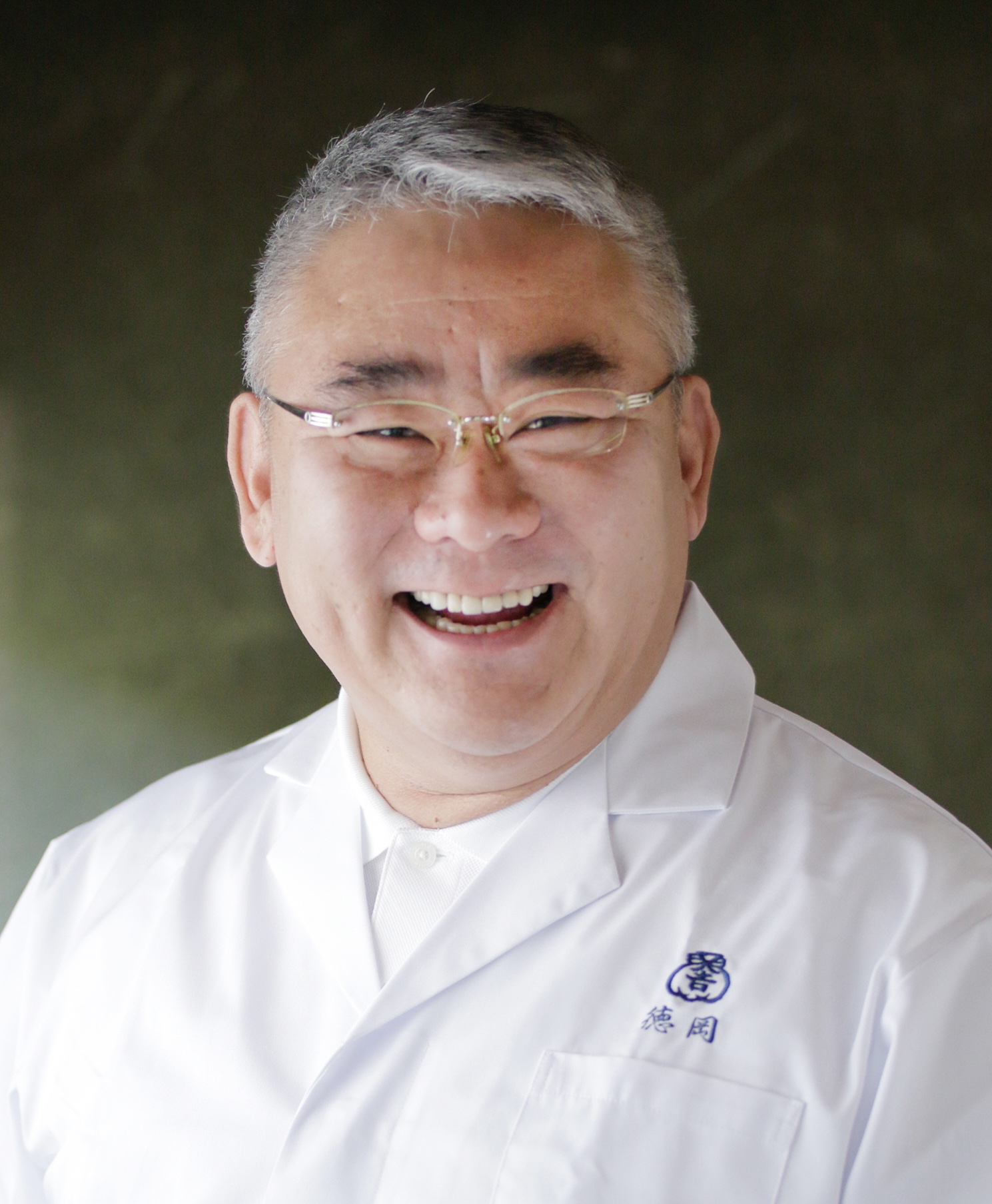
Kunio Tokuoka, Executive Chef at Kyoto Kitcho - Kyoto in Kyoto, carries Kitcho lineage through seasonal kaiseki in Arashiyama.
At a glance
- Cuisine
- Kaiseki
Season measured at the station
The vessel arrives before the dish at Kyoto Kitcho - Kyoto in Kyoto, and Kunio Tokuoka, Executive Chef of Kyoto Kitcho Arashiyama, treats that order as part of the cooking. Kaiseki here begins with season, but it does not stop at produce; the bowl, the lacquer, the interval between courses, and the view from the room all enter the method. Tokuoka has served as Executive Chef since 1995, carrying a lineage that runs directly to his grandfather, Teiichi Yuki, who founded Kitcho in Osaka in 1925 and helped define modern Japanese cuisine through the discipline of the tea ceremony. Tokuoka, born in Osaka in 1960, works at once as chef and custodian. Since 2009 he has also served as President and CEO of KYOTO KITCHO Co., Ltd., a role that places the wider house under his hand while the Arashiyama kitchen remains the flagship bench. The restaurant has held 3 Michelin stars for multiple years, and under Tokuoka it received the 2024 Luxury Japan Award Restaurant of the Year. Awards sit outside the pass; inside, the craft is still a sequence of decisions made course by course.
The course as a paced method
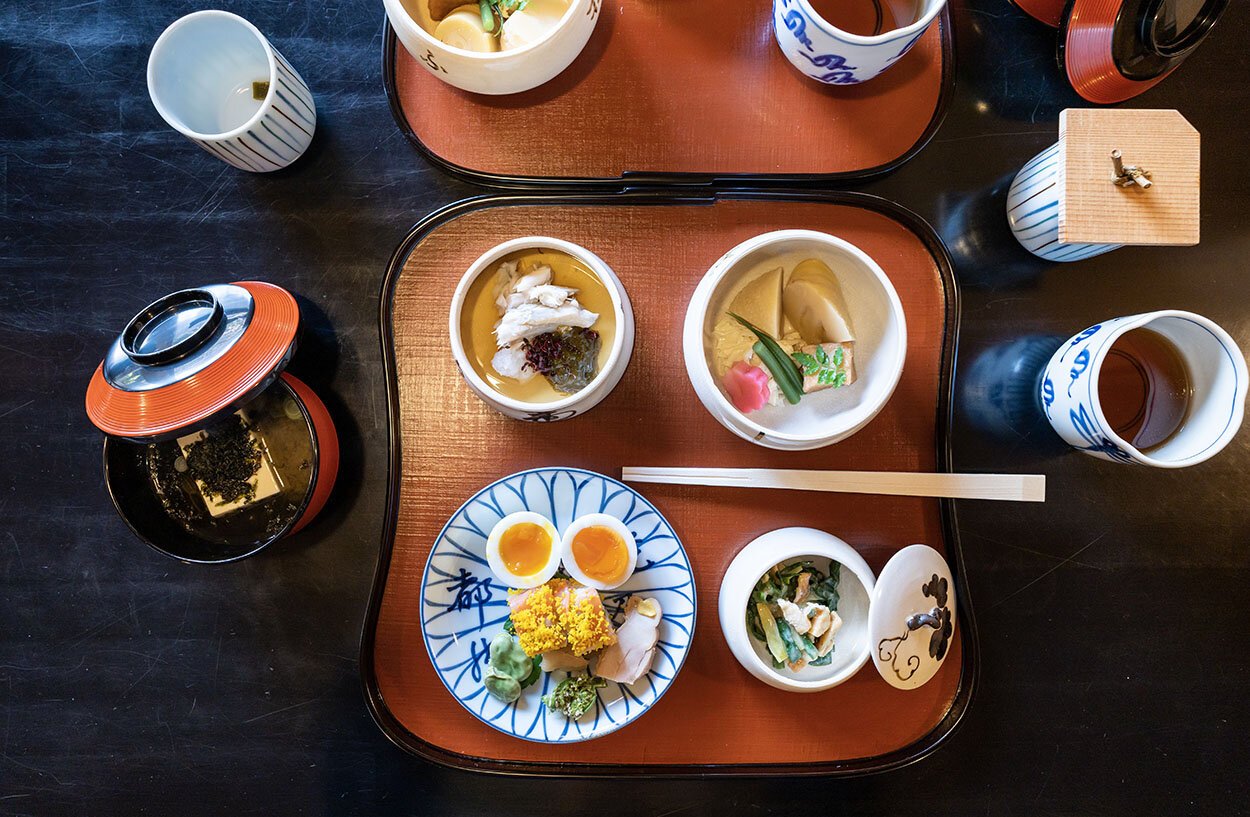
The program is kaiseki, but the word is too small unless it includes timing, utensils, temperature, texture, and the practiced restraint of the plate. A chef's course at Kyoto Kitcho Arashiyama has included blue crab with vinegar jelly and seasonal vegetables, sashimi of sea bream, toro and lobster, boiled abalone with baby fish, deep-fried maitake mushroom, tiger prawn with miso, tofu, cod's testicles, grilled harvest fish with pinko nuts and beans, Kobe beef with rice, and duck egg custard. Those examples matter because they show the span of the station: raw fish cut cleanly, simmered dishes held in balance, grilled fish served at the right moment, custard set with enough softness to register the egg. Tokuoka's cooking is often described as Kyoto tradition brought into contact with contemporary technique, but the room gives no speech on that point. The course carries it. A plate changes when the season changes; the vessel changes with it. The hand stays quiet.
Rooms looking toward the garden
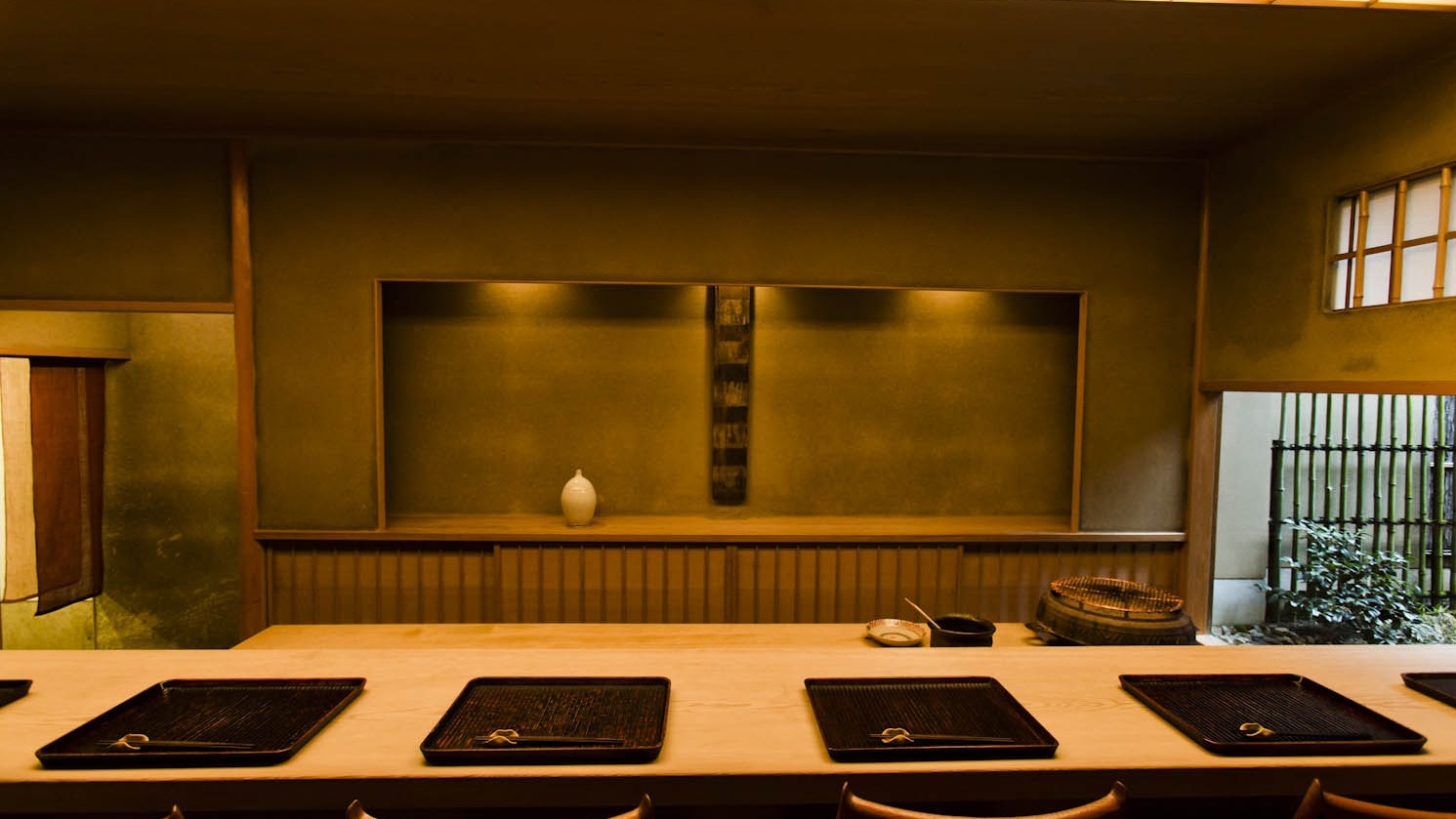
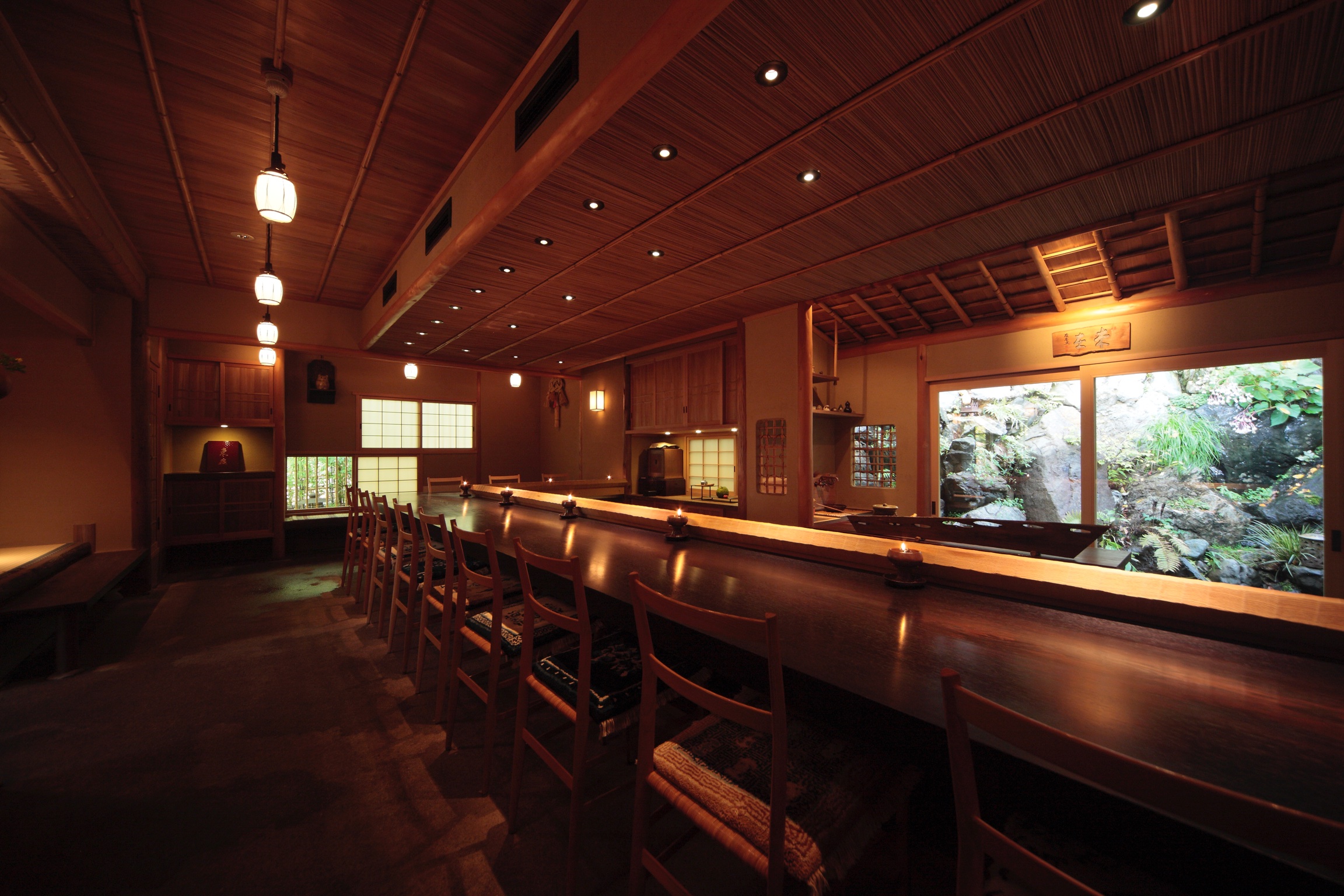
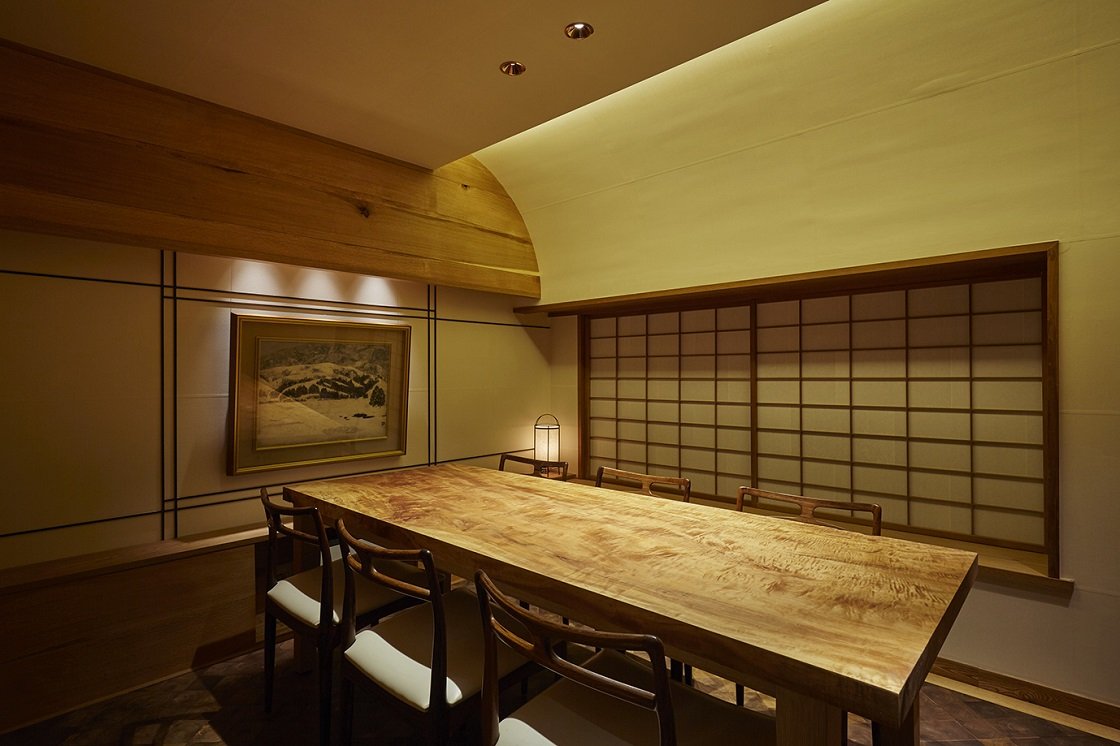
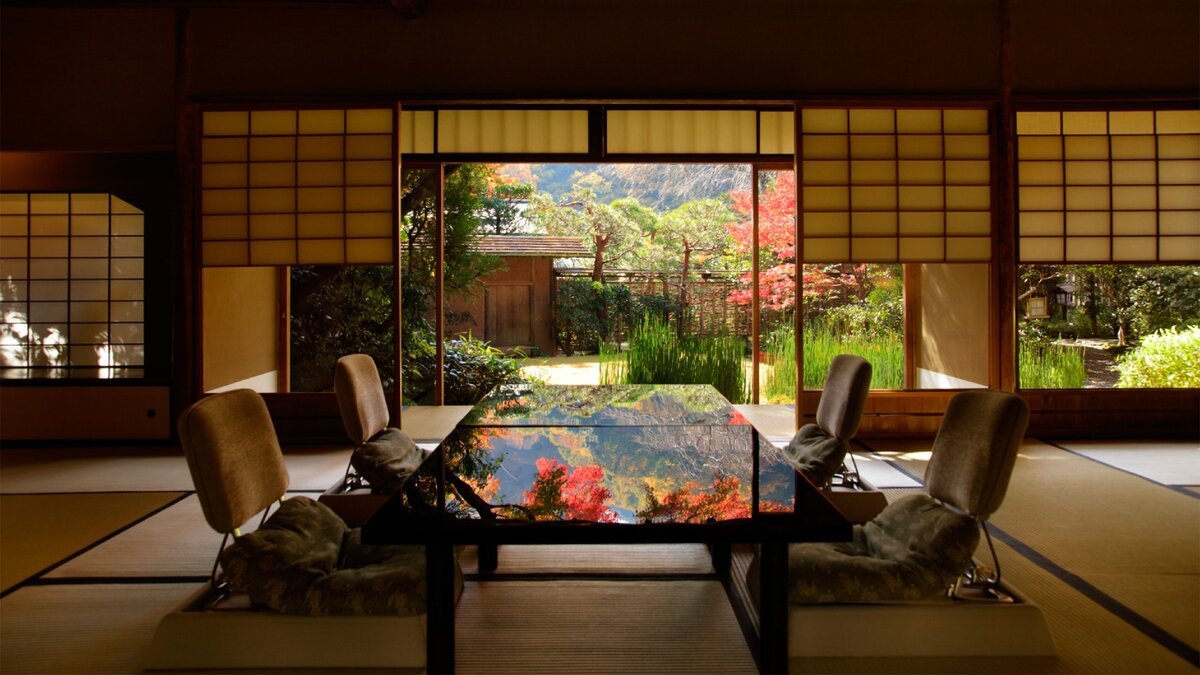
The house sits in Arashiyama, near the Ōi River, in a traditional wooden villa at 58 Susukinobaba-cho, Saga Tenryuji, Ukyo-ku. The room is part of the work, not a backdrop to it. Private dining rooms look toward gardens that shift with weather and season, so the meal takes its measure from what is outside as much as from the pass. Service follows the Japanese practice of omotenashi, close attention without display, and the pacing allows each course to arrive as a gesture rather than an announcement. In a ryokan-style setting, luxury comes through spareness: a low table, a chosen vessel, a view held long enough to change between courses. The counter is not the point here. The room is the station the guest sees.
A lineage kept in use
Teiichi Yuki's founding of Kitcho in 1925 gives the restaurant its root, but the place does not survive by treating lineage as a glass case. Tokuoka's work has included international recognition, among it his selection for a James Beard Award in 2008 and the social dinner he catered for the G8 Summit in Toyako, Hokkaido, the same year. Those facts belong to a chef who continues to hold the Arashiyama address through daily repetition. The next measure is not a declaration; it is the next seasonal course served in a room facing the garden at 58 Susukinobaba-cho.
Address
Japan, 〒616-8385 Kyoto, Ukyo Ward, Sagatenryuji Susukinobabacho, 58