Kulmeck by Tom Wickboldt

In Residence
Tom Wickboldt
Chef
- 01CuisineModern Creative European
- 02CityHeringsdorf, Germany
- 03RecognitionOne Michelin Star
- 1 Michelin Star · Michelin Guide
- Michelin 1 Star · 2026
- Michelin 1 Star · 2025
- Michelin 1 Star · 2024
A Michelin Table on the Baltic Margin
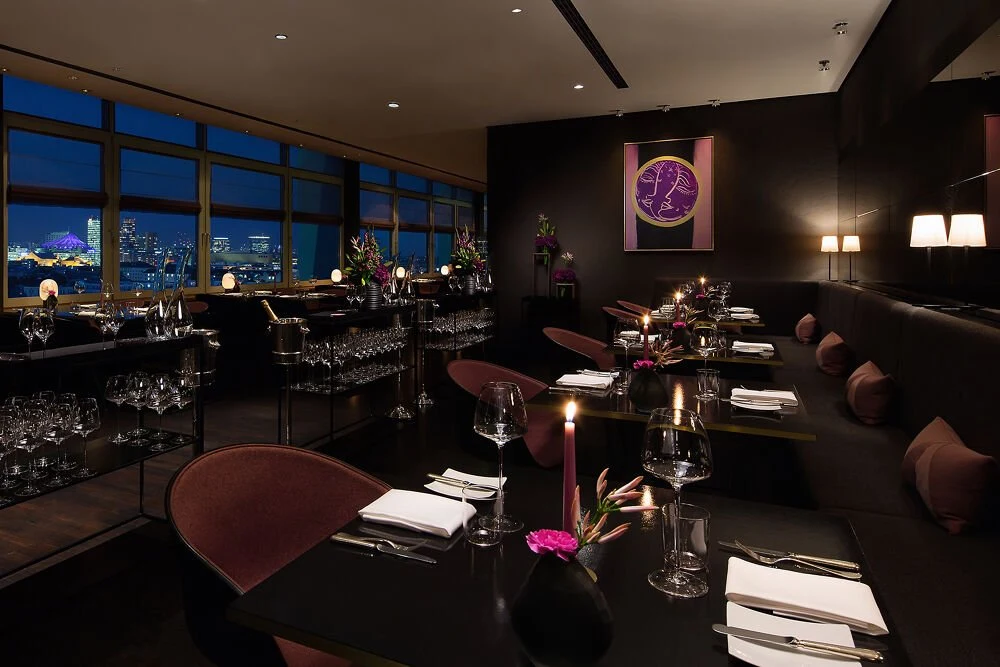
Germany's fine dining map is dense in the south and west: the Black Forest gives you Schwarzwaldstube in Baiersbronn, the Rhineland has Vendôme in Bergisch Gladbach, and Hamburg anchors the north with Restaurant Haerlin. The Baltic coast, by contrast, has historically been a holiday register: beach resorts, smoked fish stalls, and seasonal hotel dining. Kulmeck by Tom Wickboldt is the exception that clarifies the rule. Sitting at Kulmstraße 17 in Heringsdorf on the island of Usedom, it has holds a Michelin star, making it a reference point for serious eating on this stretch of coastline.
That geographical isolation is part of the editorial story. In cities like Munich or Berlin, a single Michelin star places a restaurant in a competitive comparable set of dozens. On Usedom, the same star operates differently: it marks the restaurant as a category apart from everything else in the immediate area, drawing guests who would otherwise not be here at all. The 4.8 Google rating across 133 reviews reinforces this: in a resort town where most feedback tends toward the casual, that score at a €€€€ price point reflects a guest base arriving with high expectations and leaving with them met.
The Sunday letter
Find new places through the people who run them.
Our Sunday email brings you the chefs, winemakers and hoteliers behind our newest stories. See a sample before you subscribe.
See a sample of the Sunday emailOne email a week. Unsubscribe from any issue.
The Baltic as a Larder
The editorial angle that matters most at Kulmeck is not the star count but the sourcing context. Modern cuisine at the €€€€ tier, when it works at its most coherent, anchors its identity in the ingredients available within reach. On Usedom, that means the Baltic Sea and the agricultural land of Mecklenburg-Vorpommern. The Baltic is a brackish, cold-water body with a distinct marine character: fish species here, including Baltic herring, flounder, and pike-perch, carry different flavour profiles from North Sea or Atlantic equivalents. The region around the island also produces game, root vegetables, and grain across a landscape that remains less industrialised than much of western Germany.
A kitchen in this position has a choice: source generically from national or European supply chains, as many resort-area restaurants do, or build its identity around what the immediate geography offers. Kitchens that commit to the latter tend to produce food that reads as specific rather than transferable. The Baltic's character is cold, slightly mineral, and austere in the leading sense, which creates natural alignment with a modern cuisine approach that tends toward restraint and precision over richness and volume. This is a different register from the France-inflected opulence you find at Victor's Fine Dining by Christian Bau in Perl or the Italian-Japanese fusion of Aqua in Wolfsburg. It is worth reading as its own tradition rather than as a provincial version of what those restaurants do.
The comparison that sits closest in spirit is ES:SENZ in Grassau, another German Michelin address that draws its identity from a specific regional geography rather than from cosmopolitan reference points. Both restaurants operate in areas where the surrounding environment functions as part of the editorial argument for why the food tastes the way it does.
The Competitive Set Beyond Germany
For readers building an itinerary around Nordic-influenced modern cuisine, Kulmeck sits in an interesting position relative to Scandinavian reference points. The Baltic connects Germany, Sweden, Denmark, and Finland in a shared culinary geography: cold-water fish, foraged coastal produce, the same mineral water character. Restaurants like Frantzén in Stockholm operate several price tiers above Kulmeck, but the underlying ingredient logic is regional cousins. Diners who have eaten in that northern European fine dining tradition will recognise what Usedom's kitchen is working with, even if the cultural framing is German rather than Swedish.
The comparison also helps explain why Kulmeck earns the attention it does outside of summer tourist season. Heringsdorf's beach-resort identity is largely a summer phenomenon. A restaurant that has built its sourcing and menu around the cold-water, cooler-months produce of the Baltic arguably performs leading when the resort crowd has thinned and the kitchen can serve a more focused guest list. Game from Mecklenburg, cold-season root vegetables, and autumn herring preparations align more naturally with October dining than with August beach traffic.
Format and Price Tier
Kulmeck sits at the €€€€ price tier, which in the German market for a one-Michelin-star modern cuisine restaurant means a tasting menu format at a price point that positions it alongside JAN in Munich and Schanz in Piesport, rather than at the two- and three-star level of CODA Dessert Dining in Berlin or Schwarzwaldstube. Within Heringsdorf itself, the contrast with other addresses is sharp. Belvedere and The O'ROOM occupy different positions in the local dining mix, but neither carries Michelin recognition, which leaves Kulmeck in a tier of its own in the immediate vicinity.
What It Represents for the Region
The broader significance of Kulmeck's consecutive Michelin recognition is less about one restaurant than about what it signals for the German Baltic coast as a dining destination. Michelin star continuity at a seasonal resort address requires a kitchen that can maintain supply chain discipline and cooking standards across the full range of a resort season, which is operationally harder than doing so in a year-round urban restaurant. The fact that the 2025 star followed the 2024 star without interruption is a statement about kitchen consistency, not just kitchen ambition.
That consistency is also what the Google rating reflects. A score of 4.8 across 119 reviews at the €€€€ tier, in a location where a significant portion of guests will be one-time visitors with no local loyalty to influence their judgement, is a harder benchmark than the same score at a neighbourhood favourite with a loyal repeat base. First-time guests at destination restaurants tend to arrive with sharpened critical attention, which makes the aggregate score a more demanding signal of actual performance.
For anyone planning a German fine dining itinerary that moves beyond the established western and southern circuits, Heringsdorf and Kulmeck represent the most compelling case currently available on the Baltic coast.
Questions
Frequently asked
What recognition does Kulmeck by Tom Wickboldt hold?
Kulmeck by Tom Wickboldt holds 1 Michelin star.
Who works at Kulmeck by Tom Wickboldt?
Made By profiles Tom Wickboldt (Chef) at Kulmeck by Tom Wickboldt.
How expensive is Kulmeck by Tom Wickboldt?
Kulmeck by Tom Wickboldt is listed at a price level of $$$$.
Where is Kulmeck by Tom Wickboldt and what does it serve?
Kulmeck by Tom Wickboldt is in Seebad Heringsdorf, Heringsdorf, serving Modern Creative European.
The field
How it compares
| Place | Awards | Cuisine | Notes |
|---|---|---|---|
| Kulmeck by Tom Wickboldt | Michelin 1 Star | Modern Creative European | Seebad Heringsdorf, $$$$ |
| 8 1/2 Otto e Mezzo Bombana (Hong Kong) | Michelin 3 Stars, World's 50 Best | 3 Michelin-Star Italian Fine Dining | Hong Kong |
| Reale | Michelin 3 Stars, World's 50 Best | Modern Italian Fine Dining | Castel di Sangro |
| Saison | Michelin 2 Stars, World's 50 Best | Modern Fire-Forward Fine Dining | San Francisco |
| Steirereck im Stadtpark | Michelin 3 Stars, World's 50 Best | Modern Austrian Fine Dining | Vienna |
| The Glenturret Lalique Restaurant | Michelin 2 Stars | Modern Scottish Fine Dining | Crieff |
| The Modern | Michelin 2 Stars | Contemporary American Fine Dining | New York City |
In residence
Similar places
3 Michelin-Star Italian Fine Dining
8 1/2 Otto e Mezzo Bombana (Hong Kong)
Hong Kong, Hong Kong
★★★ · 50 Best
Modern Italian Fine Dining
Reale
Castel di Sangro, Italy
★★★ · 50 Best
Modern Fire-Forward Fine Dining
Saison
San Francisco, United States
★★ · 50 Best
Modern Austrian Fine Dining
Steirereck im Stadtpark
Vienna, Austria
★★★ · 50 Best
Modern Scottish Fine Dining
The Glenturret Lalique Restaurant
Crieff, United Kingdom
★★
Contemporary American Fine Dining
The Modern
New York City, United States
★★
The Sunday letter
Get the next Made By story in your inbox.
We send one email every Sunday morning with the places and people we covered that week.
See a sample of the Sunday emailOne email a week. Unsubscribe from any issue.