Kuya Lord

In Residence
Lord Maynard Llera
Other
- 01CuisineModern Filipino
- 02CityLos Angeles, United States
- Opinionated About Dining Casual in North America Ranked #68 · 2026
- LA Times 101 Best Restaurants #62 · 2025
- LA Times 101 Best Restaurants #56 · 2024
Filipino Regional Cooking Finds a Permanent Address in Los Angeles
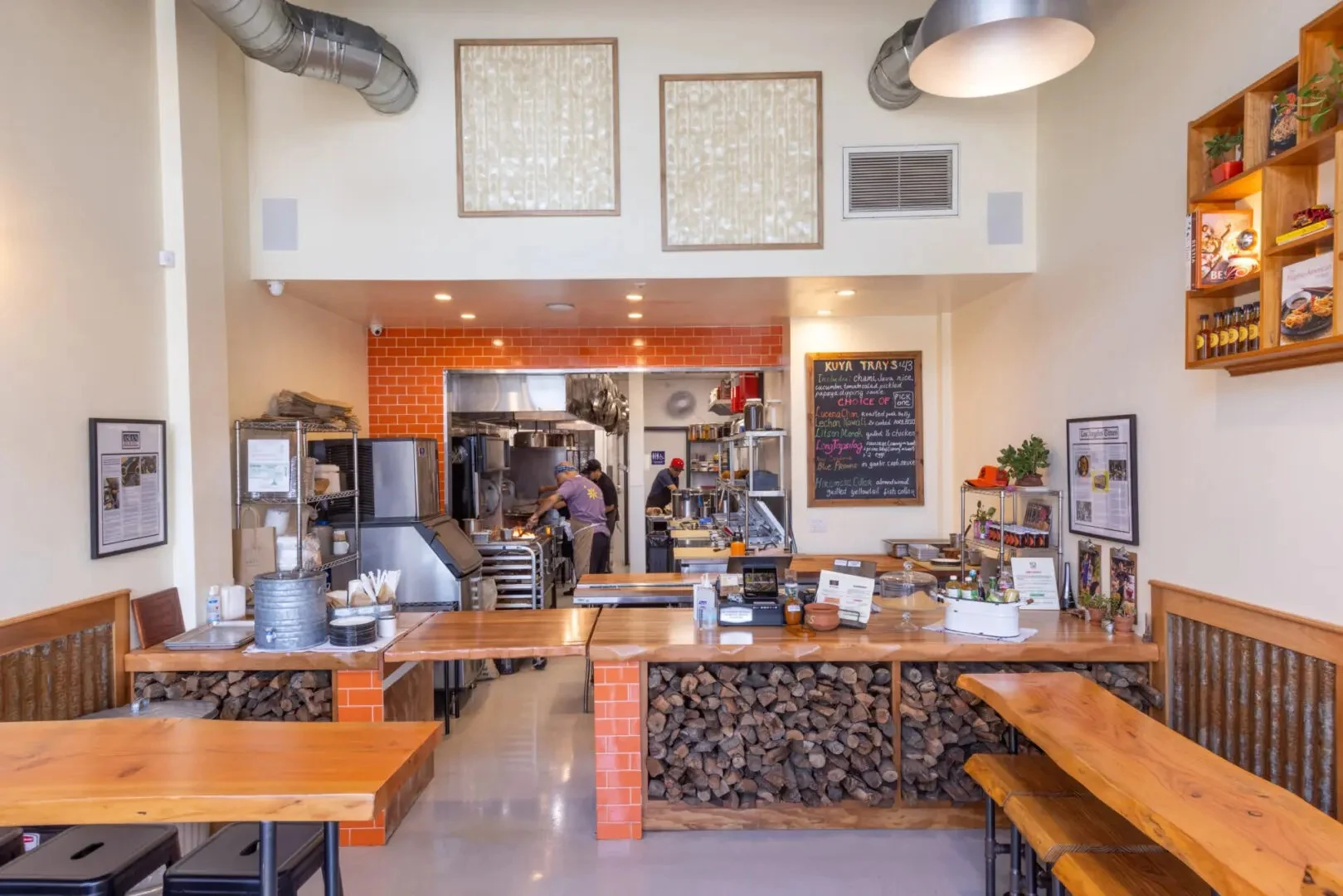
The pop-up era of serious Filipino cooking in Los Angeles had a defined arc. Through most of the last decade, the format served as a proving ground: chefs tested menus, built followings, and demonstrated that regional Philippine cuisine could compete in the same conversation as the city's more established fine-dining traditions. What has emerged from that period is a smaller, more concentrated cohort of permanent restaurants operating at a higher technical register. Kato did something similar for Taiwanese-American cooking. Kuya Lord, at 5003 Melrose Ave in the Melrose Hill corridor, represents the same transition point for Filipino regional cuisine, specifically the traditions of Lucena City, Quezon Province.
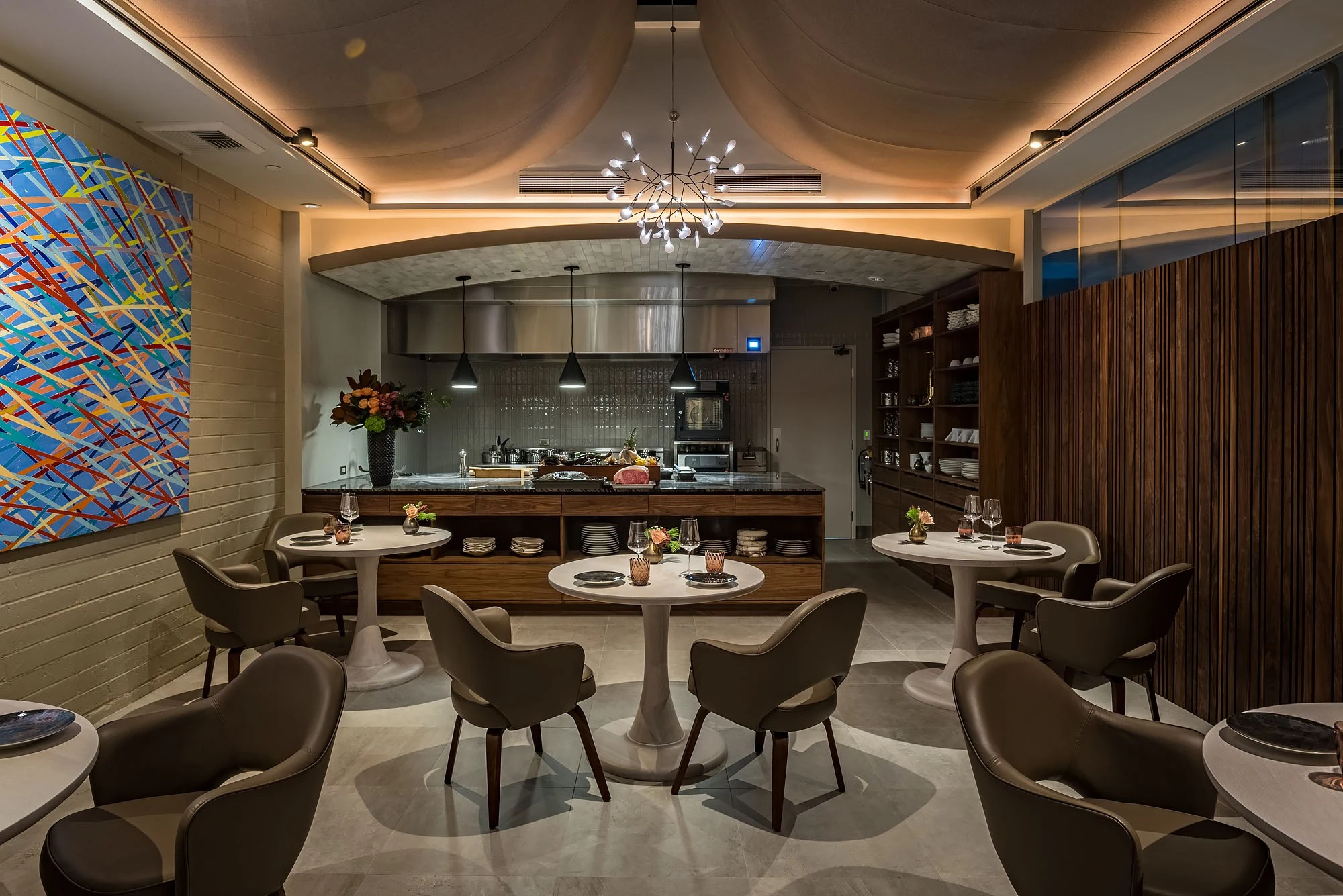
The restaurant began as a pop-up before taking its current form as a 28-seat brick-and-mortar. That origin matters because it explains the menu's discipline: there is no sprawl here, no kitchen trying to cover every corner of the Philippine archipelago. The focus is sharp, the sourcing deliberate, and the cooking built on classical technique applied to dishes that most diners in Los Angeles have never encountered in this particular form. Chef Lord Maynard Llera's James Beard Award recognition confirms what the pop-up circuit had already established, which is that this is cooking with a clear point of view and the execution to match.
The Sunday letter
Find new places through the people who run them.
Our Sunday email brings you the chefs, winemakers and hoteliers behind our newest stories. See a sample before you subscribe.
See a sample of the Sunday emailOne email a week. Unsubscribe from any issue.
The Booking Reality: What to Expect Before You Arrive
28-seat capacity at a restaurant that sits at #56 on the LA Times 101 Best Restaurants list for 2024 and holds a James Beard Award creates a predictable arithmetic. Demand runs well ahead of availability, and planning ahead is not optional if you want a specific date. The format is fast-casual in the sense that there is no multi-hour tasting menu commitment, but that label can mislead: the cooking here operates at a level that places it in the same peer conversation as Hayato or Providence in terms of chef pedigree and critical recognition, even if the format and price point differ.
For anyone planning a broader Los Angeles dining itinerary that includes technically serious restaurants, Kuya Lord should be booked alongside rather than after places like Somni or Osteria Mozza. Walk-ins at a 28-seat room are a genuine gamble.
The Menu: A Structured Entry Point and Its Rewards
Los Angeles has a well-documented history of reducing complex culinary traditions to their most accessible, portable formats, and the fast-casual label attached to Kuya Lord occasionally sends the wrong signal. The menu is concise, as any kitchen operating at this capacity needs it to be, but it is not simplified. The cooking applies classical technique to regional Philippine dishes in ways that require attention to understand fully.
The Kuya Tray is the fastest and most comprehensive introduction to what this kitchen does. Sized for two, the platter arrives with canary-yellow spiced rice, sauteed vegetables, achara (pickled green papaya), and a choice of six meats or seafood options. The tray format mirrors how Filipino communal eating actually works, which is less about individual portions and more about assembling a table of contrasts. The lucenachon, Llera's version of Filipino-style pork belly stuffed with lemongrass stalks and fennel fronds, arrives as a hypnotically spiral slice that demonstrates what happens when classical European butchery technique meets a regional Philippine roasting tradition. Blue prawns simmered in garlicky crab paste represent a different register entirely, oceanic and assertive.
Two dishes on the menu function as what the LA Times describes as relative sleepers: the mami, an egg noodle soup with pork belly and garlic-chile oil, and the laing, taro leaves braised in coconut milk and shrimp paste for nine hours. The laing receives a final addition of smoky katsuobushi and pickled chile, an umami addition that sits outside the traditional Bicol preparation but works as a coherent development rather than a distraction. Nine-hour braises in a fast-casual format suggest something important about how this kitchen prioritizes the cooking itself over the category label.
Where Kuya Lord Sits in Los Angeles's Evolving Filipino Dining Scene
The critical moment for modern Filipino cuisine in the United States arrived in a concentrated window roughly between 2015 and 2022, when a generation of chefs with classical training began translating regional Philippine traditions for American urban audiences. That movement produced restaurants in New York, San Francisco, and Los Angeles that operated across a range of formats, from tasting-menu counters to fast-casual rooms. The James Beard Award for Leading Chef: California places Kuya Lord's chef in a national comparable set that includes recipients at Lazy Bear in San Francisco and, historically, institutions like Le Bernardin in New York or Alinea in Chicago. It is a credential that operates independently of format or price tier.
The comparison to Atomix in New York is instructive at the category level: both restaurants apply serious classical technique to a regional Asian cuisine that has historically been underrepresented at this level of critical recognition. The difference is format and accessibility. Atomix operates at the tasting-menu tier with corresponding price and planning requirements. Kuya Lord occupies a different position, one where the barrier to entry is lower in terms of format commitment, but the cooking ambition runs at a comparable register. That combination is what makes the LA Times ranking and the James Beard Award sit alongside each other without contradiction.
For a broader picture of how Filipino dining fits within Los Angeles's current restaurant scene, alongside Japanese counters like Hayato or farm-driven tasting formats like Single Thread Farm in Healdsburg and The French Laundry in Napa, our Los Angeles restaurant guide maps the full range. For those traveling internationally, the conversation around how Asian culinary traditions translate into high-recognition restaurant formats is equally developed at places like 8 1/2 Otto e Mezzo Bombana in Hong Kong and Emeril's in New Orleans.
Planning Your Visit
Kuya Lord is at 5003 Melrose Ave, Los Angeles, CA 90038, in the Melrose Hill neighborhood. The 28-seat room books up quickly given the restaurant's profile, so advance planning is necessary rather than aspirational. The fast-casual structure means the experience moves at a different pace than a tasting-menu counter, which makes it a more practical option for those combining multiple restaurants in a single LA trip. Google reviewers rate the restaurant at 4.4 across 295 reviews.
Questions
Frequently asked
Who works at Kuya Lord?
Made By profiles Lord Maynard Llera (Other) at Kuya Lord.
How expensive is Kuya Lord?
Kuya Lord is listed at a price level of $$.
Where is Kuya Lord and what does it serve?
Kuya Lord is in Hollywood Studio District, Los Angeles, serving Modern Filipino.
The field
How it compares
| Place | Cuisine | Notes | Awards |
|---|---|---|---|
| Kuya Lord | Modern Filipino | Hollywood Studio District, $$ | · |
| Hayato | Traditional Japanese Kaiseki | Los Angeles | Michelin 2 Stars |
| Holbox | Modern Mexican Seafood | Los Angeles | Michelin 1 Star, World's 50 Best |
| Kato | Modern Taiwanese Fine Dining | Los Angeles | Michelin 2 Stars, World's 50 Best |
| Mélisse | California-French Fine Dining | Los Angeles | Michelin 2 Stars |
| Providence | Modern Seafood Fine Dining | Los Angeles | Michelin 3 Stars, World's 50 Best |
| Somni | Modern Spanish Fine Dining | Los Angeles | Michelin 3 Stars, World's 50 Best |
In residence
Similar places
Traditional Japanese Kaiseki
Hayato
Los Angeles, United States
★★
Modern Mexican Seafood
Holbox
Los Angeles, United States
★ · 50 Best
Modern Taiwanese Fine Dining
Kato
Los Angeles, United States
★★ · 50 Best
California-French Fine Dining
Mélisse
Los Angeles, United States
★★
Modern Seafood Fine Dining
Providence
Los Angeles, United States
★★★ · 50 Best
Modern Spanish Fine Dining
Somni
Los Angeles, United States
★★★ · 50 Best
The Sunday letter
Get the next Made By story in your inbox.
We send one email every Sunday morning with the places and people we covered that week.
See a sample of the Sunday emailOne email a week. Unsubscribe from any issue.